
Best 2-Person Tents for UK Camping in 2026

Author: Trekitt Gear Team
Tent and camping specialists with decades of combined experience testing, pitching and living with outdoor shelters in real UK conditions. From lightweight backpacking tents to durable campsite setups, our team understands what truly works in wind, rain and unpredictable British weather.
Key Takeaways
- Camping in the UK means dealing with sideways rain, gusty campsites and damp mornings. In this guide, we explain why the right 2-person tent can make the difference between a stressful night outdoors and a comfortable one.
- We break down the features that genuinely matter when choosing a 2-person tent — from waterproof ratings and pitching systems to ventilation, weight and porch space for real-world camping.
- From lightweight backpacking trips and wild camping weekends to relaxed campsite stays and muddy festival fields, we explore the types of tents that work best across typical UK camping scenarios.
This article is part of our 👉 Tents Knowledge Centre, where you’ll find expert shelter advice, tent-buying guides, real-world gear recommendations and practical camping tips for UK conditions. From lightweight backpacking tents and wild camping shelters to spacious campsite setups, our knowledge hub helps you choose the right tent for every adventure and season.
There’s a very specific moment every UK camper knows.
You’ve just finished pitching. The sky looks “mostly fine.” You make a brew. Then — without warning — the wind shifts, the temperature drops, and the rain starts arriving sideways.
Camping in the UK isn’t about perfect forecasts. It’s about being ready for whatever rolls over the ridge next.
That’s why choosing the right 2-person tent matters more than most people realise.
Whether you’re:
- Heading into the hills for a lightweight backpacking weekend
- Planning a coastal campsite escape
- Sharing space as a couple on your first multi-day trip
- Or packing for a festival where the ground will almost certainly turn muddy
Your tent isn’t just somewhere to sleep. It’s your shelter, dry zone, windbreak, and gear store, sometimes all at once.
A great 2-person tent for UK camping needs to handle:
- Persistent rain
- Gusty campsites
- Damp ground
- Condensation
- Real-world practicality
Here’s what actually matters.
How to Choose a 2-Person Tent (UK Buying Guide)
Choosing the best 2-man tent isn’t about chasing the lightest option or the biggest porch. It’s about picking one that suits British weather and your actual camping style.
2-Person Tent Buying Checklist
Season Rating: 3-Season vs 4-Season
For most UK campers, a strong 3-season tent is ideal.
3-Season tents:
- Designed for spring to autumn
- Built to handle heavy rain and moderate wind
- Lighter and better ventilated
4-Season tents:
- Designed for winter mountain conditions
- Stronger poles and more fabric coverage
- Heavier and warmer
Unless you’re camping in winter mountain environments, a well-built 3-season model is more than enough.
Waterproof Rating (Hydrostatic Head – HH)
The key number to look for is Hydrostatic Head (HH) — measured in millimetres.
In simple terms, it’s how much water the fabric can handle before it says, “Right, that’s enough,” and lets it through.
The higher the number, the more rain your tent can shrug off. In the UK, where rain doesn’t politely fall but commits, that number really matters.
For UK camping:
- 3,000mm+ flysheet rating is a reliable benchmark
- Fully taped seams are essential
- A taut flysheet prevents sagging in prolonged rain
British rain isn’t always dramatic — it’s just persistent. Your tent needs to cope with that.
Groundsheet & Bathtub Floor
In the UK, the rain doesn’t politely drain away the moment it stops. Campsites stay damp. Grass holds moisture. Fields turn soft. And if you pitch in the wrong spot, you can end up discovering — at 2am — that you’ve essentially set up in a shallow puddle.
That’s where the groundsheet really earns its keep.
Look for:
- Durable groundsheet fabric
- 3,000mm+ floor rating
- A raised “bathtub” floor design
- Fully sealed seams
This prevents surface water from seeping in during heavy rain or on muddy pitches.
Pitch Type & Ease of Setup
Weather can turn quickly, so setup simplicity matters.
Ideal systems for UK use:
- Fly-first pitching (keeps inner dry in rain)
- All-in-one pitch systems
- Colour-coded poles
Fly-first designs are particularly useful here. If rain starts halfway through pitching, the inner stays protected rather than acting like a sponge.
Freestanding designs can also make life easier on awkward ground — especially at festivals or compact campsites.
If you often arrive late, pitch in fading light, or set up in changeable weather, ease of pitching matters far more than saving 100 grams.
Because in reality, a tent that goes up quickly and calmly in poor weather will feel far more impressive than one that’s technically lighter but stressful to assemble in the rain.
How much your tent weighs only really matters if you’re the one carrying it.
If it’s going in the boot and coming out 20 metres later, 300 grams won’t change your life.
If it’s on your back for 25km across the hills, it absolutely will.
Your ideal weight depends entirely on how you camp.

Backpacking:
- Aim for the 1–2kg range
- Look for a compact, packed length that fits easily inside or on your rucksack
- Lighter poles and fabrics make long days more manageable
On multi-day trips, small weight savings add up. Your shoulders will notice.
Car Camping & Festivals:
- Weight is far less critical
- Comfort, durability and space matter more
- Slightly heavier fabrics can actually feel more reassuring
There’s no point buying an ultralight tent if it never leaves the car park. And equally, there’s no point hauling a 3kg shelter over hills just because it was on offer.
Ventilation & Condensation Control
If you’ve ever woken up and thought,
“Did it rain inside the tent?”
— That’s condensation.
In the UK, damp air, cool nights and two people breathing inside a small shelter almost guarantees some moisture build-up. Especially near lakes or rivers, or after steady rain.
Condensation isn’t a design flaw — it’s physics. But good tent design makes a big difference in how manageable it feels.
Look for:
- Double-wall construction (separates you from outer moisture)
- Adjustable vents you can open even in light rain
- Mesh inner panels for airflow
- High and low ventilation points to create cross-breeze
The goal isn’t to eliminate condensation completely — that’s unrealistic in British conditions. The goal is to reduce it and stop it from dripping onto your sleeping bag at 6am.
👉 If you want a deeper breakdown of why tents sweat and how to prevent it, we cover it step-by-step in our YouTube video: How to Reduce Tent Condensation.
Doors & Porch Space
Two people in a tent is fine.
Two people plus wet boots, packs, waterproofs and “where do I put this?” — that’s where things get tight.
The sleeping area is only half the story. In UK conditions, porch space often makes a bigger difference to comfort than an extra few centimetres of sleeping width.
When comparing tents, think about:
- One door vs two (no one enjoys climbing over their partner at 2am)
- Porch depth for boots, packs and cooking (where appropriate)
- Ease of entry and exit in wind or rain
- Room to stash wet layers without soaking the inner
Two doors can feel like a luxury — until you’ve used them. Then they feel essential.
A decent porch keeps muddy gear out of your sleeping space, gives you somewhere to organise kit, and makes damp mornings far more manageable.
For couples especially, usable porch space often improves real-world comfort more than simply choosing a wider sleeping area.
Wind Stability & Guy Lines
Rain gets all the attention.
Wind is what actually keeps you awake.
UK campsites — especially coastal spots, open fields and elevated ground — can get gusty fast. Even if the forecast looks calm, a 2am wind shift can turn a quiet night into a fabric-flapping soundtrack.
That’s why structure matters.
Look for:
- Aluminium poles (stronger and more durable than fibreglass)
- Multiple guy-out points to properly tension the fly
- Pre-attached guy lines (you’ll use them more than you think)
- Aerodynamic dome or tunnel shapes that shed wind rather than fight it
Tunnel tents, when pitched correctly into the wind, can feel incredibly stable. Freestanding domes, properly guyed out, handle shifting gusts well.
The key isn’t just the tent — it’s using all the guy points. They’re not decorative.
In UK conditions, wind is often more disruptive than rain. A stable, well-pitched tent means less flapping, less movement, and far better sleep.
Tent Comparison — Quick Facts UK Campers Care About
When comparing 2-person tents, here are the features that genuinely influence performance in British conditions:
| Feature | What to Look For | Why It Matters |
| Pitch Time | Around 5–10 minutes | Less stress if rain starts mid-setup |
| Packed Size | Compact for hiking; flexible for car camping | Easier transport and storage |
| Season Rating | Strong 3-season build | Suitable for most UK conditions |
| Weather Performance | High waterproof rating, solid structure | Handles persistent rain & gusts |
| Porch Space | Room for boots & wet gear | Keeps the sleeping area dry |
| Repairability | Replaceable poles & spares available | Extends lifespan |
| Warranty | 2–5 years typical | Indicates build confidence |
When comparing tents, focus on usability in:
- Persistent rain
- Gusty campsites
- Damp mornings
- Muddy ground
Specs matter, but real-world performance matters more.
How We Chose the Best 2-Person Tents for UK Camping
There are many “best tent” lists online.
Most are based on spec sheets. Ours isn’t.
We chose these tents based on how they perform in real UK conditions — windier-than-expected campsites, sideways rain, damp ground, late arrivals, and mornings where everything feels slightly wet, no matter what the forecast said.
These are models we:
- Stock year after year because they work
- See customers come back for (or upgrade within the range)
- Have pitched ourselves in British weather
- Recommend daily to hikers, couples and festival-goers
We didn’t just look at weight or waterproof numbers. We looked at:
- How stable they feel in gusts
- How easy they are to pitch when the weather turns
- How well they manage condensation
- Whether the porch space actually works for muddy boots
- And whether they justify their price
Some prioritise weight savings, others focus on durability or value, but every tent on this list has earned its place.
These are the 2-person tents we’d confidently suggest for UK camping in 2026 — depending on how and where you camp.
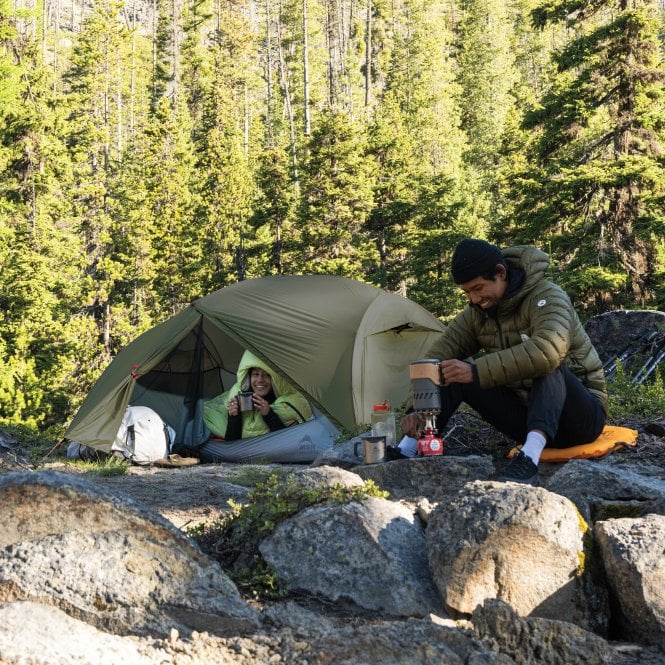
MSR Hubba Hubba LT 2P — Best All-Round 2-Person Tent
Who It’s Best For
Campers who want one tent that can handle most UK trips — from a windy Lake District weekend to a relaxed campsite stay — without overthinking it.
Why We Chose It
The Hubba Hubba has been a benchmark for years, and the LT version keeps what worked while refining the details. It’s one of those tents that just feels sorted once it’s pitched.
It’s light enough to carry properly, but not so minimal that you feel exposed.
Key Features
- Freestanding design (easy pitching on awkward ground)
- Dual doors and porches
- Lightweight yet durable 3-season build
- Strong aluminium pole structure
- Excellent ventilation layout
UK-Specific Pros
- Handles prolonged rain without sagging or drama
- Stable in gusty campsites when properly guyed
- Good airflow helps manage damp British mornings
- Straightforward to pitch when the weather isn’t cooperating
This is the tent we often recommend when someone says,
“I just want something that works.”
Downsides
- Not cheap
- Not designed for winter mountain conditions
Verdict
If you want one dependable 2-person tent for UK camping and don’t want to over-specialise, this is the most balanced choice in the list.
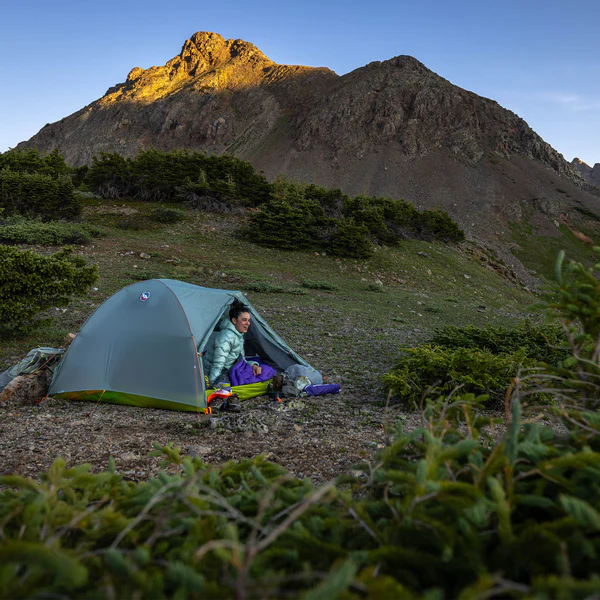
Big Agnes Tiger Wall UL2 — Best Lightweight Backpacking 2P Tent
Who It’s Best For
Walkers covering real distance, Coast to Coast, West Highland Way, multi-day hill trips, where weight genuinely matters.
Why We Chose It
When you pick this up, you immediately understand the appeal. It feels light. Properly light. But not paper-thin fragile.
It’s built for people who count grams but still camp in real weather.
Key Features
- Ultralight construction
- Compact packed size
- Dual vestibules
- Excellent space-to-weight ratio
- Semi-freestanding design
UK-Specific Pros
- Easy to carry over long mileage
- Packs small in a rucksack
- Performs well in typical 3-season UK conditions
- Ventilation helps reduce condensation on damp nights
Downsides
- Requires a good pitch for maximum stability
- Less forgiving in very exposed wind compared to tunnel designs
Verdict
If weight is your top priority but you still want genuine weather protection, this is a serious backpacking option, not just a “light at all costs” tent.
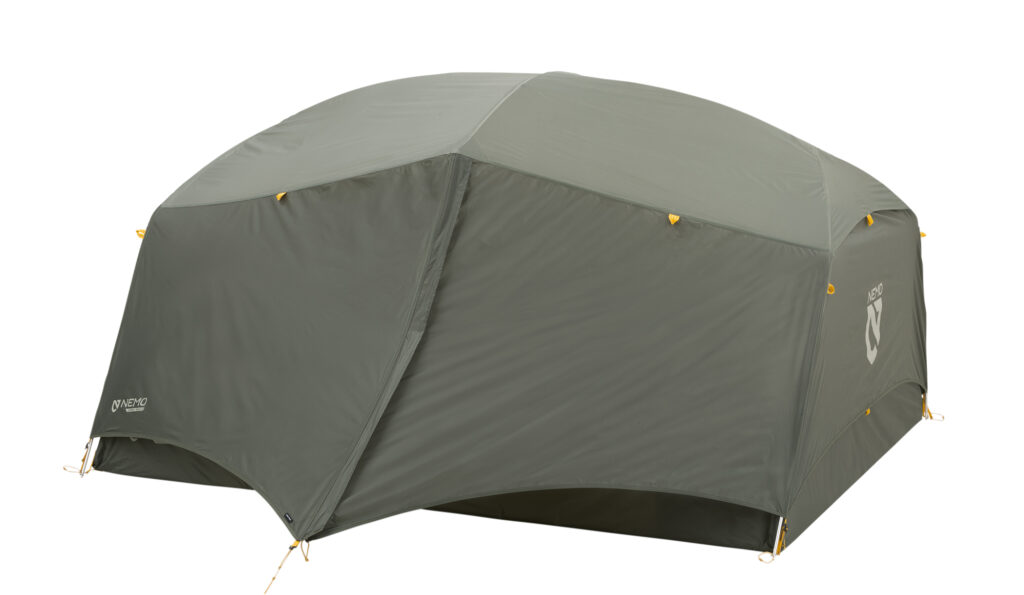
NEMO Aurora Ridge 2 — Best for Festivals & Car Camping
Who It’s Best For
Campsite campers, festival trips, and anyone prioritising comfort and ease over ultralight numbers.
Why We Chose It
This tent feels generous for its price. It’s not trying to be extreme; it’s trying to be practical.
And for UK campsite use, that’s exactly what most people need.
Key Features
- Spacious interior
- Freestanding structure
- Durable materials
- Includes footprint
- Simple, intuitive setup
UK-Specific Pros
- Comfortable space for damp, grey days
- Footprint adds protection on muddy ground
- Durable floor handles repeated use
- Easy to pitch even when you arrive late
Downsides
- Heavier than backpacking models
- Bulkier packed size
Verdict
If you’re driving to your campsite or heading to a festival field, this gives you comfort and reliability without overcomplicating things.
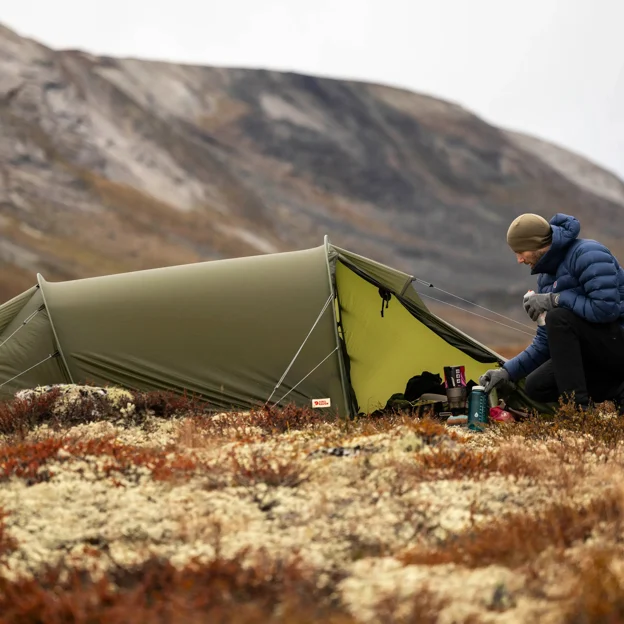
Fjällräven Abisko Lite 2 — Best Storm-Ready UK Tent
Who It’s Best For
Campers heading into more exposed areas, coastal sites, upland camps, or places where wind is part of the experience.
Why We Chose It
Tunnel tents don’t look dramatic — but when properly pitched, they’re incredibly stable. And this one feels confidence-inspiring in rougher weather.
It’s premium, yes. But you can feel where that money goes.
Key Features
- Tunnel design for wind stability
- Durable outer fabric
- Strong pole sleeves
- Excellent tensioned pitch
- Practical extended porch
UK-Specific Pros
- Outstanding in gusty coastal conditions
- Reliable rain protection during prolonged wet spells
- Sheds wind effectively when aligned correctly
Downsides
- Premium price
- Not freestanding
- Requires careful orientation in strong wind
Verdict
If you regularly camp in exposed or unpredictable UK weather, this is the tent that feels most secure when the forecast changes its mind.
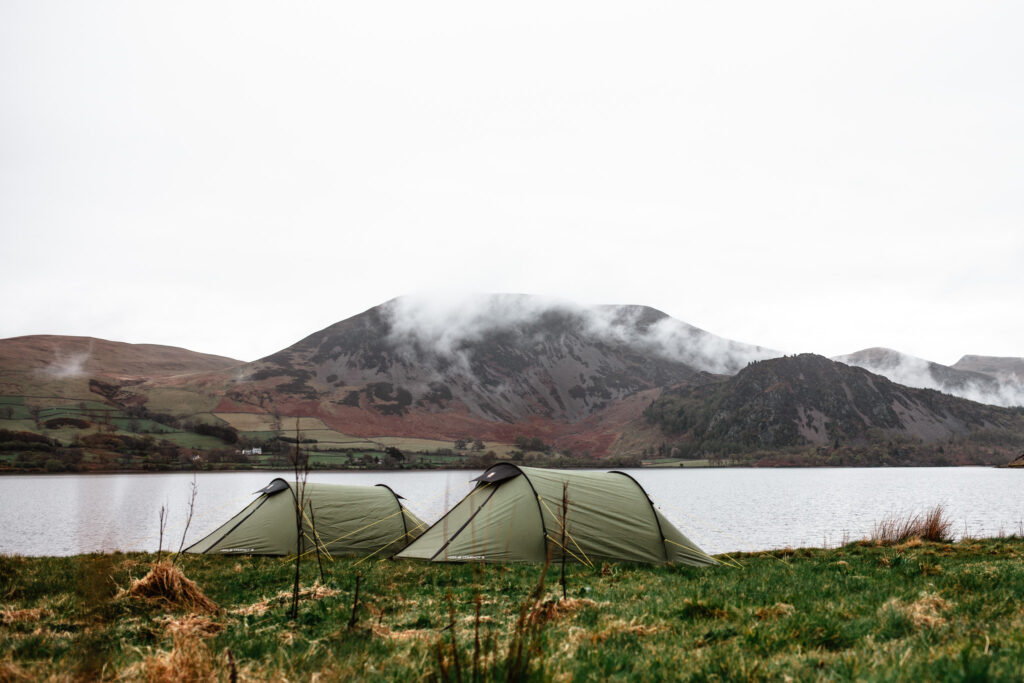
Wild Country Hoolie Compact 2 — Best Value 2-Person Tent for UK Camping
Who It’s Best For
New campers, occasional adventurers, or anyone wanting a solid UK performance without stretching the budget.
Why We Chose It
Wild Country has proper UK heritage, and this tent shows it. It’s simple, stable and dependable, without feeling flimsy.
For the price, it punches well above its weight.
Key Features
- Tunnel-style structure
- Strong waterproof rating
- Stable pole setup
- Compact packed size
- Excellent value positioning
UK-Specific Pros
- Handles heavy rain confidently
- Stable when fully guyed out
- Good choice for typical British campsite conditions
- Affordable but not “throwaway”
Downsides
- Less refined ventilation than premium models
- Interior space is practical rather than generous
Verdict
If you want a reliable 2-person tent for UK camping under £300, this is one of the safest choices available.
Conclusion: Which 2-Person Tent Should You Choose?
By now, you’ve probably realised there isn’t one “best” 2-person tent for UK camping.
There’s the best tent for how you camp.
Some people are counting grams on a multi-day trail.
Some want something stable when the wind picks up at the coast.
Others just want a comfortable weekend setup that doesn’t leak when it inevitably rains.
If you’d like even more opinion, our Trekitt team is always happy to help. We’ve pitched these tents in real UK conditions, used them, and can talk through what will genuinely suit your plans.
FAQ
For most people, a 2-person tent is ideal for solo campers who want extra space or couples travelling light.
However, keep in mind:
A standard 2-person tent fits two sleeping mats side by side
Storage space inside is usually limited
Porch space becomes important for boots and wet gear
If you’re camping as a couple with larger packs — or just like more breathing room — you may prefer a spacious 2P design or even a compact 3-person tent.
Look for:
Aluminium poles
Multiple guy-out points
Low-profile dome or tunnel shape
Strong pole sleeves or clips
A taut, well-tensioned flysheet
Wind stability is often more important than headline waterproof numbers in exposed UK locations.
Yes, but look for:
Quick pitching system
Freestanding design
Durable groundsheet
Compact packed size
Festival camping often means crowded fields and harder ground, so simplicity and robustness are more important than ultralight materials.
With proper care, a quality 2-person tent should last:
5–10 years of regular use
Longer if well-maintained
To extend lifespan:
Dry it fully before storage
Avoid packing it away wet
Store loosely, not compressed
Replace guy lines and poles when needed
Generally, no.
Cooking inside a tent can:
Increase condensation
Damage fabric
Create fire and carbon monoxide risk
It’s safer to cook on the porch (if it’s designed for it and well ventilated) or entirely outside the tent.
Most standard 2-person tents are designed to fit two sleeping mats, not two people plus full gear.
That’s why porch space matters.
A good porch allows you to:
Store boots and wet layers
Keep packs sheltered
Maintain a dry sleeping area
If internal storage is important, look for:
Extended porch designs
Two-door layouts
Or consider sizing up for extra comfort
Leave a Reply