
Best Down Jackets for Hiking & Camping (2026)
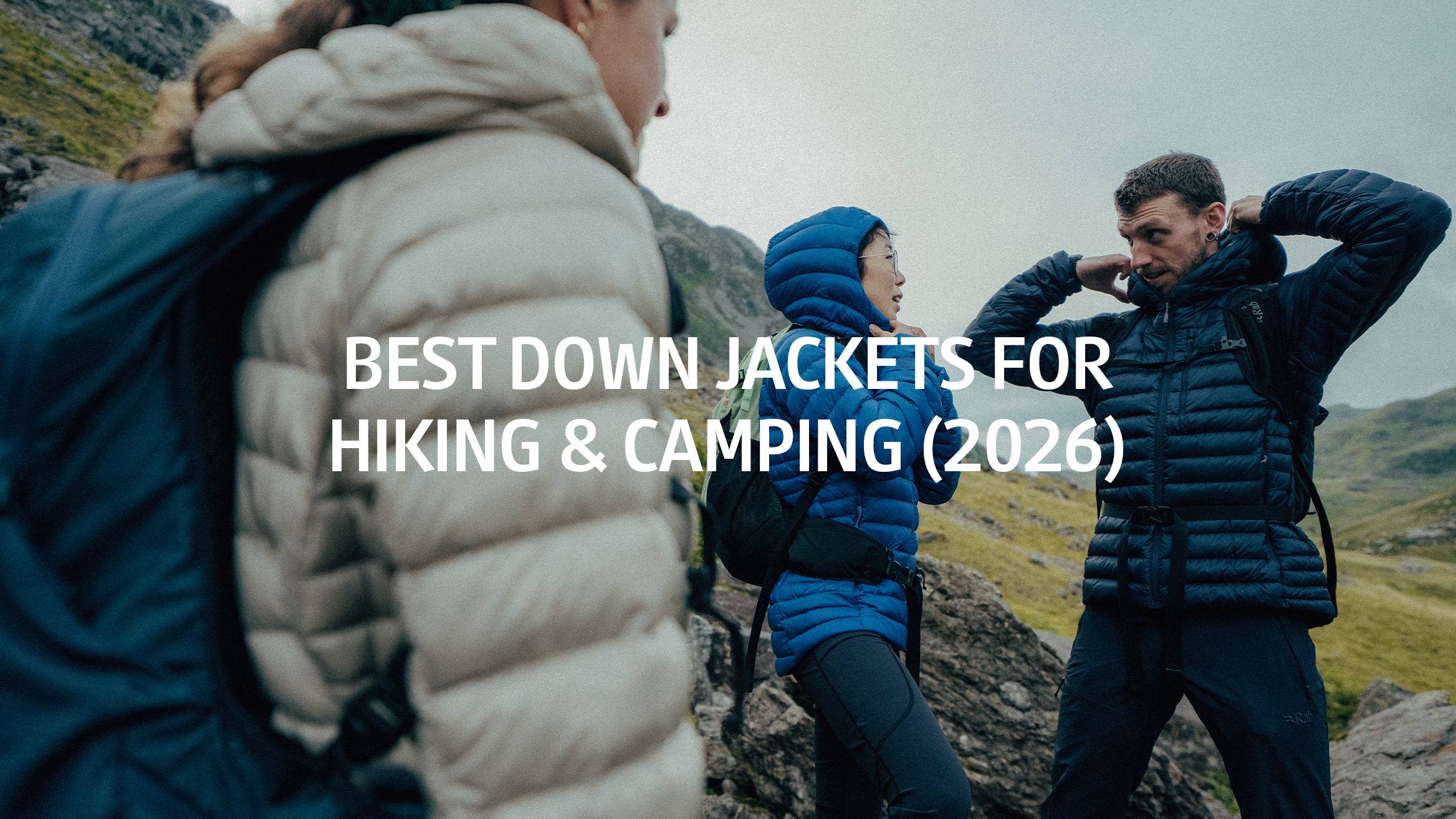
A good down jacket is one of those pieces of outdoor kit that quickly earns its place in your wardrobe. Lightweight, warm and impressively packable, down insulation can provide a lot of warmth without the weight and bulk of heavier winter clothing.
However, the best down jacket for a fast day on the hills probably isn’t the one you’ll want when sitting around a campsite on a frosty evening. Likewise, a big, warm winter jacket might feel fantastic while standing still, but it can become cumbersome once you start moving uphill.
That’s why we’ve picked our best down jackets for 2026 according to what they’re actually good at. From lightweight hiking and winter hillwalking to camping, travelling and everyday wear, there’s something here for a range of adventures and conditions.
IN SHORT…
-
How to Choose the Best Down Jacket: Learn what to look for when comparing down jackets, including fill power, fill weight, outer fabrics, weather resistance, fit and features.
-
Our Favourite Down Jackets: Explore our top picks for lightweight hiking, winter hillwalking, camping, travel and everyday cold-weather wear.
-
Understanding Different Down Jacket Designs: Discover how lightweight, midweight, heavyweight, weather-resistant and hybrid down jackets differ, and where each works best.
-
Final Thoughts: Bring everything together to help you choose a down jacket that suits your activities, conditions and layering system.
Quick Comparison Table
| Best for | Our recommendation | Why we picked it |
| Lightweight hiking | Rab Women’s Microlighter Jacket | Low-bulk hybrid insulation and excellent packability for active days |
| Winter hillwalking | Patagonia Durable Down Hoody | Warm 700 fill power down paired with a more durable ripstop outer |
| Camping and campsite use | Montane Anti-Freeze XT Hoodie | High-loft 800+ fill power down for cold camps and static stops |
| Travel | Patagonia Down Sweater | Lightweight, packable and versatile enough for outdoor and everyday use |
| Everyday cold-weather wear | Mountain Equipment Lightline Jacket | Substantial insulation and a weather-resistant outer for properly cold days |
How to Choose the Best Down Jacket
There are a few specifications worth understanding before choosing your jacket. Some are actually useful. Others only tell part of the story.
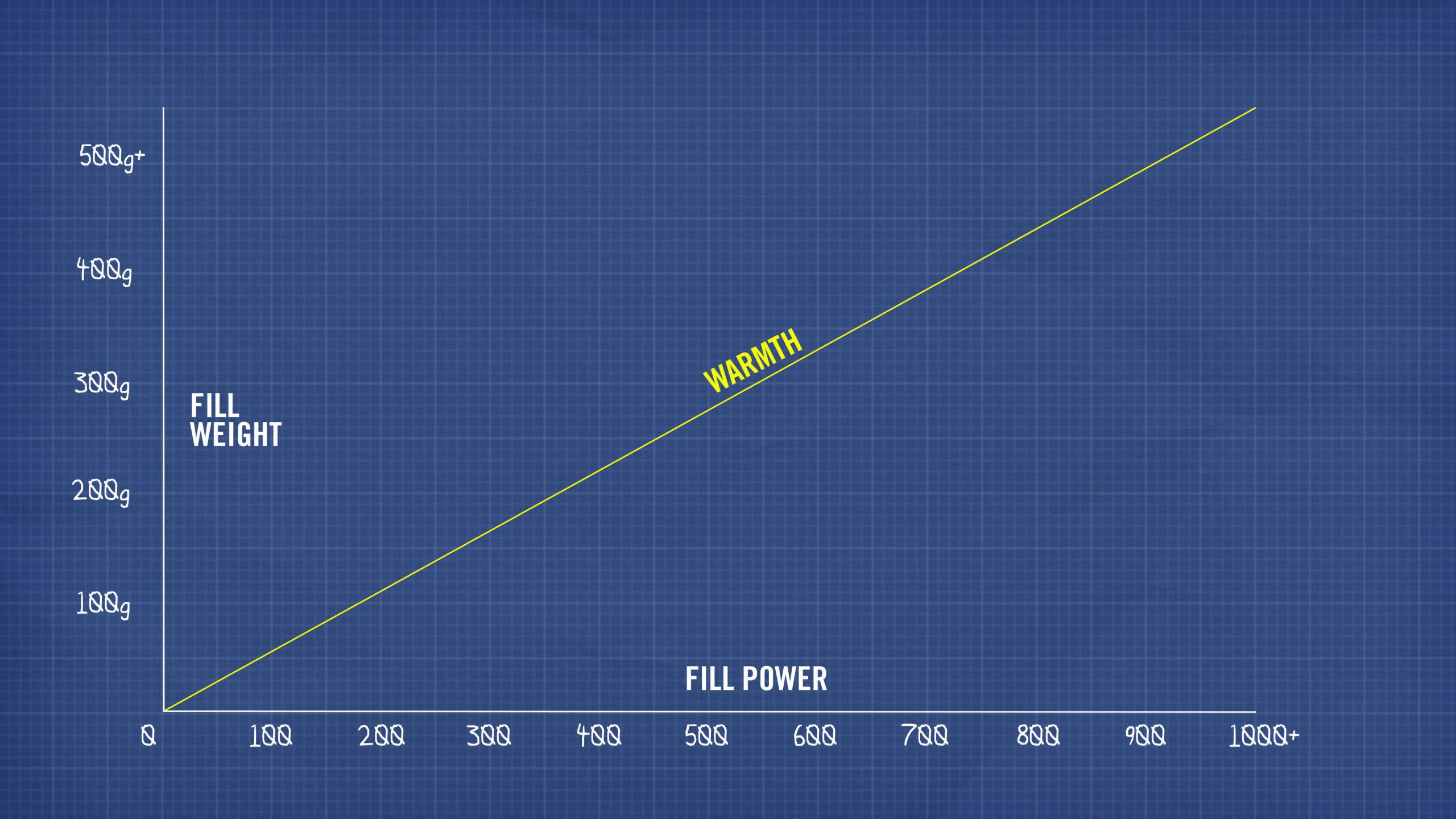
Fill Power
Fill power measures how effectively down lofts and traps air.
Higher fill power down can achieve a high level of insulation for relatively little weight, which is why you often see 800, 850 or even higher fill powers in premium lightweight mountain clothing.
However, higher doesn’t automatically mean warmer.
Imagine one jacket containing a small amount of 800 fill power down and another containing considerably more 700 fill power down. The second jacket may be much warmer overall despite having the lower fill power.
So, don’t shop using fill power alone.
Fill Weight
Fill weight tells you how much down is actually inside the garment.
When manufacturers provide it, it can be very useful when comparing jackets. However, construction, fit and down distribution still influence the finished performance, so comparing fill weights works best when looking at reasonably similar garments.
Outer Fabric
The outer fabric has a surprisingly large influence on how a down jacket feels and performs.
Thin 10D or 20D fabrics help save weight and improve packability but require more care.
Heavier fabrics generally provide greater abrasion resistance and can make more sense for everyday jackets or garments that will see frequent contact with rocks, rucksacks and general outdoor abuse.
Think about how you’ll actually use the jacket rather than automatically assuming lighter is better.
Weather Resistance
Down and persistent wet weather aren’t ideal companions.
When down becomes saturated, the clusters collapse and lose much of their ability to trap warm air. Some modern down treatments and clever constructions improve moisture management, but they don’t magically turn an ordinary down jacket into a waterproof.
For UK hillwalking, we’d usually recommend carrying a waterproof shell even if your insulated jacket has a DWR treatment or weather-resistant outer.
Hood or No Hood?
A hood adds a little weight and bulk, but it can provide a significant boost in warmth when conditions turn cold.
For winter hillwalking, camping and mountaineering, we generally like having one.
For travel or everyday use, it becomes more personal. A hoodless down jacket can layer neatly underneath a waterproof or casual outer jacket and often feels less bulky around the neck.
Fit and Layering
Think about where your down jacket sits in your layering system.
A lighter insulated jacket might need to fit comfortably underneath your waterproof shell.
A substantial winter jacket may instead be designed to go over your other layers when you stop.
Whatever you choose, avoid compressing the insulation too much. Down needs space to loft properly, and a jacket that’s excessively tight can reduce its thermal performance.
Our Best Down Jackets for Hiking & Camping
We’ve selected these jackets based on different activities rather than trying to declare one model the winner for absolutely everything.
Best for Lightweight Hiking: Rab Women’s Microlighter Jacket
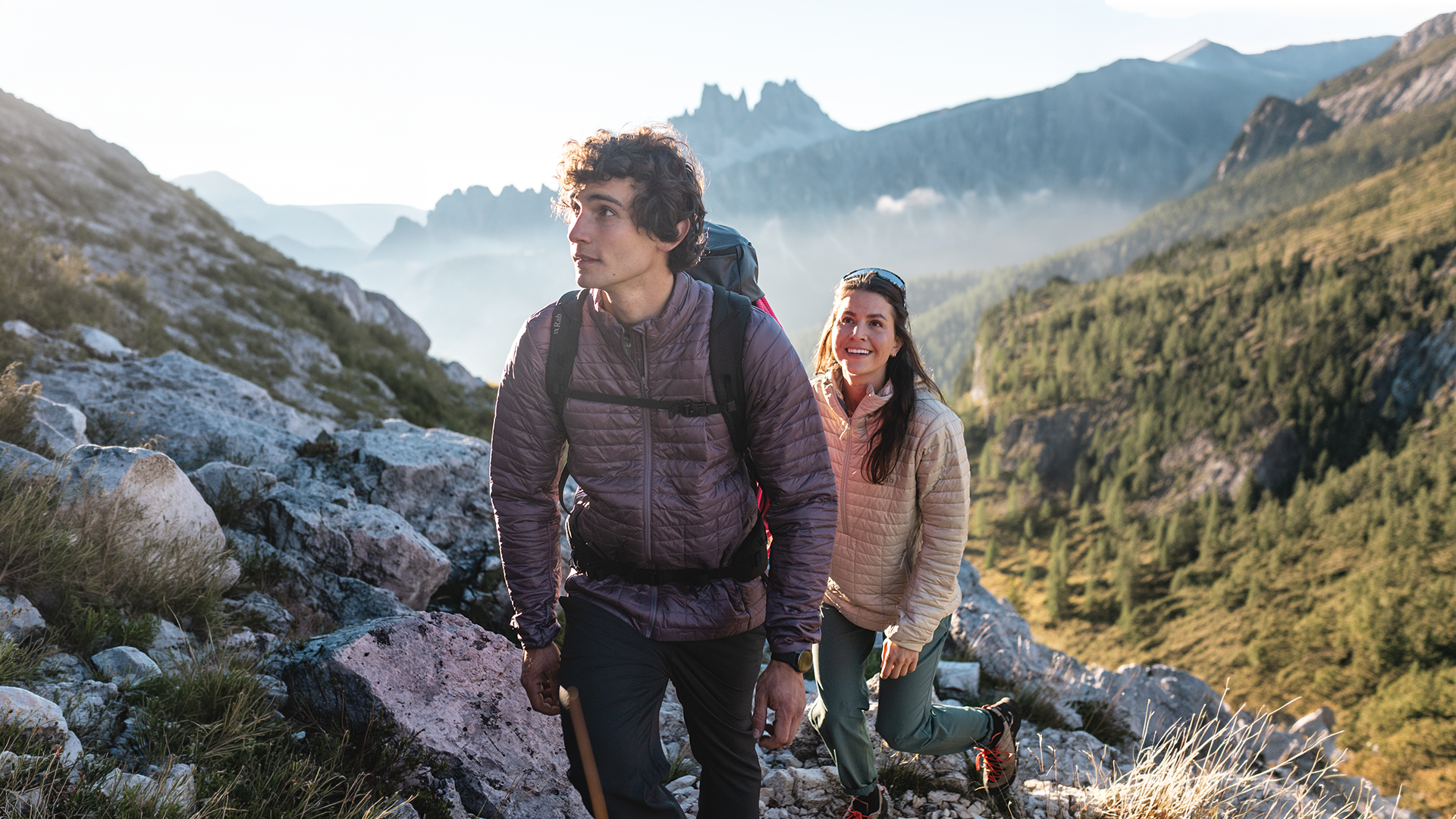
If you’re looking for lightweight insulation that won’t take up much room in your pack, the Rab Women’s Microlighter Jacket is a great option for hiking, fastpacking and active days in the hills.
Rather than traditional loose-fill down, the Microlighter uses low-bulk Txdown sheet insulation. This combines natural down and technical fibres in a fixed construction, helping to keep the insulation evenly distributed while providing lightweight warmth.
Its lightweight Pertex Quantum outer keeps things wind resistant without adding unnecessary bulk, while the articulated sleeves make it comfortable to move in when you’re covering ground quickly.
Why we like it
- Lightweight and highly packable
- Low-bulk insulation works well for active use
- Wind-resistant Pertex Quantum outer
- Easy to layer when conditions change
Best for Winter Hillwalking: Patagonia Durable Down Hoody
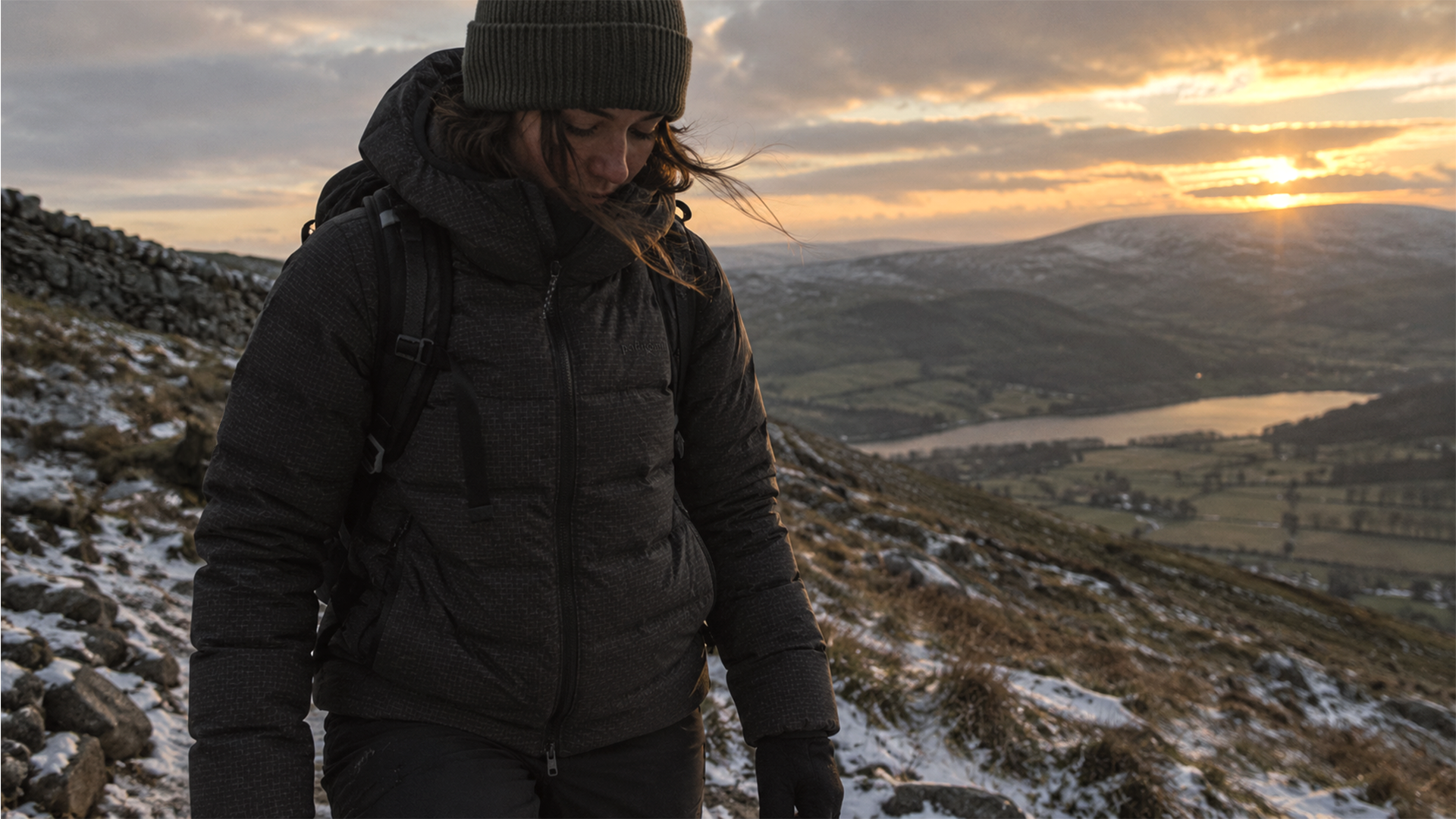
Winter hillwalking calls for a bit more warmth and protection, particularly when you stop moving on an exposed summit or ridge. The Patagonia Durable Down Hoody gives you that extra insulation without becoming an excessively bulky winter jacket.
Its 700 fill power down provides dependable warmth, while the recycled nylon ripstop outer is designed to cope with more wear than an ultralight shell fabric. That makes it a good match for regular winter use, when your jacket is more likely to come into contact with rucksack straps, rough surfaces and general mountain abuse.
You also get an insulated hood and a water-repellent finish for additional protection when the weather turns. It isn’t a replacement for your waterproof, though, so we’d still carry a shell for proper UK winter conditions.
Why we like it
- Warm 700 fill power down insulation
- More durable ripstop outer
- Insulated hood adds useful warmth
- Good balance of warmth, durability and packability
Best for Camping and Campsite Use: Montane Anti-Freeze XT Hoodie
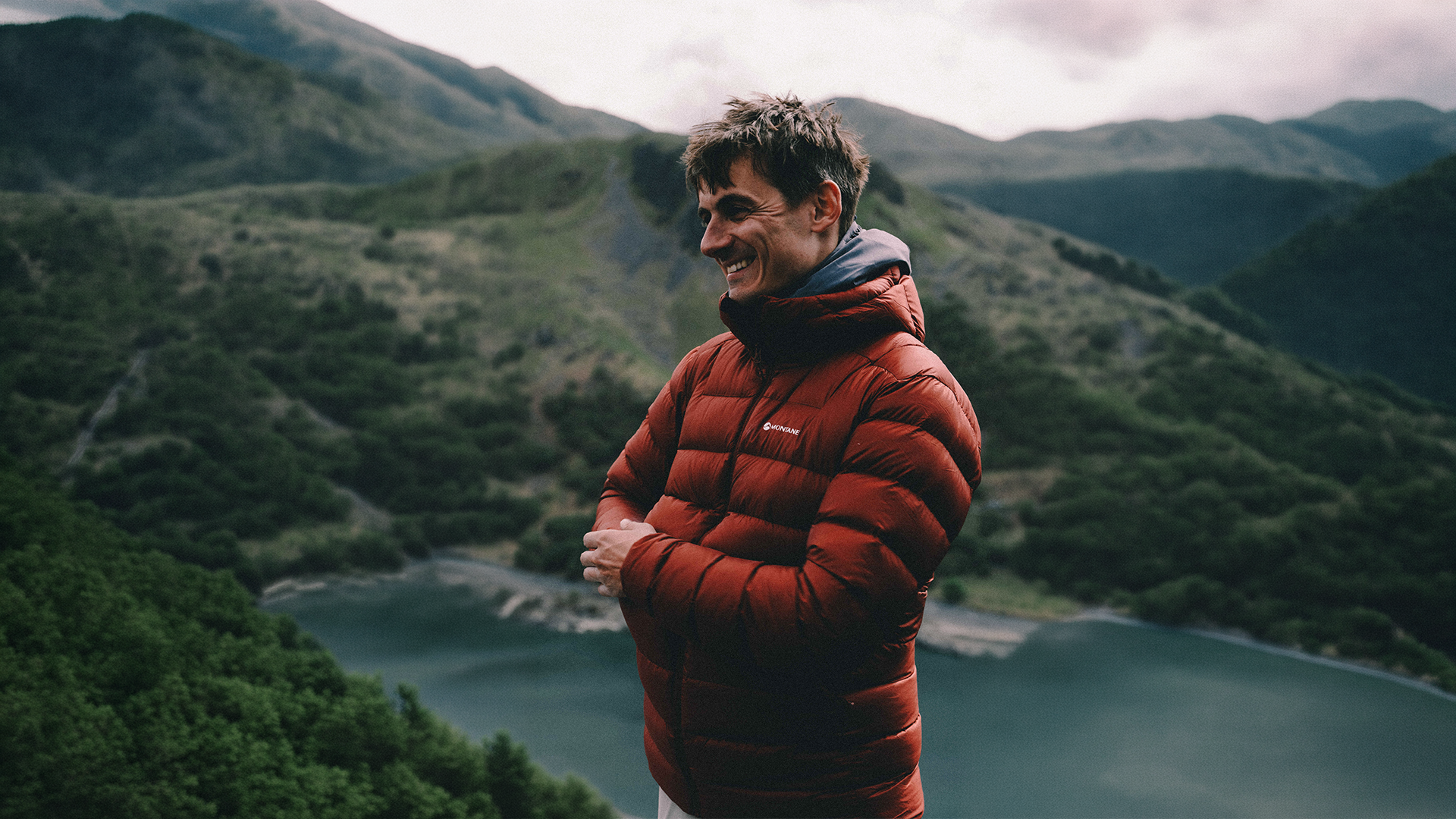
Once you stop moving around camp, you quickly notice the temperature dropping. The Montane Anti-Freeze XT Hoodie is our pick when warmth matters more than shaving every possible gram from your kit.
Its 800+ fill power ExpeDRY goose down provides plenty of loft for cold evenings, early starts and those moments when you’re standing around cooking dinner rather than generating much heat through movement.
Despite being warmer than a typical lightweight hiking jacket, it still uses a lightweight Pertex Quantum outer. That keeps it reasonably packable, which is useful whether you’re carrying it into camp or squeezing another layer into an already full camping bag.
Why we like it
- Warm 800+ fill power down
- Ideal for cold evenings and static use
- Lightweight Pertex Quantum outer
- Packs down well for the warmth it provides
Best for Travel: Patagonia Down Sweater
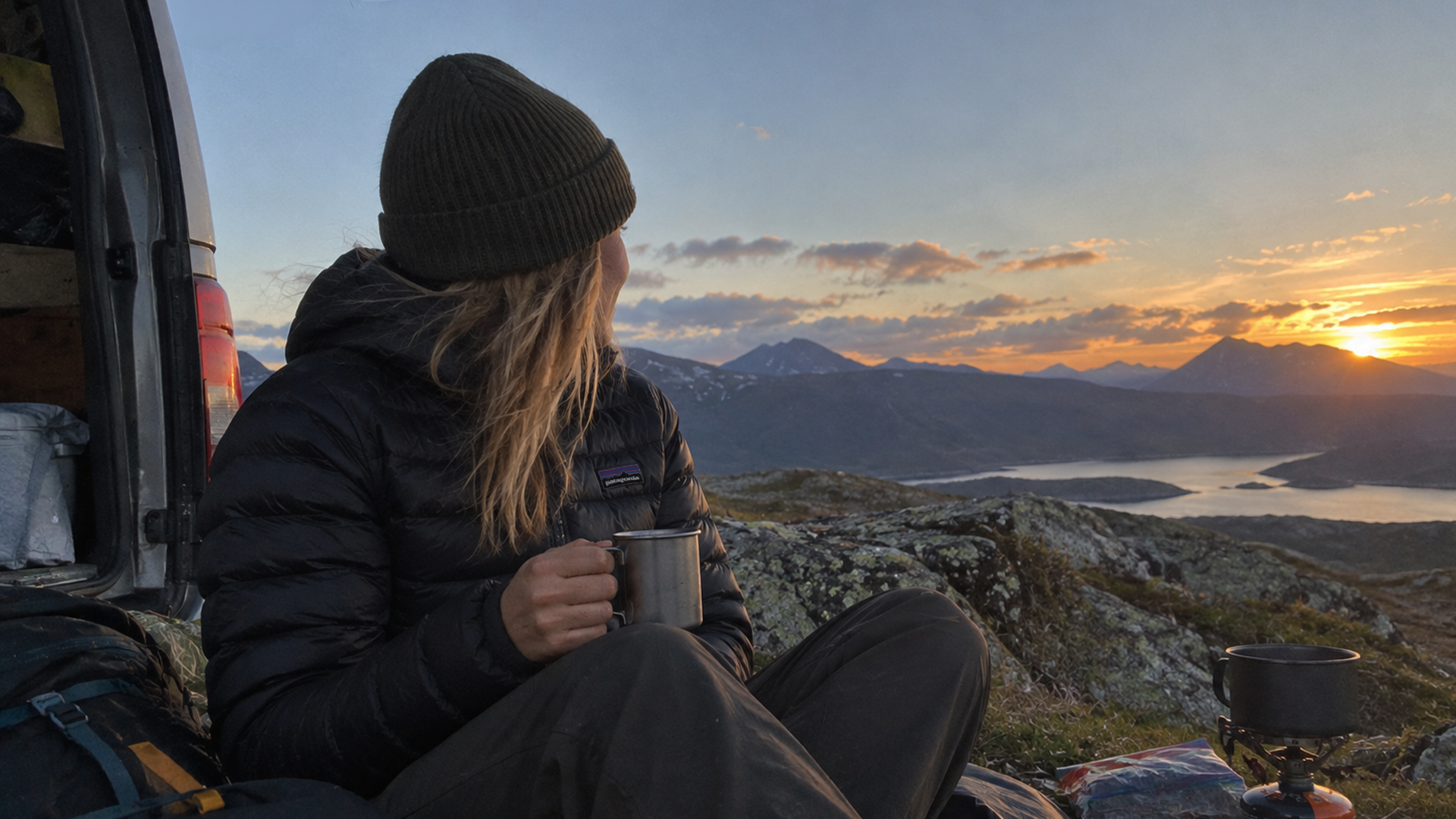
If you want one down jacket that can handle travelling, everyday wear and the occasional outdoor adventure, the Patagonia Down Sweater is an easy jacket to get along with.
It uses 800 fill power down to provide useful warmth without creating lots of bulk, while its lightweight recycled ripstop outer keeps it easy to pack when you’re short on luggage space.
The relatively simple design also works in its favour for travel. It doesn’t feel overly technical when you’re walking around town, but it still has the warmth and packability you’d expect from a proper outdoor down jacket.
Why we like it
- Warm and lightweight 800 fill power down
- Packs easily into luggage
- Versatile enough for outdoor and everyday use
- Simple design works well away from the hills
Best for Everyday Cold-Weather Wear: Mountain Equipment Lightline Jacket
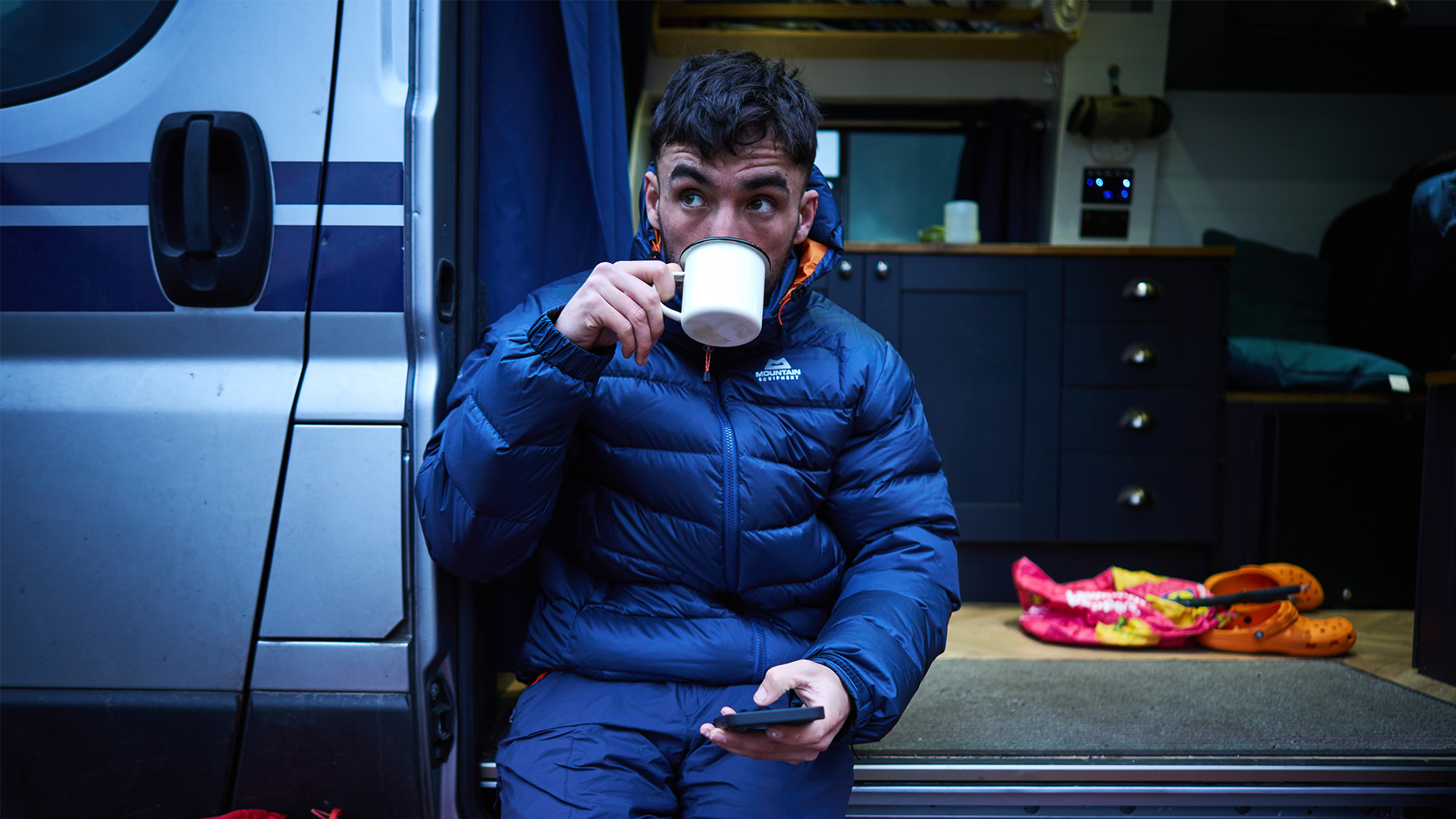
If warmth is more important than keeping weight to an absolute minimum, the Mountain Equipment Lightline Jacket is hard to overlook.
It’s a much more substantial jacket than the lightweight options in this guide, with plenty of down insulation and a protective DRILITE LOFT outer. That combination makes it particularly well suited to cold winter days when you’re spending plenty of time outside but aren’t necessarily moving quickly enough to generate lots of body heat.
It’s the sort of jacket we’d reach for when walking the dog, heading out on a cold winter walk or standing around outdoors when a lightweight down jacket simply isn’t enough.
Why we like it
- Substantial warmth for cold winter conditions
- Weather-resistant DRILITE LOFT outer
- Protective insulated hood
- Great for everyday and lower-intensity outdoor use
Understanding Different Down Jacket Designs
Not all down jackets are built for the same job. Some are designed to disappear into your pack until you need an extra layer, while others prioritise warmth and protection when temperatures really drop.
Understanding these differences can make choosing the right jacket much easier, particularly when you’re deciding how much warmth, weight and weather protection you actually need.
Lightweight Down Jackets
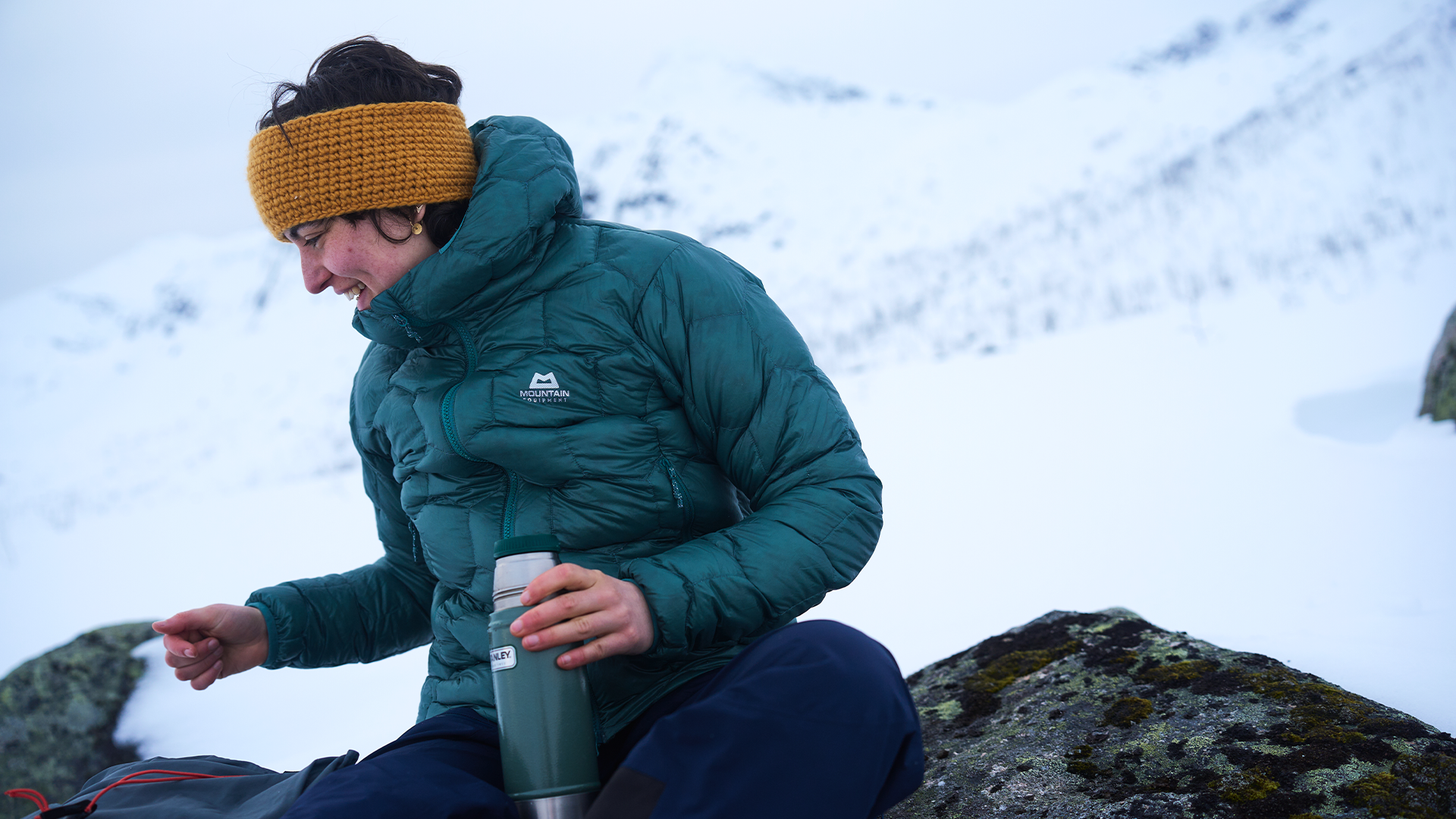
Lightweight down jackets are all about getting useful warmth without adding unnecessary weight or bulk.
They’re particularly well suited to hiking, backpacking and travel, where your jacket might spend as much time in your pack as it does being worn. They tend to use lightweight face fabrics and relatively small amounts of high-quality insulation to keep the overall weight down.
The compromise is that they’re generally not as warm or durable as more substantial jackets. Thin outer fabrics need a little more care around rock and branches, while lower quantities of insulation may not provide enough warmth for long periods standing around in very cold conditions.
For active days in the hills, though, that can be exactly what you want. A lightweight down jacket is easy to carry and works particularly well as part of a flexible layering system.
Midweight and Heavyweight Down Jackets
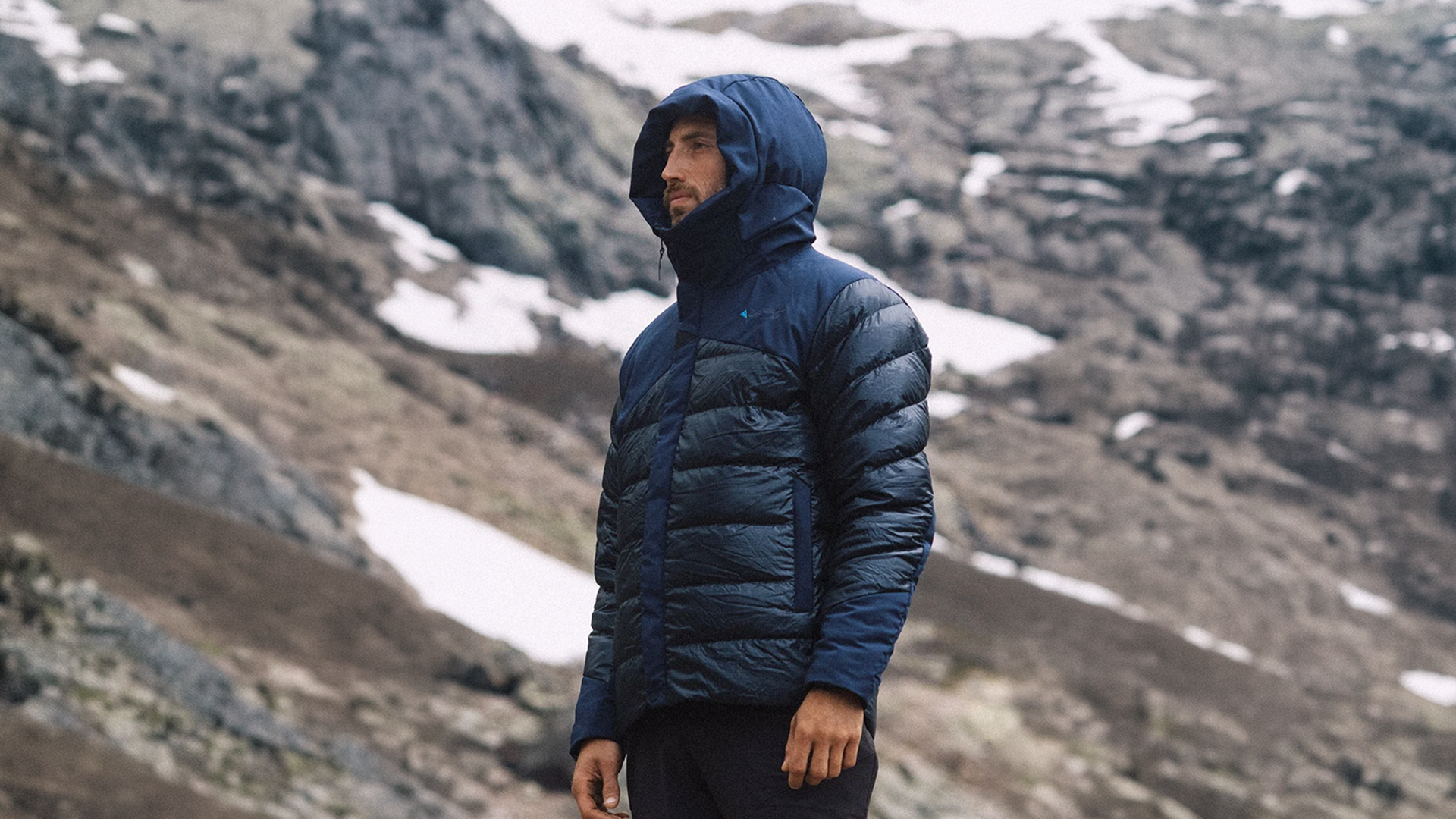
As jackets become warmer, you’ll generally see more insulation, greater coverage and often more substantial features and fabrics.
Midweight down jackets strike a useful balance between warmth and packability. They’re a good choice for colder hiking, winter days outdoors and camping when you need more insulation but still want something reasonably easy to carry.
Heavyweight down jackets push things further towards outright warmth. They’re particularly useful when you’ll be spending extended periods stationary in very cold conditions, where saving a few hundred grams matters far less than staying comfortable.
It’s also worth remembering that a heavier jacket isn’t necessarily using lower-quality down. Jacket weight can come from having more insulation, a tougher outer fabric, a larger hood or additional features. What matters is whether that extra weight is useful for the conditions you’ll be wearing it in.
Waterproof and Weather-Resistant Down Jackets
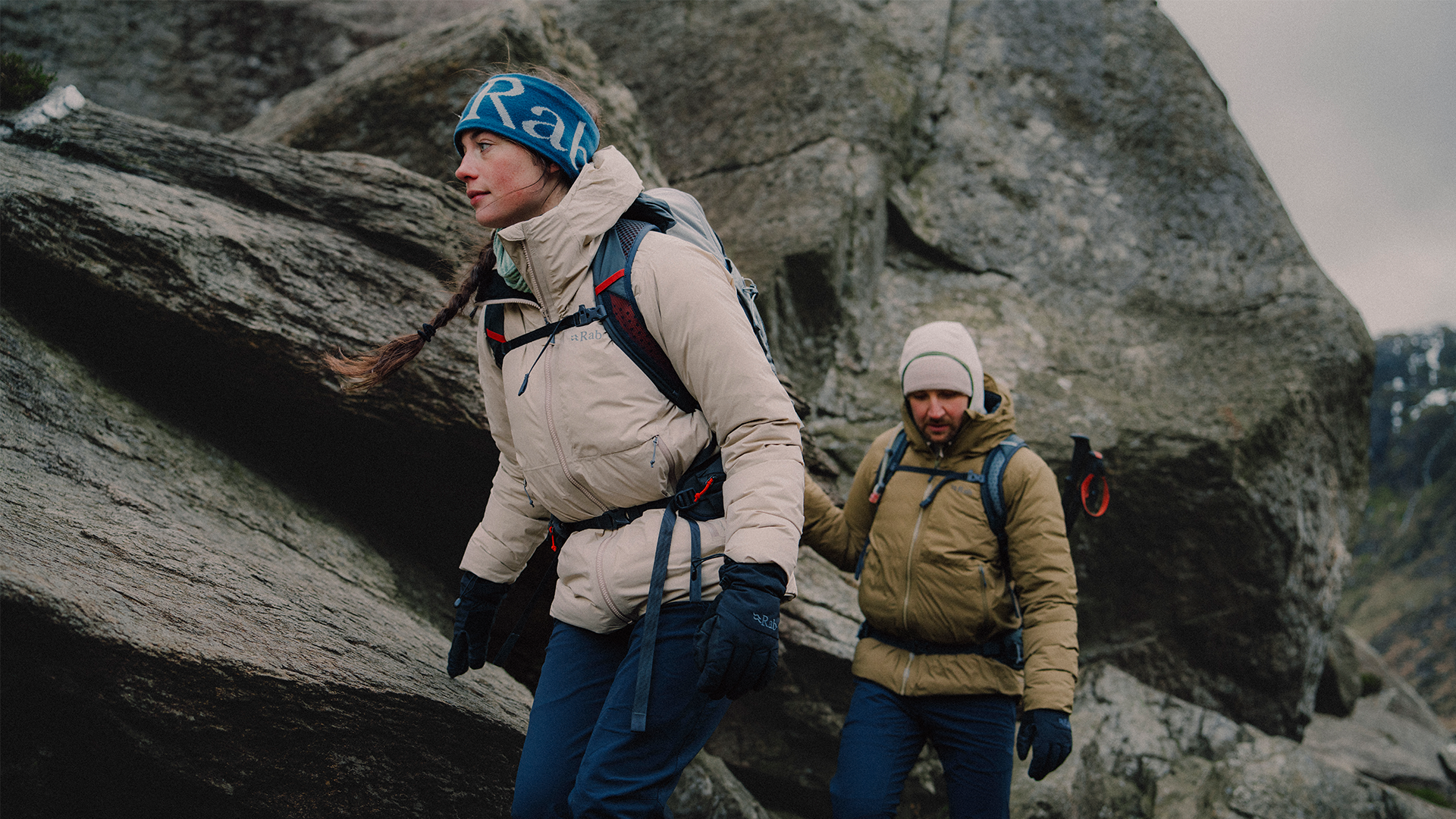
One of the most important distinctions to understand is the difference between waterproof and weather-resistant.
Most down jackets aren’t waterproof. They may use a water-resistant face fabric or a Durable Water Repellent treatment to help light rain and snow bead away from the surface, but prolonged rain can eventually soak through.
A genuinely waterproof down jacket combines its insulation with a waterproof outer construction. This can be useful when you need substantial warmth and protection in cold, wet or snowy conditions, but it also tends to add weight and reduce versatility compared with using separate layers.
For most UK hiking, we prefer the flexibility of combining an insulated jacket with a separate waterproof shell. You can add or remove each layer independently as your activity level and the weather change.
Whichever option you choose, don’t assume a DWR-treated down jacket replaces your waterproof. If sustained rain is forecast, you’ll still want proper waterproof protection.
Hybrid Down Jackets
Not every down jacket relies entirely on traditional loose-fill down.
Hybrid designs can combine natural down with synthetic fibres, use different insulation types in different areas of the jacket, or use alternative constructions designed to improve performance in specific conditions.
The idea is to take advantage of the strengths of each insulation type. Down provides excellent warmth for its weight and packs down extremely well, while synthetic fibres can perform better when exposed to moisture and can be easier to stabilise in areas that see lots of movement.
The Rab Microlighter in this guide is a good example. Its Txdown insulation combines natural and technical fibres in a fixed sheet construction rather than using conventional loose down. This helps keep the insulation evenly distributed while maintaining the low-bulk feel you’d want from a lightweight hiking layer.
Hybrid insulation is particularly worth considering for active outdoor use, where moisture management, freedom of movement and consistent insulation can be just as important as achieving maximum loft.
Final Thoughts
There isn’t one best down jacket for every person or every adventure.
For fast-moving days, lightweight insulation that packs down small is usually far more useful than carrying the warmest jacket you can find. Once you start spending more time stationary, whether that’s at a winter summit, outside your tent or simply waiting around on a freezing morning, additional insulation becomes much more valuable.
Weather matters too. Down is exceptionally efficient insulation, but Britain has a habit of providing cold and wet conditions at the same time. A DWR-treated outer can help with brief moisture, but it shouldn’t be confused with a proper waterproof.
At Trekitt, we’d always recommend thinking about the jacket as part of your wider layering system. Get that right and a good insulated jacket becomes one of the most versatile pieces of clothing in your outdoor wardrobe.
FAQs
Yes, particularly when warmth, weight and packability are priorities. Lightweight down jackets make excellent summit, rest-stop and camp layers because they compress into a small space inside your rucksack.
However, down can be too warm to wear continuously during high-output hiking, especially uphill. For active use, lighter or hybrid insulation can often be more comfortable.
There isn’t a single ideal fill power.
Higher fill powers such as 800FP provide excellent loft for relatively little weight, which makes them popular in lightweight outdoor clothing. However, fill power only measures the loft and efficiency of the down, not the total warmth of the jacket.
Fill weight, construction, fit and intended use matter too.
Most aren’t.
Many have water-resistant outer fabrics or DWR treatments that help shed light moisture, but that doesn’t make them waterproof.
If persistent rain is expected, wear or carry a proper waterproof shell unless your down jacket specifically uses a waterproof construction.
Yes, but you need to manage moisture carefully.
Down is excellent for cold, dry conditions and provides exceptional warmth for its weight. UK winters can also be wet, though, so combining your insulated jacket with a suitable waterproof shell is often the most versatile approach.
A down jacket should fit close enough to retain warmth without compressing its insulation.
You also need to account for whatever you’ll wear underneath it. A lightweight down midlayer may only need room for a baselayer and fleece, while an outer insulation piece may need enough space to fit over several winter layers.
Yes. In fact, it’s a very useful layering combination for UK conditions.
Your down jacket provides insulation while the waterproof shell protects it from rain, snow and wind. Just make sure the shell is roomy enough that it doesn’t heavily compress the down underneath.
For its weight and packed size, high-quality down is generally extremely thermally efficient. That’s one reason it remains so popular for lightweight outdoor clothing.
Synthetic insulation has its own advantages, particularly in damp conditions, and tends to retain useful insulation when wet. The best choice depends on where and how you’ll use it.
Avoid leaving a down jacket tightly compressed for long periods.
Compression is useful when you’re carrying it in your pack, but at home it’s better to store the jacket clean, dry and uncompressed so the insulation can remain fully lofted.
Always follow the manufacturer’s washing, drying and storage instructions for your particular jacket.
Leave a Reply