
Best Waterproof Walking Boots for Winter
A Winter has a habit of exposing weaknesses in your walking boots. A slightly slippery outsole becomes much more noticeable on wet rock. A boot that feels supportive on a summer footpath might struggle once you’re carrying a heavier pack across rough ground. And, unsurprisingly, a leaky boot quickly becomes a problem when every puddle seems determined to test it.
But choosing the best waterproof walking boots for winter isn’t simply a case of finding the warmest, heaviest or most technical pair.
For most UK walkers, the right winter boot depends on where you’re walking, how technical the terrain is, how much support you prefer and what conditions you’re realistically likely to encounter. A flexible waterproof boot might be ideal for muddy woodland trails, while winter mountain terrain can demand something substantially more supportive.
In this guide, we’ll explain the features that actually matter, including waterproof membranes, grip, support, insulation and upper materials. Then we’ll look at five different boots for 2026, each suited to a different type of winter walking.
IN SHORT…
-
What Makes a Good Winter Walking Boot: Learn which features become particularly important when trails turn wetter, colder and more demanding.
-
Waterproof Membranes: Understand how waterproof and breathable membranes work, and why keeping water out is only part of the equation.
-
Grip, Support and Insulation: Explore how outsole design, underfoot stability and warmth affect performance across different winter terrain.
-
Leather vs Synthetic Walking Boots: Compare two different approaches to winter footwear and find out which construction better suits your walking.
-
Recommended Winter Walking Boots for 2026: Compare five different boots selected for everything from general winter hillwalking to technical mountain terrain.
What Makes a Good Winter Walking Boot?
A good winter boot is one that suits the conditions you’re actually going to use it in.
That distinction matters.
If most of your winter walks involve muddy woodland, maintained trails and lower hills, you probably don’t need an exceptionally stiff mountain boot. In fact, the additional weight and rigidity could make your walking less comfortable.
Head into steeper, rougher and more exposed terrain, however, and the balance begins to shift. More substantial footwear can provide the support, protection and stability that technical ground demands.
When we’re choosing winter walking boots at Trekitt, we’d consider five main areas:
- Waterproof protection
- Grip and outsole design
- Support and stability
- Warmth and moisture management
- Upper construction and durability
Fit comes before all of them. Even the most technically impressive winter boot isn’t much use if your heel lifts, your toes hit the end on descents or the shape simply doesn’t suit your feet. If you’re trying your new boots on at home, our How to Fit Your Footwear at Home video walks you through the key fit checks before you head outside.
Waterproof Membranes
Waterproofing is one of the most obvious differences between summer footwear and the boots many of us reach for throughout a British winter.
Waterproof walking boots generally use a membrane positioned within the footwear. Gore-Tex is probably the best-known example, although different manufacturers may use other waterproof technologies.
These membranes contain microscopic pores designed to prevent liquid water from entering while allowing water vapour generated by your feet to escape.
The important word there is vapour.
A waterproof membrane doesn’t mean your feet can never feel damp. If you’re working hard, particularly in relatively mild winter temperatures, you can generate moisture faster than the footwear can move it away. Your socks and the rest of the boot’s construction also affect moisture management.
That’s why breathability still matters in winter.
Waterproof doesn’t mean maintenance-free
There’s another misconception worth clearing up. A waterproof membrane doesn’t make the outer material irrelevant.
If the boot’s outer fabric or leather becomes saturated, it’ll become heavier and can take much longer to dry. Saturated outer materials can also reduce the overall breathability of the footwear.
Regular cleaning and appropriate aftercare, therefore, remain important, even with membrane-lined boots. For a step-by-step guide, take a look at our How to Care for Your Footwear blog.
Grip
Wet leaves, greasy rock, mud, frozen ground and loose trails can all appear on the same winter walk. Your outsole has quite a job on its hands.
Or feet.
When comparing winter walking boots, look beyond whether the outsole has deep, aggressive-looking lugs. Effective grip depends on several factors.
Lug pattern and depth
Deeper, widely spaced lugs can penetrate soft surfaces such as mud and loose ground while allowing debris to clear more easily.
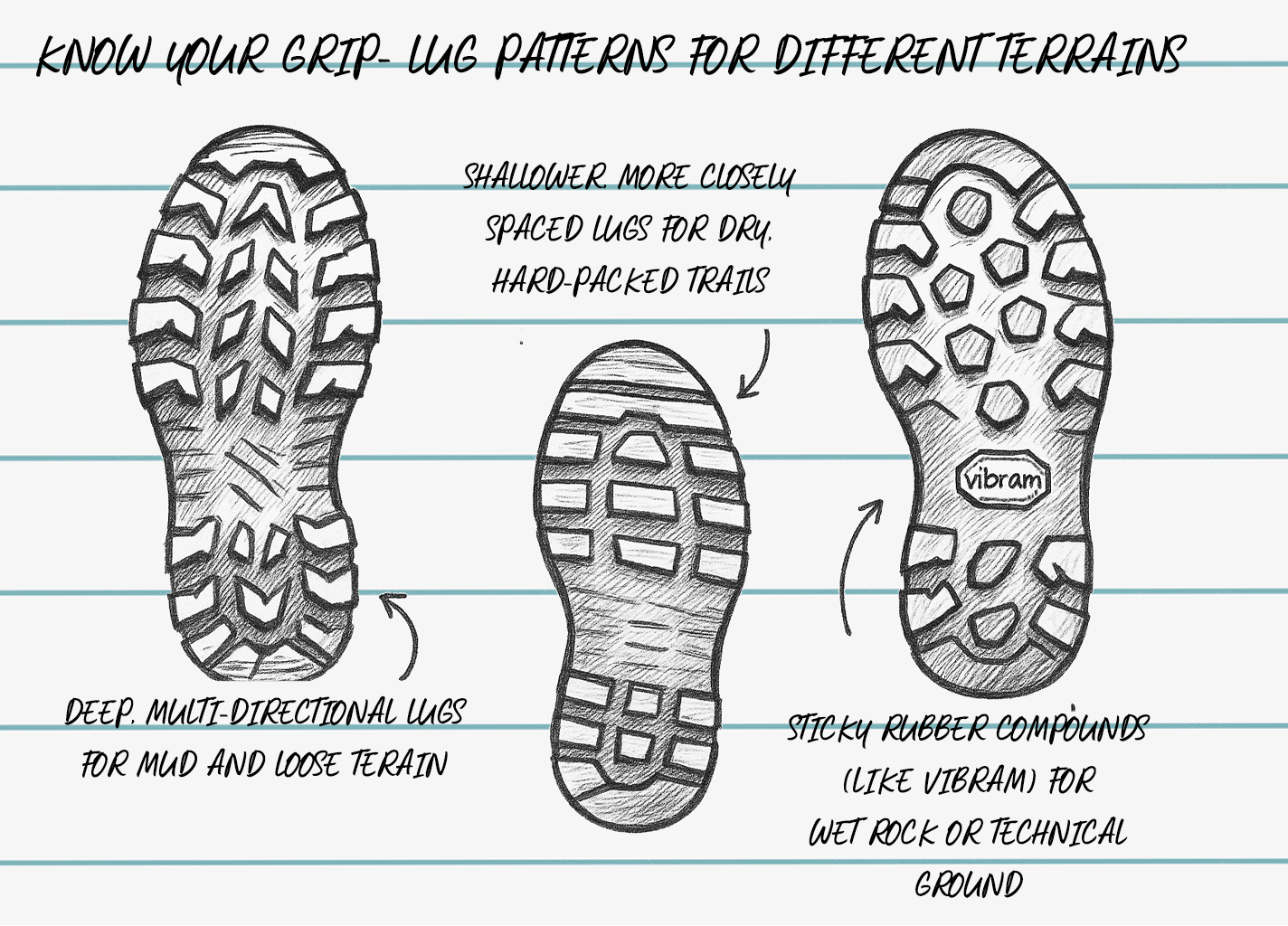
Shallower tread patterns can work brilliantly on firmer trails but may become overwhelmed more quickly in deep mud.
Rubber compound
The compound itself also affects grip.
Softer rubber can provide excellent traction on rock but may wear more quickly. Harder compounds can prioritise durability but may feel less reassuring on certain slick surfaces.
No outsole provides perfect grip everywhere. Winter terrain varies too much for that.
Surface area and braking
Look at the overall shape of the outsole too. Heel braking zones can help provide control on descents, while the layout of the forefoot lugs can affect traction when climbing.
A good winter grip isn’t simply about having the biggest lugs possible. It’s about matching the outsole to the terrain.
Support
Support is another area where it’s easy to assume more is always better.
It isn’t.
Walking boots achieve support through the combination of their upper, midsole, chassis or internal structure and overall stiffness.
A supportive boot can help create a stable platform when you’re carrying weight or moving over uneven ground. On rough winter hills, that additional structure can feel reassuring.
But stiffness comes with compromises.
A very supportive boot can feel unnecessarily restrictive on easy paths and rolling countryside. If you’re predominantly walking on maintained trails, a lighter and more flexible boot may feel considerably more natural.
Think about where you sit on this rough spectrum:
- Paths and countryside: Flexible to moderately supportive.
- Hillwalking: Moderate support with good underfoot stability.
- Rough mountain terrain: More substantial support and protection.
- Technical winter mountain terrain: B2 or B3 mountaineering boots may be more suitable, depending on the conditions, terrain and type of crampons you intend to use.
Don’t choose a burly mountain boot simply because it sounds more capable. Choose enough support for the terrain you’re tackling.
Insulation
Do winter walking boots need insulation?
Not necessarily.
It’s tempting to assume that a winter boot should automatically be insulated, but active walking generates plenty of heat. In typical UK winter conditions, a waterproof walking boot combined with an appropriate walking sock can offer a much more versatile system.
Heavy insulation can become uncomfortable if you’re moving quickly or walking in relatively mild conditions.
Insulated footwear becomes more relevant when temperatures are consistently very low, you’re spending long periods stationary or your activity specifically demands it.
For most general UK winter hillwalking, we’d concentrate first on fit, waterproofing, grip and appropriate socks rather than simply looking for the warmest boot available.
Remember that sock thickness affects fit. Don’t buy boots that only fit correctly with thin socks if you know you’ll primarily wear thicker walking socks throughout winter.
Leather vs Synthetic Winter Walking Boots
Leather versus synthetic isn’t really a question of which material is better. It’s about which characteristics you value most.
Leather walking boots
Quality leather can be exceptionally durable and naturally resistant to weather when cared for properly.
A relatively substantial leather upper can also provide plenty of structure, which is one reason traditional leather boots remain popular among walkers who spend a lot of time on rough British hills.
Leather boots can be particularly appealing if you prioritise:
- Long-term durability
- Supportive construction
- Resistance to abrasion
- Traditional boot feel
The trade-off is usually weight, drying time and potentially a longer period for the boot to soften around your foot.
Synthetic walking boots
Synthetic boots can use woven fabrics, mesh, microfibres and various reinforcement technologies to achieve impressive performance at a lower weight.
They’re often a good choice if you value:
- Lower weight
- Greater flexibility
- Faster drying
- A ‘trainer-like’ feel
That doesn’t automatically make synthetic boots less capable. Modern synthetic footwear can be remarkably supportive and durable.
There are also plenty of hybrid constructions combining leather with synthetic fabrics, giving manufacturers more control over where they add structure, flexibility and ventilation.
Again, the important question isn’t which material wins. It’s which construction makes sense for your walking.
Winter Walking Boot Recommendations
Rather than simply listing five boots we like, we’ve selected five different options representing different approaches to winter walking.
The idea is simple. Work out which type of walking most closely resembles yours, then look at the characteristics that make that boot suitable.
Best for Versatile Winter Walking: Salomon Quest 5 GTX
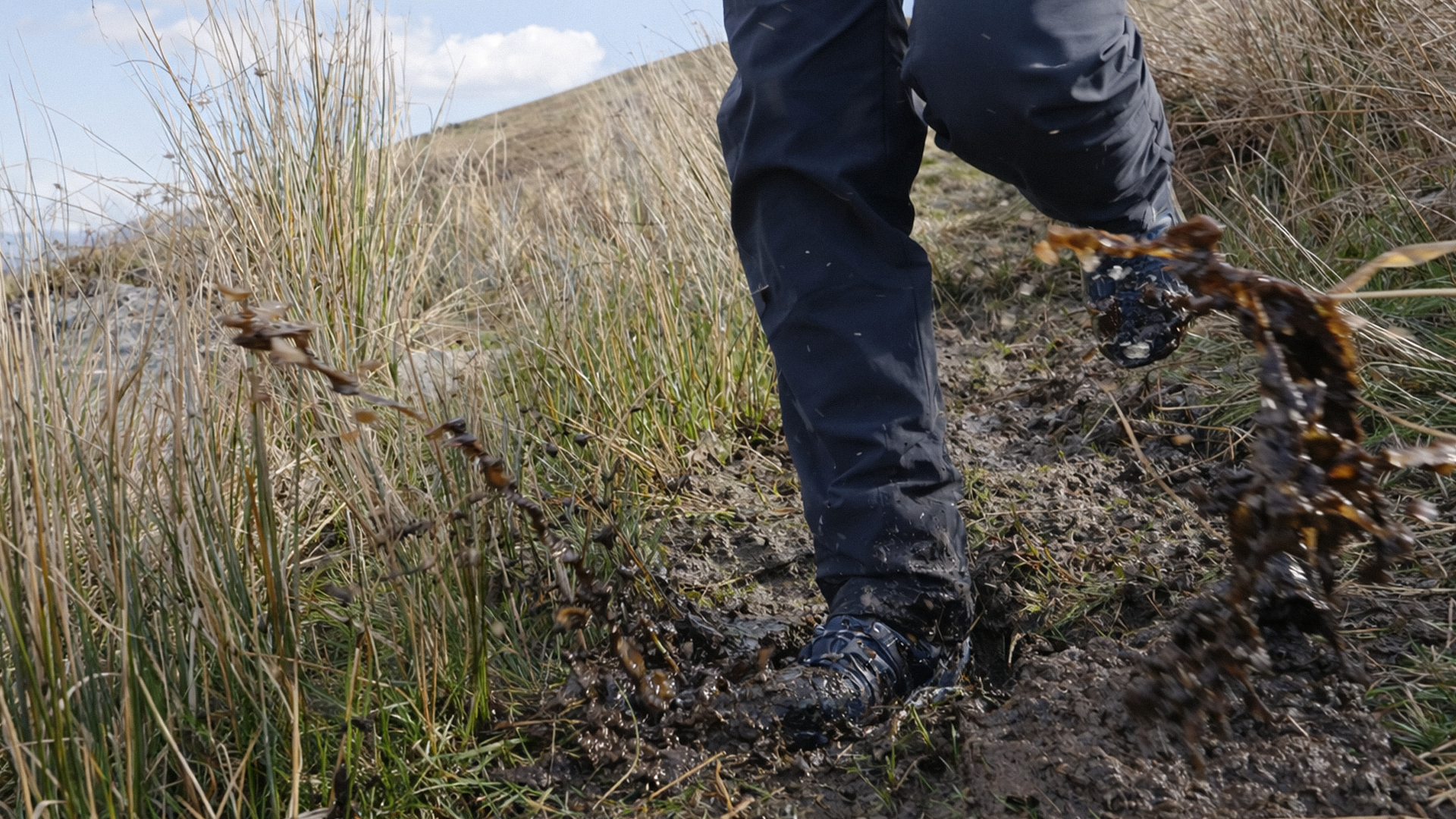
The Salomon Quest 5 GTX is a strong all-round choice for walkers tackling a mixture of muddy trails, hill paths and rougher terrain. It offers more support than a lightweight hiking boot without moving into mountaineering territory, making it particularly well suited to longer winter days and varied UK conditions.
Choose this type of boot if:
- Your walks cover a mixture of terrain.
- You want more support than a lightweight hiking boot.
- You regularly walk longer distances.
- You prefer a modern boot feel.
Best for Comfortable Winter Hillwalking: Hanwag Banks GTX
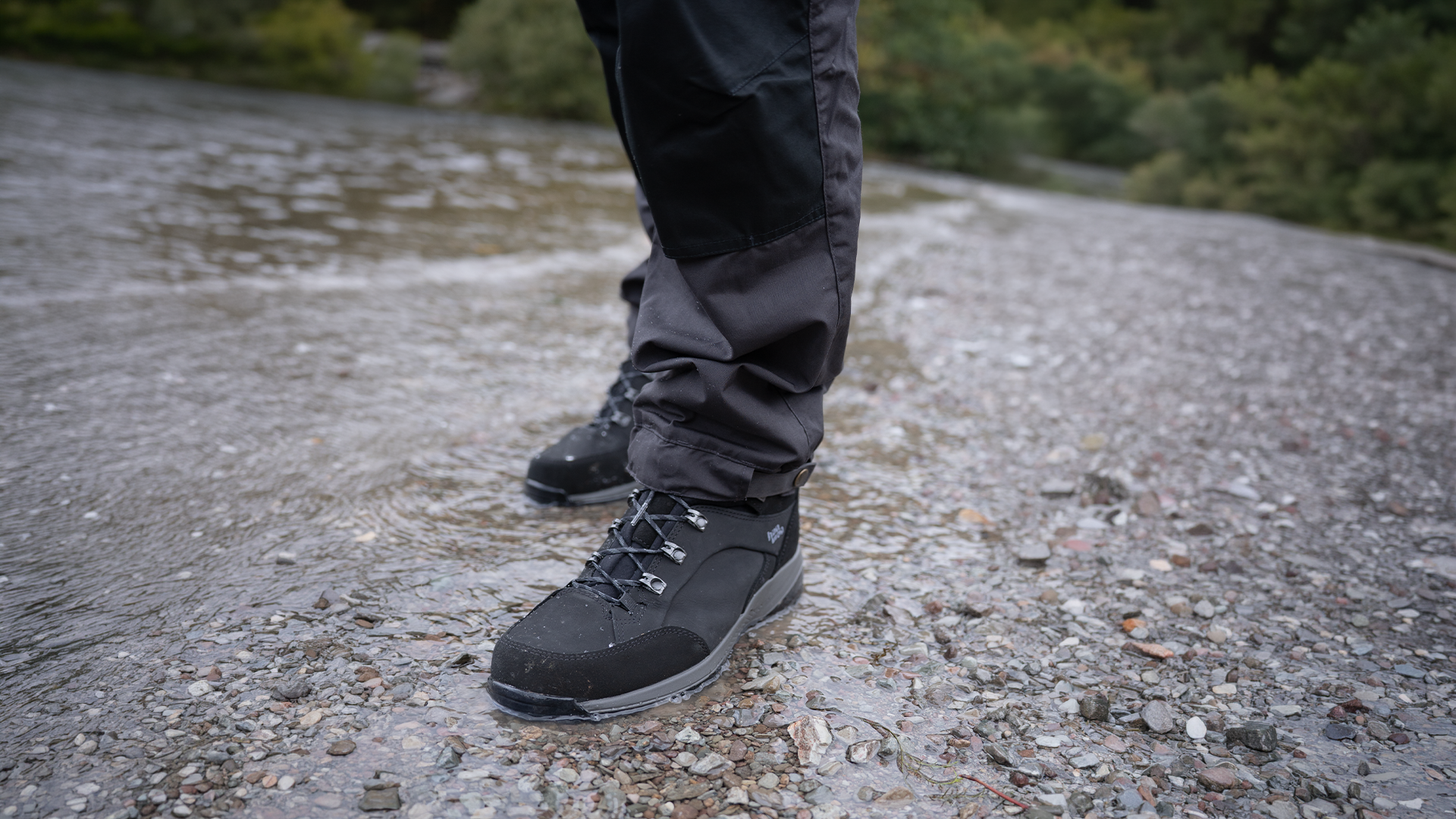
The Hanwag Banks GTX suits walkers who prioritise comfort for regular days in the hills. It offers a useful balance of support and flexibility, making it a good option for established paths, rolling hills and varied UK terrain where all-day comfort matters more than outright stiffness.
Choose this type of boot if:
- Comfort is one of your biggest priorities.
- You mostly stick to established walking and hill routes.
- You want moderate support rather than maximum stiffness.
- You want a dependable boot for regular year-round walking.
Best for Traditional Leather Winter Walking: Meindl Bhutan MFS
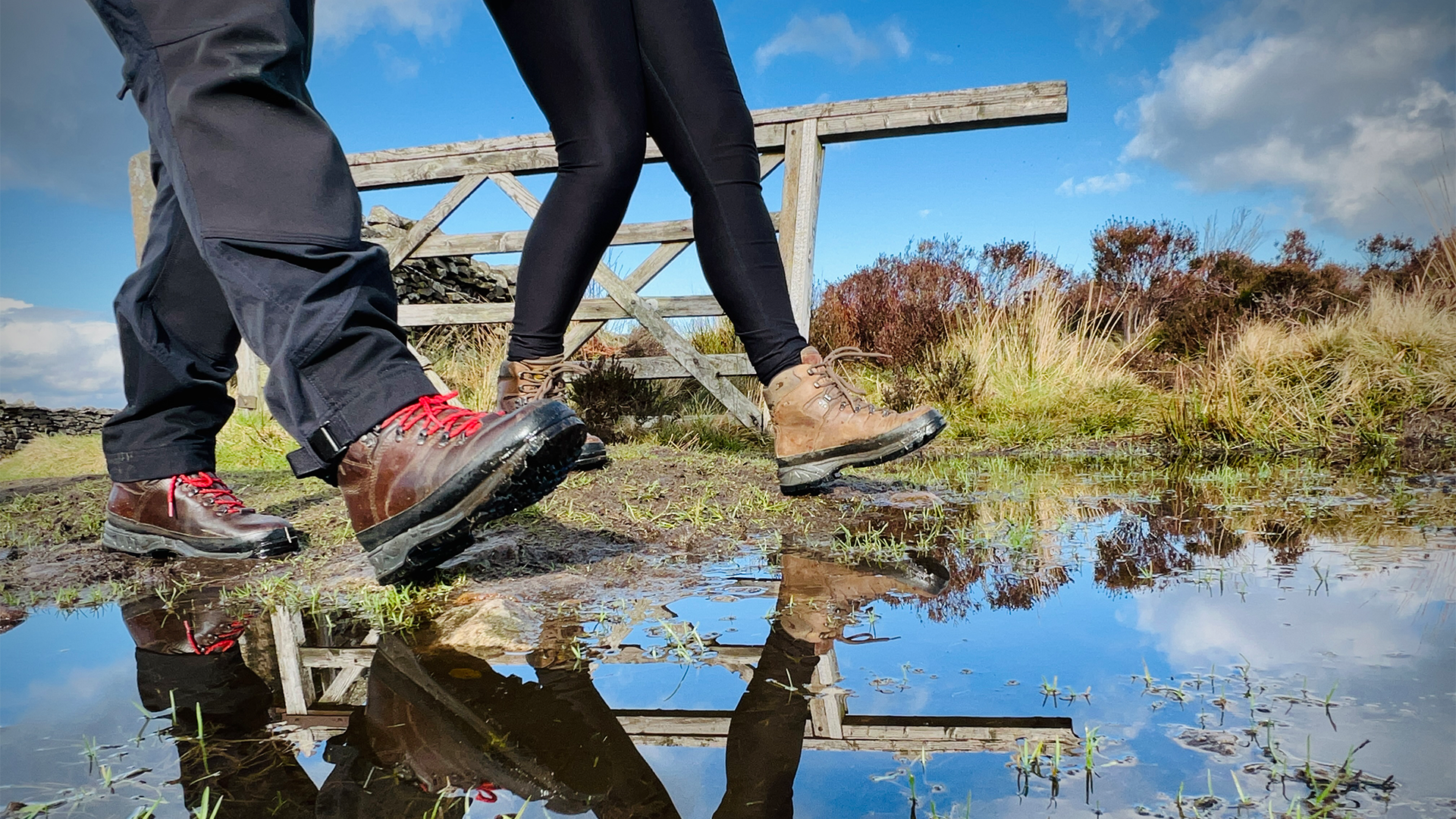
The Meindl Bhutan MFS represents the more traditional approach to winter hillwalking. Its substantial leather construction suits walkers who value durability, support and protection on rough, wet terrain and don’t mind carrying a little more weight to get them.
Choose this type of boot if:
- You prefer traditional leather walking boots.
- Durability is a major priority.
- You regularly encounter rough, wet terrain.
- You like a more substantial and supportive feel.
Best for Technical Mountain Walking: La Sportiva Aequilibrium Hike GTX
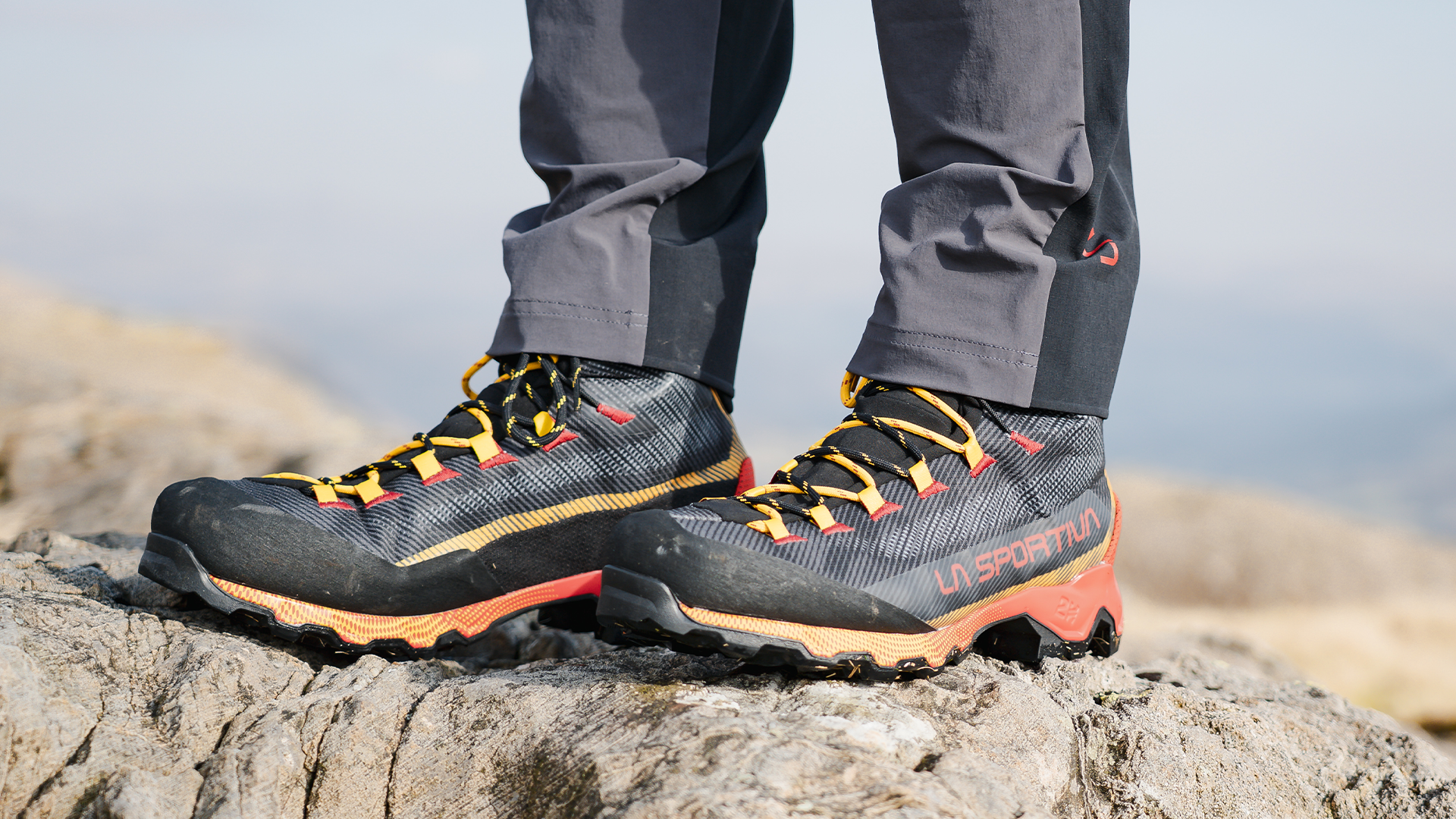
The La Sportiva Aequilibrium Hike GTX is aimed at walkers heading onto steeper, rockier and more technical mountain terrain. It provides a more precise, technical feel than a conventional hillwalking boot without stepping into the B2 or B3 mountaineering boots that may be more appropriate for technical winter conditions.
Choose this type of boot if:
- Your routes regularly involve steep and rocky terrain.
- You prefer a precise, technical feel.
- Mountain walking makes up a significant part of your winter.
- You want something more technical than a conventional hillwalking boot.
Best for Long-Distance Winter Trekking: Scarpa Rush TRK GTX
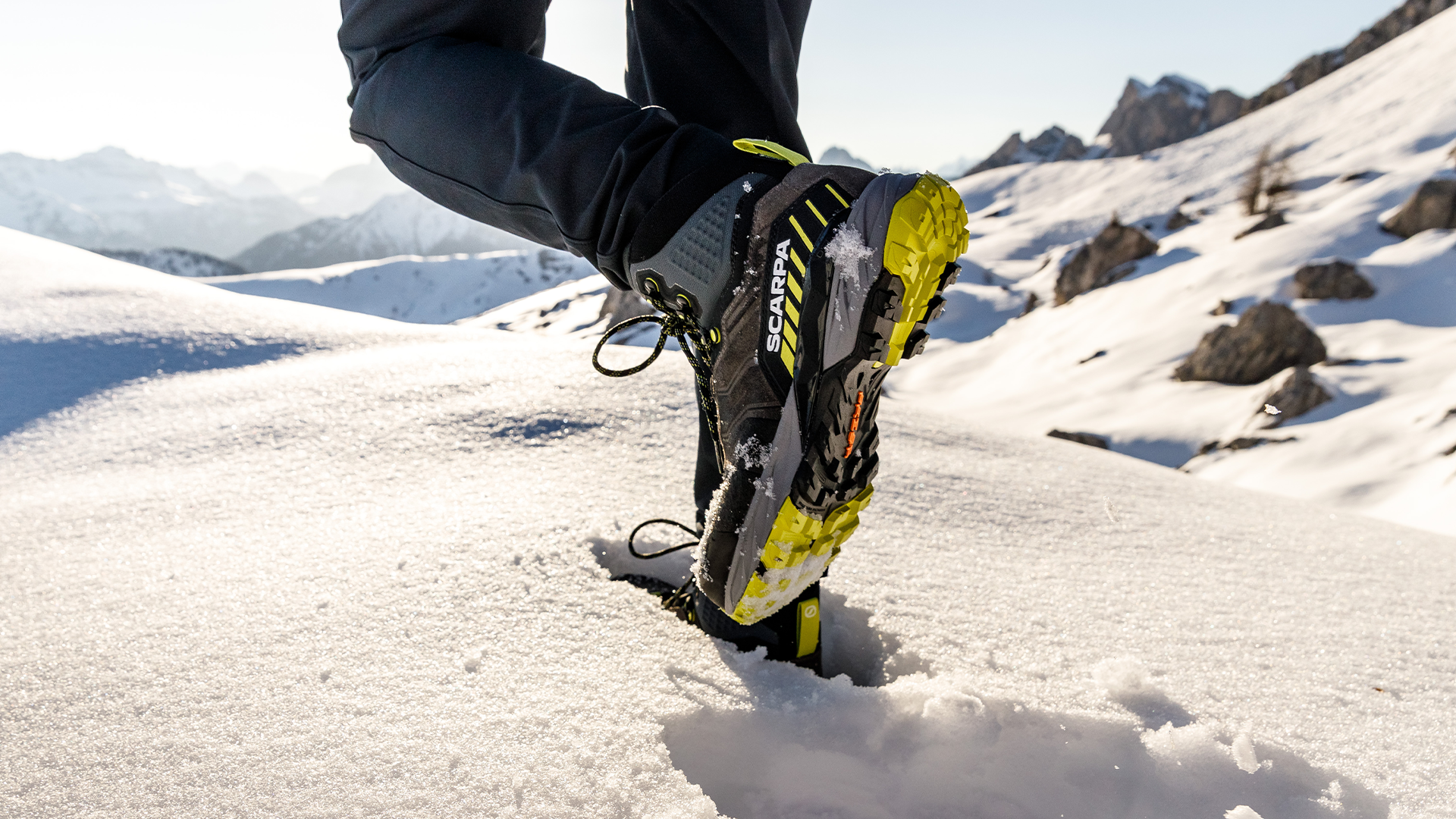
The Scarpa Rush TRK GTX is a good fit for walkers covering bigger distances across mixed terrain. It combines the comfort of modern hiking footwear with the support and protection you’d want for longer, rougher days, without resorting to a particularly heavy traditional trekking boot.
Choose this type of boot if:
- You regularly cover longer distances.
- All-day comfort is particularly important.
- Your routes combine trails with rougher terrain.
- You prefer a modern trekking boot.
Which Winter Walking Boot Should You Choose?
Start with your terrain, not the boot.
For lower-level winter walking and good trails, prioritise comfort, waterproof protection and suitable grip. As you move towards longer hill days, additional support and underfoot stability become increasingly useful.
If your routes regularly take you onto steep, rocky mountain terrain, more technical footwear begins to make sense.
Then consider your preferences.
Do you like the reassuring structure of a substantial leather boot? Or do you prefer something lighter and more flexible? Are you covering five miles at a relaxed pace or spending ten hours moving through rough terrain?
Finally, try the boots on properly.
Foot shape varies enormously between people, and brands use different lasts and constructions. A recommendation can point you towards the right type of footwear, but it can’t tell you which shape fits your feet.
Final Thoughts
The best waterproof walking boots for winter aren’t necessarily the heaviest, warmest or most technical. They’re the ones that fit properly and provide the right balance of waterproofing, grip and support for where you walk.
For typical British winter walking, prioritise reliable waterproofing and grip, then choose the level of support and protection to suit your terrain. If you’re heading into more technical winter mountain conditions, B2 or B3 boots may be more appropriate.
Our range of boots covers everything from lightweight trail footwear to more substantial hill and mountain options. If you’re unsure what you need, get in touch with our team or visit us in store. We’ll help you find the right fit and the right boot for your winter walking.
If you’re still unsure which boots are right for you, get in touch with our team on 01432 263335 or at [email protected] and we’ll be happy to talk through your options. You can also visit us in store, where our team can help with fitting and finding a boot that suits your feet, the terrain you walk on and the kind of winter adventures you have planned.
FAQs
Gore-Tex footwear is designed to prevent external water passing through its membrane while allowing water vapour to escape. However, water can still enter over the cuff, and moisture generated by your feet can create dampness inside. The condition and maintenance of the boot’s outer material also affect overall performance.
Usually not for general UK winter walking. Active movement generates heat, and a waterproof walking boot combined with suitable walking socks is often more versatile. Insulated boots are more relevant for particularly cold environments or activities involving long periods of inactivity.
Leather can be an excellent choice for winter because it’s durable, protective and naturally weather resistant when properly maintained. However, modern synthetic boots can be lighter and faster drying. Neither is universally better. proof construction.
Only as stiff as your terrain requires. Easy paths generally don’t require a particularly stiff boot, while rough and mountainous terrain can benefit from additional structure and underfoot stability. Excessive stiffness can make straightforward walking less comfortable.
Look for an outsole appropriate for your terrain rather than simply the deepest tread available. Widely spaced, pronounced lugs can perform well in mud and loose ground, while rubber compound and tread layout influence performance on wet rock and harder surfaces.
For occasional shallow snow on straightforward walking terrain, suitable waterproof walking boots may be adequate. More serious snow and ice, particularly on mountain terrain, can require specialist winter footwear and additional equipment. Your footwear should always be appropriate for the terrain, conditions and equipment being used.
They should hold your heel securely while leaving enough room around your toes, particularly when descending. Try them with the type of socks you expect to wear in winter. Your toes shouldn’t hit the front of the boot and your heel shouldn’t lift excessively as you walk.
Clean your boots regularly and restore the appropriate water-repellent treatment when required. Pay particular attention to the manufacturer’s care instructions, as leather and synthetic footwear may require different products. If water is entering over the cuff, however, reproofing won’t solve the problem.
Leave a Reply