
Author: Trekitt Gear Team
Outdoor gear specialists with decades of combined experience testing bivvy systems, tarps, and lightweight sleep setups in real UK conditions. From exposed mountain camps to damp woodland bivvies. Our advice is based on hands-on experience across changing seasons, helping you stay comfortable and protected outdoors.
Bivvy Camping Guide
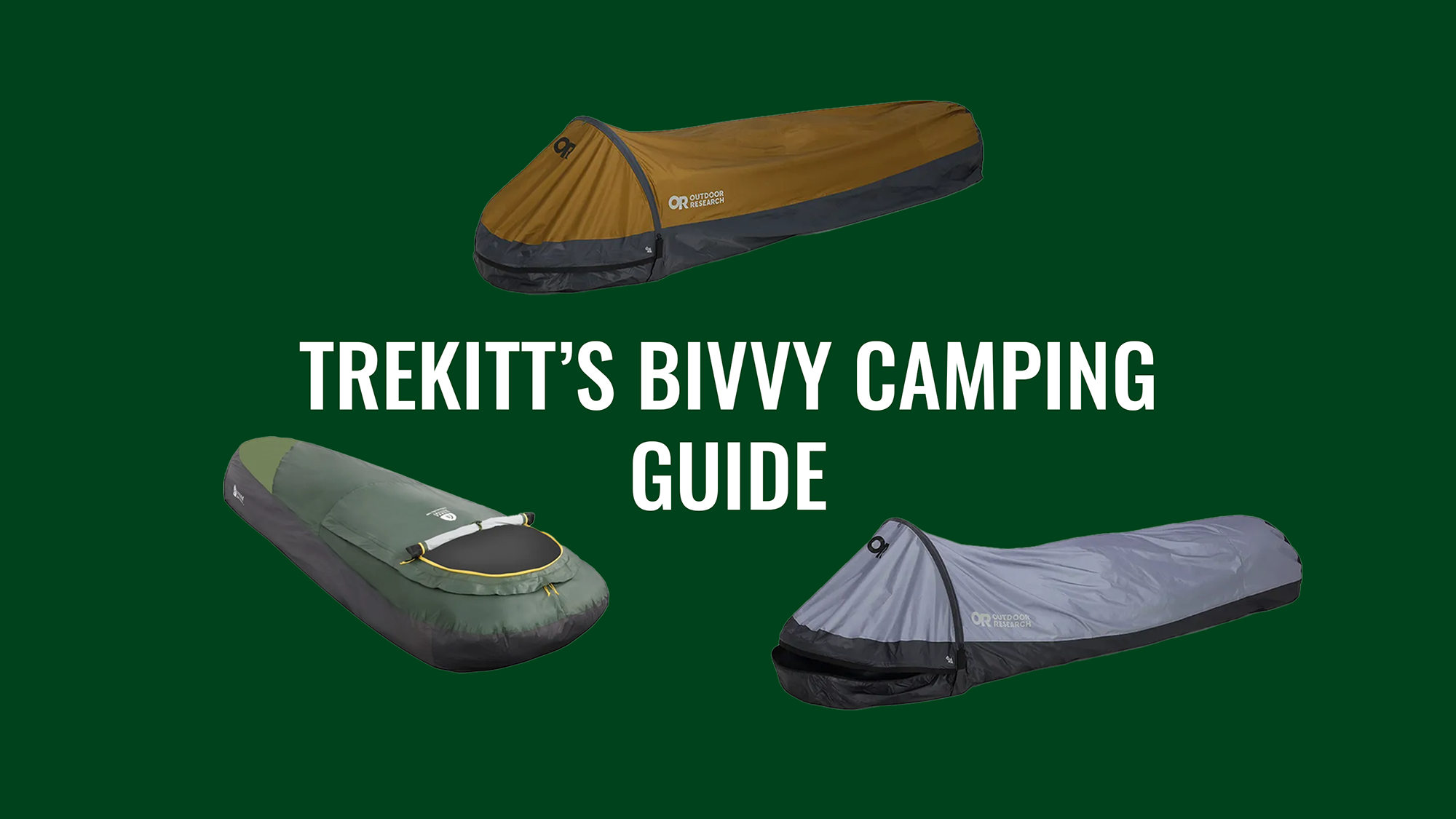
So, you’ve heard of regular camping, but how about bivvy camping? In this blog, I’ll provide all the essential information you need to get started with your bivouac.
Updated for 2026: Modern bivvy bags and tarps use lighter waterproof-breathable fabrics and improved seam-taping, helping reduce weight and manage moisture better than older designs. This guide has been updated to reflect current bivvy materials, gear setups, and tips for staying comfortable outdoors.
In SHORT…
-
Why bivvy camping is a game-changer: Learn how using a lightweight bivvy or tarp setup slashes pack weight and brings you closer to nature—plus, discover when it’s better than pitching a tent.
-
How to Build Your Perfect Bivvy Kit: Discover the essential gear—shell bivvies, tarps, sleeping bags, mats, lighting, and cooking setups—explained simply so you can gear up without the overwhelm.
-
When to pitch, how to stay comfy: Discover tips on choosing flat ground, managing condensation, fitting everything snugly, and staying dry under your tarp.
What is a bivouac?
A bivouac, or bivvy, is a minimal, lightweight alternative to a regular tent. It’s almost like a shell jacket for your sleeping bag, providing the bare minimum in terms of space with maximum protection from the elements. Bivouac bags are made for one person, making them great for solo adventurers and fast and light missions.
What are the benefits of bivvy camping?
Depending on your adventure, there are multiple benefits to using a bivvy bag.
Minimal weight and pack size
If you’re seeking something with minimal pack size and less weight, a bivvy bag is an excellent alternative to carrying an entire tent. This would be ideal if you’re going bikepacking, backpacking, or fast-packing.
Feeling more immersed in nature
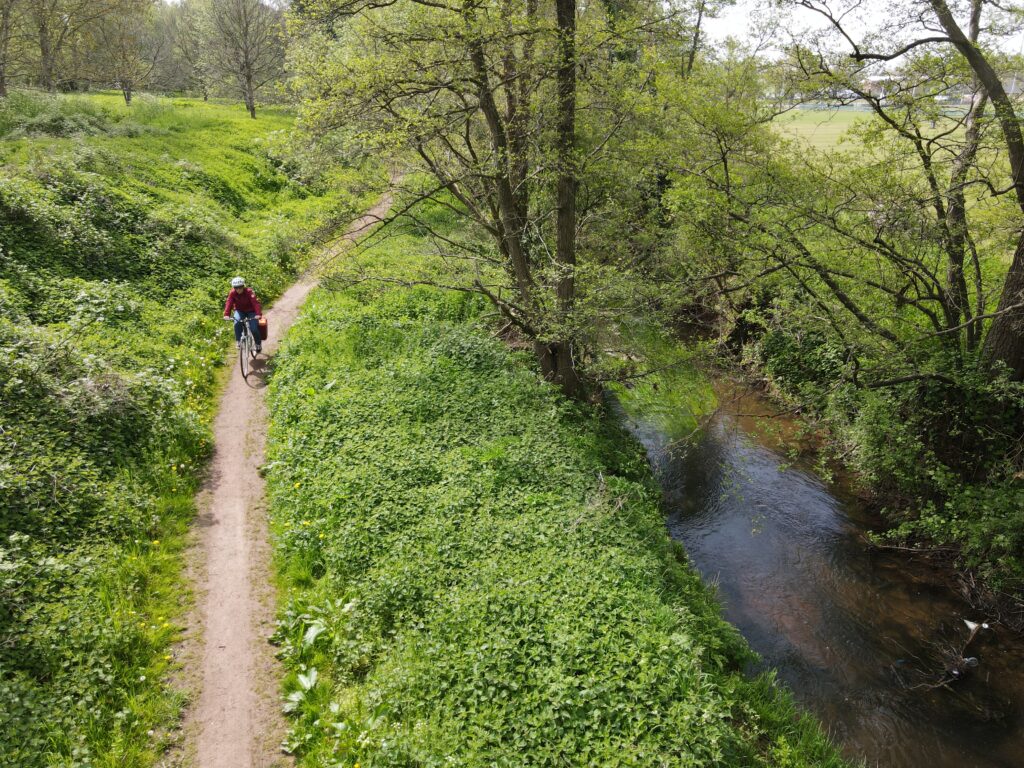
Sleeping in a bivvy set-up instead of a tent will also help you to feel closer or more immersed in nature; let’s be honest, who doesn’t want that?
All-season use
You can use bivvy bags all year round, too, if you use them correctly. I’ll be providing some tips and tricks for getting the best experience from your bivvy, so read on for more!
Should I use a bivvy or a tent?
It’s always worth weighing up whether you actually need to use a bivvy over a regular tent. Some people find it less comfortable, and you don’t want to sacrifice a good night’s rest for no reason. Consider the type of adventure you’re heading on, the weather, the terrain, and how long it’s for. If you need a little extra guidance, watch our ‘Lightweight vs Rightweight’ YouTube video to get the lowdown on taking the right kit for the right adventures; because lightweight isn’t always best!
Types of Bivvy Shelters Explained
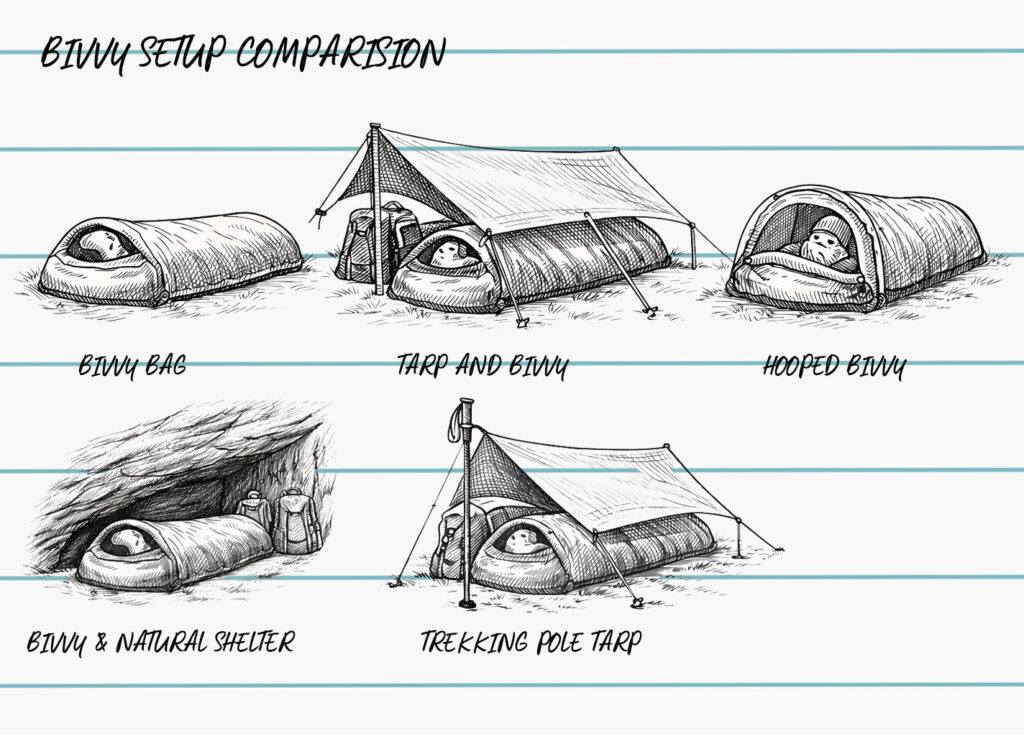
Not all bivvy shelters are the same. While the basic idea is always to create a minimal, lightweight sleeping shelter, there are several different designs available depending on how much protection, space, and weight savings you want.
Understanding the main types of bivvy shelters can help you choose the right setup for your adventures.
Bivvy Bags
A bivvy bag is the most traditional form of bivouac shelter. It’s essentially a waterproof shell that fits around your sleeping bag, protecting you from wind, rain, and ground moisture.
Most bivvy bags use waterproof-breathable fabrics and include features such as:
- seam-taped construction
- drawcord or zip openings around the head
- insect mesh panels
- waterproof floor materials
Bivvy bags are best suited for solo adventurers looking to minimise pack weight, especially when bikepacking, fastpacking, or tackling mountain routes where space is limited.
Hooped Bivvies
Hooped bivvies add a small pole or flexible hoop to create extra headroom around the face area.
This design improves comfort by:
- keeping the fabric away from your face
- increasing ventilation
- reducing condensation build-up
Hooped bivvies can feel much less restrictive than standard bivvy bags, while still remaining lighter and smaller than most tents.
They’re a popular choice for longer bivvy trips where comfort matters more.
Tarp and Bivvy Setups
Many experienced bivvy campers combine a bivvy bag with a lightweight tarp.
This setup provides additional weather protection while still keeping weight low.
A tarp allows you to create a small sheltered space for:
- cooking
- organising gear
- storing boots and backpacks
It also improves ventilation, which can significantly reduce condensation inside your bivvy.
For many outdoor users, a bivvy + tarp system offers the best balance between protection and minimal pack weight.
Emergency Bivvies
Emergency bivvies are extremely lightweight shelters designed primarily for safety and survival situations rather than planned camping trips.
They are often made from reflective or waterproof materials and are designed to:
- retain body heat
- provide temporary shelter in bad weather
- act as emergency protection during mountain adventures
While they can technically be used for sleeping outdoors, they are usually best carried as backup safety equipment rather than a primary shelter.
What do you need for bivvy camping?
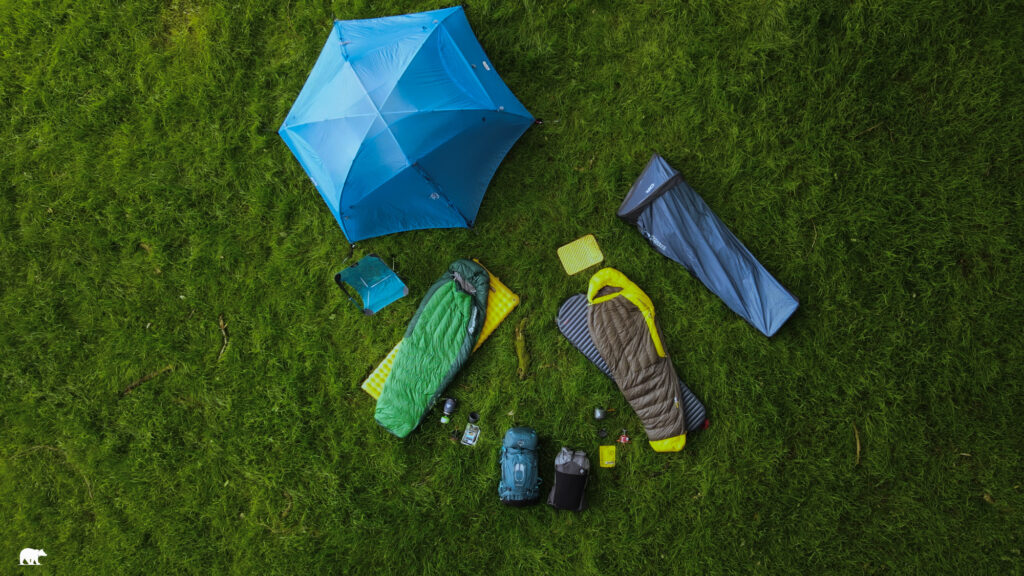
Essentially, bivvy camping is very similar to regular camping in terms of the kit list. The only significant difference is your shelter. However, some elements must be considered to ensure your set-up is functional.
Some of the must-have items for bivvy camping include:
Bivvy Bag (obviously)
A bivvy acts as the main sleeping shelter. They’re more compact and confined than tents and are generally designed for one person. Therefore, you might want to reconsider your shelter choice if you don’t like sleeping solo in the wild or have multiple people on your trip.
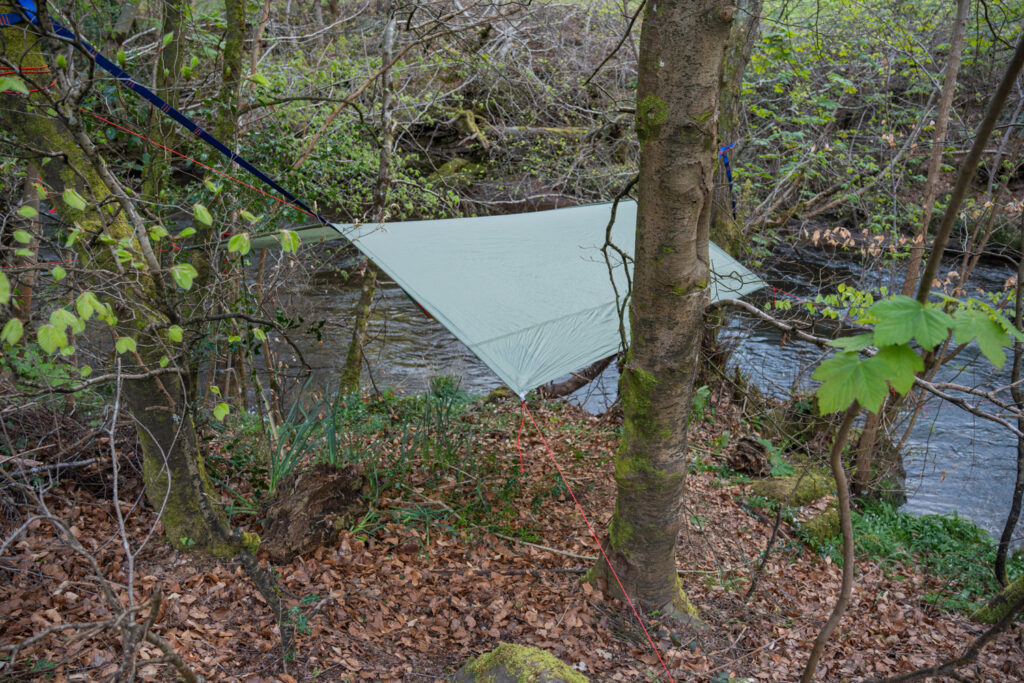
Tarp
A tarp is optional but highly recommended. Without one, it could be an extremely long night in the bivvy. This additional shelter would also provide reliable cover for cooking and socialising. Furthermore, it’ll give you somewhere to store bulky bits of kit, backpacks, and boots without leaving them out in the rain or stinking out your bivvy as you try to catch some z’s.
Sleeping Bag
Your sleeping bag will keep you warm throughout the night, so investing in a good one is well worth it. Sleeping bags also have different weights and pack sizes, so consider what sleeping bag is best suited to your adventure, and your personal needs.
Synthetic sleeping bags work especially well for bivvy camping, as the interior of the bivvy is more likely to encounter moisture inside. If you’d prefer a down-filled bag, choose a bag with hydrophobic down and a DWR (durable water repellent) for optimum performance. You could even do one better and get a waterproof sleeping bag!
Sleeping Mat
A sleeping mat is also an essential part of your sleep system, as it’ll protect you from the cold ground and help amplify the warmth of your sleeping bag. You can get various types of sleeping mats, including insulated, inflatable, or foam, to suit your preference. For bivvy camping, a tapered or mummy-shaped sleeping mat works best, as rectangular or wide mats may not fit inside a bivouac bag. If you need more clarification, measure up the dimensions of your kit before hitting the trail.
Lighting
A camping light or a headtorch is essential for camping for obvious reasons. You’ll especially be grateful for a good source of lighting when cooking in the evening or heading out for a wild wee in the middle of the night!
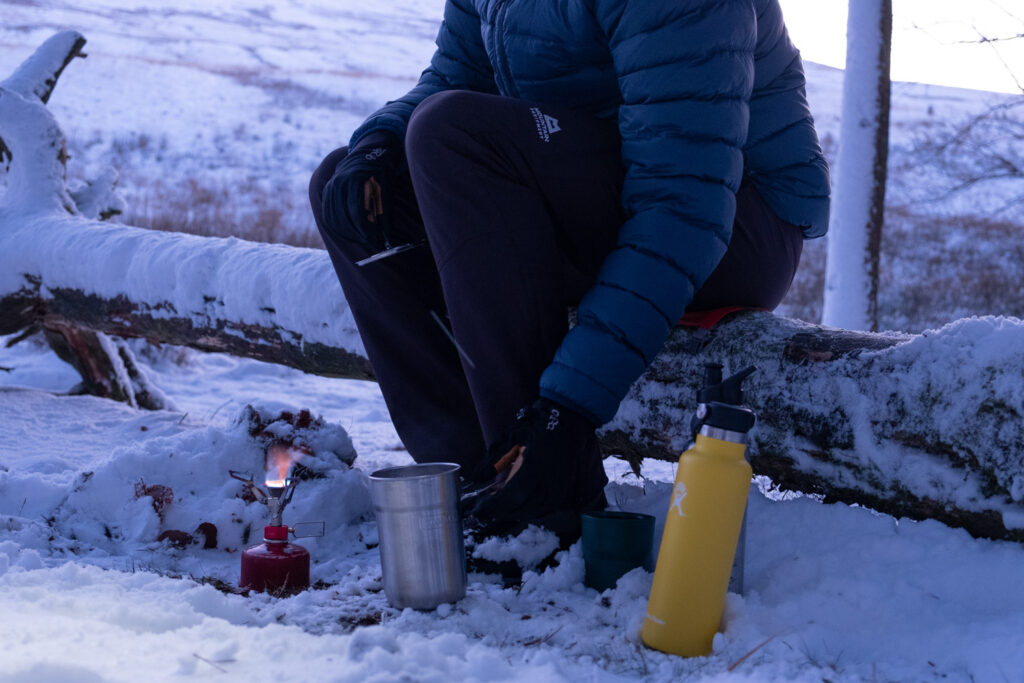
Camping Cooking System
A complete cooking system will include a camping stove, cooking pot, utensils, a mug, and food, of course. Freeze-dried camping meals are a great option if you’re looking to save weight and space. We stock a range of these at Trekitt, catering to all different types of diets. Click here to check out our current selection of camping meals and food.
Dry Bags
Dry bags are great for keeping your kit protected, dry, and organised. You can buy different-coloured dry bags for organisation or use coloured ties to identify which is which. This little trick will save you time, so you won’t have to fumble through your backpack just to find your clean pants.
Suitable Clothing
It’s crucial to check the weather forecast before camping. This will allow you to assess what kit and clothing you need. It’s a good idea to take extra baselayers to ensure you have some dry, clean clothing to sleep in. Merino baselayers work incredibly well. Merino wool provides exceptional temperature regulation and warmth. It is also naturally odour-resistant, making it ideal for multi-day pursuits when you have limited access to washing facilities.
How to Stay Warm and Dry When Bivvy Camping
Because bivvy camping involves minimal shelter, staying warm and dry relies more heavily on good preparation and smart campsite choices. A few simple adjustments to your setup can make a huge difference to comfort overnight.
Choose your campsite carefully
Location is one of the most important factors when bivvy camping.
Try to pitch in places that are:
- slightly elevated to avoid water pooling in heavy rain
- sheltered from wind, such as behind rocks, trees, or natural terrain features
- away from dips or valleys, where cold air and moisture often collect overnight
A well-chosen campsite can make even a minimalist bivvy setup feel much more comfortable.
Use a tarp when possible
While bivvy bags can handle rain on their own, adding a lightweight tarp greatly improves protection.
A tarp provides:
- extra shelter from wind-driven rain
- a covered space for cooking or sorting gear
- better airflow around your bivvy
This setup also reduces the chance of rain entering the bivvy when you open it.
Build a reliable sleep system
Your warmth overnight depends heavily on your sleep system, not just the bivvy bag.
Make sure your setup includes:
- a sleeping bag suited to the expected temperature
- an insulated sleeping mat to prevent heat loss to the ground
- dry baselayers reserved for sleeping
Even in summer, ground insulation from a good mat can make a significant difference to warmth.
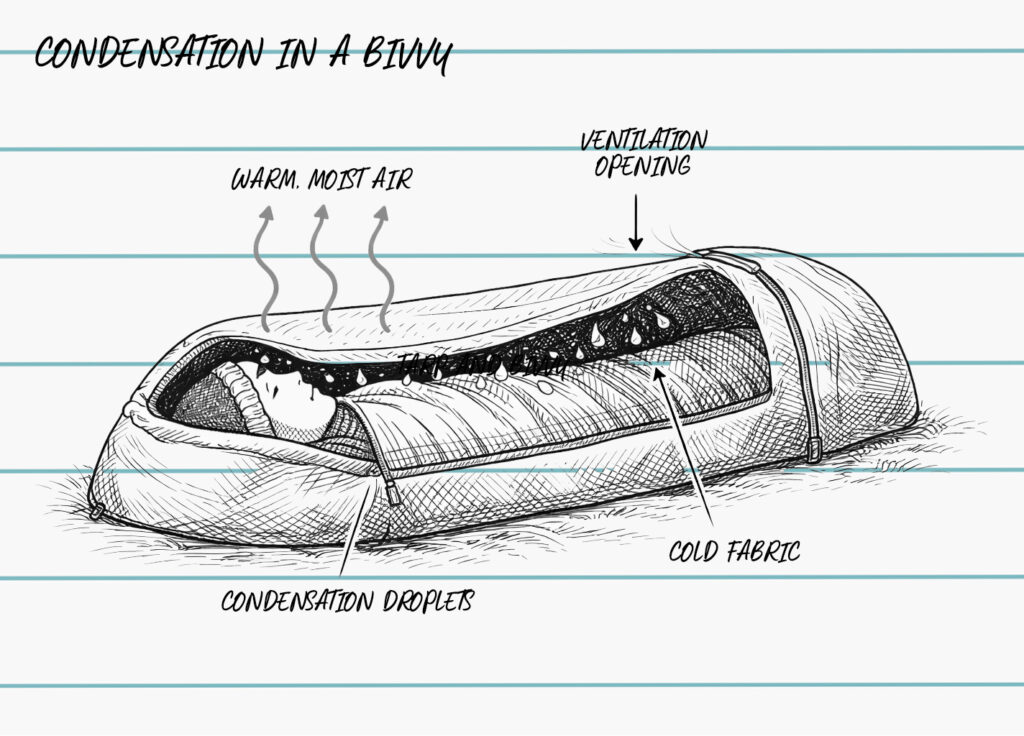
Manage condensation
Condensation is common when sleeping in small shelters.
To reduce moisture inside your bivvy:
- leave the head opening slightly ventilated
- avoid camping too close to water sources where humidity is higher
- use a tarp to improve airflow
Some campers also carry a small microfibre cloth to wipe away condensation in the morning.
Keep your gear organised and protected
Before going to sleep, store your equipment properly.
Place items such as:
- boots
- backpacks
- cooking gear
under a tarp or inside dry bags so they stay protected from overnight rain or damp ground.
Starting the morning with dry gear and warm clothing makes a big difference to the overall experience.
Update for 2026: Bivvy Camping Gear and Trends
Outdoor gear continues to evolve, and bivvy camping equipment has also seen a few important changes in recent years. If you’re planning a bivvy adventure in 2026, it’s worth understanding some of the latest trends in lightweight shelter design, materials, and sleep systems.
More breathable waterproof fabrics
Modern bivvy bags now use more breathable waterproof membranes than older designs. Many manufacturers have improved fabric technology to reduce condensation while maintaining strong weather protection.
However, even the most advanced bivvy bags still rely heavily on good campsite selection and ventilation to manage moisture effectively.
Lightweight tarp shelters gaining popularity
More campers are pairing their bivvy bag with lightweight tarps instead of relying on the bivvy alone. This combination offers a better balance between:
- weight
- weather protection
- comfort
- usable living space
Tarps also allow for more flexible pitching options, which can be particularly useful when wild camping in varied terrain.
Ultralight sleep systems
The rise of ultralight backpacking and bikepacking has also influenced bivvy setups.
Many adventurers now combine:
- compact down sleeping bags or quilts
- lightweight inflatable sleeping mats
- minimalist tarps
to create extremely small and efficient sleep systems.
Increased focus on versatility
Many modern bivvy bags are now designed with multiple uses in mind, such as:
- emergency shelter for mountaineering
- lightweight summer sleep systems
- backup protection when using a tarp
This versatility makes bivvy bags useful across a wide range of outdoor activities.
Tips for bivvy camping
Before you go bivvy camping…
Test out your set-up. You can pitch your bivvy in the garden and slide in your sleeping mat and bag to ensure they fit comfortably inside. Get in the bivouac and make sure you feel like you have enough space to sleep; chunkier sleeping bags sometimes take up all the room between the bag and your bivvy. If this is the case, consider that this could cause your sleeping bag to dampen overnight, as the face fabric is likely to condensate as the temperature changes.
Where is the best place to pitch a bivvy?
The best place to pitch a bivvy is on flat ground. This will help prevent you from sliding to the top, bottom, or side of the bivvy during the night, allowing you to get a better night’s sleep.
How to control condensation in a bivvy?
You can help to control condensation in your bivvy by keeping it slightly open at the head. A lot of condensation forms inside camping shelters because you breathe out warm, moist air during the night. So, by leaving it unzipped just a little, this air has somewhere to escape. However, this may have drawbacks if you’re camping in summer, as the midges come out to play! In this case, make sure you have a midge net with you if you don’t have one built into your bivvy. Insect spray would also be wise.
Additionally, you can also take a small microfibre towel to help manage condensation without taking up excess space in your backpack.
Before you go to bed…
Before you sleep, ensure your belongings are under your tarp or packed into dry bags to protect them from the elements overnight. There’s nothing worse than waking up to a soggy pair of boots first thing in the morning!
The best tip for bivvy camping
The most important thing to remember is to have fun! If the weather forecast is looking miserable, or if you’re planning on travelling somewhere challenging for your camp, don’t forget that there are other options available to make your stay more enjoyable. Sometimes it’s worth scrapping your initial plans and prioritising comfort to avoid having a miserable trip. If you’re not looking forward to using the bivvy when it comes to heading out, save it for another day.
Enjoyed this blog? Check out our previous post about keeping safe when hiking by clicking here.
FAQ
Bivvy camping (short for bivouac camping) is a minimalist style of camping where you sleep inside a bivvy bag instead of a tent. A bivvy bag acts as a waterproof shell around your sleeping bag, protecting you from wind, rain, and ground moisture while keeping pack weight and size very low. This type of shelter is commonly used by backpackers, bikepackers, and mountaineers who want a lightweight and simple sleep system.
Many outdoor enthusiasts choose a bivvy instead of a tent to reduce pack weight and simplify their shelter system. Bivvy bags are smaller and lighter than most tents, making them ideal for fastpacking, bikepacking, or minimalist wild camping. They also allow you to sleep closer to nature and can be quicker to set up when arriving late at camp.
The main disadvantages of bivvy camping are limited space and potential condensation. Bivvy bags are designed for one person and provide very little room to sit up, change clothes, or store gear. Condensation can also form inside the bivvy overnight, particularly in humid conditions. Many campers use a tarp alongside a bivvy to improve comfort and weather protection.
Bivvy bags are not necessarily better than tents, they simply serve a different purpose. A bivvy is ideal for lightweight, fast-moving trips, where pack size and weight matter most. Tents generally offer more comfort, living space, and protection in bad weather, making them a better choice for longer trips or group camping.
A tarp is optional but highly recommended for most bivvy setups. A lightweight tarp adds extra protection from rain and wind while providing a small, sheltered space for cooking, storing gear, or getting organised at camp. Many experienced bivvy campers prefer a bivvy and tarp combination for improved comfort and versatility.
Condensation can be reduced by improving ventilation and campsite selection. Leave the bivvy slightly open at the head, avoid camping in damp valleys or near water, and use a tarp to allow more airflow around your shelter. Modern waterproof-breathable fabrics also help reduce moisture build-up compared to older bivvy designs.
Bivvy camping often falls under the same rules as wild camping. In Scotland, wild camping is widely permitted under the Scottish Outdoor Access Code. In England and Wales, wild camping generally requires landowner permission, although it is tolerated in some remote upland areas when done responsibly. Always follow Leave No Trace principles and respect local regulations.
Yes, bivvy camping is generally safe when done with proper preparation and good campsite selection. Always check the weather forecast, choose sheltered and well-drained ground, and make sure your sleep system is suitable for the expected temperatures. Carrying a reliable headtorch, warm clothing, and navigation equipment is also important for safety when camping in remote areas.
Yes, bivvy camping is possible in the rain, especially if you use a waterproof bivvy bag and choose your campsite carefully. Many campers also use a lightweight tarp above the bivvy to provide additional protection from rain and wind. This setup helps keep both your sleeping system and gear dry during wet conditions.
A tapered or mummy-shaped sleeping mat usually works best for bivvy camping because it fits more easily inside most bivvy bags. Insulated inflatable mats are a popular choice because they provide good warmth and comfort while still packing down small. Always check the dimensions of your mat and bivvy bag to ensure they fit together properly.
Leave a Reply