
Down vs Synthetic: What’s the difference? (Updated for Winter 2025–2026)
Trying to decide between down vs synthetic insulation for your next jacket? Whether you’re heading into dry winter chill or unpredictable mountain weather, knowing the key differences between these two materials can help you pick the right layer for your adventures.
2025/2026 update: We’ve refreshed this guide for the Winter 2025–2026 season with new insights on PFC-free water-resistant down, improved recycled synthetics, and hybrid insulation designs ideal for the UK’s cold, changeable weather.
In SHORT…
-
What’s the real difference between down and synthetic insulation? Explore how these materials vary in warmth, weight, and packability.
-
When should you choose down or synthetic? Find out which insulation works best for specific weather conditions, activities, and environments.
-
How do you pick the right insulation for your needs? Learn how to match your jacket to your budget, lifestyle, and long-term adventure goals.
This article is part of our Winter Gear and Apparel Guide, where you’ll find expert layering advice, technical gear deep dives and practical cold-weather tips.
As I write this, the cold mornings are rolling in and the threat of winter is lingering. Now’s the time we all start looking at a new insulating jacket to keep us toasty on those really cold days. You may already have a preference or you may not even have a clue where to start. Down vs Synthetic – Will help you decide.
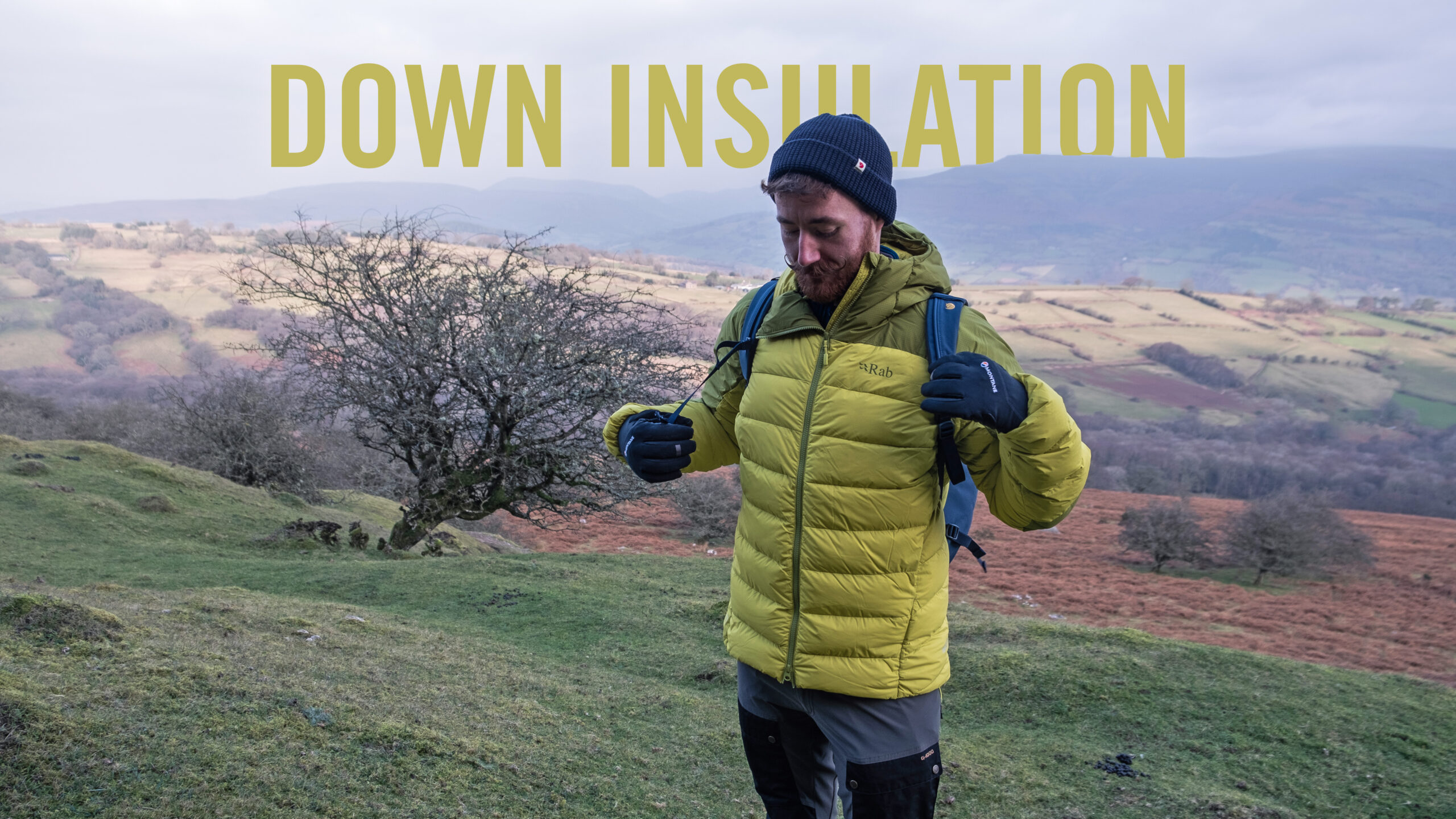
Down vs Synthetic: Understanding the Differences and Benefits of Each
Down clusters usually come from ducks or geese and is the fluffy plumage found on the underbellies of the birds. It’s the stuff that comes packed into those expensive duvets that weigh the same as a small mountain. Don’t get down confused with feathers, though. Feathers act as the waterproof membrane to the bird, while the down acts as the insulator. Very few manmade fabrics can replicate the superior warmth that down offers compared to its weight and pack size.
Down is also available in a range of different qualities (represented by ‘fill power’) that allow you to purchase based on your budget and unique requirements.
Down Insulation Pros
- Ounce for ounce, down is warmer than nearly all synthetic insulation types
- Different qualities available for different price points
- With proper care, it can last for decades
- Highly compressible
- Lightweight
Down Insulation Cons
- Down will lose most of its thermal efficiency when wet. Many brands are combatting this with hydrophobic coatings, but it isn’t something to rely on.
- It requires more care to wash. We have a blog with detailed instructions here.
- Down products are typically more expensive than synthetic products.
- Down is not hypoallergenic. The down may not cause an allergic reaction itself, lower quality down can harbour dust particles, debris or other non-down materials, causing a reaction in sensitive people. However, high-quality down is cleaned very well according to strict industry standards and is less likely to cause an issue. If you’re prone to allergies, invest in only high-quality down products, or go with synthetic.
Where is down most effective?
Down really excels in cold, dry conditions. It’s also a brilliant choice if you’re looking for the lightest, most packable product available for your chosen activity.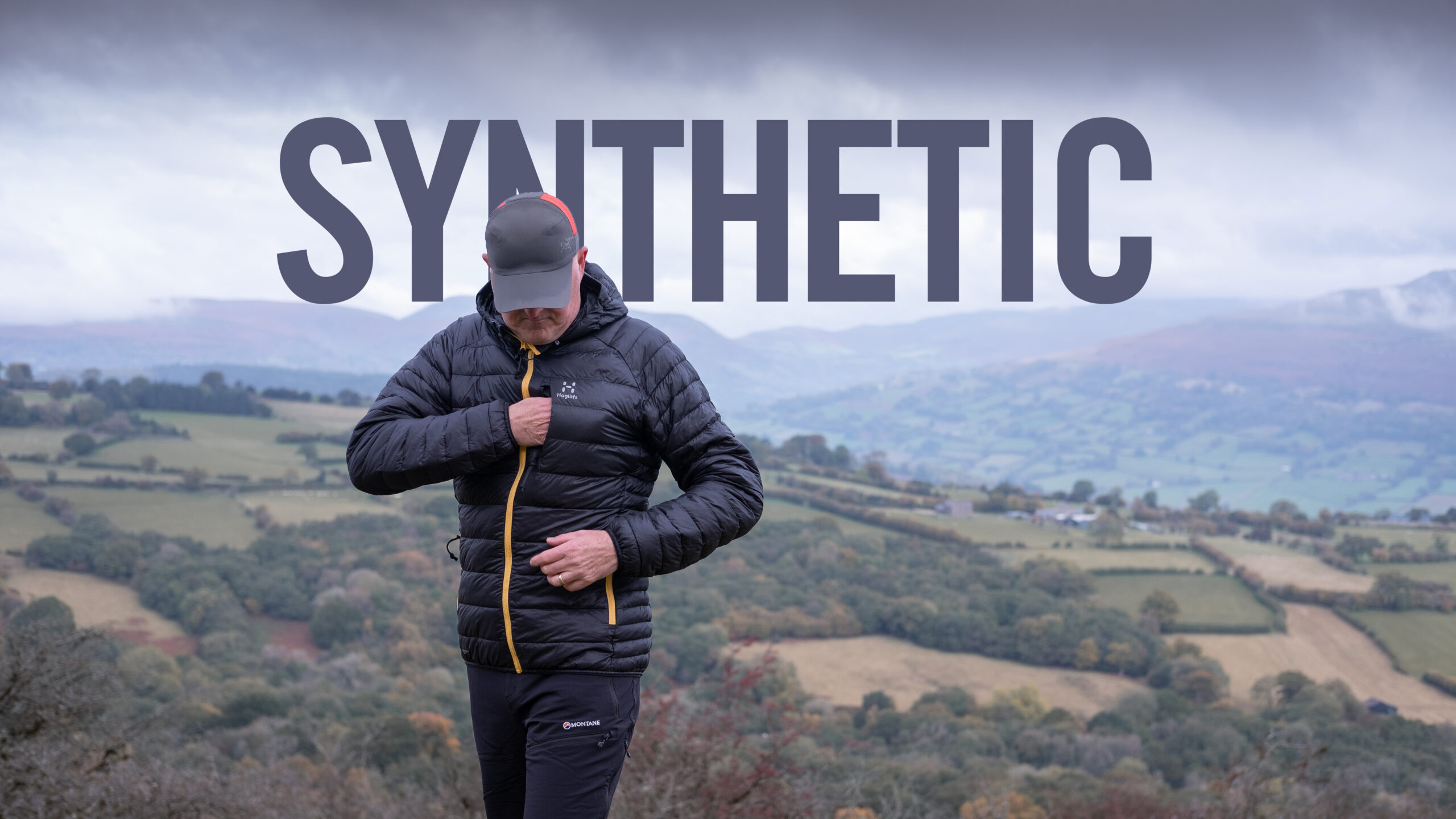
There are hundreds of different types of synthetic insulation on the market today.
Synthetic insulation is polyester threading moulded into long, single threads or short staples to mimic down clusters.
Many different technologies fall into this category, but the end results are all fairly similar.
An insulating layer designed to replicate the qualities of down, but retain them even when wet.
Down vs Synthetic: Synthetic Insulation Pros
- Retains most of its warmth when it gets wet and when it does get wet, it dries much faster than untreated down.
- If you’re on a budget, synthetic insulation is usually cheaper.
- Simple to wash.
- Most synthetics are also completely hypoallergenic.
Down vs Synthetic: Synthetic Insulation Cons
- Typically heavier and bulkier than down, which also means that it requires more weight and volume to keep you warm and comfortable.
- Synthetic fibres will lose their lofting capabilities quicker than high quality down products.
- They don’t feel as ‘nice’. This may seem small, but psychology plays a huge part in our decision in choosing a garment. Down products just feel cosier.
Where is synthetic insulation most effective?
Pretty much everywhere, but it especially excels when you’re not quite sure what the weather is going to throw at you. If you’ve spent much time in our UK mountains, you’ll know the weather changes almost instantaneously. A synthetic garment will deal with a quick shower far more effectively. It will also resist sweat pretty well, but if you’re sweating so much that your jacket is becoming waterlogged, I’d take off a few layers.
🧭 What’s New for Winter 2025/2026
PFC-free performance
Most major outdoor brands have now phased out fluorocarbon-based durable water repellents (DWRs) in favour of PFC-free alternatives. These new treatments are far more environmentally responsible while still providing excellent resistance against light rain and snow. Water-resistant down is also improving — new hydrophobic coatings are more durable and less reliant on harmful chemicals, meaning jackets stay warm for longer even when exposed to damp or humid conditions. The result is a cleaner production process, better long-term performance, and a lower impact on our mountain ecosystems.
Recycled & responsible fills
Sustainability continues to be a primary focus for 2025–2026, with many insulation brands now using recycled polyester fibres or Responsible Down Standard (RDS) certified down as standard. This shift helps reduce waste and ensures animal welfare in the down supply chain. Recycled synthetic insulations are also advancing — they’re softer, loftier, and more consistent than earlier versions, meaning you can get high performance without compromising on ethics. For the conscious adventurer, these changes make it easier than ever to choose warmth that aligns with your values.
Smarter hybrid designs
Hybrid insulation is one of the biggest trends this winter. Many new jackets combine down and synthetic fills in a single design, placing each where it performs best. You’ll often find down in the torso and core areas for maximum warmth, while synthetic insulation is used in shoulders, hoods, and underarms to handle moisture and abrasion. This strategic mix offers better comfort during stop-and-go activity — perfect for UK hill days when you might be battling drizzle one minute and sunshine the next. The result is a more versatile layer that adapts to your movement and environment.
Lighter synthetics
Synthetic insulation has made giant leaps in both feel and performance. The latest continuous filament and sheet-style insulations, such as Primaloft Gold Active+ and ThermoBall Eco, now deliver improved warmth-to-weight ratios and pack down almost as small as down. They also dry incredibly quickly and retain their loft even after repeated compressions. For hikers, climbers, or commuters who value reliability in unpredictable weather, these lighter synthetics make an appealing, low-maintenance choice without the traditional bulk.
Improved construction
Jacket design itself has evolved, too. Brands are moving towards more sophisticated baffle layouts — offset or box-wall structures that reduce cold spots and distribute insulation more evenly. New outer fabrics with stretch panels and weather-resistant overlays help improve mobility and durability, particularly in high-wear areas like shoulders and elbows. Combined with refined stitching and better patterning, these updates make modern insulated jackets both warmer and more weatherproof without adding unnecessary weight.
Longevity & care
Finally, there’s growing attention to the lifespan of insulated garments. Eco-conscious wash-in proofers, down refresh sprays, and gentler detergents now make it easier to restore loft and maintain DWR coatings at home. Many brands are also offering repair and recycling schemes, encouraging users to extend the life of their gear rather than replace it. Taking proper care of your jacket not only preserves its performance but also supports a more sustainable approach to outdoor clothing overall.
Looking ahead to Winter 2026–2027
As insulation technology keeps evolving, we can expect even more crossover between natural and synthetic materials in the coming years. Brands are already experimenting with plant-based fibres, bio-down alternatives, and adaptive insulations that react to body temperature and moisture. Whether you’re layering up for crisp morning walks or prepping for alpine adventures, the best choice will always come down to your environment, activity, and comfort. Keep an eye on next winter’s innovations.
Down vs Synthetic: Which one is better?
Unfortunately, that one’s up to you to decide. You should carefully consider a product that’s going to fit your activities and your lifestyle most effectively. If you’re after a simple, do-it-all workhorse of a jacket, synthetic is probably the way to go. If you want the warmest, lightest, most packable kit available and don’t mind the added complexities, down is the one for you.
Hopefully, that helps in your decision-making process! If you need any help with your insulation questions or queries, feel free to contact our customer service team—drop them a message on [email protected] or call >>01432 263 335
We hope you enjoyed reading our blog and that the battle- Down vs Synthetic is over. Why not dive into another blog like: Understanding Waterproof and Breathability Ratings
FAQ
With proper care, a good down jacket can last over a decade. Down fill naturally regains loft after compression and can be revived with gentle washing and drying. Synthetic insulation tends to break down faster with repeated use, especially in high-friction areas. That said, many 2025 synthetics are now more resilient and easier to refresh, extending their usable life.
Down compresses far more efficiently than synthetic insulation, which makes it the go-to choice for alpine or travel use when pack size matters. Synthetic jackets are bulkier, though newer designs like Patagonia Nano-Air Light Hybrid and Rab Cirrus Ultra are narrowing that gap considerably.
Synthetic wins here. It keeps insulating even when exposed to moisture, sweat, or drizzle. For UK winter conditions — think hill walks or commutes with on-off rain — synthetics such as Rab Cirrus Flex or Cotopaxi Trico Hybrid are excellent options. If you prefer down, choose a jacket with a hydrophobic down treatment and a PFC-free DWR outer shell to help it resist moisture.
Not quite — not yet. Down still outperforms synthetics for pure warmth-to-weight and packability. But for active movement, damp climates, or ethical reasons, modern synthetics provide an outstanding balance of performance and practicality. The latest hybrids, such as Rab’s Cirrus Flex 2.0 and Patagonia’s Nano-Air Light Hybrid, show how close the technologies have become.
Always follow the manufacturer’s instructions. Down jackets need gentle washing with a specialist down detergent, then tumble-drying with clean tennis balls to restore loft. Synthetic jackets are easier — a cool machine wash and air-dry is usually enough. Re-proof your jacket occasionally with an eco-conscious wash-in proofer to maintain water repellency and extend its life.
For dry, crisp days or alpine travel, down gives unbeatable warmth-to-weight performance — think Rab Neutrino Pro or Microlight Alpine ECO. For damp, unpredictable UK mountain days, go synthetic or hybrid — options like Rab Cirrus Flex or Patagonia Nano-Air, balance warmth, breathability, and wet-weather reliability.
Leave a Reply