
If you spend enough time outdoors, one universal truth will eventually hit you (hopefully not too suddenly): nature calls, even in nature. And unlike at home, there’s no porcelain throne, no triple-ply luxury, not even a dodgy petrol station loo to fall back on.
Instead, you’re left with a backpack, a patch of earth, and maybe a squirrel who seems way too invested in your next move. Awkward? A bit. Unavoidable? Absolutely.
But don’t worry, once you know the tricks, going to the toilet outdoors can be surprisingly straightforward.
So, let’s explore the best practices for staying comfortable while also protecting the landscapes we love, ensuring that our adventures leave no trace behind.
In SHORT…
- Why it matters: Going to the toilet outdoors isn’t just about comfort, it’s about protecting landscapes, water, and wildlife. Leave No Trace is the golden rule.
- How to do it: From digging a proper cat hole to packing out waste in sensitive areas, learn the techniques that keep you clean and nature pristine.
- Gear that helps: Trowels, WAG Bags, pee rags, and even portable loos, the right kit makes wild bathroom breaks simple and hygienic.
1. Basic Wilderness Toileting Practices
The first rule of outdoor adventures? Plan ahead. Toileting in nature isn’t quite the same as nipping into a café loo, so it pays to familiarise yourself with techniques before you go.
This is where the Leave No Trace principles come in. In short:
- Don’t leave toilet paper behind.
- Don’t contaminate water sources.
- Always pack out or properly bury your waste.
Think of it as being a good guest in nature’s home, leave it just as beautiful (and clean!) as you found it.
Planning ahead also means knowing the regulations for the place you’re visiting. Some areas, like delicate alpine zones, deserts, or popular national parks, don’t allow burying waste at all, you’ll be expected to pack it out using special waste bags. In other environments, digging a cat hole is the standard. A quick check before your trip will save you from surprises later.
It’s also worth considering timing. Try to go before setting off on a big hike or climbing route, and carry a small kit (trowel, bags, hand sanitiser) so you’re prepared when nature calls unexpectedly. Nothing ruins a beautiful day faster than scrambling unprepared for a “bathroom emergency.”
2. Essential Equipment for Wilderness Toileting
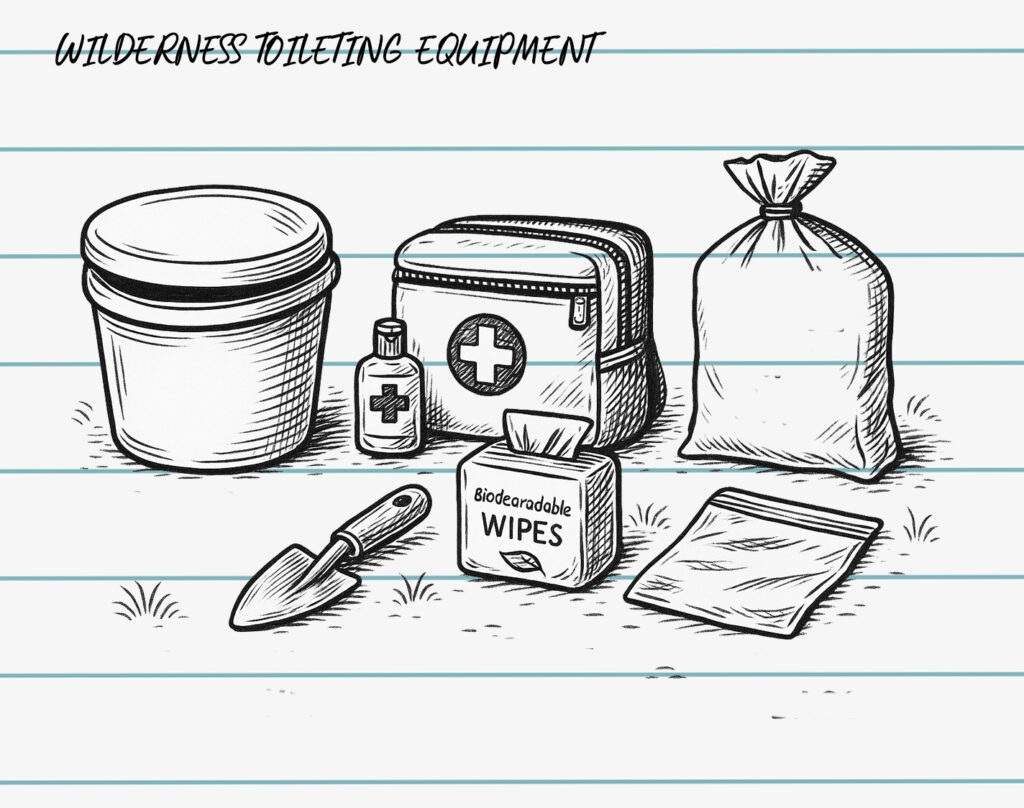
Having the right gear makes everything easier. A little preparation means you can manage toileting in the outdoors safely, hygienically, and in a way that respects the environment. Here are some useful options to consider:
- Portable toilets – These are ideal for car camping, base camps, or areas where you’re not allowed to bury waste. They come in different designs, from bucket-style seats with liners to collapsible models that pack flat. While they aren’t the lightest option, they provide comfort and are especially useful for families or longer trips.
- Camping poop kits – These compact kits usually include waste disposal bags, hand sanitiser, tissues or wipes, and sometimes a lightweight privacy shelter. They’re designed for convenience, easy packing, and quick use when you’re on the move.
- Waste kit bags (such as WAG Bags) – Specially designed for sensitive areas where digging isn’t possible, these bags are leakproof, odour-proof, and often contain a gelling agent that breaks down waste. They’re widely accepted in national parks, alpine environments, and deserts, and are a reliable option when packing out your waste is the only choice.
Bonus items that make the process smoother:
- A small trowel – Lightweight and sturdy, this is essential for digging a proper cat hole when conditions allow. Some are designed to fit easily into side pockets or clip onto packs for quick access.
- Biodegradable wipes – Useful for hygiene, but remember that “biodegradable” doesn’t mean it disappears instantly. They should still be packed out in a sealed bag.
- Zip-lock bags – Practical for storing used toilet paper or wipes until you can dispose of them properly. Carry a few spares, and double-bag if needed to prevent leaks or odours.
It’s also worth preparing a dedicated toileting kit bag so everything is in one place, no rummaging through your pack at the worst possible time. A well-organised kit helps you respond quickly, keeps your gear clean, and ensures you follow Leave No Trace principles with ease.
3. Wilderness Toileting Techniques
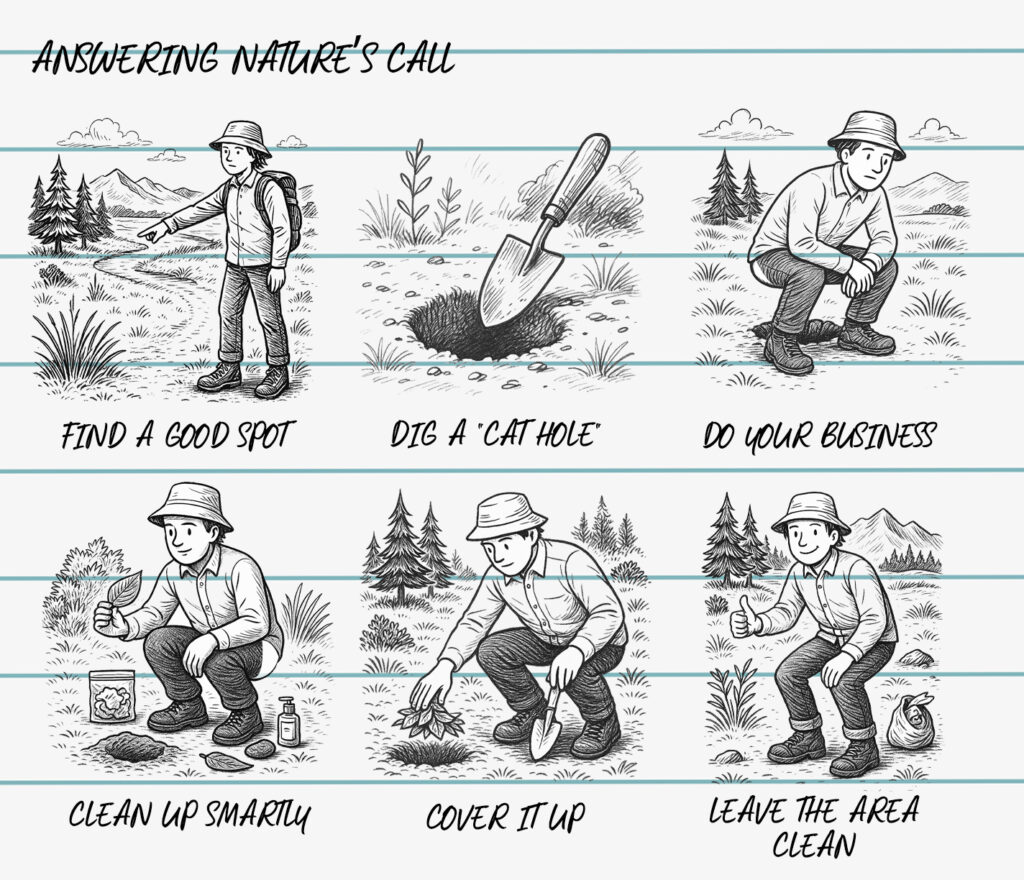
Okay, let’s get practical. Here’s how to answer nature’s call:
Find a good spot
Choose a location at least 60 metres (about 200 feet) away from any water sources, trails, and campsites. This distance helps protect drinking water, wildlife habitats, and the experience of fellow adventurers. Look for areas with deep, organic soil rather than rocky or sandy ground, as soil microorganisms help break down waste more effectively.
Dig a “cat hole”
Use your trowel to dig a hole 15–20 cm deep and about the size of a loaf of bread. The depth is important—too shallow and animals may dig it up; too deep and decomposition slows down. A spot with rich, dark soil is best. Avoid digging in fragile alpine meadows, desert crusts, or other sensitive environments where digging can cause long-lasting damage.
Do your business
Squat directly over the hole and take care of business. Choose firm, stable ground to avoid slips, especially if you’re wearing a heavy pack. If balance is an issue, some people prefer to lean against a tree or hold onto trekking poles for support.
Clean up smartly
Use toilet paper sparingly and, where possible, pack it out in a sealed bag. Alternatively, consider natural materials like smooth stones, snow, or non-toxic leaves. Always double-check plants before using them—steer clear of poison ivy, nettles, or anything that looks suspicious. Another excellent option is a water bottle bidet attachment, which lets you rinse clean with minimal impact and greatly cuts down on paper waste. Whatever method you use, always finish with a small bottle of hand sanitiser to keep things hygienic.
Cover it up
When finished, replace the soil you dug out and press it down firmly. Camouflage the spot with natural materials such as leaves, sticks, or pine needles to make it less obvious to animals or other hikers. This helps maintain the natural look of the area and keeps waste securely buried.
Leave the Area Clean
Once the hole is covered and camouflaged, take a moment to look around. Make sure no toilet paper scraps, wipes, or other traces are left behind. The goal is for the next person walking by to have no idea that spot was ever used. It’s the simplest way to respect the environment and fellow adventurers.
Concerns?
- Privacy – If you feel exposed, set up a lightweight tarp or use a natural screen like bushes or trees. Remember, most people are too focused on their own hike to notice what you’re up to.
- Limited resources – Reduce your reliance on toilet paper by using a washable pee rag for urination or a small bidet bottle for rinsing. These options are lightweight, reusable, and cut down on waste.
- Waste disposal—Cat holes aren’t appropriate in some environments (alpine, desert, or heavily trafficked areas). In those cases, always carry your waste out in a proper waste bag. This prevents contamination and helps preserve the landscape.
4. Alternative Toileting Methods
Sometimes, digging a hole isn’t an option, maybe you’re on rocky terrain, frozen ground, or in a fragile environment where soil disturbing isn’t allowed. In these cases, you’ll need to adapt. Here are some creative and responsible alternatives:
Natural materials
When toilet paper isn’t available, nature often provides substitutes. Soft moss, clean snow, smooth stones, or broad non-toxic leaves can work surprisingly well. Always check plants carefully before using them to avoid anything irritating or poisonous. Smooth materials are best, and snow doubles as a cleaner and a refresher in cold environments. These options minimise waste and don’t need to be carried out, as long as you leave them in a proper cat hole.
Backpacking pee rag
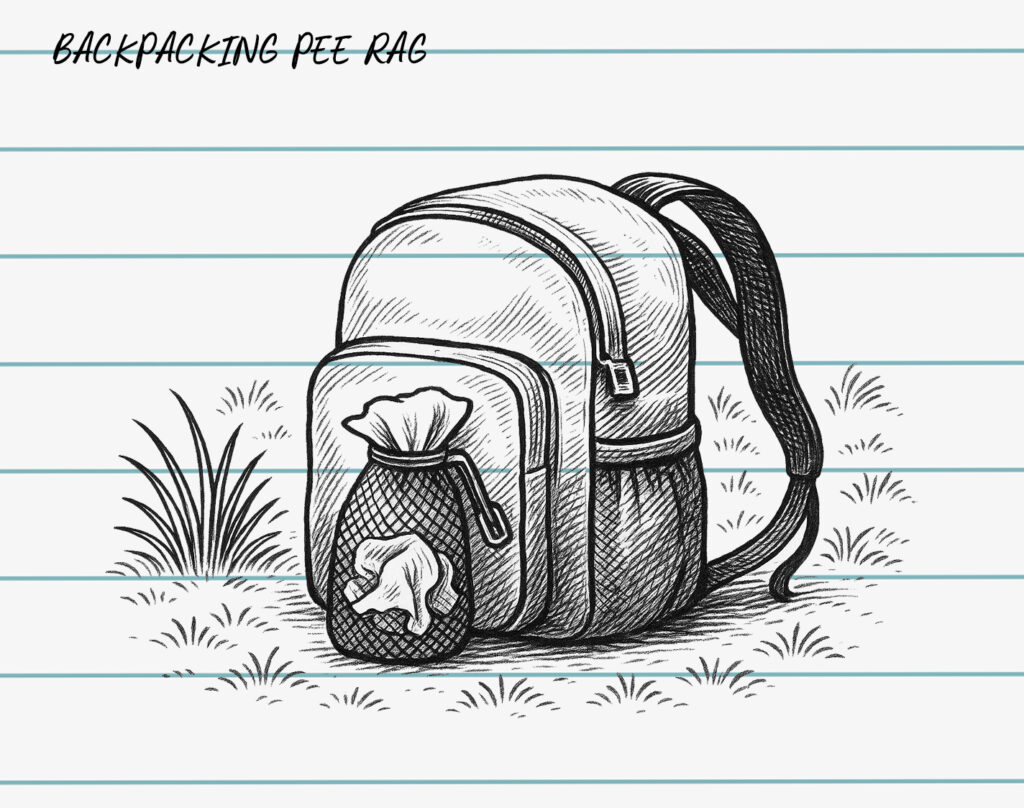
A reusable cloth or “pee rag” is a popular solution for urination, especially among female hikers. The cloth is used for drying after peeing and then clipped to the outside of your pack to dry in the sun (UV light helps disinfect it). It saves a significant amount of toilet paper over time, is lightweight, and easy to clean with soap and water at camp.
Discreet Pee Rag Tips:
- Clip it low or behind a strap where it’s barely visible.
- Choose a dark or patterned cloth so it blends in with your gear.
- Use a small mesh stuff sack—still gets airflow, looks like normal kit.
- On shorter trips, stash it in a zip-lock and hang it to dry later at camp.
Most hikers won’t notice or care, but if you prefer subtlety, these little tricks keep things practical and discreet.
Biodegradable toilet paper
Designed to break down faster than standard toilet paper, it’s a more responsible option. However, “biodegradable” doesn’t mean it vanishes instantly, so the best practice is still to pack it in a sealed bag. If burying is allowed, keep it in the cat hole, but only in environments where decomposition is quick and permitted by regulations.
Improvised fixes
Emergencies happen. If you’re caught short on supplies, a spare plastic or compostable bag can act as a temporary toilet until you reach proper disposal facilities. Some hikers even carry a wide-mouthed container or “poo tube” for situations where digging isn’t possible (such as climbing routes or winter mountaineering). These solutions are effective and often required in certain wilderness areas.
5. Waste Management and Hygiene
This part is one of the most critical aspects of wilderness toileting. How you manage waste directly impacts the environment, wildlife, and even other people’s enjoyment of the outdoors. Done right, no one should ever know you were there.
Pack out toilet paper and wipes
All toilet paper, wipes, and hygiene products should be carried out in a sealed bag. Even “flushable” or “biodegradable” wipes don’t break down quickly in the wild and can linger for years. A simple zip-lock or a dedicated “waste bag” keeps things tidy and odour-free. If you use menstrual products, these also need to be packed out—consider a small opaque pouch for discretion.
Use designated facilities where available
If your campsite, trailhead, or climbing base has a toilet or composting system, use it. Many parks have invested in these facilities to protect fragile environments, so it’s always best to make use of them. Rules differ from place to place, so check signage or local guidelines before setting out.
Cat holes vs. pack out
In many areas, digging a cat hole is the accepted method for solid waste disposal. But in high-traffic, alpine, desert, or river environments, soil conditions make decomposition too slow or impossible, so packing out waste is the standard. Carrying a waste kit bag (like a WAG Bag) is the simplest solution in these situations.
Personal hygiene is essential
After any bathroom break, clean your hands properly. At the very least, use alcohol-based hand sanitiser. If you have access to water, use biodegradable soap at least 60 metres from streams or lakes to avoid contaminating water sources. Keeping your hands clean prevents stomach upsets and keeps your group healthier on longer trips.
Minimise contamination risks
Always handle waste carefully and store used bags away from food supplies. Keep a small “hygiene kit” separate from your cooking gear, so nothing gets mixed up. For multi-day trips, it’s worth carrying a pair of lightweight disposable gloves in your kit for emergencies.
At the end of the day, good waste management comes down to one goal: leave the land as clean (or cleaner) than you found it. By packing out what doesn’t belong and taking care of hygiene, you’re protecting nature, respecting others, and keeping your adventure safe and enjoyable.
6. Wild Toilet Tales from the Famous
British climber Mick Fowler, himself a legend in alpine and mixed climbing, has one of the strangest toilet-related anecdotes out there. In his biography and in mentions of his exploits, he’s credited with ice-climbing a 65-foot frozen water icicle that had poured from a broken toilet waste pipe at St Pancras station in London. Yes, while most of us would run the other way, Fowler saw a route worth climbing.
If he can turn a leaking toilet pipe into a serious climb, then surely your forest cat hole doesn’t seem quite so intimidating.
Andy Kirkpatrick — Flaming poop bags and big-wall reality
Legendary British alpinist and writer Andy Kirkpatrick has openly shared his gritty take on toileting in extreme climbing environments. In his blog post “Going to the Bathroom,” he describes how climbers in the past would often “crap into paper bags from the grocery store and just throw them off,” resulting in piles of dried waste accumulating at the base of popular walls.
He also notes one particularly alarming phenomenon: “flaming shit bags.” Climbing beneath another team carries the risk that a tossed bag—sometimes smouldering—could fall onto other climbers.
In his writing, Kirkpatrick also pulls no punches when describing the awkward logistics of using a harness mid-climb. He outlines “harness dump basics,” stressing that one must know how to unhitch their rear risers, pull trousers down while clipped in (if needed), and avoid dangling gear into one’s own waste.
By modern standards, he says, things have improved—poo tubes, WAG bags, waste cases, and stricter regulations have reduced the odds of bag explosions or horrified climbing partners. But his recollections serve as a vivid reminder that improvisation often leads to disaster.
Bear Grylls — The “Poo Hand-Warmer” and Bottle-Pee Hack
Asked for his best bathroom technique, Bear answered: “Quickly.”
For peeing, he suggests a simple and practical trick: use a bottle. Not just to contain it, but afterwards to use as a hot-water bottle through the night — especially when temperatures plummet. It’s a clever dual-use hack.
When it comes to “number two,” things get more extreme. In cold or survival conditions, Bear has admitted that in his military training, they once resorted to pooing into plastic wrap (like kitchen cling film), wrapping the mess, and passing it around to warm their hands in freezing weather.
The image is startling, but it does highlight how necessity can push survival thinking into weird places. It’s the kind of story that makes you squirm and appreciate your ziplock or WAG bags.
Steve Backshall — Arctic Wee Gone Wrong
Steve Backshall, the British naturalist and explorer, often reminds people that every expedition has at least one toilet mishap. In one story he’s shared, while on Arctic ice, he stopped for a “quick wee” on pack ice—and in that moment, his kayak began to drift away behind him. (He posted a clip about Arctic wild-wee experiences on his social media, noting that expedition life almost always includes at least one mortifying loo story.)
It’s the kind of moment that sounds simple enough—pause, relieve yourself, carry on—but in extreme environments, small details (like securing your boat) can go sideways (or downstream) fast.
Ed Stafford — Catching Dinner … With Poo
In his survival series Marooned, British explorer Ed Stafford once revealed an extreme trick: he used his own poo as bait in a bottle trap. According to Stafford, the method was surprisingly effective in small rivers, and he later noted the fish caught by the technique tasted “somewhat tangy.”
It’s a stomach-turning tactic, but it underscores a brutal truth of survival: in extreme circumstances, wasted matter can become a resource. Sometimes the line between “gross” and “ingenious” is a matter of context—and necessity.
Wrapping It Up
Alright, enough poo stories. We’ve had flaming bags, frozen toilets, and fish bait that no one wants to try at home. They’re funny (in hindsight), but they also highlight a serious point: everyone, even the most seasoned adventurers, faces bathroom challenges in the wild.
The key difference between a disaster story and a forgettable routine? Preparation. A small toileting kit, a bit of knowledge, and a dose of respect for Leave No Trace principles will see you through without drama.
So, the next time nature calls when you’re far from civilisation, remember:
- Choose your spot wisely.
- Manage your waste responsibly.
- Keep hygiene front and centre.
- And, most importantly, keep your sense of humour.
Because in the end, toileting in the wild is just another outdoor skill — like pitching a tent or reading a map. Once you’ve mastered it, you’ll wonder why it ever felt awkward at all.
FAQ
It happens. Step off the trail, head for a spot with some natural cover (trees, bushes, rocks), and put a little distance between yourself and others. Most hikers get it — everyone’s been there — and they’ll politely pretend not to notice.
Totally normal. Try moving a little further from camp or finding a quieter, more private spot. Sometimes just sitting or squatting for a bit helps your body relax. Worst case, take a short walk and try again later.
Aim for absorbent surfaces like soil, grass, or sand, not bare rock. If that’s not an option, adjust your squat or stance so you’re angled slightly downhill. Gravity is your friend here.
Menstrual cups, period underwear, or tampons all work — just remember everything (yes, everything) needs to be packed out in a sealed bag. A small opaque pouch keeps things discreet. Wet wipes or a bit of water for cleaning make life much easier.
Enter the “pee bottle.” Wide-mouthed bottles (clearly labelled and never used for drinking!) are lifesaving. You’ll need to head out for solid waste, but having your toileting kit ready at the tent door saves time. What about women? That’s where a female urination device (FUD) — comes in handy. It lets you pee standing up or aim directly into a bottle without awkward gymnastics.
Proper disposal is key. Buried cat holes and sealed waste bags keep animals uninterested. Never leave “toilet paper flowers” or waste on the surface. It’s basically an open invitation for wildlife.
Leave a Reply