
How to Reproof or Maintain Winter Outerwear

Author: Trekitt Gear Team
Outdoor clothing specialists with decades of combined experience testing, maintaining,
and looking after waterproof jackets in real UK cold and wet conditions.
Caring for winter outerwear and reproofing waterproof jackets isn’t the most exciting job on your winter to-do list, but a little TLC goes a long way in keeping your jacket dry, breathable, and actually enjoyable to wear when the weather turns grim.
KEY TAKEAWAYS:
-
Why winter jackets suddenly feel cold and soggy – how worn DWR causes “wetting out” even when the jacket is still technically waterproof.
-
How to clean, dry, and reapply DWR to your jacket properly – why cleaning first matters and how choosing wash-in vs spray-on DWR affects performance.
-
When to reproof winter gear (and when not to) – simple signs your jacket needs attention and how often winter use really demands it.
This article is part of our Winter Gear and Apparel Basecamp, where you’ll find expert layering advice, technical gear deep dives and practical cold-weather tips.
1. Why Winter Outerwear Needs Regular Care
Winter Conditions Take a Toll on Outer Fabrics
Winter is harsh on your kit. Even if you’re not heading deep into the hills, everyday winter use exposes your jacket to a brutal mix of road salt, grit, mud, slush, and constant wetting and drying. Over time, this breaks down the outer fabric, particularly the water-repellent finish, causing your jacket to work harder than it should.
Why Jackets “Wet Out” in Winter
This is where that familiar “wetting out” feeling comes in. Even though the waterproof membrane underneath is still doing its job, the outer fabric stops repelling water. Instead of beading up and rolling off, rain soaks into the face fabric, leaving your jacket looking dark, heavy, and cold. Once that outer layer is saturated, breathability drops too — so you can end up damp from the inside as well.
Quick note: if your jacket is ” wetting out”, it doesn’t usually mean it’s stopped being waterproof. It’s the DWR (the water-repellent finish on the outer fabric) that’s worn off. The waterproof membrane underneath can still be doing its job, but once the face fabric saturates, it can feel clammy and breathe poorly. Technically, you’re reapplying the DWR rather than “reproofing”.
DWR vs Waterproof Membrane: A Two-Part System
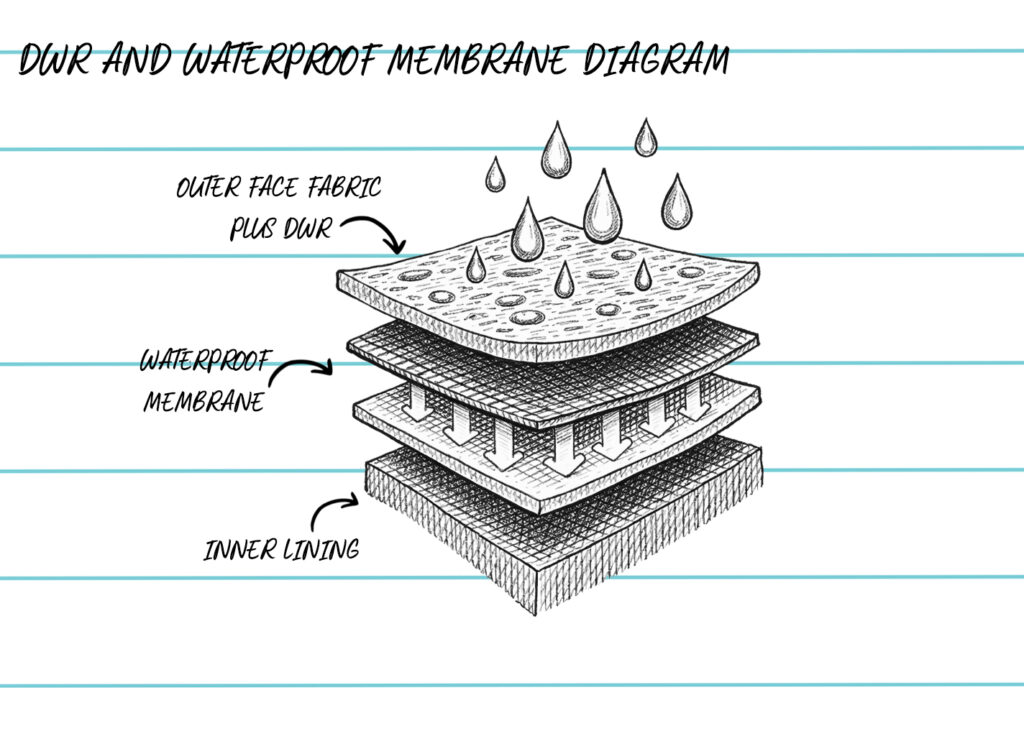
It helps to think of your jacket as a two-part system. The waterproof membrane (like Gore-Tex or similar) keeps water out, while the DWR (Durable Water Repellent) coating on the outside encourages water to bead and run off. The membrane usually lasts for years; the DWR doesn’t. It wears away with use, dirt, and washing — especially in winter conditions.
Signs Your Jacket Needs Reproofing
So how do you know it’s time to give your jacket some love? If rain no longer beads on the surface, the fabric darkens almost immediately when wet, or the jacket starts to feel clammy and cold even in light rain, those are clear signs the DWR needs refreshing. The good news? A proper clean and reproof can bring it back to life — and make your winter jacket feel like new again.
2. What Is DWR and Why Freeze-Resistant Treatments Matter
What Is DWR (Durable Water Repellent)?
DWR stands for Durable Water Repellent — a treatment applied to the outer fabric of your jacket. Its role is to make water bead up and roll off instead of soaking in. When DWR is working well, rain sits on the surface in small droplets. When it wears off, the fabric darkens and absorbs water almost immediately.
DWR vs Waterproof Membrane: What’s the Difference?
It’s important to separate the two.
- The waterproof membrane sits inside the jacket and physically blocks water from getting through.
- The DWR coating sits on the outside and keeps the fabric drier so the membrane can breathe.
Even if your jacket is still technically waterproof, worn DWR can make it feel cold, heavy, and clammy because breathability drops once the outer fabric wets out.
Why Cold Weather Breaks Down DWR
Winter is where weak DWR treatments get exposed. Low temperatures, freezing rain, sleet, and repeated freeze–thaw cycles can reduce the effectiveness of cheaper or worn-out coatings. Some DWRs simply stop beading properly in the cold, which is why a jacket that worked fine in autumn suddenly feels useless in winter.
What Are Freeze-Resistant DWR Treatments?
Freeze-resistant DWRs are designed to keep repelling water even in low temperatures. They cope better with cold, wet conditions and repeated freezing, helping water shed properly instead of soaking into the fabric. For winter jackets, ski shells, and wet-weather hiking gear, these treatments make a noticeable difference in comfort and performance.
Reliable Options for Reproofing at Home
When it comes to reproofing winter outerwear, Nikwax and Grangers are both solid choices. They’re straightforward to use, easy to apply at home, and well-suited to the kind of cold, wet conditions most winter jackets see in the UK.
3. Before You Reproof: Clean It Properly (This Is Crucial)
Why Reproofing a Dirty Jacket Doesn’t Work
Reproofing only works if the fabric is clean. Dirt, salt, sweat, and everyday winter grime sit in the fibres and stop DWR from bonding properly. If you apply a reproofing treatment over a dirty jacket, the result is usually poor water beading and a finish that wears off quickly.
In short, no amount of reproofing will fix a dirty jacket.
Cleaning Often Restores Performance
Dirt attracts water. Once it’s removed, you’ll often notice water beading improve straight away — even before you’ve reapplied DWR. That’s why cleaning is always the first step, not an optional one.
How to Prepare Your Jacket for Reproofing
Before applying any DWR treatment, make sure you:
- Close all zips and Velcro to prevent snagging
- Use a technical cleaner, not regular detergent
- Avoid fabric softeners entirely — they damage water repellence and breathability
- Follow the wash temperature and cycle on the care label
- Rinse thoroughly to remove any leftover residue
Using the right cleaner helps lift dirt without leaving behind anything that will interfere with breathability or water repellence.
Step-by-Step Washing Guide
If you’re unsure about wash settings, drying, or what products to use, link through to our full guide:
How to wash your waterproof jacket
Get this step right and reproofing becomes far more effective — helping your winter outerwear perform better and last longer.
4. How to Dry Winter Jackets Without Damaging Them
Drying is just as important as washing — and it’s where most accidental damage happens.
Always check the care label first. Some jackets are fine to air dry, while others benefit from gentle tumble drying. Using too much heat can damage membranes, seam tape, or insulation, but avoiding drying altogether can be just as bad.
A few simple rules:
- Never wring out a jacket — press excess water out gently
- Air-dry shells and softshell if the label recommends it
- Use low heat only if tumble drying is allowed
- Make sure the jacket is fully dry, inside and out
For waterproof shells, gentle heat can help reactivate DWR, but only if the care label allows it. A damp jacket that’s put away too early will lose performance quickly and can start to smell or degrade over time.
5. How to Reproof Your Winter Outerwear
When Reproofing Is Necessary
Once your jacket is clean, it’s easy to see whether reproofing is needed. If water still doesn’t bead on the surface after washing, the DWR has done its job and worn out — and it’s time to refresh it.
Winter conditions speed this process up. Salt, grit, rucksack straps, and repeated wetting and drying all take their toll, so needing to reproof during the season is completely normal — even on high-end waterproof jackets. It’s routine maintenance, not a sign that anything’s wrong with your kit.
Wash-In vs Spray-On DWR: Which Should You Use?
Both wash-in and spray-on treatments work well, but they suit different types of jackets and use.
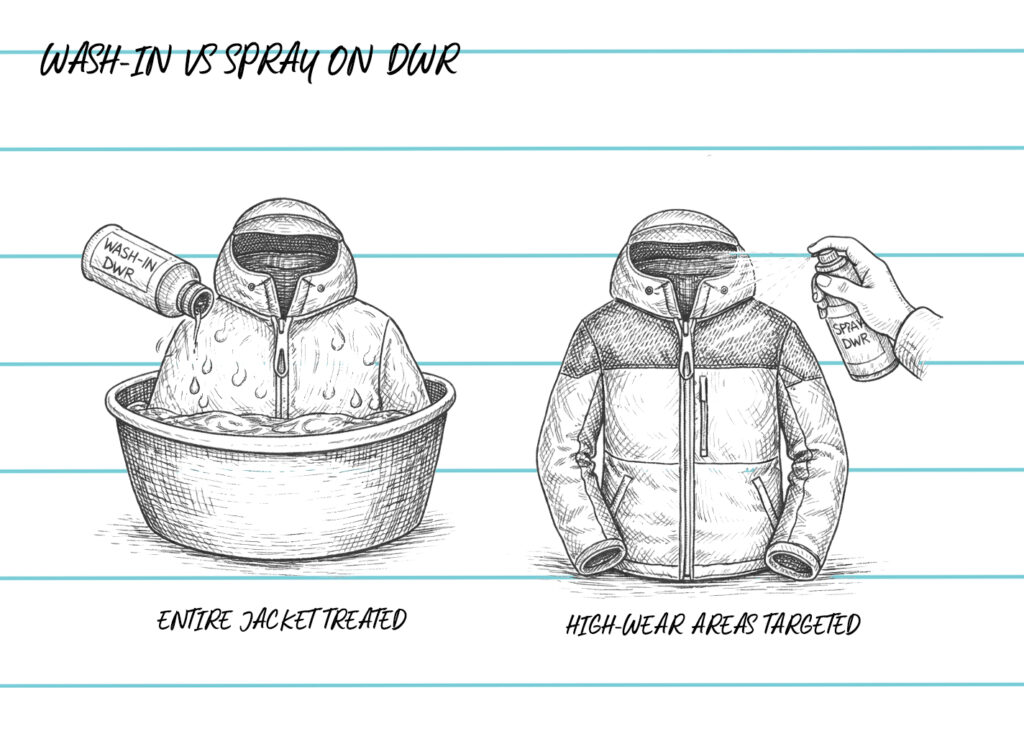
Wash-In DWR
- Treats the entire garment evenly
- Quick and straightforward to apply
- Works well for insulated jackets and more casual winter shells
Wash-in treatments are convenient, especially when breathability isn’t the top priority across the whole jacket.
Spray-On DWR
- Targets high-wear areas like shoulders, sleeves, cuffs, and hood
- Helps preserve breathability where you need it most
- Better suited to technical waterproof shells
For winter hiking, hillwalking, and mountaineering jackets, spray-on DWR is usually the better option, as it allows you to reinforce the areas that see the most abrasion without over-treating the rest of the fabric.
How to Apply DWR Properly
To get the best results, follow these basics:
- Apply DWR to clean, damp fabric
- Pay extra attention to high-abrasion areas (shoulders from pack straps, cuffs, hood, hips)
- Wipe off any excess product to avoid patchiness
- Dry according to the care label — some DWRs work better once gently heat-activated
Take your time with this step. A careful application lasts longer, performs better, and keeps your jacket working properly through the worst of winter weather.
Quick note: if your jacket is “wetting out”, it doesn’t usually mean it’s stopped being waterproof, It’s the DWR (the water-repellent finish on the outer fabric) that’s worn off. The waterproof membrane underneath can still be doing its job, but once the face fabric saturates, it can feel clammy and breathe poorly. Technically, you’re reapplying the DWR rather than “reproofing”.
6. Caring for Different Types of Winter Outerwear
Not all winter jackets require the same level of care. The fabrics, insulation, and their use all affect how often they need cleaning and reproofing — and how best to do it.
Waterproof Shell Jackets
Hard shells take the most abuse in winter. Rucksack straps, constant movement, and wet weather all wear DWR down quickly.
- Clean and reproof regularly, especially with frequent winter use
- Prioritise spray-on DWR to keep breathability high where you need it most
- Pay close attention to shoulders and hips, where pack straps and waist belts cause the most abrasion
Keeping the face fabric dry makes a big difference to comfort on long, wet days.
Insulated Jackets (Synthetic & Down)
Insulated jackets need a bit more care, especially in winter conditions.
Synthetic insulation
- More forgiving if it gets damp
- Still benefits from regular cleaning and occasional reproofing
- DWR helps stop the outer fabric from soaking up snow and sleet
Down insulation
- Needs down-specific cleaners to protect loft and warmth
- Regular detergent can damage down and reduce insulation
- Reproofing the outer fabric helps keep moisture out, which is crucial in wet winter weather
For both types, keeping the outer fabric water-repellent helps insulation stay warmer for longer.
Why Insulated Jackets Look Flat After Washing — and How to Fix It
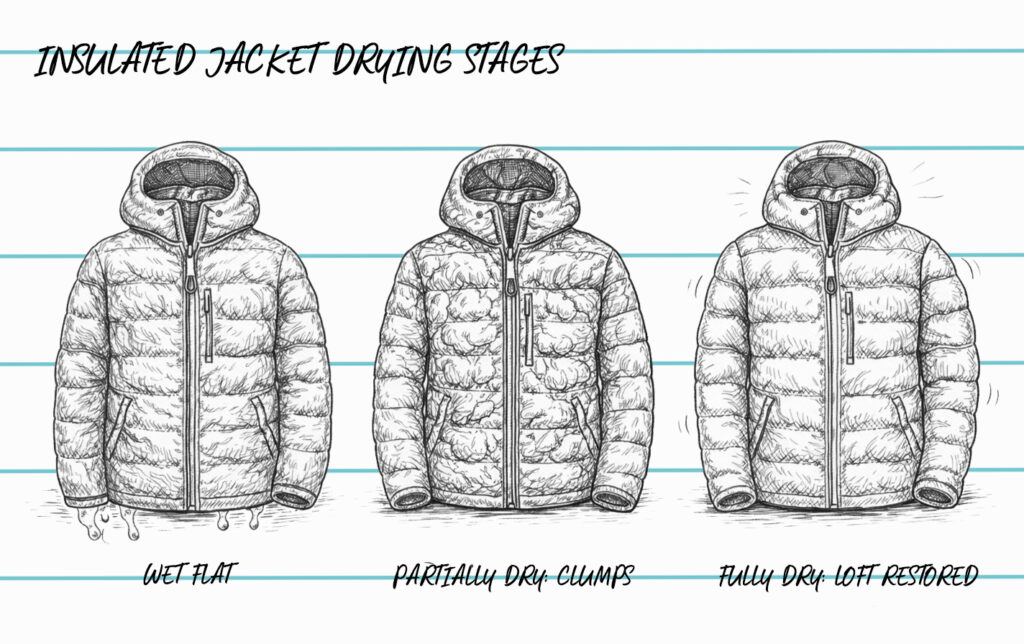
If your insulated jacket comes out of the wash looking flat or lumpy, don’t panic. This is completely normal.
When down gets wet, it clumps together. The jacket won’t regain its loft until it’s fully dry and the clusters have separated again.
To help it recover:
- Dry the jacket thoroughly, following the care label
- Gently massage and break up clumps by hand during drying
- If tumble drying is allowed, use low heat and be patient
Down jackets often take longer to dry than expected. As long as the jacket is dried properly, warmth and loft will return.
Softshells and Ski Jackets
Softshells and ski jackets often rely on DWR as their main line of defence against the weather.
- Softshells depend heavily on DWR to shed light rain and snow
- Ski jackets face constant abrasion, snow contact, and freeze–thaw cycles
- Reproof at least once per season if they’re used regularly
If water stops beading on these jackets, performance drops quickly — so staying on top of care makes a noticeable difference.
7. Common Winter Care Mistakes to Avoid
Looking after winter outerwear doesn’t need to be complicated — but a few common mistakes can undo a lot of good kit very quickly. Avoid these, and your jacket will stay comfortable and reliable for far longer.
Using Regular Laundry Detergent
This is the fastest way to kill DWR and reduce breathability. Household detergents leave residues behind that attract water and interfere with how the fabric sheds moisture. Fabric softeners are even worse, coating the fibres and blocking performance altogether. Always stick to a proper technical cleaner.
Over-Washing
You don’t need to wash your jacket after every outing. A bit of surface dirt won’t hurt it.
That said, leaving salt, mud, and winter grime on the fabric for months will slowly break down the DWR and shorten the jacket’s life. Wash when it’s genuinely dirty, not just because it’s been worn.
Ignoring the Care Label
Different fabrics, membranes, and insulation types have different limits. Some tolerate gentle heat; others don’t. Washing or drying at the wrong temperature can quickly damage waterproof layers or insulation. Always check the care label before you start.
Reproofing Dirty Gear
Reproofing over dirt doesn’t fix anything — it just locks grime into the fabric. The DWR won’t bond properly, water beading will be patchy, and the treatment will wear off far sooner than it should. Cleaning first isn’t optional; it’s essential.
8. Small Repairs: Don’t Let Minor Damage Ruin a Good Jacket
Winter is tough on jackets, and the odd knock or scuff is pretty much unavoidable. A sharp rock, a crampon spike, rucksack straps rubbing day after day — it all adds up. The key thing? Small damage is normal. Ignoring it isn’t.
Most jackets don’t fail suddenly. They slowly worsen because a minor issue is left to spread.
Why Small Repairs Matter More Than You Think
A pinhole tear or worn patch might not look like much, but in winter conditions it can:
- Let water creep into insulation layers
- Allow fabric to fray and split further with movement
- Undermine waterproof performance in high-stress areas
Once moisture and abrasion get involved, damage escalates quickly — especially in cold, wet weather.
Common Winter Wear Points to Check
After washing or reproofing (when the fabric is clean and easy to inspect), take a minute to look over:
- Cuffs and hems – frequent contact with gloves, ice, rock, and grit
- Shoulders and hips – rucksack strap and waistbelt wear
- Zips and zip garages – stiff movement, snagging, or leaking
- Inside seam tape – any lifting or peeling
Catching these early is one of the easiest ways to extend a jacket’s life.
Simple Fixes You Can Do at Home
You don’t need to be handy or own specialist tools to deal with most minor issues:
- Small fabric nicks or scuffs: Repair tape or patches stop tears from spreading and keep water out
- Stiff or gritty zips: Cleaning and lubricating early can prevent full zip failure
- Lifting seam tape: Sorting it early (or sending it for repair) prevents leaks later
These are quick, inexpensive fixes — and far easier than dealing with a soaked insulation layer halfway through winter.
When to Get a Jacket Professionally Repaired
If you’re dealing with:
- A broken zip
- Larger tears
- Failing baffles or stitching
It’s usually worth getting the jacket repaired rather than replaced. Specialist outdoor repair services can restore performance surprisingly well, often for far less than the cost of a new jacket.
9. Winter Jackets and Materials That Need Extra Care
Most modern winter jackets are designed to be washed — but there are a few exceptions where extra caution is needed.
Avoid machine washing jackets that:
- Are labelled “dry clean only”
- Have leather panels, untreated shearling, or bonded trims
- Are very old down jackets with failing baffles or stitching
If you’re unsure, don’t guess. Washing something that shouldn’t be washed can cause permanent damage. In those cases, a specialist outdoor cleaner or repair service is a safer option.
10. How Often Should You Reproof Winter Gear?
A Simple Rule of Thumb
There’s no single schedule that works for everyone — how often you need to reproof depends on how and where you use your jacket. As a rough guide:
- Regular winter use: reproof once per season
- Heavy use (weekly hiking, skiing, daily dog walks): 1–2 times per season
- Occasional use: reproof when water stops beading after washing
This applies whether your jacket is budget or high-end — DWR wear is about use and conditions, not price.
Why Winter Conditions Matter
If you’re walking in salty, gritty winter conditions, DWR will wear out faster than if you’re mostly in clean, upland environments. Road spray, pavements, and rucksack abrasion all speed things up, which is why urban winter use often demands more frequent reproofing than hill use alone.
The best indicator is always the same: wash the jacket first and see what the water does. If it no longer beads on the surface, it’s time to reproof — simple as that.
10. Recommended Winter Care Products
What to Look For
You don’t need a cupboard full of products to look after winter outerwear — just the right ones for the job. The key is choosing products that clean properly, don’t leave residue behind, and restore water repellence without damaging the fabric.
Here’s what’s worth having to hand:
- Technical cleaners – designed to remove dirt and oils without harming waterproof membranes or breathability
- Freeze-resistant, winter-ready DWR – better suited to cold, wet conditions where standard coatings struggle
- Spray-on DWR options for shells – ideal for reinforcing high-wear areas while maintaining breathability
- Down-specific wash – essential for insulated jackets, helping maintain loft and warmth without clumping
Brands like Nikwax and Grangers cover all of the above, making it easy to choose the right product for the type of jacket you’re looking after — whether that’s a hard shell, a softshell, or an insulated winter layer.
11. Jacket Lifespan: What Good Care Really Buys You
A well-made winter jacket shouldn’t be disposable. With proper care, 5–10 years of use — or more — is realistic, even for regularly used jackets.
It’s worth knowing that different parts of the jacket age differently:
- Waterproof membranes usually last many years
- DWR coatings wear out regularly, but are easy to refresh
- Insulation lasts far longer when kept clean and dry
Most jackets don’t fail — they’re just dirty, wetting out, or poorly maintained. Regular cleaning and reproofing keep them working as intended and delay the need for replacement.
12. Final Tips to Make Your Winter Gear Last Longer
Small Habits, Big Difference
Looking after winter outerwear doesn’t need to be a big job — it’s the small, regular habits that make the biggest difference over time.
- Wash and reproof before big winter trips, not after. Starting with a clean, weather-ready kit keeps you warmer and more comfortable from day one.
- Store jackets clean and fully dry, especially at the end of the season. Damp or dirty storage is a fast way to shorten a jacket’s lifespan.
- Don’t leave salty winter grime sitting on fabric until spring. Road salt and grit continue to break down DWR even when the jacket isn’t being worn.
- A little maintenance each season goes a long way. Regular cleaning and occasional reproofing can add years to your winter gear — and save you from replacing it sooner than necessary.
Look after your kit, and it’ll look after you when the weather turns properly wintery.
FAQ
Always check the care label first. Close all zips and Velcro, use a technical cleaner, and wash on a gentle cycle. Avoid fabric softener. Dry according to the label — some jackets benefit from gentle tumble drying, while others should be air-dried.
For most winter shells, spray-on DWR is the best option as it targets high-wear areas without affecting breathability. Brands like Nikwax and Grangers are reliable, easy to use at home, and well-suited to UK winter conditions.
Down insulation, waterproof membranes, softshell fabrics, and seam-taped shells all need technical cleaners and gentle cycles. Regular detergent can quickly damage performance fabrics.
Yes. Most modern technical cleaners are PFC-free and environmentally responsible, while still being safe for membranes, insulation, and DWR coatings. Avoid anything labelled as standard household detergent.
Clean when the jacket is genuinely dirty or when breathability drops — not after every use. Leaving salt, sweat, and grime sitting in the fabric for long periods is far worse than washing occasionally.
Yes, if you follow the care label. Use a technical cleaner, a gentle cycle, and refrain from using fabric softener. Synthetic insulation is more forgiving; down requires down-specific products and careful drying.
Rinse the affected area with clean water as soon as possible, then wash using a technical cleaner. Salt left sitting on fabric continues to break down DWR and should never be ignored.
Leave a Reply