
How to Stay Cool on Summer Hikes

Author: Trekitt Gear Team
With years of experience hiking across the UK’s hills, mountains and countryside, our team understands the challenges that warm-weather walking can bring. From short summer strolls to full-day mountain adventures, we’ve tested clothing, footwear, hydration systems and backpacks in UK conditions and know what genuinely helps you stay cooler, more comfortable and safer when temperatures rise.
British summer hiking is a bit of a gamble. One minute you’re wondering whether you should’ve packed a waterproof (you always should!), and the next you’re desperately searching for the only patch of shade on an otherwise treeless hillside while questioning every life decision that brought you there.
Longer daylight hours, drier trails and clearer mountain views make summer one of the best times to get outdoors. However, warm-weather hiking brings its own challenges. Overheating, dehydration, sun exposure and carrying the wrong gear can quickly turn a pleasant walk into a slow march between water bottle stops.
The good news? Staying comfortable in hot weather isn’t about suffering through it or carrying half the contents of an outdoor shop. With the right clothing, a sensible hydration strategy and a few smart gear choices, you can stay cooler, hike further and enjoy those rare British summer days while they last.
In this guide, we’ll explain how to stay cool, comfortable and safe during summer hikes in the UK and beyond.
Key Takeaways
- Learn why hikers overheat and how to recognise the early warning signs.
- Discover the best clothing, footwear and backpacks for staying comfortable in hot weather.
- Understand how to protect yourself from the sun with the right clothing, hats, sunglasses and sunscreen.
- Find out how much water you should carry and when electrolytes can help.
- Learn simple strategies for planning hikes around the heat and staying cooler on the trail.
Why Do We Overheat While Hiking?
Many people assume overheating only happens during heatwaves or when temperatures climb well above 25°C. In reality, hikers can become overheated even on relatively mild days. Walking uphill with a loaded backpack is physical exercise, and your body generates a surprising amount of heat as it tries to power you up the trail.
The challenge is that your body must constantly balance heat production with heat loss. When it can no longer release heat quickly enough through sweating and airflow, your core temperature begins to rise. As this happens, hiking becomes harder, your heart works more intensely, and fatigue can set in much earlier than expected.
What Causes Overheating on the Trail?
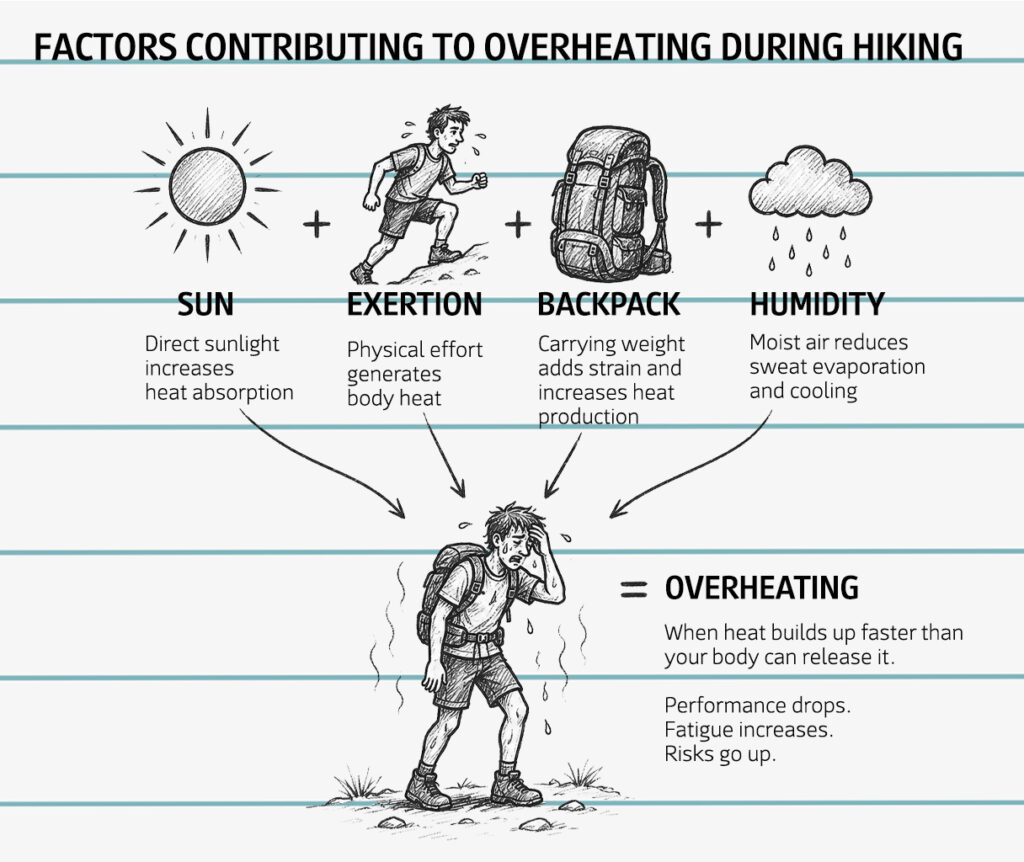
Overheating is usually the result of several factors combining rather than a single cause.
Physical Exertion
Hiking is an exercise, particularly when climbing steep hills, navigating rough terrain or maintaining a fast pace. Your muscles generate heat as they work, and the harder you push, the more heat your body produces.
Direct Sunlight
Even on cooler days, prolonged exposure to direct sunshine can significantly increase heat stress. Dark clothing, exposed skin and a lack of shade all make it harder for your body to stay cool.
Humidity
Sweating is your body’s primary cooling mechanism. However, in humid conditions, sweat evaporates more slowly, reducing its cooling effect and making you feel hotter and more uncomfortable.
Poor Ventilation
Wearing non-breathable clothing or carrying a backpack with minimal airflow can trap heat and moisture against your body. This prevents sweat from evaporating efficiently and accelerates overheating.
Carrying Heavy Loads
A heavier pack requires more energy to carry, increasing the amount of heat your body generates. Larger backpacks can also reduce airflow across your back, one of the areas where many hikers sweat most.
Inadequate Hydration
Your body relies on sweat to regulate temperature. When you’re dehydrated, your ability to produce sweat decreases, making it much harder to stay cool and increasing the risk of heat-related illness.
Wearing Unsuitable Clothing
Cotton T-shirts, thick layers and poorly ventilated waterproofs can trap heat and moisture. Choosing breathable, moisture-wicking clothing allows sweat to evaporate more effectively, helping maintain a comfortable body temperature.
What Happens When Your Body Gets Too Hot?
When heat production exceeds heat loss, your core temperature begins to rise. Your body responds by increasing sweat production and directing more blood towards the skin to help release heat.
These cooling mechanisms are effective, but they come at a cost. More energy is required, fluid loss increases, and physical performance starts to decline. As overheating progresses, even simple tasks such as climbing a hill or navigating a route can feel noticeably more difficult.
This is why hikers often experience a sudden drop in energy on hot days, despite carrying the same gear and walking the same distance they would comfortably manage in cooler conditions.
Common Signs of Overheating
Recognising the early warning signs can help you take action before overheating develops into heat exhaustion.
Early Signs
- Excessive sweating
- Feeling unusually hot
- Increased thirst
- Elevated heart rate
- Fatigue or reduced energy
- Mild headache
More Serious Warning Signs
- Dizziness or light-headedness
- Nausea
- Difficulty concentrating
- Muscle cramps
- Unsteadiness when walking
- Feeling weak or unusually exhausted
If you experience these symptoms, slow down, seek shade, drink fluids and allow your body time to cool before continuing.
Pro Tip
If you’re starting to feel thirsty, you’re already behind on hydration. Drinking small amounts regularly throughout your hike is far more effective than waiting until you feel dehydrated.
Choosing the Right Clothing for Hot Weather Hiking
When temperatures rise, your clothing becomes one of the most important pieces of equipment you carry. The right layers can help regulate body temperature, manage sweat and protect you from the sun, while the wrong clothing can leave you feeling hot, uncomfortable and exhausted long before the end of your hike.
Many hikers focus on jackets and footwear, but in summer, your base layer often has the biggest influence on overall comfort.
What Should You Wear When Hiking in Summer?
The best summer hiking clothing is lightweight, breathable and designed to move moisture away from your skin. Rather than trapping heat, it should help your body cool itself efficiently through airflow and evaporation.
The goal isn’t simply to wear less clothing. In fact, covering exposed skin can often keep you cooler than hiking in a vest and shorts under direct sunlight.
A well-chosen summer hiking outfit should:
- Allow heat to escape
- Dry quickly after sweating
- Provide protection from the sun
- Remain comfortable during long periods of movement
- Avoid holding moisture against the skin
Choose Lightweight Technical Fabrics
Not all fabrics perform equally well in warm conditions.
Technical hiking and trail running clothing is specifically designed to manage moisture and maintain comfort during physical activity. These fabrics help sweat spread across a larger surface area, allowing it to evaporate more quickly and cool the body more effectively.
Fabrics Worth Looking For
Polyester
One of the most common fabrics in hiking and trail running clothing. Polyester is lightweight, durable, highly breathable and dries quickly after sweating.
Nylon
Often slightly more durable than polyester, nylon is commonly used in lightweight hiking shirts and technical summer clothing. It provides excellent strength while remaining comfortable in warm conditions.
Merino Wool Blends
Merino wool naturally regulates temperature and resists odours, making it popular for multi-day hikes. Lightweight merino blends can feel comfortable across a wide range of temperatures while offering better durability than pure merino.
Fast-Drying Fabric Technologies
Many modern garments use proprietary fabric technologies designed to improve moisture management and drying speed. These can be particularly beneficial during long hikes or hot, humid conditions.
Fabrics to Avoid
Heavy Cotton
Cotton absorbs and holds moisture, becoming heavier and slower to dry as you sweat. Once wet, it can feel clammy, uncomfortable and significantly less effective at regulating temperature.
Thick Fleece Layers
Fleece is excellent for cooler conditions but generally unnecessary during warm summer hikes unless you’re heading into high mountains where temperatures may drop significantly.
Non-Breathable Fabrics
Clothing that restricts airflow prevents heat from escaping efficiently and can quickly create a hot, sweaty microclimate around your body.
Wear Lighter Colours
Colour plays a surprisingly important role in hot-weather comfort.
Dark colours absorb more solar radiation, which can cause fabrics to become noticeably warmer when exposed to direct sunlight. Lighter colours reflect more sunlight and often feel cooler during prolonged sun exposure.
Many summer hiking garments are available in:
- Light grey
- Beige
- Sand
- Pale blue
- Light green
- White or off-white shades
While colour alone won’t prevent overheating, it can improve comfort on exposed routes.
Prioritise Ventilation
Even the best fabric can only do so much if airflow is restricted.
Modern hiking and trail running clothing increasingly incorporates ventilation features that help heat escape while maintaining protection and comfort.
Features Worth Looking For
Mesh Panels
Often found under the arms, across the back or behind the knees, mesh panels improve airflow in high-heat areas.
Half-Zip Tops
Half-zip designs allow you to quickly increase ventilation when climbing steep hills or hiking in full sun.
Venting Chest Pockets
Common on hiking shirts, these pockets often double as discreet ventilation panels.
Lightweight Shorts
For many hikers, lightweight shorts offer maximum airflow and freedom of movement during warm conditions.
Breathable Hiking Trousers
Those seeking additional sun protection may prefer lightweight hiking trousers made from thin, highly breathable fabrics that remain comfortable even on hot days.
Are Cooling Clothes Worth It?
Customer interest in cooling clothing has increased significantly in recent years, particularly among hikers, trail runners and travellers heading to warmer destinations.
While no garment can magically lower your body temperature, many modern designs are specifically engineered to help you feel cooler during exercise.
These garments typically focus on improving breathability, moisture management and sun protection rather than actively cooling the body.
Common Cooling Features
- Highly breathable fabrics
- Moisture dispersal technologies
- UPF-rated sun protection
- Open-knit fabric construction
- Lightweight materials
- Enhanced airflow zones
The biggest benefits are usually seen during prolonged activity in direct sunshine, where effective moisture management and ventilation help reduce heat build-up.
Good examples include lightweight trail-running tops, sun hoodies, and highly breathable hiking shirts.
Why Sun Hoodies Are Becoming So Popular
A few years ago, most UK hikers had never heard of a sun hoodie. Today, they’re among the fastest-growing clothing categories in hiking and trail running.
At first glance, covering more skin might seem counterintuitive in hot weather. However, many hikers discover that protecting skin from direct sunlight can feel cooler than leaving it exposed.
Sun hoodies are particularly popular in exposed environments where shade is limited, and sun exposure remains constant throughout the day.
Benefits of Sun Hoodies
UPF Protection
Many sun hoodies offer built-in UPF ratings, helping block harmful UV rays without relying solely on sunscreen.
Neck Coverage
The hood provides valuable protection for one of the areas most commonly affected by sunburn.
Reduced Sunscreen Use
Covering more skin means fewer areas need reapplication throughout the day.
Excellent Breathability
Modern sun hoodies use lightweight fabrics specifically designed to maximise airflow and moisture management.
Less Exposed Skin
Reducing direct sunlight exposure often improves comfort during long hikes in hot conditions.
Curious whether a sun hoodie could keep you cooler on your next hike? In this video, we explain the benefits and share our top sun hoody picks for summer adventures in 2026.
Best Clothing Choices for Summer Hiking
Depending on your activity and environment, some of the most effective options include:
Sun Hoodies
Ideal for exposed trails, mountain routes and all-day hikes where sun protection is a priority.
Lightweight Hiking Shirts
Excellent for warm-weather walking, travel and relaxed hiking where ventilation and comfort matter most.
Technical T-Shirts
A versatile choice for everything from local walks to full-day hill adventures.
Trail Running Tops
Designed for high-output activities, these often offer some of the best breathability and moisture management available.
Sun Protection for Hiking
Even on mild days, prolonged exposure to ultraviolet (UV) radiation can lead to sunburn, dehydration, fatigue and an increased risk of heat-related illness.
In the UK, it’s easy to underestimate the sun because temperatures are often lower than in Mediterranean destinations. Yet spending several hours on exposed hillsides, ridgelines, or open moorland can result in significant sun exposure, particularly during late spring and summer when UV levels are highest.
Good sun protection doesn’t just help prevent sunburn. It can also improve comfort, reduce heat stress and help you maintain energy levels throughout your hike.
How Do You Protect Yourself from the Sun While Hiking?
The most effective approach combines clothing, shade, sunglasses and sunscreen rather than relying on a single solution.
Think of sun protection as another part of your hiking clothing system. Just as you dress for rain or cold, you should also dress for prolonged exposure to the sun.
Protect Your Head
Your head and neck receive some of the highest levels of sun exposure during a hike, particularly on open trails above the tree line.
Choosing appropriate headwear helps reduce direct sunlight, keeps your face shaded and can significantly improve comfort on hot days.
Wide-Brim Hats
Wide-brim hats provide excellent protection for the:
- Face
- Ears
- Neck
- Back of the head
They’re particularly useful for lower-level walks, long-distance trails and travel in hotter climates where shade may be limited.
Legionnaire Caps
A legionnaire-style caps combine a traditional cap peak with additional neck coverage.
They’re lightweight, packable and provide protection where many hikers commonly get sunburnt.
Lightweight Running Caps
Technical running caps are ideal for fast hiking, hillwalking and trail running.
Look for features such as:
- Lightweight fabrics
- Breathable mesh panels
- Moisture-wicking materials
- Dark under-brims to reduce glare
Protect Your Eyes
Remember that your eyes are also vulnerable to UV exposure.
Bright sunlight, particularly when reflected from water, pale rock, or snow, can cause eye strain and discomfort while increasing the risk of long-term UV damage.
What Sunglasses Should You Choose for Hiking?
Look for sunglasses with:
UV400 Protection
This blocks virtually all harmful UVA and UVB radiation and should be considered essential for outdoor use.
Category 3 Lenses
Category 3 lenses provide excellent protection for most hiking conditions and are suitable for bright summer days across the UK and Europe.
A Secure Fit
Sunglasses that constantly slide down your nose become frustrating very quickly. Look for designs intended for active outdoor use with secure temples and good coverage around the eyes.
Use Sunscreen Properly
Even the best clothing leaves some skin exposed, making sunscreen an essential part of your summer hiking kit.
Unfortunately, many people either don’t apply enough or forget to reapply it during the day.
Choose SPF 30+ or SPF 50
For most hiking conditions, dermatologists recommend using a broad-spectrum sunscreen with SPF 30 or higher.
For prolonged exposure, high altitudes or travel in hotter climates, SPF 50 offers additional protection.
When Should You Apply Sunscreen?
Apply sunscreen:
- Before setting off
- At least 15–30 minutes before sun exposure
- Every two hours during prolonged activity
- After excessive sweating
- After swimming or washing
Don’t wait until you feel your skin getting warm—by then, damage may already be occurring.
The Most Exposed Areas Hikers Forget
Many sunburns occur not because sunscreen wasn’t applied, but because certain areas were missed entirely.
These commonly forgotten spots often receive intense sunlight throughout a hike.
Ears
One of the most frequently missed areas and one of the easiest places to burn.
Back of the Neck
Particularly vulnerable when wearing a standard baseball cap without additional coverage.
Nose
The nose is constantly exposed and often receives more direct sunlight than any other part of the face.
Lips
Sunburnt lips are surprisingly common during summer hiking. Consider using a lip balm with SPF.
Hands
If you’re using trekking poles, your hands may remain exposed to direct sunlight for hours.
Calves
Shorts provide excellent ventilation, but they also leave your lower legs exposed. Many hikers discover burnt calves only when stepping into the shower that evening.
Do You Need More Sun Protection at Higher Altitudes?
Yes. As altitude increases, the atmosphere becomes thinner and absorbs less UV radiation.
This means that mountain environments often expose hikers to stronger UV levels than lower-level walks, even when air temperatures feel relatively cool.
Combined with reflection from pale rock, water or occasional snow patches, sun protection becomes even more important during mountain adventures.
Quick Summer Hiking Sun Protection Checklist
- Sunglasses with UV400 protection
- Hat or sun hoodie
- SPF 30+ or SPF 50 sunscreen
- SPF lip balm
- Lightweight sun-protective clothing
- Regular sunscreen reapplication
- Extra protection for ears, neck and hands
Pro Tip
If you’re hiking in direct sunshine and feel noticeably cooler whenever you step into shade, that’s a good indication your body is already working hard to manage heat. Taking short breaks in shaded areas can help reduce heat build-up, conserve energy and make long summer hikes considerably more comfortable.
Hydration Strategy for Summer Hiking
If there’s one mistake that consistently ruins summer hikes, it’s underestimating how much water you’ll need.
Warm weather changes the equation significantly. As temperatures rise, your body relies on sweating to regulate temperature, increasing fluid loss and making hydration one of the most important factors in maintaining comfort and performance.
The challenge is that dehydration often develops gradually. You might not notice it initially, but as fluid levels drop, you’ll typically experience reduced energy, a higher heart rate, increased fatigue and difficulty concentrating.
Good hydration isn’t simply about carrying more water. It’s about drinking consistently throughout your hike and matching your intake to the conditions.
How Much Water Do You Need for a Summer Hike?
There is no single answer because hydration requirements vary significantly between individuals and conditions.
Factors that influence water requirements include:
- Air temperature
- Humidity levels
- Elevation gain
- Hiking pace
- Pack weight
- Route exposure
- Individual sweat rate
Some people naturally sweat far more than others, meaning two hikers walking the same route may have very different hydration needs.
As a general rule, if you’re finishing a summer hike with water leftover, that’s usually preferable to running out halfway through.
General Water Requirements for Summer Hiking
The following guide provides a useful starting point for typical UK summer conditions.
| Hike Duration | Recommended Water |
| 1–2 hours | 500ml–1L |
| 2–4 hours | 1–2L |
| 4–8 hours | 2–4L+ |
These figures should be increased during:
- Heatwaves
- Mountain hikes
- Fast-paced hiking
- High humidity
- Long exposed routes with little shade
A Simple Rule
Drink little and often.
Taking regular small sips throughout your hike is generally more effective than waiting until you’re thirsty and drinking a large amount at once.
By the time you feel genuinely thirsty, you’re often already beginning to dehydrate.
How Can You Tell If You’re Becoming Dehydrated?
Early warning signs often include:
- Increased thirst
- Dry mouth
- Headaches
- Reduced energy
- Muscle cramps
- Darker urine
- Reduced concentration
If you notice these symptoms, take a break, drink fluids and slow your pace where possible.
Preventing dehydration is always easier than recovering from it.
Water Bottles or Hydration Reservoirs?
Both systems work well, and the best choice often depends on the length and style of your hike.
The important thing is selecting a system that encourages you to drink regularly.
Water Bottles
Traditional water bottles remain popular for many hikers due to their simplicity and reliability.
Advantages
- Easy to refill
- Easy to clean
- Easy to monitor how much you’ve consumed
- Can be carried in side pockets for quick access
- No hoses or moving parts
Best For
- Short hikes
- Day walks
- Casual hillwalking
- Routes with refill opportunities
Many hikers prefer bottles because they provide a clear visual reminder of how much water remains.
Hydration Reservoirs
Hydration reservoirs store water inside your backpack and deliver it through a drinking tube.
They’re particularly popular among trail runners, mountain hikers and anyone covering longer distances.
Advantages
- Drink without stopping
- Encourages more regular hydration
- Larger carrying capacity
- Convenient during steep climbs
- Excellent for fast-moving activities
Best For
- Longer hikes
- Mountain days
- Fast-paced hiking
- Multi-hour adventures
- Hot-weather trekking
Many hikers find they naturally drink more water when using a reservoir because the tube is always within reach.
Which Hydration System Is Better?
The answer depends on your hiking style.
For relaxed day walks and shorter routes, water bottles are often perfectly adequate.
For longer summer hikes, mountain days, or high-output activities, hydration reservoirs can help maintain consistent fluid intake throughout the day.
Many experienced hikers use both a hydration reservoir for regular drinking and a spare bottle for electrolyte drinks or emergency backup.
When Should You Use Electrolytes?
Water is essential, but during longer hikes, your body loses more than just fluids.
Sweat contains important minerals known as electrolytes, including:
- Sodium
- Potassium
- Magnesium
- Calcium
These minerals help regulate hydration, muscle function and nerve signalling.
Replacing water without replacing electrolytes can sometimes leave hikers feeling tired, sluggish or prone to muscle cramps during prolonged activity.
Electrolytes Become More Important When:
Temperatures Exceed 20°C
The warmer it gets, the more you sweat and the greater your electrolyte losses become.
Hiking All Day
Multi-hour hikes increase cumulative fluid and mineral loss.
Sweating Heavily
If your clothing is soaked or salt marks appear after hiking, you’re likely losing significant amounts of electrolytes.
Carrying a Heavy Pack
Higher physical effort increases sweat production and fluid requirements.
Signs You May Need Electrolytes
While everyone is different, common signs include:
- Muscle cramps
- Excessive fatigue
- Headaches
- Feeling drained despite drinking water
- Heavy salt deposits on clothing or skin
Electrolyte tablets, powders and hydration mixes provide a convenient way to replace minerals during longer summer adventures.
Hydration Tips for Hot Weather Hiking
- Start your hike well hydrated
- Drink consistently rather than waiting for thirst
- Carry more water than you think you’ll need
- Plan refill opportunities before setting off
- Consider electrolytes on longer or hotter hikes
- Increase intake during climbs and exposed sections
- Monitor urine colour during long days outdoors
Pro Tip
Many hikers obsess over pack weight but think nothing of carrying an extra waterproof “just in case.” On a hot summer day, an extra litre of water is often far more valuable than shaving a few hundred grams from your backpack.
Choosing the Right Pack for Hot Weather
Your backpack can have a surprisingly large impact on how hot and sweaty you feel on the trail.
After all, you’re essentially strapping an insulated load to your back and carrying it up a hill for several hours. If that pack traps heat and restricts airflow, it can quickly become one of the hottest parts of your hiking system.
The good news is that choosing the right pack and carrying only what you need can make a noticeable difference to comfort during warm-weather hikes.
Can Your Backpack Make You Feel Hotter?
Absolutely.
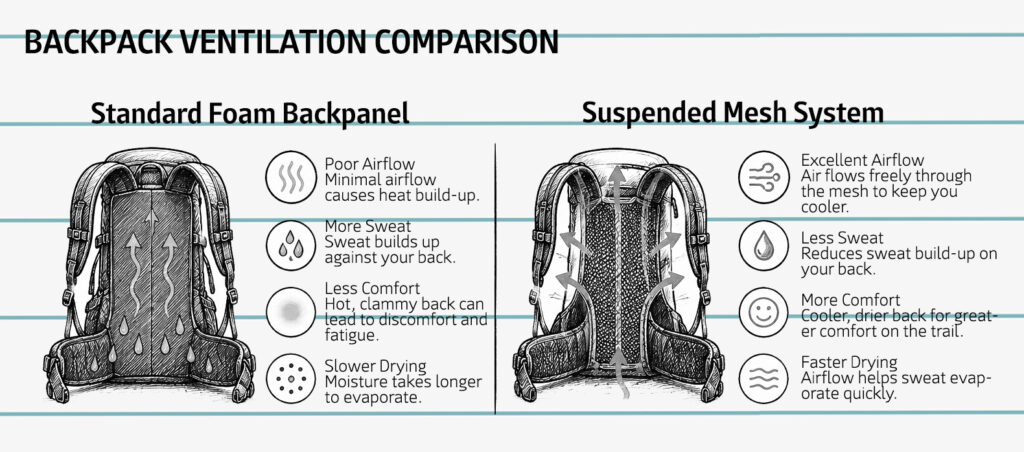
Backpacks sit directly against one of the body’s largest sweat-producing areas. Poorly ventilated designs can trap heat and moisture against your back, creating a warm, damp environment that feels uncomfortable long before the rest of your clothing becomes saturated.
Anyone who has removed their backpack after a summer hike and discovered a perfectly backpack-shaped sweat patch already knows the answer.
While some sweating is inevitable during physical activity, a well-designed hiking backpack can significantly reduce heat build-up and improve overall comfort.
What Backpack Features Help Keep You Cool?
When choosing a backpack for summer hiking, ventilation should be your top priority.
Many modern hiking packs are designed to improve airflow between your back and the pack itself.
Ventilated Back Systems
The most effective systems create space between your back and the main body of the pack, allowing air to circulate more freely.
Common designs include:
Trampoline Mesh Systems
A tensioned mesh panel sits between your back and the pack, creating a gap that encourages airflow and reduces direct contact with the pack body.
Suspended Back Panels
These systems use structured frames to keep the pack slightly away from your back, maintaining stability and carrying comfort.
Air-Gap Carrying Systems
Various brands use their own interpretations of ventilated back systems, all aiming to increase airflow and reduce heat build-up during activity.
Benefits of Ventilated Packs
- Better airflow
- Reduced sweating
- Improved comfort
- Less heat build-up
- Better moisture management
- Increased comfort on long climbs
Ventilation won’t eliminate sweating, but it can make a significant difference during warm-weather hiking and prolonged uphill sections.
Choose the Right Size Pack
One of the easiest ways to stay cooler is to avoid carrying unnecessary weight.
Many hikers use a larger backpack than they actually need, filling spare space with “just in case” items that rarely leave the pack. The result is extra weight, increased effort and more heat generation throughout the day.
A smaller, appropriately sized pack encourages a lighter, more efficient setup while reducing the physical effort required to carry it.
Not Sure What Size Backpack You Need?
Choosing the correct pack size can be surprisingly confusing. If you’re unsure whether you need a 20L daypack, a 35L hiking pack or something larger, check out our guide: What Size Backpack Do You Need for Hiking? where we explain capacity recommendations for everything from short walks to multi-day adventures.
Planning Your Hike Around the Heat
Even the best clothing, hydration strategy and backpack can only do so much if you’re hiking during the hottest part of the day.
One of the simplest ways to stay cooler is to plan your hike around the temperature rather than fighting against it.
Professional mountain guides, trail runners and experienced hikers often adjust their schedules during summer, starting earlier or finishing later to avoid peak heat.
When Is the Coolest Time to Hike?
In most summer conditions, the coolest and most comfortable times are:
Early Morning
Often the best time to hike.
Benefits include:
- Lower temperatures
- Less direct sun exposure
- Quieter trails
- Better wildlife sightings
- Reduced dehydration risk
You also get the satisfaction of reaching the summit while everyone else is still looking for their car keys.
Late Afternoon
As the sun begins to lower, temperatures often become noticeably more comfortable, especially on exposed routes.
Evening
Summer evenings can provide some of the most enjoyable hiking conditions of the year, with softer light, cooler temperatures and beautiful sunset views.
Avoid the Hottest Part of the Day
Where possible, try to minimise strenuous climbing and exposed sections during the hottest period.
Typical Heat Peak
11am–4pm
This is generally when:
- UV levels are highest
- Sun exposure is most intense
- Water consumption increases
- Overheating risk rises significantly
If you’re planning a longer hike, consider using this period for:
- Lunch stops
- Breaks in shaded areas
- Lower-intensity sections of the route
- Refilling water supplies
A Smart Summer Hiking Strategy
A common approach for experienced hikers is:
Start early → Climb while it’s cool → Take a relaxed lunch break → Finish during the afternoon or evening
This allows you to spend less time battling the heat and more time enjoying the walk.
Pro Tip
If you’re constantly searching for patches of shade, pouring water over your hat and checking how much water you have left every ten minutes, the problem might not be your gear, it might simply be that you’re hiking at midday. Sometimes the coolest piece of equipment is a slightly earlier alarm clock.
Summer Hiking Gear Checklist
By this point, you might be wondering whether staying cool on a summer hike requires an entirely new gear setup. Fortunately, it doesn’t.
Most hikers already own many of the essentials. The key is choosing lightweight, breathable equipment and making sure your gear supports hot-weather comfort rather than working against it.
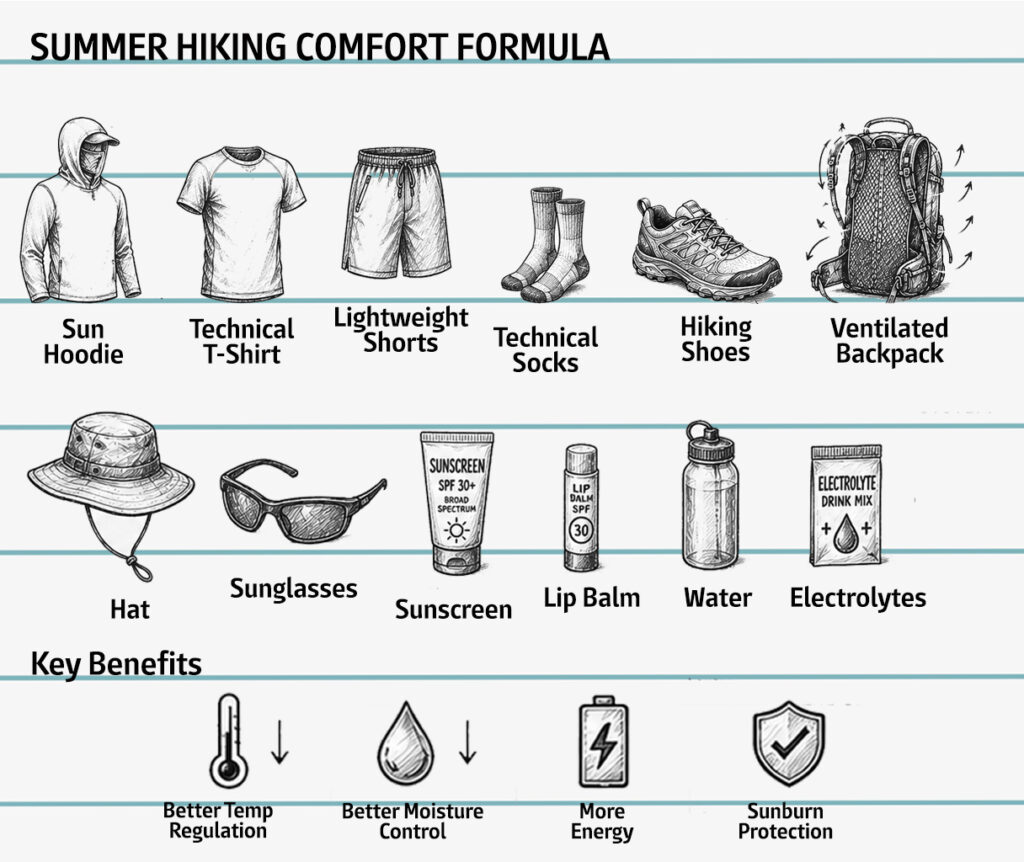
Use this checklist before your next summer adventure to ensure you’re prepared for warm conditions.
Clothing
Your clothing should help your body regulate temperature, manage sweat, and protect you from the sun.
✓ Lightweight Technical T-Shirt
A breathable technical T-shirt forms the foundation of most summer hiking systems. Look for lightweight fabrics that wick moisture efficiently and dry quickly after sweating.
✓ Sun Hoodie or Lightweight Hiking Shirt
For exposed routes, a sun hoodie or a highly breathable hiking shirt can provide valuable protection from UV rays while keeping you comfortable throughout the day.
✓ Lightweight Shorts or Trousers
Choose shorts for maximum airflow, or lightweight hiking trousers for additional sun protection and coverage from vegetation or insects.
✓ Technical Socks
Your feet can generate a surprising amount of heat during long walks. Technical hiking socks help manage moisture, reduce friction and improve comfort in warm conditions.
✓ Lightweight Hiking Shoes
Breathable, supportive hiking shoes can make a big difference on summer walks. Compared to heavier boots, they usually feel cooler, dry faster and allow more natural movement, especially on dry trails, forest paths and lower-level hill walks. Look for grippy outsoles, good cushioning and enough support for your route and pack weight. If you’re unsure where to start, take a look at our guide to the Best Lightweight Hiking Shoes for Summer, where we compare some of our favourite options for warm-weather hiking and hillwalking.
Sun Protection
Many hikers only think about sun protection after they start feeling the effects. A few small items can make a huge difference.
✓ Sunglasses
Choose a pair with UV400 protection and a secure fit suitable for active outdoor use.
✓ Hat
Whether it’s a wide-brim hat, legionnaire cap or lightweight running cap, head protection helps reduce direct sun exposure and improve comfort.
✓ Sunscreen
A broad-spectrum SPF 30+ or SPF 50 sunscreen should be considered essential for summer hiking.
✓ Lip Balm with SPF
Often forgotten but highly appreciated after a long day in the sun.
Hydration
Staying hydrated is one of the most effective ways to maintain performance and reduce the risk of overheating.
✓ Water Bottles or Hydration Reservoir
Choose a hydration system that encourages regular drinking throughout your hike.
✓ Electrolytes
Particularly valuable during long hikes, warm temperatures or periods of heavy sweating.
✓ Water Filter for Longer Routes
If you’re heading into remote areas or planning all-day adventures, a lightweight water filter can reduce the amount of water you need to carry while providing access to safe refill options.
Pack
Your backpack should support comfort rather than contribute to overheating.
✓ Ventilated Backpack
A pack with a suspended mesh or ventilated back system can significantly improve airflow and reduce heat build-up.
✓ Lightweight Waterproof Jacket
This is still the UK, after all. A lightweight waterproof jacket remains worth carrying, even when the forecast looks promising.
✓ Emergency Essentials
Summer conditions don’t eliminate the need for basic safety equipment.
Depending on your route, this may include:
- Mobile phone
- Emergency contact information
- Navigation tools
- Headtorch
- First aid kit
- Emergency shelter
Final Thoughts
The secret to staying comfortable isn’t carrying more gear. It’s carrying the right gear. Lightweight clothing, sensible sun protection, effective hydration and a well-chosen backpack can make the difference between enjoying the trail and simply enduring it.
Just remember that hot weather adds another layer of planning. Start early where possible, drink before you feel thirsty, seek shade when you need it and don’t underestimate how quickly conditions can affect your energy levels.
And because this is the UK, it’s probably still worth throwing a lightweight waterproof in your pack. The weather forecast may say sunshine all day, but British hikers know better than to trust that completely.
Stay cool, stay hydrated and enjoy those rare sunny hiking days while they last. The rain will be back soon enough. If you’re looking to upgrade your summer hiking kit, our team is always happy to help, whether online or in person at our Trekitt shop in Hereford
FAQ
The best summer hiking clothing is lightweight, breathable and quick-drying. Technical fabrics such as polyester, nylon and lightweight merino blends help move moisture away from your skin, allowing sweat to evaporate more efficiently and keeping you comfortable during long periods of activity.
Look for garments with good ventilation, moisture-wicking performance and, where possible, built-in sun protection. Cotton is generally best avoided as it absorbs moisture and dries slowly. 
Surprisingly, many hikers find they are.
While it might seem logical that less clothing would feel cooler, direct sunlight can actually increase heat stress on exposed skin. Sun hoodies provide coverage for the neck, arms and head while using highly breathable fabrics designed for warm-weather activity.
In strong sunshine, many hikers and trail runners report feeling more comfortable in a lightweight sun hoodie than in a standard short-sleeved T-shirt, particularly during long days on exposed trails.
Water requirements vary depending on temperature, route length, elevation gain and your individual sweat rate.
For most UK summer day hikes, carrying between 1 and 3 litres is a sensible starting point. Longer mountain days, heatwave conditions or fast-paced hikes may require considerably more.
A good rule is to carry enough water to comfortably complete the route, plus a little extra for unexpected delays or warmer-than-expected conditions.
If you’re heading into remote areas, a water filter can provide additional flexibility by allowing you to safely refill from suitable water sources along the way.
Neither system is universally better. It depends on how and where you hike.
Water bottles are simple, easy to refill and make it easy to monitor how much you’ve consumed. They’re ideal for shorter walks and casual day hikes.
Hydration reservoirs allow you to drink without removing your backpack or stopping to reach for a bottle. This convenience often encourages more regular hydration, making reservoirs particularly popular for longer hikes, mountain adventures and fast-paced activities.
Many experienced hikers use a combination of both systems to get the benefits of each.
Backpacks with suspended mesh back systems typically offer the best ventilation.
These designs create a gap between your back and the main body of the pack, allowing air to circulate and helping reduce heat build-up during warm-weather hiking.
Common examples include:
Trampoline mesh systems
Suspended back panels
Ventilated air-gap carrying systems
While no backpack will completely prevent sweating, a well-ventilated design can make a noticeable difference to comfort on hot days.
Hiking during a heatwave requires additional caution. Higher temperatures increase the risk of dehydration, overheating and heat exhaustion, particularly on exposed routes with limited shade.
If temperatures are unusually high, consider:
Starting very early in the morning
Choosing lower-level routes
Carrying extra water
Taking frequent breaks in shaded areas
Reducing overall distance and intensity
Sometimes the smartest hiking decision is simply choosing a cooler day.
Both options can work well.
Shorts maximise airflow and are often preferred during very warm weather. Lightweight hiking trousers provide greater protection from sun exposure, insects, vegetation and rough terrain while remaining surprisingly comfortable when made from breathable technical fabrics.
The best choice depends on the conditions, your personal preference and the type of terrain you’re hiking through.
Yes.
Even though UK temperatures are often lower than those in southern Europe, UV radiation can still be strong enough to cause sunburn, particularly during late spring and summer.
Long periods spent on exposed hillsides, ridgelines and open moorland can result in significant sun exposure, making sunscreen an essential part of your summer hiking kit.
The most common mistake is underestimating how much the conditions will affect them.
Many hikers start with too little water, wear unsuitable clothing or set off during the hottest part of the day. Small decisions like starting earlier, drinking regularly and wearing breathable clothing often have a bigger impact on comfort than buying expensive new gear.
Leave a Reply