
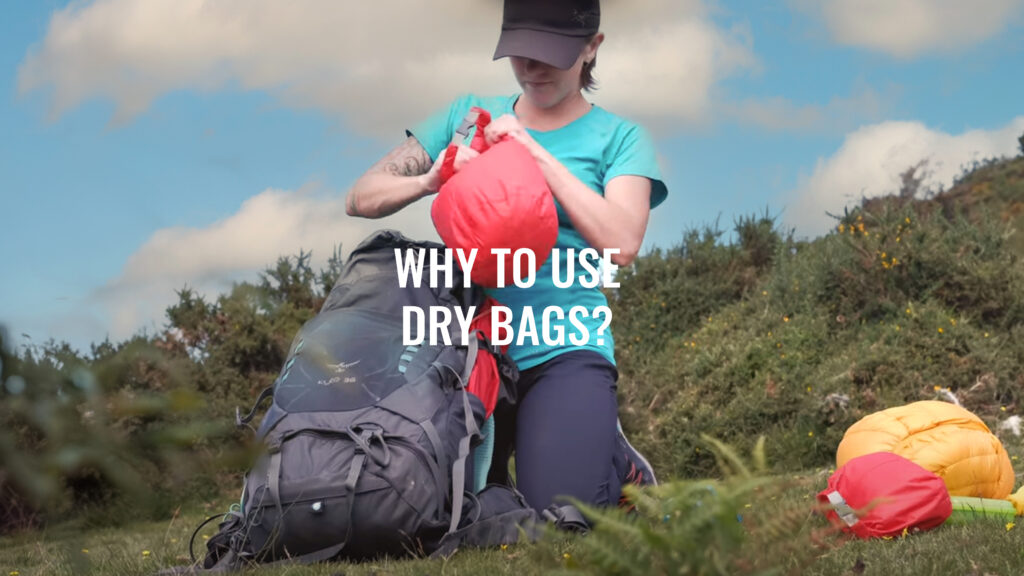
If you’ve ever had a sleeping bag soaked by sideways rain or watched your phone take an unexpected swim, you already know why to use dry bags isn’t just theory. In this guide, we’ll dive into what they are, how they work, and the many clever ways they can save your gear (and your trip).
In SHORT…
- What a dry bag is & how it works: Learn how roll-top waterproof bags made from TPU, PVC, or laminated nylon keep gear dry, and why proper sealing (three tight rolls) is critical to performance.
- When and how to use them: Discover key scenarios from wild camping to bikepacking where dry bags prevent soggy gear, plus size guides, IPX waterproof ratings, and tips for packing electronics, clothes, sleeping bags, and food.
- Extra uses and care tips: See surprising hacks like using them as water buckets, food storage, or camp pillows, and how to clean, store, and maintain them for years of reliable adventure protection.
If there’s one thing we know at Trekitt, it’s how quickly the weather can change and how quickly that can ruin your day if your gear isn’t protected. One soaked base layer or drowned sleeping bag, and you’re suddenly facing a cold, uncomfortable, and potentially dangerous night out.
That’s why we swear by dry bags. These humble roll-top wonders are one of the best bits of kit you can carry. They’re light, tough, and incredibly effective at keeping your stuff dry, no matter the weather. So let’s break down what they are and why they’re worth their weight in gold.
What Is a Dry Bag?
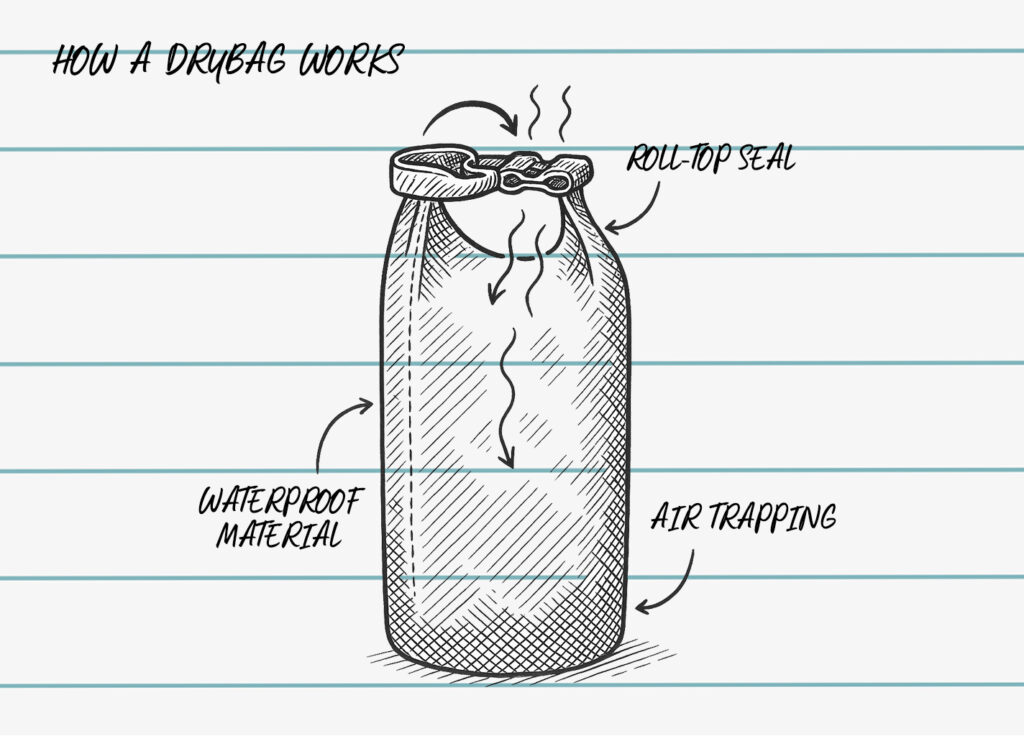
In short, it’s a waterproof bag made from materials like TPU, PVC, or laminated ripstop nylon, all designed to keep moisture out even when things get properly wet and wild. They use a roll-top closure system (roll it 3–5 times and buckle it shut), which seals everything inside and keeps water firmly on the outside. Some float, some compress, and some are featherlight, but they all do one job really well: keeping your gear dry.
How Does the Drybag Actually Work?
Think of your dry bag as a tiny, rugged, waterproof house for your gear. There are no windows or plumbing, just solid protection and a roll-top roof that doesn’t leak. Your sleeping bag is a VIP guest. Spare clothes are nestled in luxury. Your phone is tucked away like it’s dodging a monsoon.
Once you roll that top down nice and tight (three times minimum), don’t cheat—it creates a seal so snug it could survive an impromptu swim or an unexpected cloudburst halfway up Snowdon. The fabric is like high-tech rain armour (TPU, PVC, or laminated nylon if you’re curious), and once sealed, it laughs in the face of water.
We’ve tested these things in almost every miserable weather situation you can imagine, from sideways hail in Snowdonia to wet-booted canoe trips in the Highlands. And trust us, once you’ve had one, you won’t go back.
When Do You Actually Need a Dry Bag?
Many people—especially those just starting out in the outdoors—assume dry bags are just for paddlers, kayakers, canoeists, the SUP crowd. And sure, they absolutely are. But the truth is, they’re not just for water sports. The leaky tent, the sideways rain halfway up Cadair Idris, that “harmless” river crossing that turned into a knee-deep paddle. And suddenly, the idea of keeping a dry pair of socks, your phone, or even just your loo roll bone-dry started to feel very appealing.
So, when do you really need one?
1. Hiking & Wild Camping
British weather doesn’t mess around. One minute it’s sunny, the next you’re in sideways rain halfway up the Glyders. A dry bag tucked into your rucksack gives your spare clothes, sleeping bag, and electronics a safe, dry haven.
2. Camping & Overnighters
Even if you’re not hiking in, a dry bag is great for keeping things organised and safe from condensation, damp ground, or overnight showers. Use them to stash clothes, keep your first aid kit sealed, or even separate dry gear from wet stuff in your tent.
3. Bikepacking & Cycle Touring
Dry bags are brilliant for stashing kit on your bike, especially on the handlebars or under the saddle, where it’s more exposed. They shrug off rain, tyre spray, and trail grit, keeping your essentials clean and dry no matter what the route throws at you.
4. Kayaking, Canoeing & Paddleboarding
This one’s a no-brainer. If you’re on or near water, a dry bag is non-negotiable. You can tuck it under bungees on a paddleboard or cram it into a kayak hatch. It keeps your phone, snacks, and warm layers dry even if you take that unexpected swim.
5. Travelling & Backpacking
Dry bags double as handy packing cubes—except they also protect your kit from leaky roof racks, downpours in the tropics, or hostel bathroom chaos. They’re especially great for keeping electronics, chargers, or passports safe when you’re on the move.
6. Beach Days & Water-Based Adventures
Heading to the beach or wild swimming spot? Toss your phone, towel, and dry change of clothes into a dry bag and forget about splash damage, rogue waves, or sand getting everywhere.
Rugged Enough for the Extreme
If you’re heading into the mountains, jungle, desert, or coast, don’t just think of a dry bag as “optional.” Think of it as insurance.
- In alpine environments, it protects your gear from snow melt and slush
- In tropical zones, it shields against rain and sweat-soaked humidity
- In deserts, it keeps sand out of your clothes, food, and sleeping bag
- At the coast, it saves your gear from salt spray and beach grit
You don’t have to be paddling through rapids or wading through rivers to appreciate the value of a dry bag. Sometimes all it takes is one unexpected downpour, a leaky tent seam, or a surprise slip into a stream to wish you’d packed smarter.
A dry bag is for those everyday moments when the outdoors throws a curveball. It’s the kind of gear you might overlook at first, but once you’ve used one, you’ll wonder how you ever managed without it.
Are Dry Bags Really Waterproof?
Short answer? Yes, but only if you use them properly.
Longer answer? Well, “waterproof” isn’t always as straightforward as it sounds, especially when relying on it to keep your sleeping bag, spare clothes, or expensive electronics safe from soaking.
It’s easy to assume that anything with a roll-top and a plasticky feel is fully waterproof, but the reality is a little more nuanced. Not all dry bags are made equal, and how well they perform depends on three key factors: the materials, the rating (if any), and how you seal them.
So, before you toss your gear into one and hurl it into a canoe or strap it to your rucksack in a storm, let’s unpack what “waterproof” really means in the world of dry bags, and what you need to look out for to make sure your kit stays dry.
How Waterproof Ratings Work (e.g. IPX)
When a dry bag says it’s “waterproof,” it can mean different things depending on how and where you use it. Some are built to handle a torrential downpour, while others can survive a full dunk in a river. So how do you know what you’re getting?
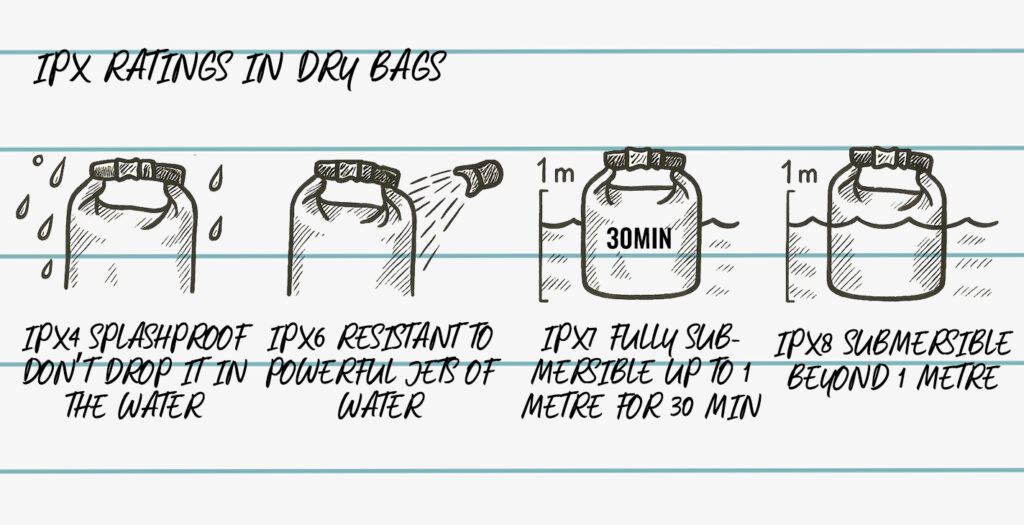
That’s where IPX ratings come in. These are part of the Ingress Protection (IP) scale, which tells you how well something can resist water (and sometimes dust). Not all dry bags come with an IPX rating, but when they do, it gives you a clear idea of what kind of water exposure they can handle.
Here’s a quick breakdown of what those numbers actually mean:
- IPX4 – Splashproof. It can handle rain, splashes, and a bit of spray, but don’t drop it in the water.
- IPX6 – Resistant to powerful jets of water. Great for heavy rain, washing off your pack, or high-moisture environments.
- IPX7 – Fully submersible up to 1 metre for 30 minutes. Ideal for short accidental dunks.
- IPX8 – Submersible beyond 1 metre, usually rated for a specific depth and duration (e.g. 2m for 1 hour) and often used for diving or marine rescue gear.
Most everyday dry bags, like the ones you’d take hiking, camping, or paddleboarding, aren’t designed for long-term submersion, unless they’re clearly rated as IPX7 or IPX8. If you plan to dunk your gear, or your trip fully involves deep water crossings, make sure your bag can genuinely handle it—or double up for safety.
The Closure Matters More Than You Think
Even the best waterproof fabric won’t help if the bag isn’t sealed correctly. That’s why nearly all dry bags use a roll-top closure, and how you roll it is critical.
To keep things watertight:
- Roll the top at least three times before clipping it shut.
- Squeeze out excess air (unless you want it to float).
- Ensure both seal sides are flat and aligned—no bunching or twisting.
A sloppy roll = a soggy outcome
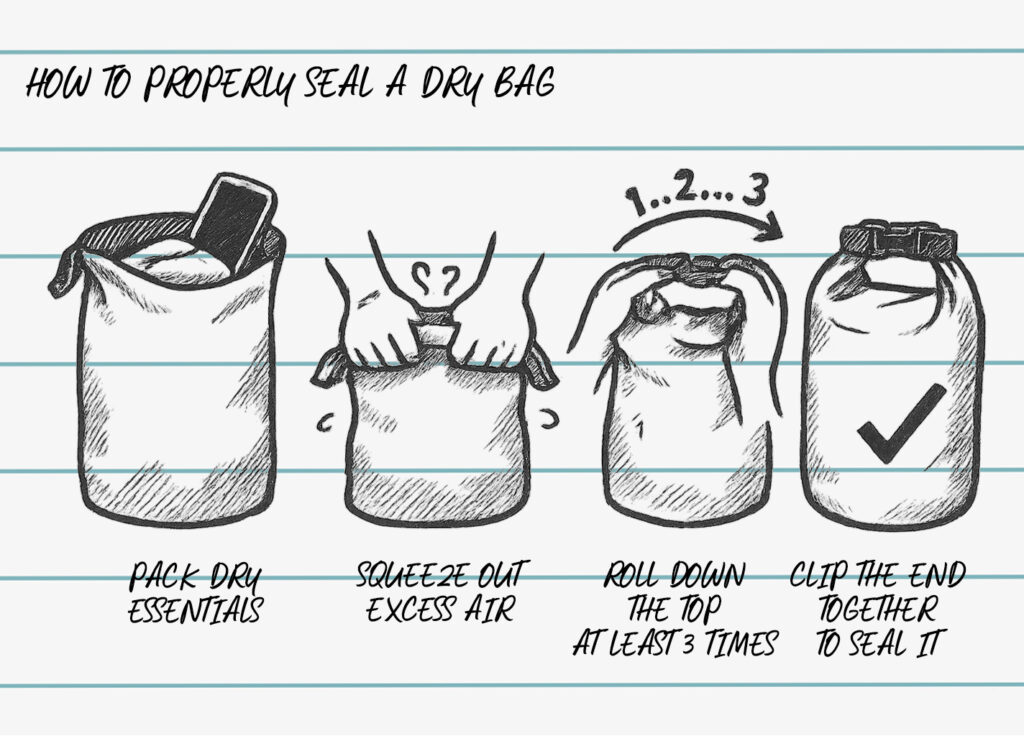
How to Properly Seal a Dry Bag: Step-by-Step
1. Pack Your Gear
Start by placing your essentials inside the dry bag.
Try to keep wet and dry items separate, and if possible, only pack dry gear, especially sleeping bags, electronics, or spare layers.
2. Remove Excess Air
Gently press down on the bag to push out as much air as you want.
Leaving some air in helps it float, but if you’re trying to save space in your pack, go for a tighter roll.
3. Roll the Top Down
This is the crucial part:
Fold the top edge over at least three full times.
Make sure you roll it toward the front (away from the back panel or straps), and keep each roll tight and flat.
Top tip: The tighter and cleaner the roll, the better the seal. Avoid wrinkling or folding the edges sideways as you go.
4. Clip the Ends Together
Once rolled, bring the two ends of the top together and clip them shut.
This secures the seal and forms a handle or anchor point for lashing the bag to your pack, boat, or bike.
5. Check the Seal
Give the bag a gentle squeeze to see if any air escapes.
If you hear a hiss or see puffing from the sides, unroll and reseal it—better safe than soaked!
What Can You Put in a Dry Bag?
You can keep pretty much anything dry. Dry bags are incredibly versatile—whether you stuff them inside a rucksack or strap them to a kayak, they protect your essentials from water, mud, dust, and general chaos.
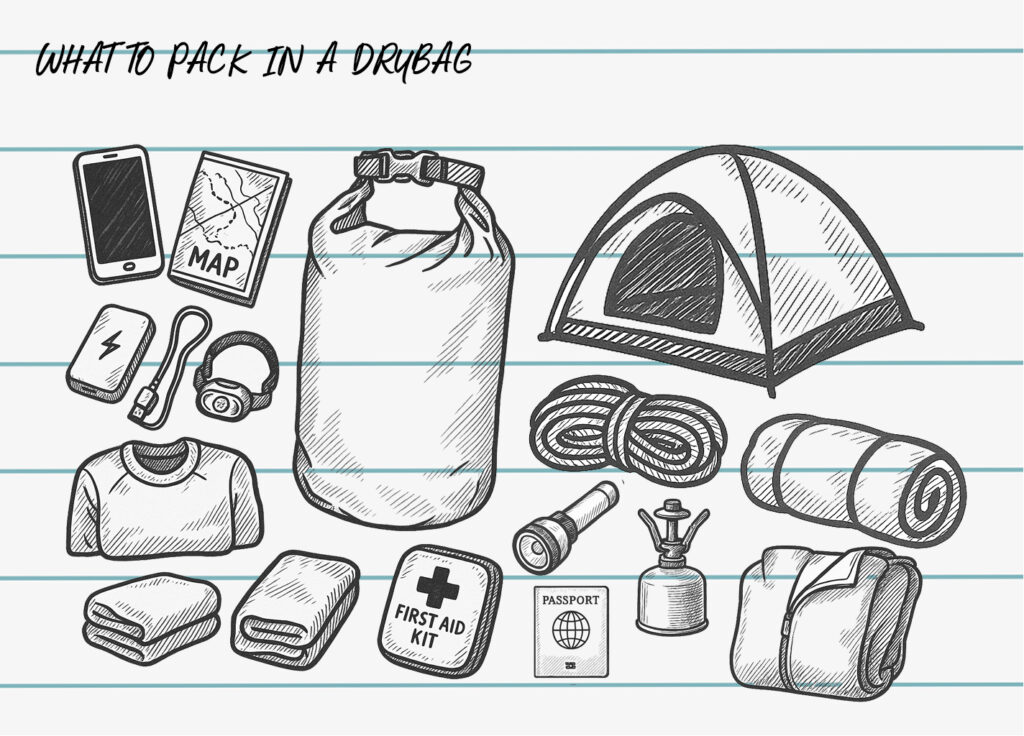
Here are the kinds of things we always stash inside:
Electronics
Phones, power banks, GPS devices, headlamps—anything with a screen or battery belongs in a dry bag. Keep them in smaller individual bags for quick access and extra protection from knocks.
Clothing & Spare Layers
Wet baselayers are morale killers. Dry bags are perfect for stashing spare socks, underwear, midlayers, gloves or hats—especially when you’re out for multiple days.
Sleeping Bags & Insulation
This one’s non-negotiable. Whether you use down or synthetic, your sleeping bag must stay dry. A larger dry bag (or a compression dry sack) ensures you don’t climb into a soggy cocoon at night.
Food & Cooking Gear
Dry bags keep food safe from moisture and smell-free from wildlife. They’re also brilliant for storing lightweight cook kits and gas canisters. Bonus: if something spills, it won’t ruin the rest of your pack.
Maps, Passports & Paperwork
Even in the age of GPS, a paper map or printed permit can be a trip-saver. Use a small or transparent dry bag to keep documents legible and close to hand.
First Aid Kit
Keeping plasters and bandages dry is just as important as remembering to bring them. A brightly coloured dry bag makes your first aid kit easier to find in a hurry.
Tents (Yes, Really!)
Packing your tent into a dry bag is smart, especially in wet conditions. It keeps the fabric dry until setup, or keeps the rest of your gear safe from a soaked flysheet after a rainy takedown.
- 1–2 person tent: 20–30L dry bag
- 3–4 person tent: 40–60L dry bag
Tip: Pack poles separately to save space.
What Size Dry Bag Do I Need?
Dry bags come in loads of sizes—and choosing the right one depends on what you’re packing and how you travel. Here’s a quick guide:
Dry Bag Size Guide:
- 5L – Ideal for phones, wallet, snacks, or first aid kits. Great inside a daypack or strapped to handlebars.
- 10L – Room for a lightweight jacket, gloves, hat, and some extras. A good size for essentials on a short hike.
- 20L – Big enough for a full spare outfit or a sleeping bag. Common choice for bikepacking, day hikes, or wild swims.
- 30L – Carries clothes, food, and sleeping kit for overnight trips. It can work as a standalone rucksack.
- 60L – Great for multiday expeditions, canoe trips, or group gear. Usually lives outside the main pack or in a boat.
Types of Dry Bags: What to Consider
Transparent vs Solid:
Clear dry bags let you see what’s inside at a glance—ideal for quick access to smaller items. Solid ones offer more privacy and often feel more rugged.
Compression vs Standard:
Compression dry bags have purge valves or straps that let you squeeze out air and shrink bulky items like sleeping bags or insulated jackets—great for saving space in your pack.
Lightweight vs Durable:
Ultralight dry bags are brilliant for hiking, but thinner fabrics are less abrasion-resistant. Heavier-duty bags are ideal for paddle sports, climbing, or expedition use, where durability matters more than grams.
Backpack-Style Dry Bags
These fully waterproof bags, with shoulder straps or harness systems, are ideal for paddle trips, canyoning, or wet portages where your bag is the only pack you carry.
They often include hip belts, air mesh, and roll-top or zip-seal closures for all-day comfort and all-weather performance.
Zip-Seal Dry Bags (Submersible)
Designed with fully waterproof zips instead of roll-tops, these bags are often rated to IPX7 or IPX8 and are truly submersible.
Ideal for canoe rescues, diving, and environments where gear might be underwater for extended periods. Pricier, but worth it for total protection.
Still Wondering “What Size Dry Bag Do I Need?”
A good rule of thumb is to start small and build up. Most people find they need a mix of sizes to stay organised, so don’t stress about finding one perfect dry bag. A 10L for clothes, 5L for tech, and 20L for sleeping kit? You’re sorted.
How Do Dry Bags Help You Stay Organised?
Sure, dry bags are great for keeping things dry—but here’s the underrated bonus: they’re also brilliant for keeping you organised.
Whether stuffing your life into a rucksack for a multi-day hike, packing your paddleboard, or squeezing everything into a bikepacking setup, dry bags act like packing cubes—with added waterproof protection.
1. Colour-Coded Bags Make Life Easier
One of the simplest but most brilliant tricks is to use different-coloured dry bags for different types of gear—that way, you know exactly where everything is without unpacking your bag in the rain.
For example:
- 🟥 Red = First aid kit
- 🟨 Yellow = Food and cooking gear
- 🟦 Blue = Spare clothes
- 🟩 Green = Tent or sleeping system
- 🟪 Purple = Electronics and valuables
You’ll thank yourself when you’re fumbling in the dark looking for a headtorch or your last oat bar.
2. Faster Setups & Tear-Downs at Camp
When everything has its place, it’s quicker and less stressful to set up or pack down camp. You know exactly which bag your sleeping socks are in, and you won’t be rummaging through damp base layers trying to find your map.
Pro tip: if it’s wet, you can keep your dry bags outside the tent or under the porch without worry. No faffing. No mess. Just smooth camp flow.
3. Dry Bags = Waterproof Packing Cubes
Think of dry bags as packing cubes with superpowers. They compress down, separate your gear, and protect everything from the elements. You can even pack them by priority, stuff you’ll need right away on top, overnight gear deeper down.
They’re invaluable on:
- Expeditions
- Backpacking trips
- Canoe journeys
- Bikepacking setups
- Wild camps where everything must stay efficient
Organisation Tips from the Trail:
- Label your bags with tape or tags if colours aren’t enough
- Use smaller bags inside larger ones to group things (e.g. hygiene kit inside your clothes bag)
- Pack in use-order: gear you’ll need first on top, long-term stuff at the bottom
Don’t overstuff – leave a bit of give so you can still roll the top properly.
Unexpected & Brilliant Uses for Dry Bags
Because keeping things dry is just the beginning…
Dry bags might be designed for waterproof storage, but once you start using them regularly, you’ll realise they’re the Swiss Army knife of your kit list. Here are a few of our favourite, slightly unconventional ways dry bags have saved the day out in the wild.
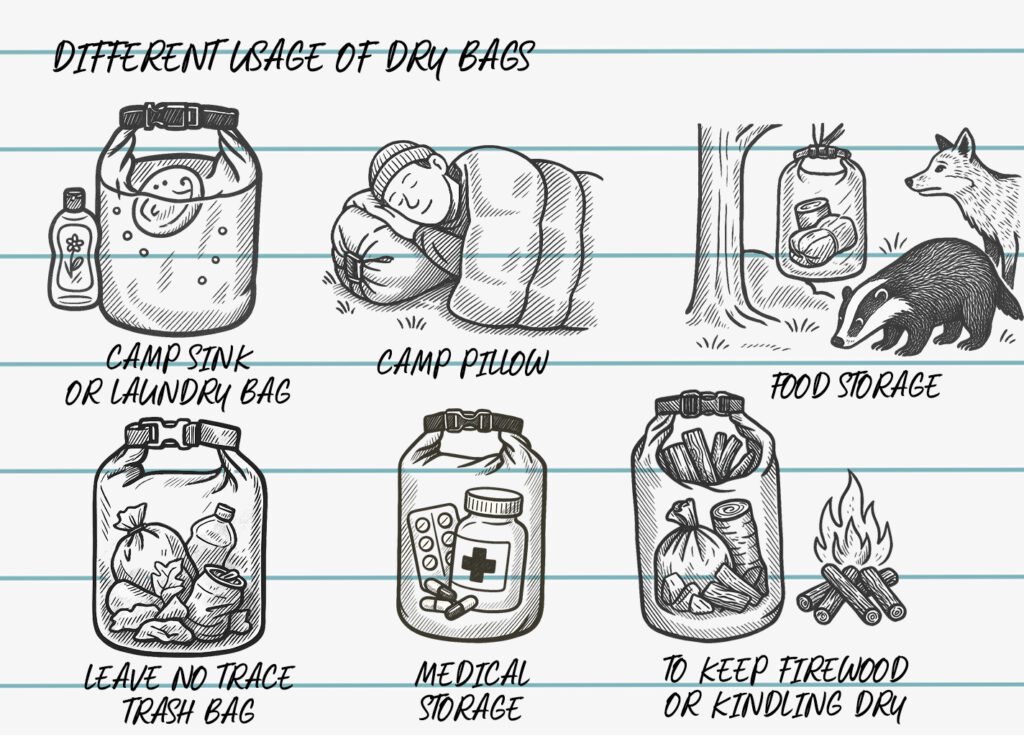
🦝 Food Storage That Keeps Wildlife Guessing
Here’s one that isn’t mentioned enough: dry bags don’t just stop water; they also help stop smells. That makes them fantastic for food storage on wild camps, especially in areas with wildlife.
We’ve used dry bags to hang food in bear country, stash lunch on multi-day jungle treks, and pack oat bars at coastal campsites without attracting curious noses. They’re not airtight, but much better than a half-torn supermarket bag or a foil pouch loosely crammed into your tent vestibule.
💦 Makeshift Water Bucket
Need to collect water from a stream or lake but forgot a pot or basin? Our team tends to use a 20L dry bag as a temporary water bucket. They roll the top down loosely and carried it back to camp with zero leaks. It worked like a charm.
🧼 Camp Sink or Laundry Bag
We’ve seen dry bags used as mini sinks for washing hands, dishes, or even socks in the wild. Add some water and biodegradable soap, shake it, and rinse. They’re not officially made for this but tough enough to handle the job in a pinch.
🧴 Contain Leaks from Toiletries or Cooking Oil
Nobody wants toothpaste or olive oil all over their kit. A small dry bag is a great place to quarantine potential leak offenders inside your main pack. It’s the closest thing to carrying a spill-proof container that weighs next to nothing.
🪑 Stuffed Sit Mat or Camp Pillow
A half-full dry bag packed with spare clothes or soft kit makes a surprisingly good camp pillow or sit mat, especially when the ground’s wet or cold. It’s not luxury, but it’s practical comfort in a pinch.
🪵 Keep Firewood or Kindling Dry
When the rain has been pouring down all day and everything’s soaked, having a stash of dry kindling or firelighters in a dry bag is a campfire game-changer.
We’ve used 10L bags to collect birch bark and twigs and even keep fire logs dry in soggy conditions. A roaring fire is much more fun when it doesn’t start with frustration.
💊 Medical or Prescription Storage
If you carry medication that must stay dry and clean, a small dry bag offers excellent peace of mind, especially on long treks, jungle expeditions, or in humid environments. It adds a layer of protection when everything else is damp and unpredictable.
🥾 Leave No Trace Bonus: Carry Out Rubbish
Dry bags make excellent rubbish bags on multi-day trips. They seal in the smell, contain mess, and make it easy to follow Leave No Trace principles without stress.
How Do You Care for and Store a Dry Bag?
Dry bags are tough, but like any outdoor kit, they’ll go the distance if you look after them properly. With a bit of care between adventures, your dry bag can last for years, protecting your kit on every hike, paddle, and wild camp you throw at it.
Here’s how to keep it in top shape:
1. Clean It Gently (But Thoroughly)
After a muddy trip, sea paddle, or just general use, give your dry bag a proper clean:
- Use lukewarm water and a mild soap—no harsh detergents or solvents.
- Wipe down the inside and outside with a soft sponge or cloth.
- Rinse well, especially around seams and the roll-top closure.
Avoid chucking it in the washing machine or scrubbing aggressively—this can damage the waterproof coating over time.
2. Dry It Completely Before Storing
This bit’s crucial. Even a slightly damp dry bag can develop mildew or mould if you stuff it into a gear cupboard straight away.
- Hang it upside down, open, in a well-ventilated space.
- Ensure the interior is completely dry, especially in the corners and folds.
- Wipe it down first with a clean towel, then air it out for faster drying.
3. Check for Damage Between Trips
Give your dry bag a quick once-over before and after each adventure:
- Look for punctures or abrasions, especially if it’s been rubbing against rocks or strapped to a bike frame.
- Inspect the roll-top seal or zip—if it’s cracked, warped, or no longer smooth, it may not seal properly.
- Test the seal by gently squeezing the closed bag—if air hisses out, you might need a replacement (or a patch job).
Depending on the material, some small holes can be repaired with specialist patches or seam tape, especially heavier-duty models.
4. Store It Loosely, Not Rolled
Once it’s clean and dry:
- Store your dry bag unrolled and uncompressed if possible—this helps preserve the shape and integrity of the seal.
- Keep it in a cool, dry place away from direct sunlight or heat, which can degrade the waterproof coating over time.
Are Dry Bags Worth It?
100% yes
For such a simple bit of kit, dry bags punch well above their weight. They’re light, affordable, and offer an unbeatable protection-to-weight ratio. When the rain rolls in, your tent gets drenched, or your pack tumbles into a stream, a dry bag turns chaos into calm.
They offer peace of mind—knowing your spare layers will be warm, your sleeping bag will be dry, and your electronics won’t be ruined by one bad weather call.
And let’s not forget the sustainability angle: dry bags are reusable, durable, and far more eco-conscious than constantly reaching for single-use ziplocks or stuffing your gear in rustly old bin liners that rip when you need them most.
Not sure where to start? The Trekitt team is always happy to help you choose the right size, style, or setup for your next adventure whether you’re heading out for a weekend hike or planning a full-blown expedition.
Just send us a message, give us a ring, or pop into the shop. We’ve been out there, tested it all, and will get you sorted.
Make Backpacking a Breeze with These Four Game-Changing Packing Tips
Whether you’re using dry bags for kayaking, hiking, travelling, or just keeping gear organised on the go, they’re only one piece of the puzzle when it comes to packing smarter. If you want to see how they fit into a bigger system of clever, time-saving tricks, check out our YouTube video, 4 Packing Tips to Make Backpacking More Enjoyable. In it, we share how dry bags work alongside other smart methods to keep your load lighter, your gear easier to find, and your adventures more carefree. Watch now and get inspired to pack with confidence, no matter where your journey takes you:
FAQ
Yes—but it depends on how you pack them.
Most dry bags will float if there’s air trapped inside, which can be a lifesaver during water-based activities like kayaking or paddleboarding. Just don’t squeeze out all the air if buoyancy is essential. Remember that they’re not life-saving devices, but can help you recover dropped gear more easily.
Some can be, some can’t.
Most standard dry bags are splashproof or water-resistant, not designed for prolonged submersion. If your trip involves dunkings or river crossings, look for bags with IPX7 or IPX8 ratings tested for submersion depth and duration. Just remember, even then, a proper seal is key.
For hiking, we recommend lightweight, flexible dry bags in the 10–20L range big enough for spare layers or a sleeping bag, but easy to compress inside your pack.
Look for lighter nylon or PU-coated bags with taped seams and roll-top closures. Compression dry bags are also great if you’re tight on space.
Go for heavier-duty bags (20–60L) made of thicker materials like PVC or TPU, which can withstand abrasion from rocks and wet gear.
A D-ring or lash point is handy for securing the bag to your boat or board, and a bright colour makes it easier to spot if it goes overboard. Bonus points for floaty, air-filled roll-tops.
We love 10–30L dry bags for travel. They’re perfect for separating clothes, food, or electronics inside a pack or suitcase.
Transparent bags help you find what you need quickly, and roll-tops offer extra compression if you’re short on space. You can even use one as a makeshift day bag in wet weather.
Yes, but only if it’s designed for it.
Compression dry bags come with purge valves or straps that let you safely squeeze out excess air. Standard dry bags can be compressed by rolling, but overdoing it may stress the seams or damage the seal.
Not entirely. While dry bags are made from tough, abrasion-resistant materials, they can still be punctured by sharp rocks, thorns, or gear with hard edges.
Check regularly for wear and tear, and pack sharp items carefully (or separately).
Nope.
Dry bags are completely non-breathable by design. That’s how they keep water out, but it also means moisture inside stays inside, so always pack dry gear, and allow things to dry before sealing when possible.
Yes!
Dry bags are a great alternative to stuff sacks for bear hangs or food storage. They’re durable, weatherproof, and help contain food smells better than mesh bags.
Leave a Reply