
Best Lightweight Hiking Shoes for Summer

Author: Trekitt Gear Team
With years of hands-on experience using lightweight hiking shoes across the UK’s varied terrain, our team understands how summer footwear performs beyond the shop floor. From breathable trail shoes designed for warm valley walks and dusty paths to more supportive options that handle rocky Lake District routes and long hill days, we know what genuinely makes a difference when temperatures rise. This guide focuses on the features that matter most in real UK conditions, including ventilation, grip on mixed terrain, comfort over distance and how to choose between hiking shoes and trail-style alternatives for summer use.
When summer finally arrives in the UK (usually sometime between two unexpected rain showers), lightweight hiking shoes start to make a lot of sense.
Compared with traditional walking boots, they feel noticeably cooler, lighter on your feet and far less restrictive over long days on the trail. Whether you’re heading out for a quick hill loop after work, a full Lake District day out or a long-distance path where comfort matters more with every mile, a good lightweight hiking shoe can make walking feel smoother and less tiring overall.
Modern summer hiking shoes use lighter uppers, more breathable materials and more flexible midsoles than classic boots, which helps your feet move naturally across mixed terrain. They also tend to dry faster after wet grass, stream crossings or one of those “it wasn’t meant to rain today” moments that somehow always happen anyway.
Importantly, lightweight hiking shoes still provide enough grip and stability for typical UK conditions. From dusty ridge paths to rocky scrambles and damp woodland trails that never quite seem to dry out, the right pair will handle far more than their weight suggests.
They’re not designed to replace boots in winter mountain conditions or when carrying heavier loads, but for most spring and summer walking across the UK, they’re exactly the right tool for the job.
This guide is ideal if you’re:
- Heading out for day hikes in mixed countryside and hill paths
- Moving faster across longer hillwalking routes
- Planning warm-weather mountain days where breathability matters
- Walking long-distance trails where comfort becomes everything after hour five
- Tackling rocky routes or light scrambling where precision underfoot helps
Below, we’ve picked some of the best lightweight hiking shoes for summer 2026 available at Trekitt, each suited to a slightly different walking style. Whether your idea of a perfect day involves covering serious distance, moving quickly through the hills, or just enjoying the fact that your feet aren’t overheating by lunchtime.
This article is part of our 👉 Hiking Knowledge Centre, where you’ll find expert advice on hiking footwear, clothing, backpacks and outdoor skills.
Quick comparison: Best lightweight hiking shoes for summer 2026
| Shoe | Best for | Why choose it | Terrain strength | Support level | Summer comfort |
| Salomon X Ultra 360 Edge GTX | Best overall lightweight hillwalking shoe | Excellent balance of grip, stability and waterproof protection for mixed UK terrain | Woodland trails, hills, rocky paths, damp ground | Medium-high | Good ventilation with weather protection for typical British “four seasons in a day” walks |
| Salewa Pedroc 2 Max | Best for fast hiking | Built for speed and breathability on warm mountain days with a lighter, agile feel underfoot | Mountain trails, ridgelines, dry paths | Medium | Excellent airflow and reduced weight for high-output walking |
| Altra Olympus 6 Hike Low GTX | Best for long-distance comfort | Max cushioning and a roomy toe box reduce fatigue over longer mileage days | Long-distance trails, national trails, mixed terrain | Medium | Very comfortable for all-day walking, especially over hard-packed paths |
| Scarpa Mescalito | Best for rocky terrain & scrambling routes | Precise edging, strong grip and protective construction inspired by approach shoes | Rocky terrain, scrambles, and technical hill paths | High | Slightly more structured feel, but excellent control on uneven ground |
| Hanwag Kaduro Low GTX | Best supportive lightweight trekking shoe | More traditional support in a lighter format, ideal if transitioning from boots | Mixed hill terrain, longer days carrying light packs | High | Stable and protective without the bulk of full trekking boots |
Best overall lightweight summer hiking shoe
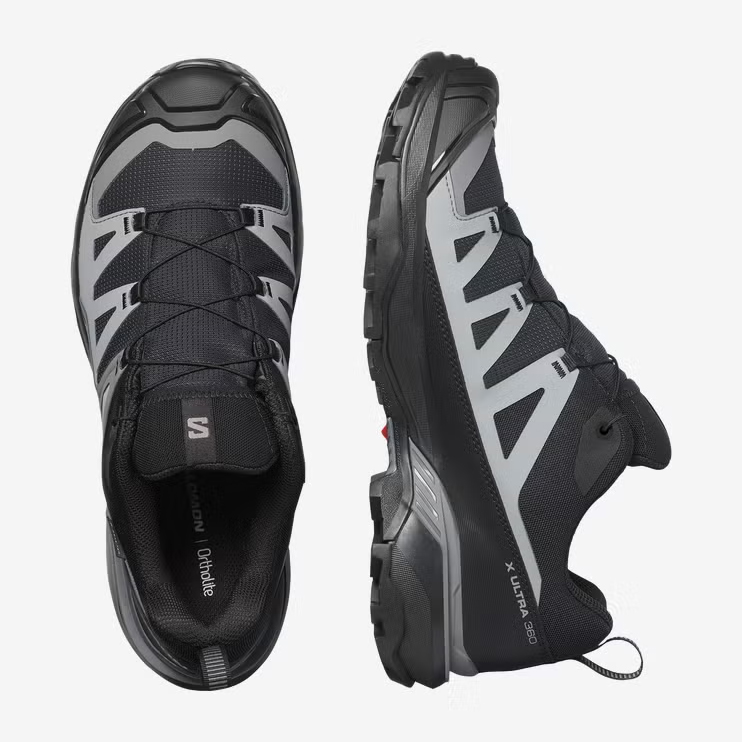
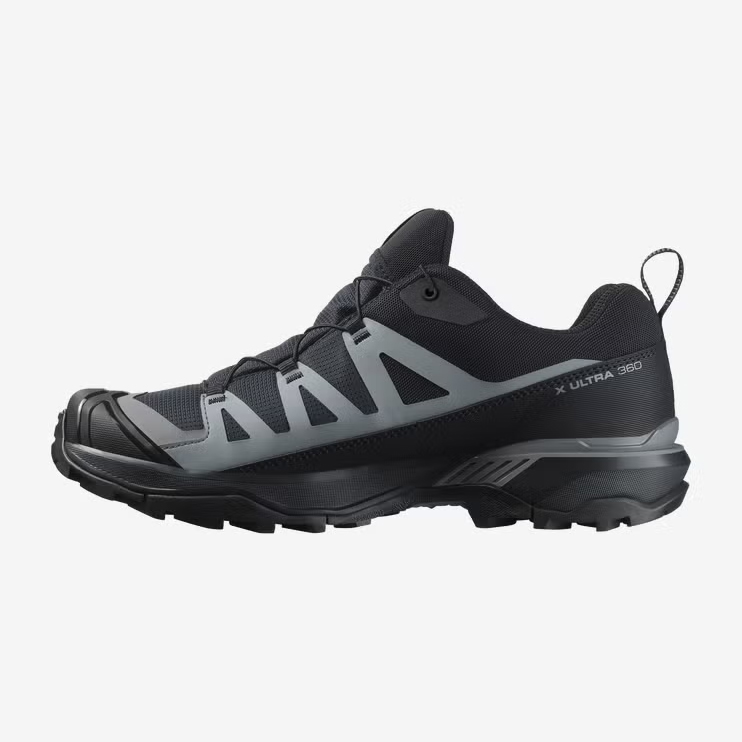
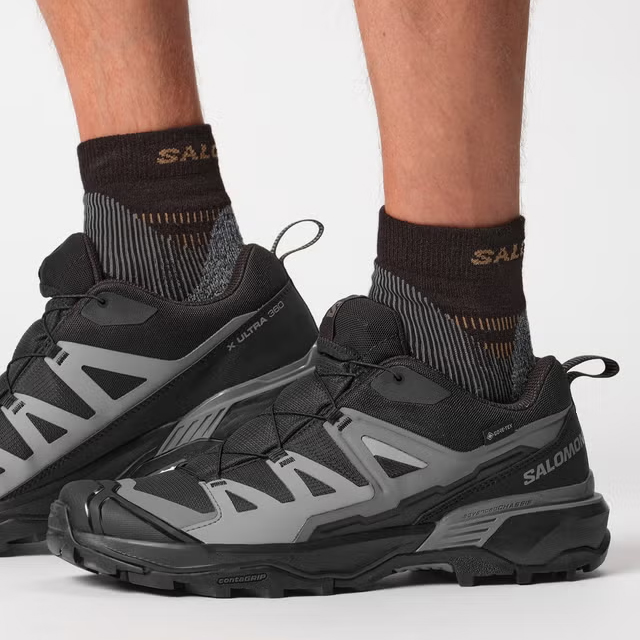
Salomon X Ultra 360 Edge GTX
If you’re looking for one lightweight hiking shoe that can handle most UK summer walking without fuss, the Salomon X Ultra 360 Edge GTX is one of the safest choices out there.
It sits right in the sweet spot between a flexible trail-style shoe and a more structured trekking option. That means you get reassuring stability underfoot on uneven ground without the heavier feel of traditional walking boots, ideal for typical British hill days where terrain rarely stays consistent for long.
One minute you’re on dry gravel paths, the next you’re crossing damp grass, loose stone or a woodland descent that hasn’t seen sunlight since 1998. This is exactly the kind of terrain the X Ultra range was built for.
Why does it work so well for summer hillwalking?
The X Ultra series has built a reputation for delivering dependable grip and stability while staying light enough for long-distance comfort. The 360 Edge GTX continues that tradition with a modern, slightly more agile feel that suits warm-weather walking particularly well.
Key strengths include:
- A stable chassis that improves confidence on uneven ground
- A reliable Contagrip outsole that performs well on wet UK trails
- Waterproof GTX protection for unpredictable summer conditions
- A lighter, more flexible feel than traditional trekking shoes
In real-world use, this makes it a strong choice for walkers who want one pair of shoes that can handle most day hikes across the UK without needing to overthink footwear choices every weekend.
The waterproof lining also makes more sense here than it does in hotter alpine climates. British “summer” still involves wet grass, stream crossings and surprise showers, so having that extra protection often proves useful rather than overkill.
Best for
The Salomon X Ultra 360 Edge GTX works particularly well for:
- Lake District paths and mixed fell terrain
- South Wales hill routes
- Woodland trails that stay damp underfoot even in summer
- General weekend hillwalking across varied UK terrain
If you’re choosing just one lightweight hiking shoe for summer walking in Britain, this is the model that comfortably covers the widest range of conditions without feeling overly technical or overly minimal.
Best Summer Hiking Shoed for Fast Hiking & Hot Mountain Days
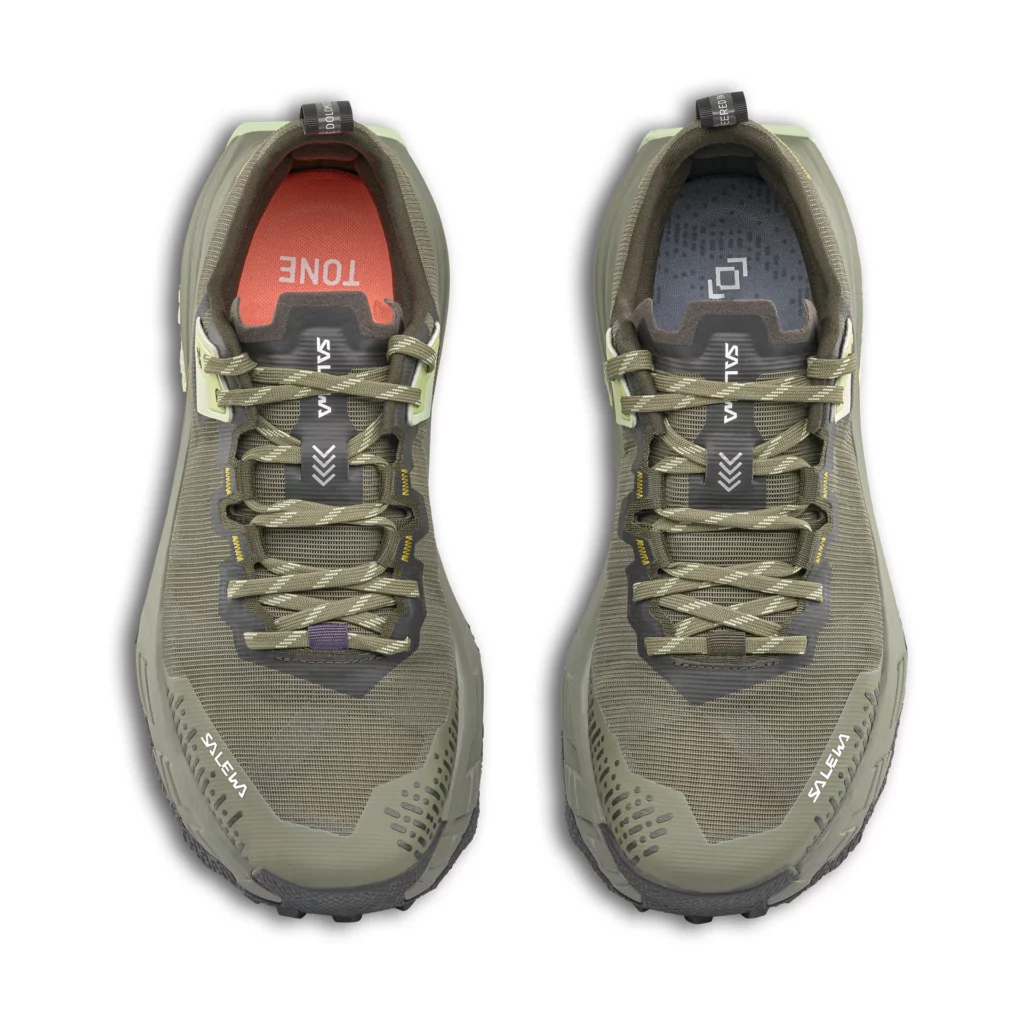
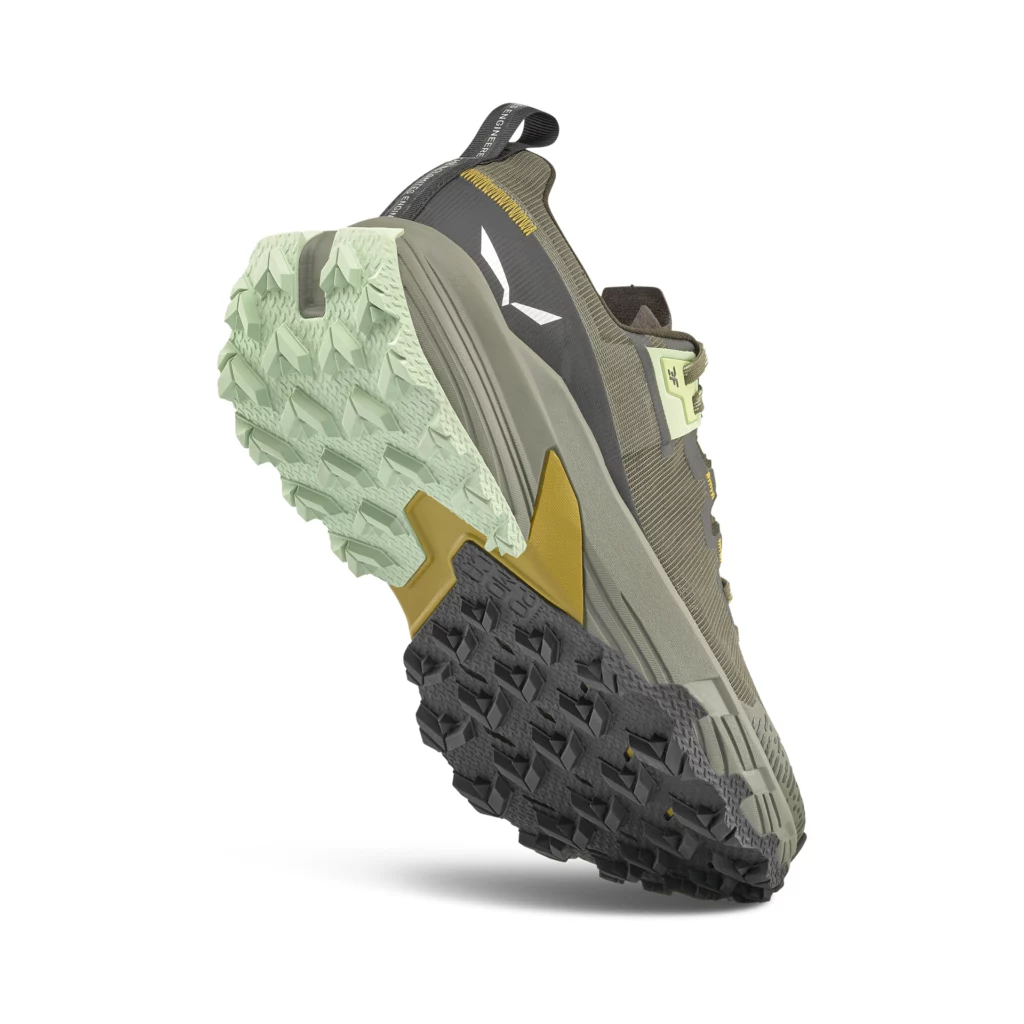
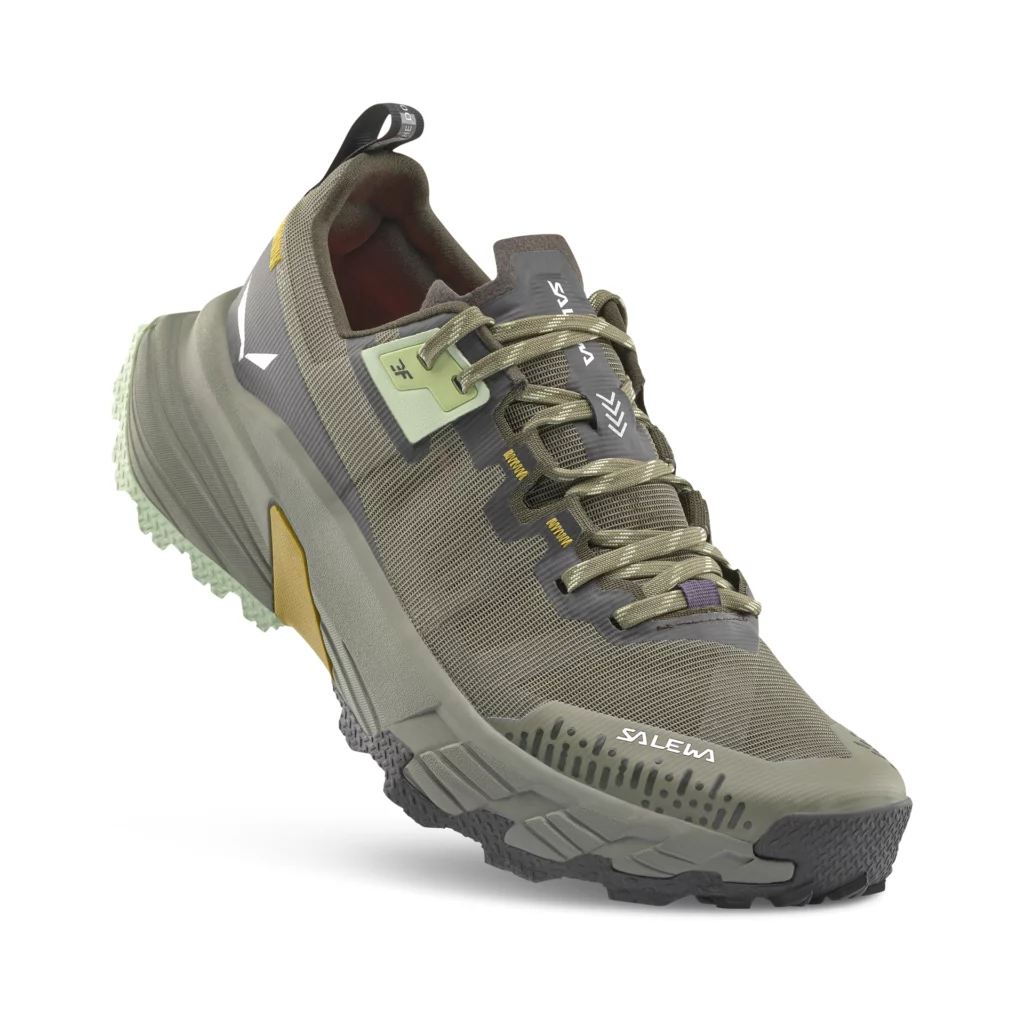
Salewa Pedroc 2 Max
If your summer walking style involves covering distance efficiently rather than stopping every twenty minutes to admire the view (or your snack selection), the Salewa Pedroc 2 Max is one of the most purpose-built options available.
This is a true speed-hiking shoe, designed for movement-focused days where breathability, agility and precise foot placement matter more than traditional boot-style structure. It feels noticeably lighter and more responsive than most classic hillwalking footwear, which makes a real difference as the temperature rises or the elevation starts to stack up.
Unlike many lightweight hiking shoes that are simply light, the Pedroc 2 Max is engineered specifically for fast alpine-style movement across mixed mountain terrain.
Why does it work so well in warm conditions?
One of the biggest advantages of the Pedroc 2 Max is how well it manages heat during high-output walking. The upper is designed to maximise airflow, helping reduce that familiar mid-afternoon “why are my feet suddenly boiling?” moment on exposed climbs or long ridgeline traverses.
At the same time, it still provides enough grip and control to stay confident on loose stone, rocky paths and uneven mountain terrain.
Key strengths include:
- Highly breathable upper that performs well on warm mountain days
- Lightweight construction that reduces fatigue over longer elevation gains
- Precise foothold for moving quickly across technical trail sections
- Confident traction on mixed alpine-style terrain
The overall feel is closer to a mountain-ready fast-hiking shoe than a traditional trekking model, which makes it especially appealing if your walking style falls somewhere between hillwalking and trail running.
Best for
The Salewa Pedroc 2 Max works particularly well for:
- Summer ridgeline walking in dry or mixed mountain terrain
- Fast hiking days where pace matters as much as distance
- Lightweight missions with smaller packs
- Long elevation days where breathability becomes essential
If the Salomon X Ultra 360 Edge GTX is the dependable all-rounder in this guide, the Pedroc 2 Max is the shoe you reach for when the plan is to move quickly through the hills and make the most of long summer daylight hours.
Best Summer Hiking Shoes for long-distance comfort
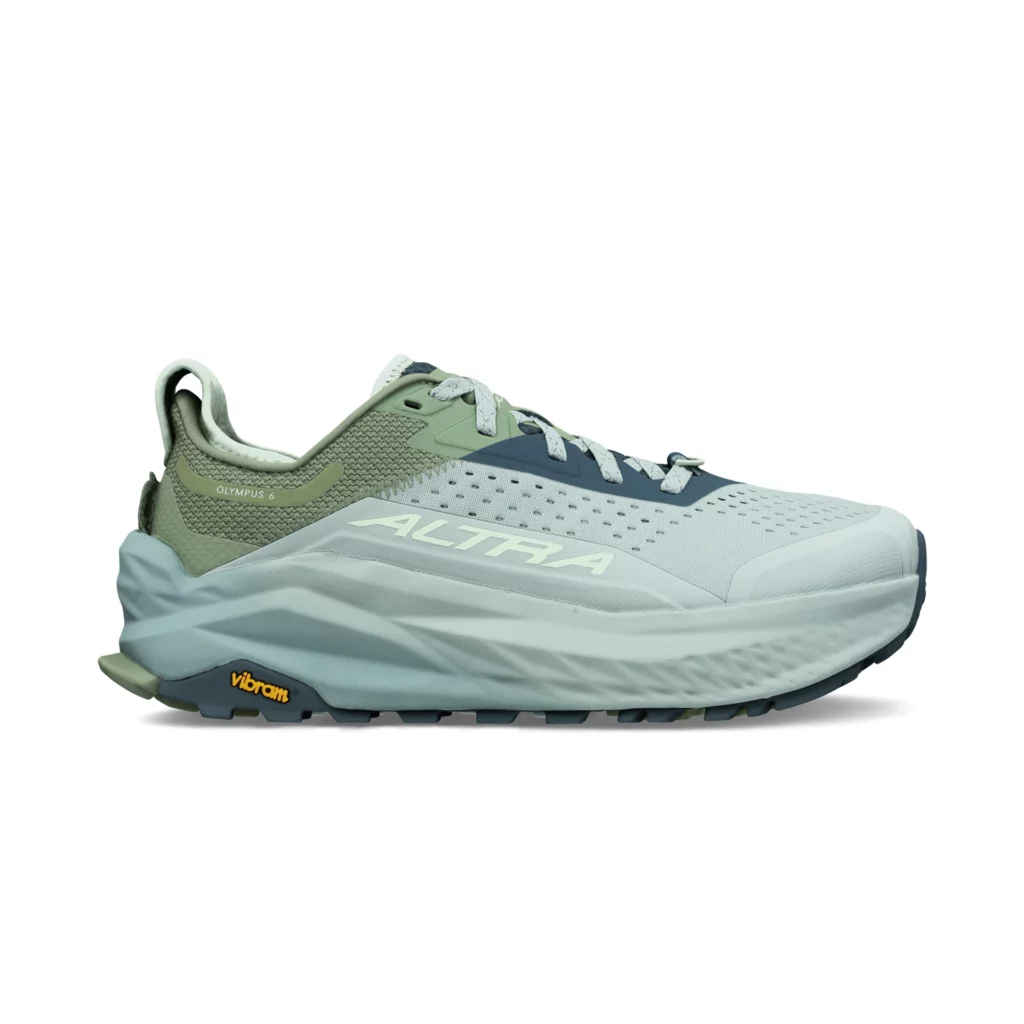
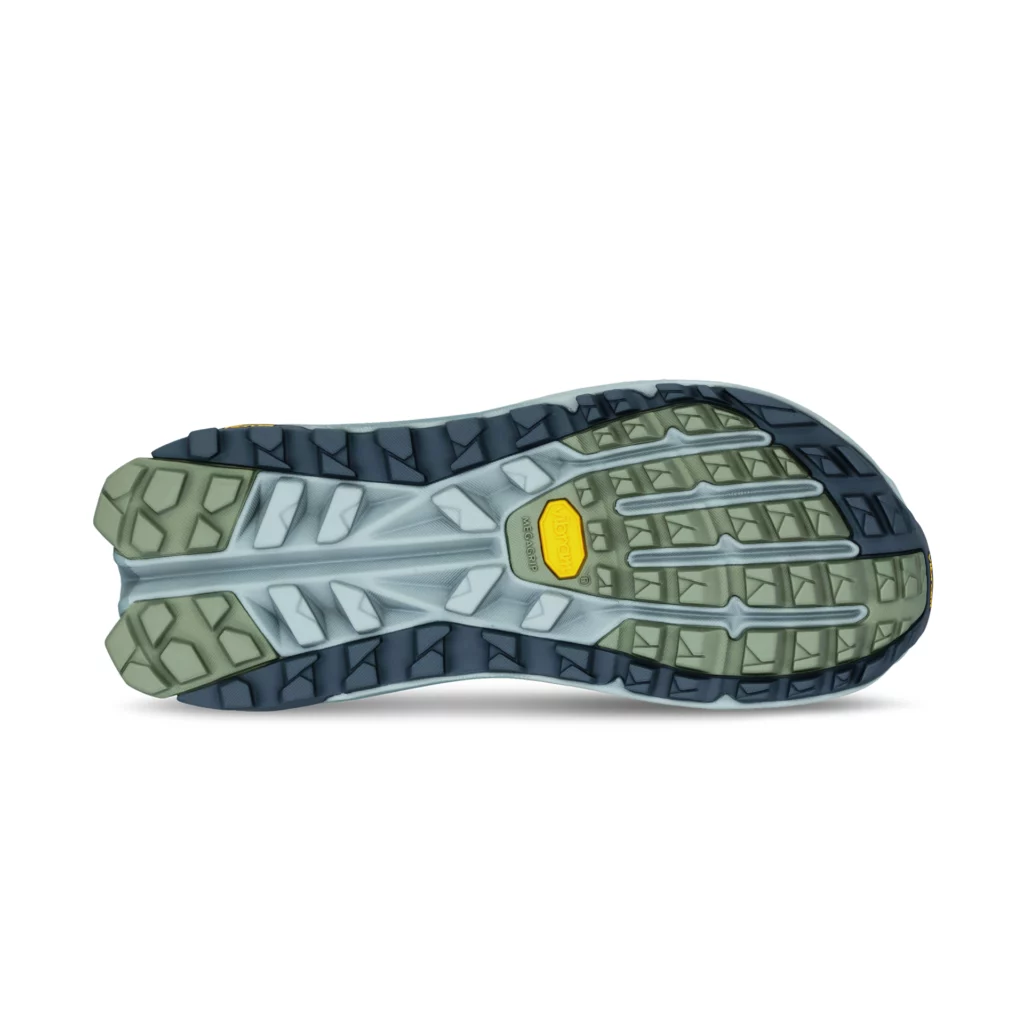
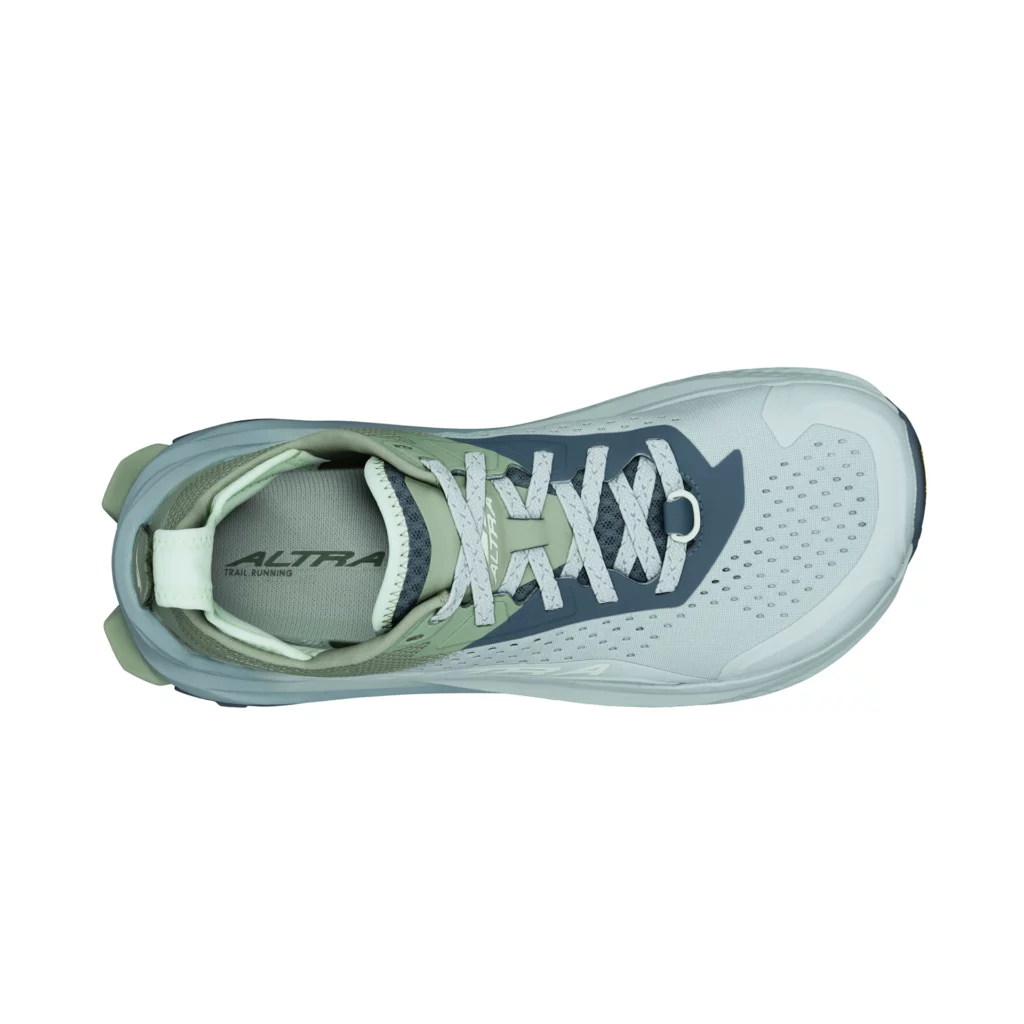
Altra Olympus 6 Hike Low GTX
If your idea of a good summer walking day involves covering serious distance rather than just reaching the summit and heading home, the Altra Olympus 6 Hike Low GTX is one of the most comfortable options available right now.
This shoe draws inspiration from long-distance trail running footwear and adapts it for hiking, offering a noticeably softer ride underfoot than most traditional walking shoes. Over time, that extra cushioning really starts to matter, especially somewhere around mile twelve when your feet normally begin negotiating with you about turning back early.
One of the standout features is Altra’s roomy toe box design, which allows your toes to spread naturally as you walk. On longer routes, this helps reduce pressure build-up and fatigue, particularly during descents when feet tend to move forward inside the shoe.
Why does it work so well for long-distance walking?
The Olympus 6 Hike Low GTX is built around comfort over mileage rather than stiffness for technical terrain. The cushioning absorbs impact effectively on hard-packed paths and mixed trail surfaces, making it particularly well-suited to national trails and multi-day routes where consistency underfoot matters more than edging precision.
At the same time, the waterproof lining helps manage wet grass, coastal weather and unpredictable British trail conditions without sacrificing overall comfort.
Key strengths include:
- Wide toe box that allows natural foot movement over long distances
- High cushioning that reduces fatigue on longer walking days
- Smooth, trail-runner-inspired ride feel
- Reliable comfort across mixed terrain and extended mileage
Compared with more traditional hillwalking shoes, it feels noticeably more forgiving underfoot. Something many walkers start to appreciate more with each passing mile.
Best for
The Altra Olympus 6 Hike Low GTX works particularly well for:
- Multi-day walking routes and hut-to-hut style trips
- South West Coast Path sections and similar long coastal trails
- Pennine Way stages and long-distance UK national trails
- Camino-style journeys where daily comfort matters more than technical terrain precision
If your priority is keeping your feet comfortable from the morning start to the evening campsite (or pub stop), rather than maximising edging performance on rocky terrain, the Olympus 6 Hike Low GTX is one of the strongest choices in this guide.
Best Summer Hiking Shoes for rocky terrain & scrambling routes
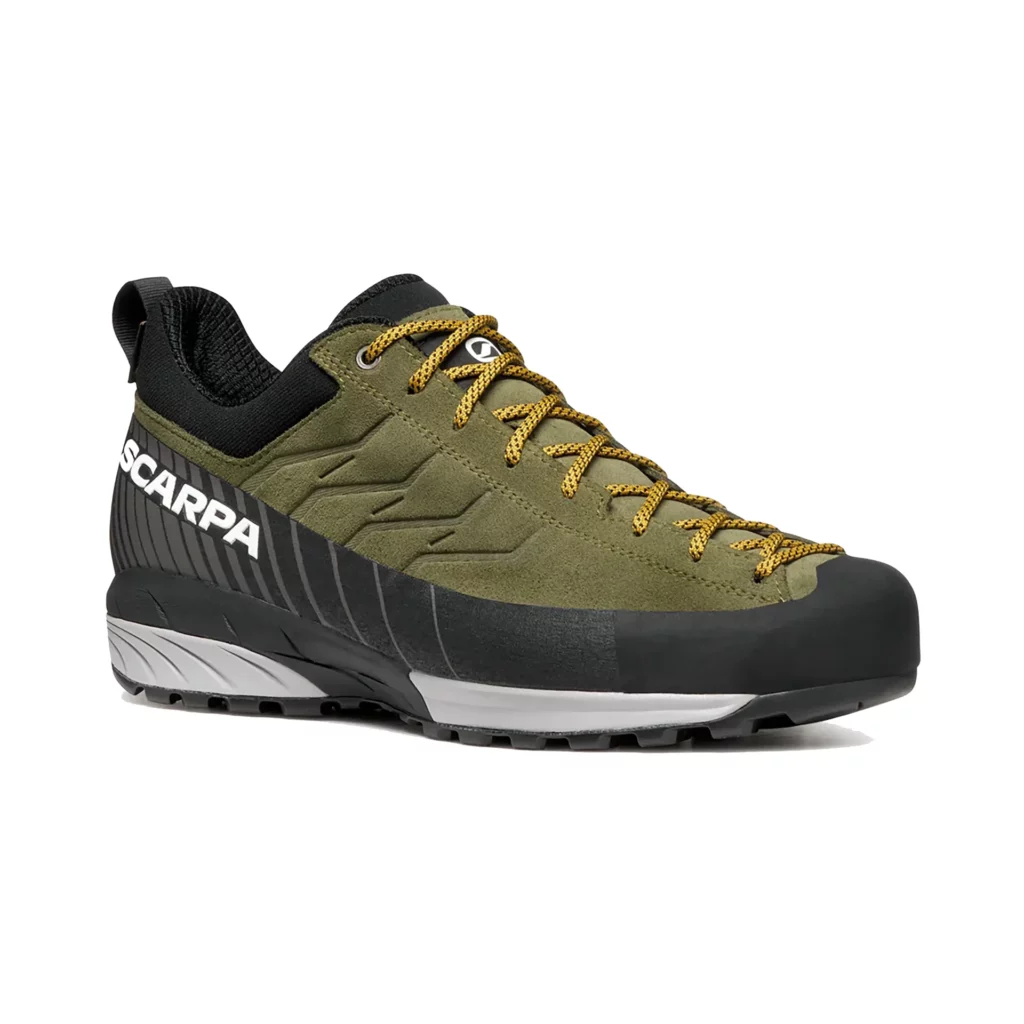
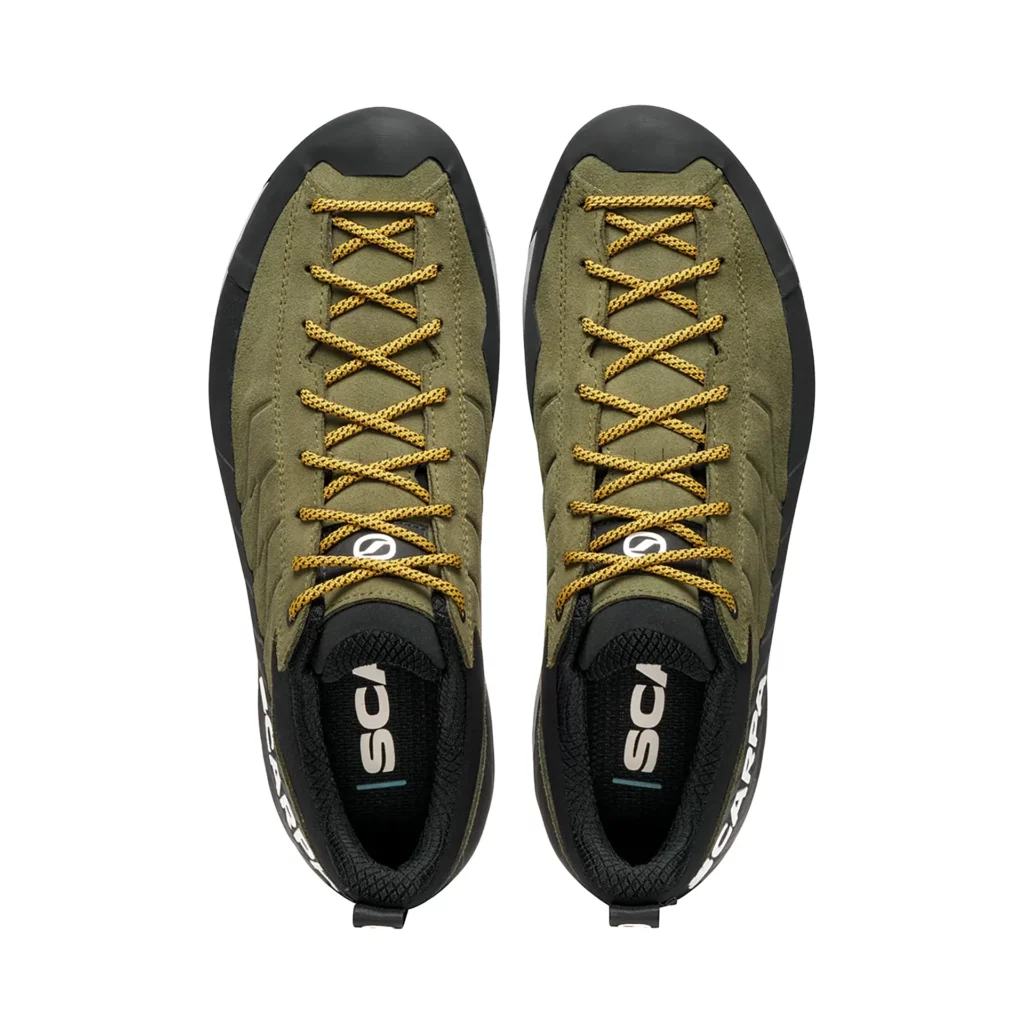
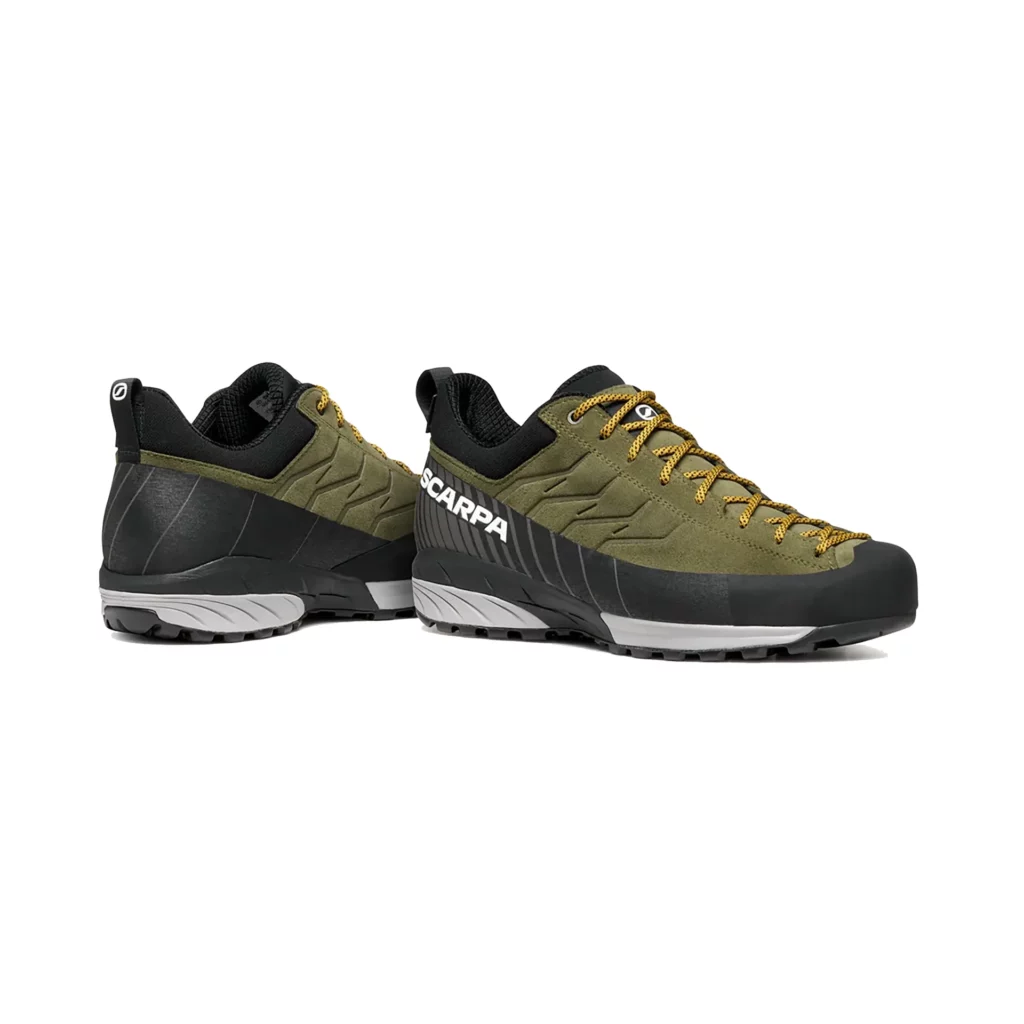
Scarpa Mescalito
If your summer walking plans regularly involve hands-on sections, rocky ridgelines or routes where foot placement actually matters, the Scarpa Mescalito is one of the most confidence-inspiring lightweight options available.
This sits closer to an approach shoe than a traditional hiking shoe, which explains why it feels so secure on technical ground. It’s designed for terrain where grip, edging precision and stability are more important than soft cushioning. Exactly the kind of surfaces you’ll find on classic UK scrambling routes.
In simple terms, this is the shoe you choose when the path stops behaving like a path.
Why does it work so well on technical terrain?
The Mescalito’s climbing-inspired design gives it excellent control on rock. The outsole provides strong traction across slabs and loose stone, while the structured construction keeps your foot stable when moving across uneven ground or narrow ridge sections.
A protective toe rand also makes a noticeable difference on rocky routes. It adds durability and gives you the confidence to move closer to the rock without worrying about knocking your toes every five minutes.
Key strengths include:
- Climbing-inspired outsole that improves precision on rocky terrain
- Excellent edging ability for scrambling sections and slabby ground
- Protective rubber toe rand for durability and confidence on technical routes
- Stable, supportive feel on uneven mountain paths
Compared with softer, distance-focused hiking shoes in this guide, the Mescalito feels more controlled and deliberate underfoot. Exactly what you want when the terrain becomes more technical.
Best for
The Scarpa Mescalito works particularly well for:
- Snowdonia scrambling routes such as Tryfan approaches and ridge traverses
- Skye ridge terrain where precision foot placement matters
- Rocky Lake District paths like Helvellyn approaches or Langdale routes
- Technical hillwalking days where terrain is mixed and unpredictable
If your summer routes regularly include rocky ground, scrambling sections or airy ridgelines rather than just well-made paths, the Mescalito is one of the most capable lightweight shoes you can choose without stepping fully into mountaineering footwear territory.
Best lightweight supportive trekking shoe for summer
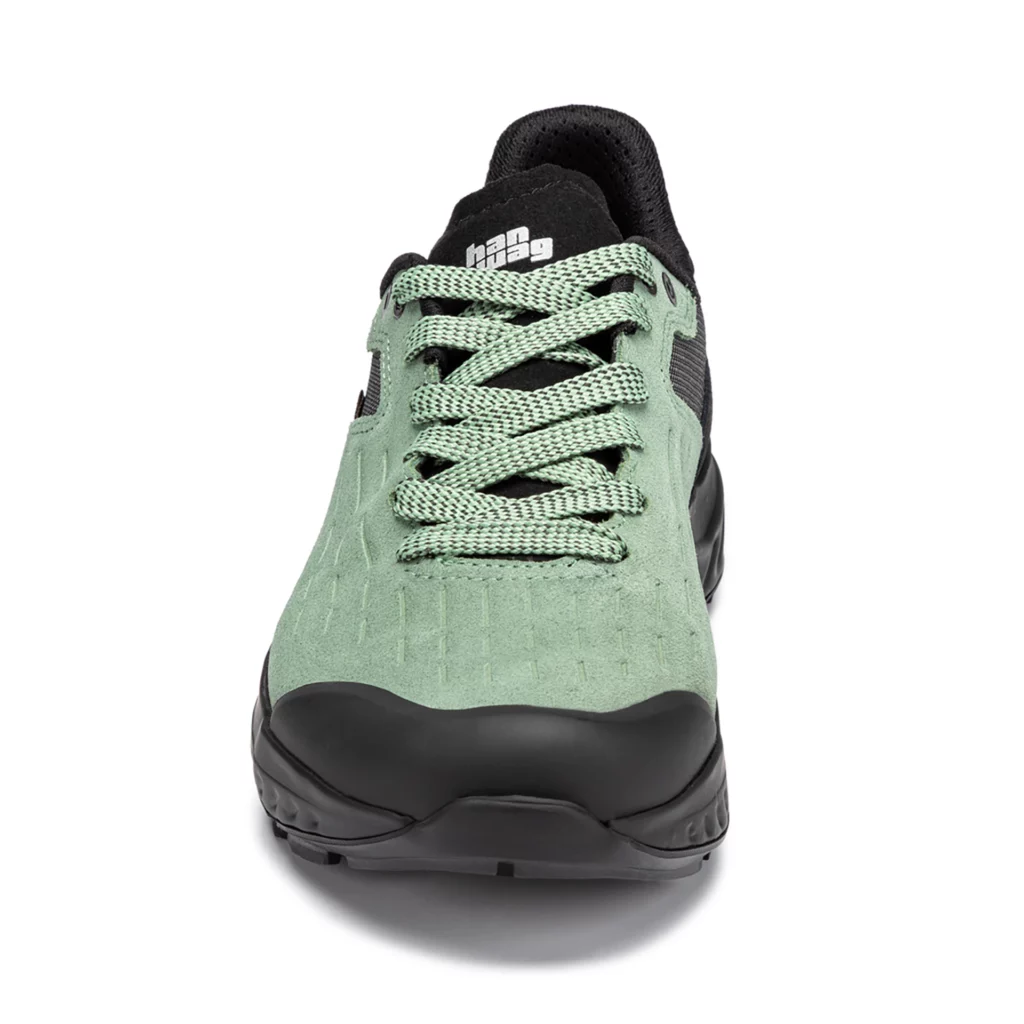
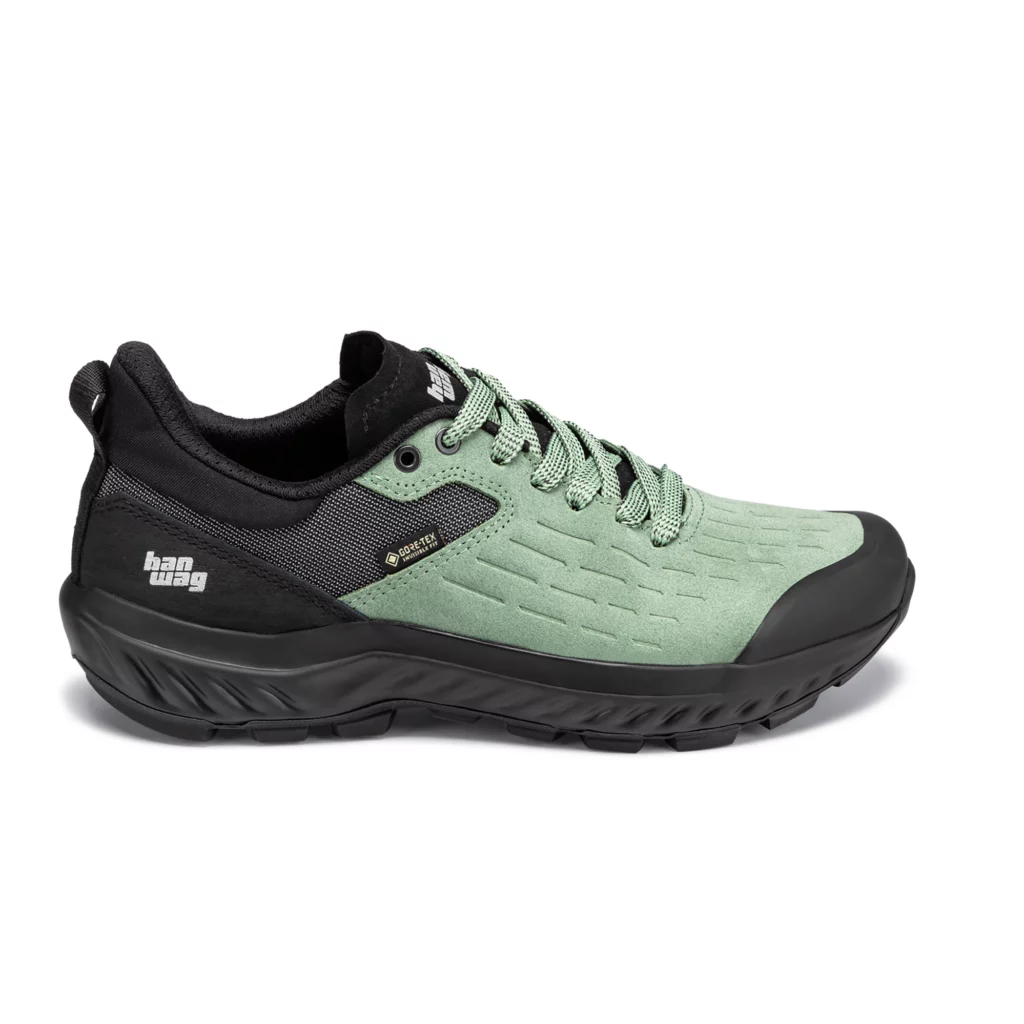
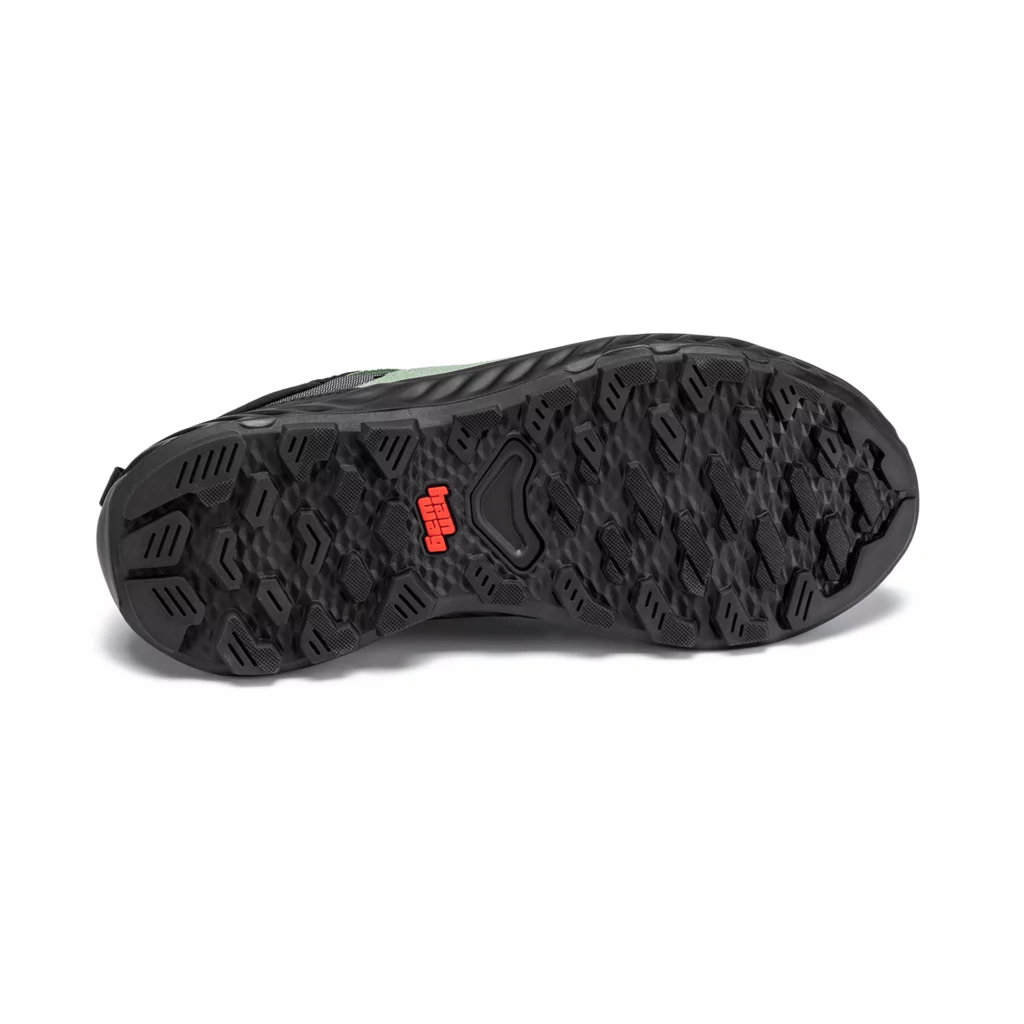
Hanwag Kaduro Low GTX
If you like the support and reassurance of traditional walking boots but want something lighter for summer, the Hanwag Kaduro Low GTX sits in a very useful middle ground.
It’s one of those shoes that makes immediate sense the moment you put it on. You still get that familiar trekking-style stability underfoot, but without the extra bulk and ankle height that can feel unnecessary on warm-weather hill days. For many walkers, especially those moving away from boots for the first time, this kind of design feels like a very natural step.
In short, it behaves more like a lightweight trekking boot that just happens to stop below the ankle.
Why does it work so well for longer hill days?
The Kaduro Low GTX combines a structured platform with a supportive fit that helps keep your foot stable across uneven terrain. That extra support becomes particularly noticeable on longer routes, steeper descents or when carrying a slightly heavier day pack.
At the same time, it still keeps overall weight lower than a traditional trekking boot, making it a strong option for summer hillwalking where comfort over distance really matters.
Key strengths include:
- Supportive construction that improves stability on uneven terrain
- Lightweight feel compared with classic trekking boots
- Durable materials suited to regular hill use
- Waterproof GTX lining for typical UK summer conditions
It’s especially appealing if lighter trail-style shoes feel a bit too minimal underfoot, but full boots feel like overkill for the season.
Best for:
The Hanwag Kaduro Low GTX works particularly well for:
- Walkers transitioning from boots to lighter summer footwear
- Longer hill days carrying slightly heavier packs
- Mixed terrain routes where stability matters as much as comfort
- General UK hillwalking across varied ground conditions
If the Pedroc 2 Max is the fast mover and the Olympus 6 Hike is the mileage specialist, the Kaduro Low GTX is the steady, confidence-building option that keeps things comfortable and supportive without adding unnecessary weight.
How to choose lightweight hiking shoes for summer
Choosing the right lightweight hiking shoe for summer isn’t just about picking the lightest option on the shelf. The best pair depends on where you walk, how far you walk and how quickly you like to move. UK terrain, in particular, tends to mix dry trail, wet grass, loose stone, and rocky sections in the same day, so it’s worth considering a few key features before deciding.
Here’s what actually makes a difference when choosing a summer hiking shoe.
Weight
Weight is usually the first thing people notice when switching from boots to hiking shoes. Lighter footwear reduces fatigue over longer distances and helps your walking feel more natural, especially on warm days.
However, lighter doesn’t always mean better.
Very lightweight shoes are ideal for:
- Faster hillwalking
- Long-distance trails
- Warm-weather movement days
- Carrying lighter packs
Slightly more structured lightweight trekking shoes are better for:
- Rougher terrain
- Longer hill days
- Walkers used to boots
- Routes with more elevation change
A good summer hiking shoe should feel light enough to move comfortably all day without sacrificing stability on uneven ground.
Breathability
Breathability is one of the biggest advantages lightweight hiking shoes have over boots.
More breathable uppers help:
- Reduce overheating on climbs
- Improve comfort during long walks
- Dry faster after stream crossings
- Manage sweat better in warmer conditions
If most of your summer walking involves exposed hills, ridgelines, or higher-output movement, breathable models like the Salewa Pedroc 2 Max make a noticeable difference by midday.
That said, UK walking rarely stays completely dry, which leads to the next decision.
Cushioning
Cushioning affects how comfortable your shoes feel after several hours on the trail rather than in the first ten minutes of wearing them.
Higher cushioning works best for:
- Long-distance walking
- Hard-packed trails
- Multi-day routes
- Coastal paths
- National trails like the Pennine Way
Shoes like the Altra Olympus 6 Hike Low GTX are designed specifically with long mileage comfort in mind.
Lower cushioning tends to feel:
- More precise on rocky terrain
- More stable on uneven ground
- Better for scrambling routes
- More responsive when moving quickly
There’s no single correct level; it depends on how you walk and what terrain you prefer.
Grip type
Grip matters more in UK summer conditions than many people expect. Even when the forecast looks good, routes often include damp grass, loose stone or polished rock sections.
Look for outsoles designed for:
- Wet trail traction
- Mixed terrain grip
- Rocky path stability
- Loose gravel confidence
For example, the Salomon X Ultra 360 Edge GTX uses a Contagrip outsole that performs well across varied British terrain, while approach-style shoes like the Scarpa Mescalito offer excellent precision on rockier routes and scrambling sections.
If your walking regularly includes ridgelines or technical ground, outsole performance becomes one of the most important features to prioritise.
Support level
Support requirements vary more between walkers than almost any other footwear feature.
Lower-support shoes are ideal for:
- Confident walkers
- Smoother trails
- Faster movement
- Lighter packs
Higher-support lightweight trekking shoes work better for:
- Uneven hill terrain
- Longer walking days
- Walkers transitioning from boots
- Carrying slightly heavier gear
Models like the Hanwag Kaduro Low GTX offer a reassuring middle ground between flexible trail-style shoes and traditional trekking boots.
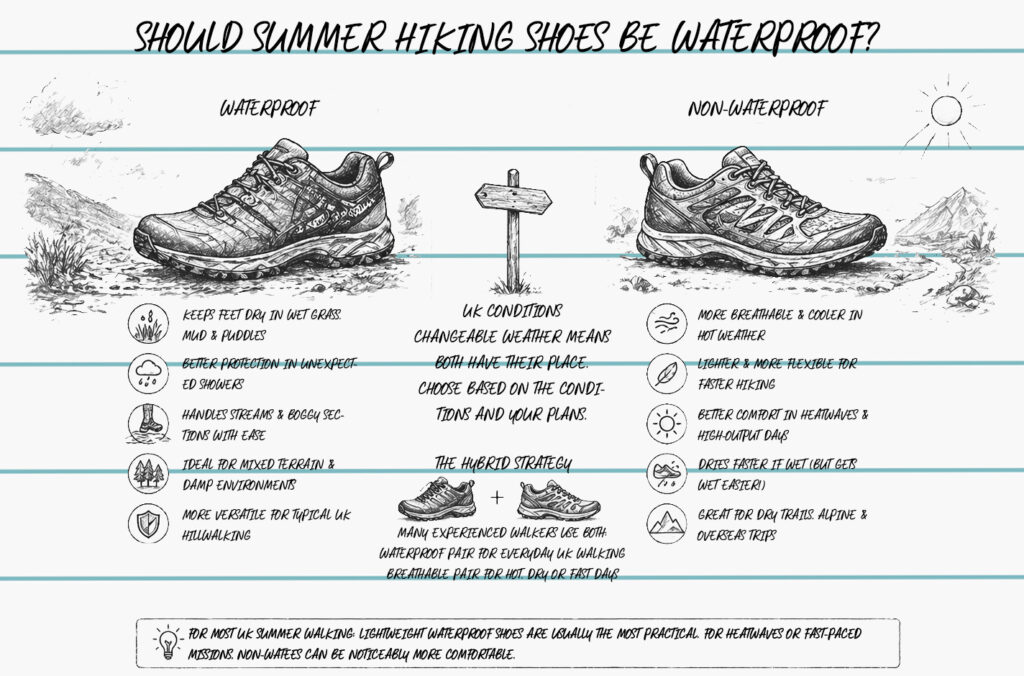
Waterproof vs non-waterproof Summer Hiking Shoes
This is one of the most common summer footwear questions in the UK.
Waterproof hiking shoes are useful for:
- Wet grass crossings
- Muddy sections
- Stream splashes
- Unpredictable summer showers
Non-waterproof shoes are better for:
- Hot weather walking
- Very dry conditions
- Fast hiking days
- Trips where breathability is the priority
Because British summer conditions are rarely consistently dry, many walkers still prefer lightweight waterproof shoes like the Salomon X Ultra 360 Edge GTX for everyday hill use.
If you’re planning trips during heatwaves or heading somewhere drier than usual (rare, but it happens), a breathable non-GTX option can feel noticeably cooler.
Are lightweight hiking shoes better than boots in summer?
Yes, for most summer UK hillwalking, lightweight hiking shoes are cooler, faster drying and more comfortable over long distances. They reduce fatigue, improve breathability on warm days and feel more natural on typical mixed British trails. Traditional walking boots are still the better choice when carrying heavier loads or heading into rough winter mountain terrain.
Here’s what that looks like in real use:
Why lightweight hiking shoes work better in summer
Lightweight hiking shoes are usually the better option when:
- Temperatures are higher, and breathability matters more
- You’re walking long distances on mixed terrain
- Your pack weight is moderate rather than expedition-level
- Routes include dry trails, damp grass and rocky paths rather than deep mud or snow
- You want faster-drying footwear after stream crossings or showers
They also tend to feel less tired over a full day in the hills, especially on routes like the Lake District fells, South Wales ridges or national trail sections.
When boots are still the better choice
Walking boots remain the smarter option if:
- You’re carrying a heavier pack
- Terrain is very rough or loose underfoot
- Ankle support is a priority for you personally
- Conditions are cold, wet or wintry
- You’re heading into exposed mountain environments
In other words, boots are still the right tool for winter hillwalking and demanding mountain terrain, but for most spring and summer UK routes, lightweight hiking shoes are the more comfortable and efficient choice.
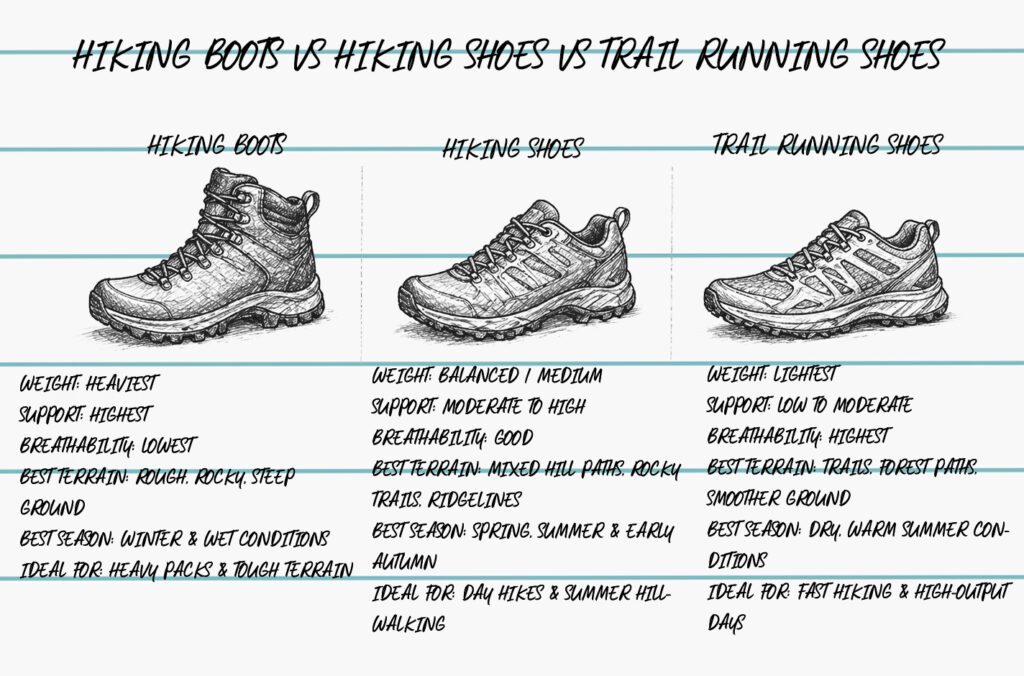
Trail running shoes vs lightweight hiking shoes
This is a question that comes up a lot, especially in summer when many walkers start wondering whether they actually need hiking shoes at all.
Short answer: trail running shoes are lighter and more breathable, while lightweight hiking shoes offer more stability and protection for rougher terrain and longer hill days.
Both work well for summer walking, but they’re designed with slightly different priorities.
When are trail running shoes the better choice
Trail running shoes are ideal if your walking style is faster and more movement-focused rather than slow and load-carrying.
They work best for:
- Fast hiking and high-output days
- Smoother trails and national paths
- Hot weather conditions
- Lightweight pack setups
- Walkers who prefer a softer, more flexible feel
Many experienced hillwalkers now use trail shoes for summer routes in places like the Brecon Beacons or along sections of the Southwest Coast Path, where comfort and airflow matter more than maximum structure.
They’re especially appealing once temperatures climb and traditional footwear starts feeling a bit overbuilt for the job.
When lightweight hiking shoes make more sense
Lightweight hiking shoes sit between trail runners and boots. They offer extra reassurance when terrain becomes rougher or more unpredictable.
They’re the better option for:
- Rocky hill paths and uneven ground
- Scrambling approaches
- Mixed UK terrain in one route
- Longer days carrying slightly heavier packs
- Walkers transitioning away from boots
Shoes like the Salomon X Ultra 360 Edge GTX or Scarpa Mescalito provide noticeably more stability and underfoot protection than most trail running models, which makes a difference on classic British hill routes where surfaces change constantly.
A simple way to choose between them
If your summer walking usually involves moving quickly on established trails, trail running shoes are often enough.
If your routes include rocky terrain, ridgelines or classic hillwalking ground, lightweight hiking shoes are the safer and more versatile choice.
Many regular UK walkers eventually end up using both. Trail shoes for faster warm-weather movement days and lightweight hiking shoes for more technical or mixed-terrain routes across the hills.
Final Word
Choosing the best lightweight hiking shoes for summer is all about staying comfortable when the temperature rises and the miles start adding up. The right pair should feel breathable, supportive and confidence-inspiring on everything from dry ridge paths to damp grassy trails and mixed UK terrain.
If you are still deciding whether lightweight hiking shoes are the right choice for your walks, it is worth comparing them properly with boots. Our guide Hiking Shoes vs Hiking Boots explains the key differences in support, protection and when each option makes the most sense on UK hills.
And if you are unsure which model will suit your walking style or the routes you have planned, the Trekitt team is always here to help. We spend a lot of time testing footwear in real UK conditions and are happy to point you towards the options that will work best for your summer adventures.
FAQ
Yes. Lightweight hiking shoes are ideal for most summer walking in the UK because they’re cooler, more flexible and less tiring over long distances than traditional boots. They still provide enough grip and stability for mixed terrain such as hill paths, woodland trails, and rocky sections commonly found across British routes.
For most summer hillwalking, yes. Lightweight hiking shoes improve airflow, reduce fatigue and dry faster after wet grass or showers. Boots remain the better choice for winter conditions, very rough terrain or when carrying heavier packs.
For typical UK conditions, lightweight waterproof hiking shoes are usually the most practical option. They help keep your feet dry when crossing wet grass, muddy sections and shallow streams. Non-waterproof shoes feel cooler during heatwaves or fast hiking days, but are less versatile overall.
Trail running shoes are lighter and more breathable, making them ideal for faster walking on smoother trails. Lightweight hiking shoes offer more stability, grip, and protection for rocky terrain and mixed hill routes, making them better suited to traditional UK hillwalking.
Some are. Approach-inspired models like the Scarpa Mescalito provide excellent grip and edging precision for rocky terrain and easier scrambling routes. Softer, distance-focused hiking shoes are better suited to trails than to technical terrain.
Yes. Many lightweight hiking shoes are designed specifically for long-distance comfort. Models with higher cushioning and roomy toe boxes, such as the Altra Olympus 6 Hike Low GTX, are particularly well suited to national trails and multi-day walking routes.
Yes, for most summer hillwalking routes. Modern lightweight hiking shoes provide enough structure for mixed terrain and uneven ground. If you prefer more stability similar to boots, supportive models like the Hanwag Kaduro Low GTX offer extra reassurance without the weight of full trekking footwear.
Most lightweight hiking shoes weigh between 300g and 450g per shoe, depending on support level and materials. Lighter models suit faster walking and hot conditions, while slightly heavier options usually provide more stability for longer hill days.
They’re generally durable enough for regular summer hillwalking but may wear faster than full leather boots if used on very rocky terrain. Choosing a model with a protective rand and quality outsole improves longevity across typical UK routes.
Yes, especially waterproof models. Lightweight GTX hiking shoes handle wet grass and muddy sections well while remaining cooler and more comfortable than boots during warmer months.
Leave a Reply