
Best Waterproof Jackets and Trousers for Winter Hiking

Author: Trekitt Gear Team
We’ve spent years exploring the outdoors in cold, wet and unpredictable British weather, so we understand how important the right waterproof clothing is for winter hiking. In this guide, we share our expert advice on the best waterproof jackets and trousers, helping you find the right gear to stay dry, warm and comfortable on the trail. From choosing the right materials and features to finding the perfect fit and avoiding common mistakes, we’ll help you prepare for whatever the winter weather throws your way.
A jacket that feels fine in a passing shower can be a different story after hours of rain on an exposed hillside. Add a cold wind, sleet or snow, and you soon notice where your waterproofs fall short.
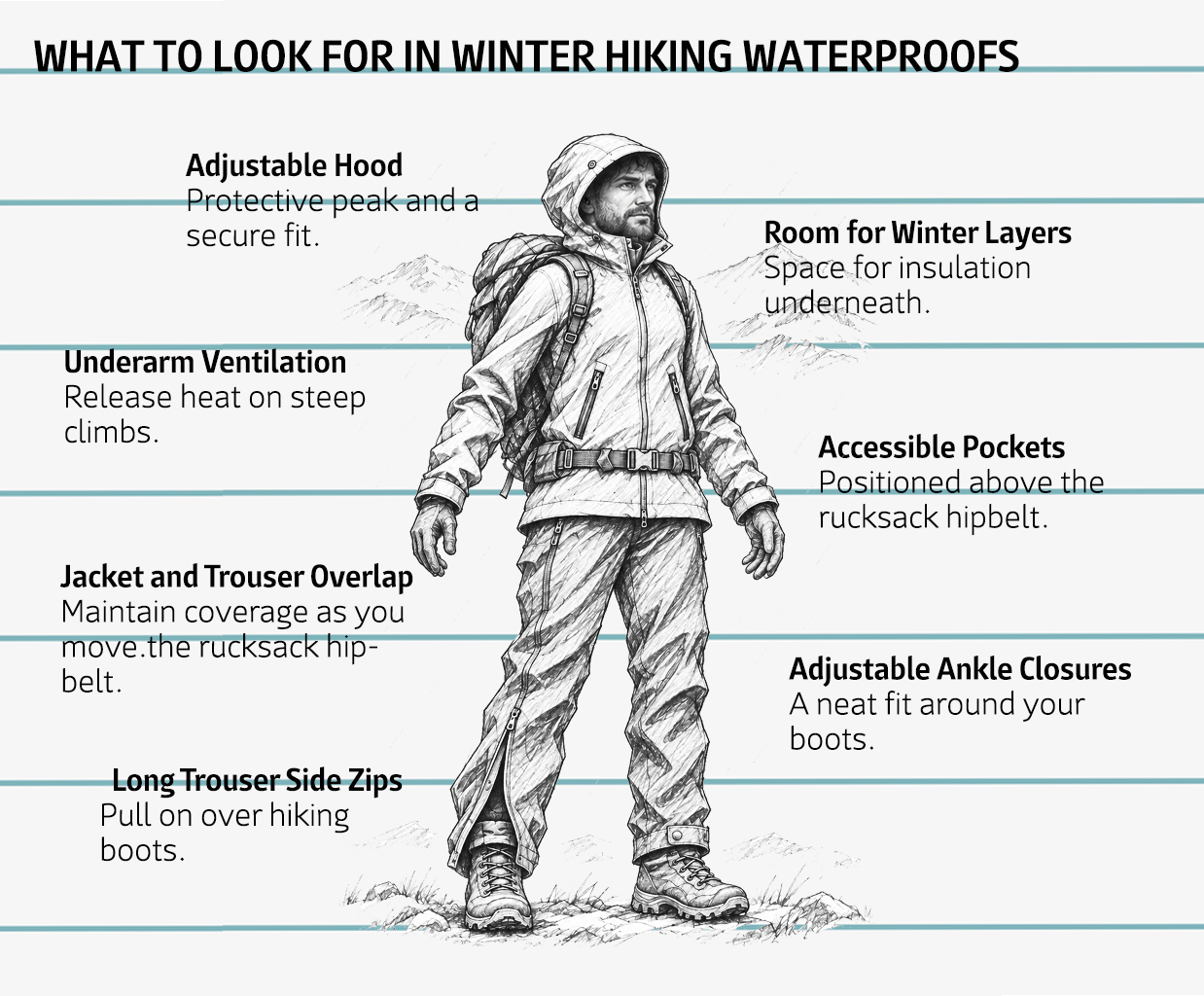
For winter hiking in the UK, we want protection we can rely on without feeling restricted or getting too hot on the way up. That means looking beyond the waterproof fabric to the fit, ventilation and smaller details, such as a hood that stays put when you turn your head or trouser zips you can open over muddy boots.
It also helps to know what you’re buying. A waterproof shell keeps rain, wind and snow out, but most offer little warmth on their own. That comes from the layers underneath, with enough room to add insulation when you need it.
Below, we’ve brought together our picks of waterproof jackets and trousers for winter hiking, including suggested pairings to help you put together a combination that suits your walks.
IN SHORT…
-
Our top picks: Compare the best waterproof jackets and trousers with a handy comparison table.
-
Find your perfect pairing: Discover the best combinations for everyday hillwalking, energetic hikes and technical mountain days.
-
Features that matter: Know what to look for, from adjustable hoods to boot-friendly leg zips.
-
Understand waterproof technologies: Explore GORE-TEX versus alternatives, including breathability, durability and packability.
-
Get the fit right: Learn about fit, winter layering and how to care for your waterproofs.
Best Waterproof Jackets and Trousers: Our Top Picks
Some waterproofs earn their place by handling almost any winter walk. Others stand out when the route gets steeper, the weather settles in, or space in your rucksack becomes a priority. These five pairings offer different approaches, with each jacket and pair of trousers also worth considering individually.
At a glance
| Best for | Jacket and trousers | Waterproof technology and construction | Ventilation | Weight*: jacket / trousers | Packability |
| Overall winter hiking | Rab Kangri GTX Jacket + Kangri GTX Pants | Both: three-layer GORE-TEX Performance ePE, 70D face fabric | Jacket pit zips; full-length two-way trouser side zips | 438g / 378g | Substantial shells prioritising durability over minimum bulk |
| Everyday winter hillwalking | Montane Norste XT Jacket + Rab Namche Hike GTX Pants | Jacket: three-layer Pertex Shield, 40D. Trousers: three-layer GORE-TEX ePE, 75D | Jacket pit zips; three-quarter-length two-way trouser side zips | 425g / 296g | Practical everyday combination with streamlined trousers |
| Energetic hikes and steep ascents | Rab Kinetic Alpine Stretch Jacket + Firewall Mountain Pants | Jacket: three-layer Pertex Shield Air. Trousers: three-layer Pertex Shield, 40D | Two-way jacket pit zips; full-length two-way trouser side zips | 519g / 348.5g | Jacket favours stretch and features; trousers pack compactly |
| Premium lightweight option | 7mesh Guardian Apex Jacket + Guardian Apex Pants | Both: three-layer GORE-TEX ePE with 40D main fabric and C-Knit backing; reinforced trouser panels | Jacket underarm vents; Trousers with partial-length leg zips | 310g / 245g | Both stow into their own pockets |
| Technical winter mountain days | Patagonia Triolet Jacket + Triolet Pants | Both: three-layer GORE-TEX ePE, 75D; reinforced trouser scuff guards | Two-way jacket pit zips; fully separating two-way trouser side zips | 510g / 520g | More substantial, especially the reinforced trousers |
* Weights refer to men’s versions, generally size medium where specified. Packability descriptions are qualitative comparisons, rather than measured packed volumes.
Best Overall for Winter Hiking
Rab Kangri GTX Jacket + Rab Kangri GTX Pants
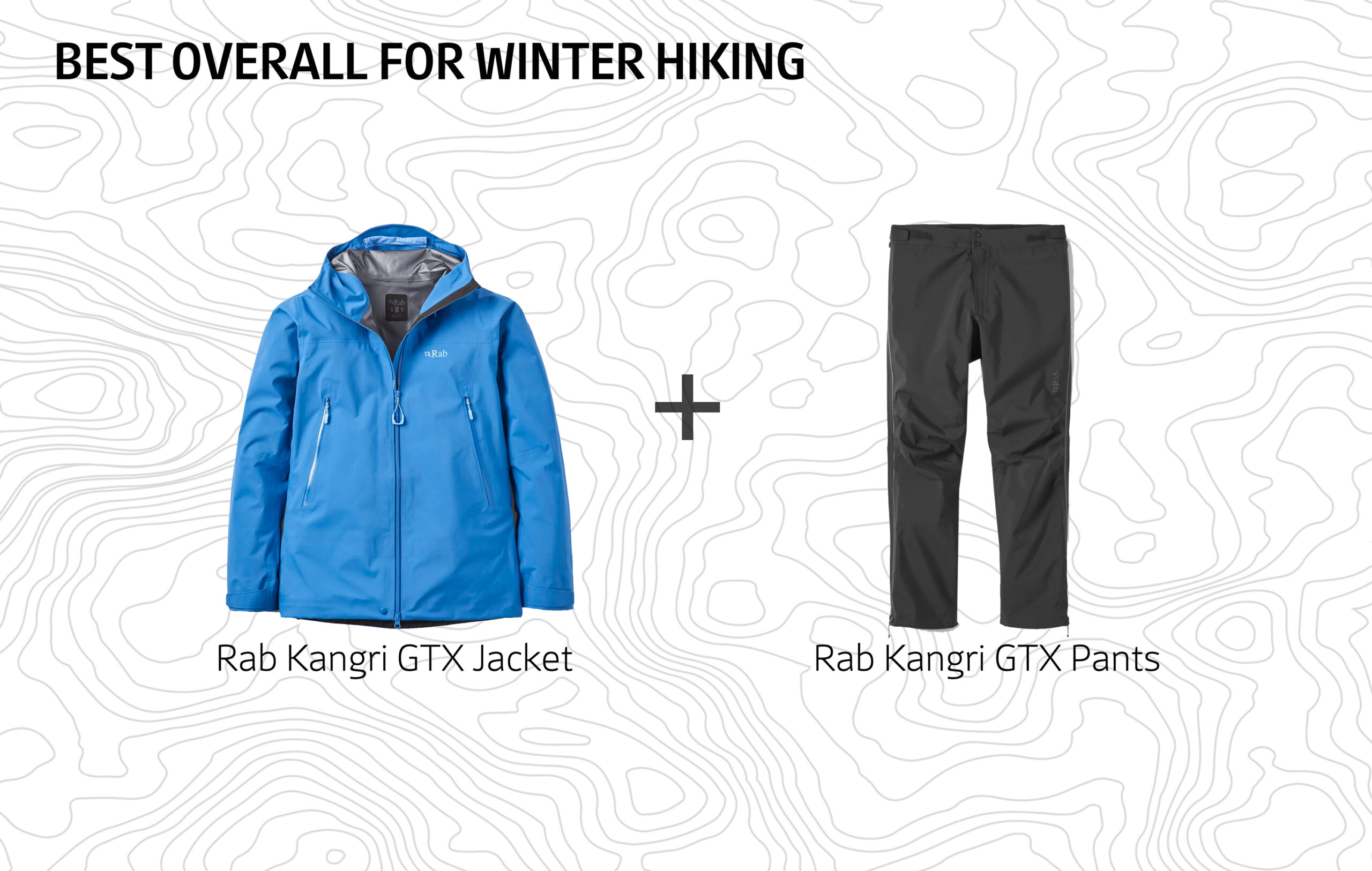
For winter walks where rain is likely to become a lasting companion, the Kangri pairing makes a convincing starting point. Both pieces use a robust 70D three-layer GORE-TEX Performance ePE construction, with useful adjustments and ventilation rather than a stripped-back feature set.
The jacket: A fully adjustable mountain hood with a stiffened peak provides coverage, while two-way underarm zips let you release heat on climbs. The regular fit suits layering, and the two-way front zip gives you another way to adjust the jacket when moving or sitting.
The trousers: Full-length two-way side zips are the standout feature, making changes over boots easier and offering ventilation once you’re walking. Articulated knees and an adjustable waistband help keep the fit comfortable.
Why pair them? They share an emphasis on durable protection and practical adjustment. The compromise is packed bulk: choose them for regular wear in winter weather rather than the smallest possible backup kit.
Best for Everyday Winter Hillwalking
Montane Norste XT Jacket + Rab Namche Hike GTX Pants
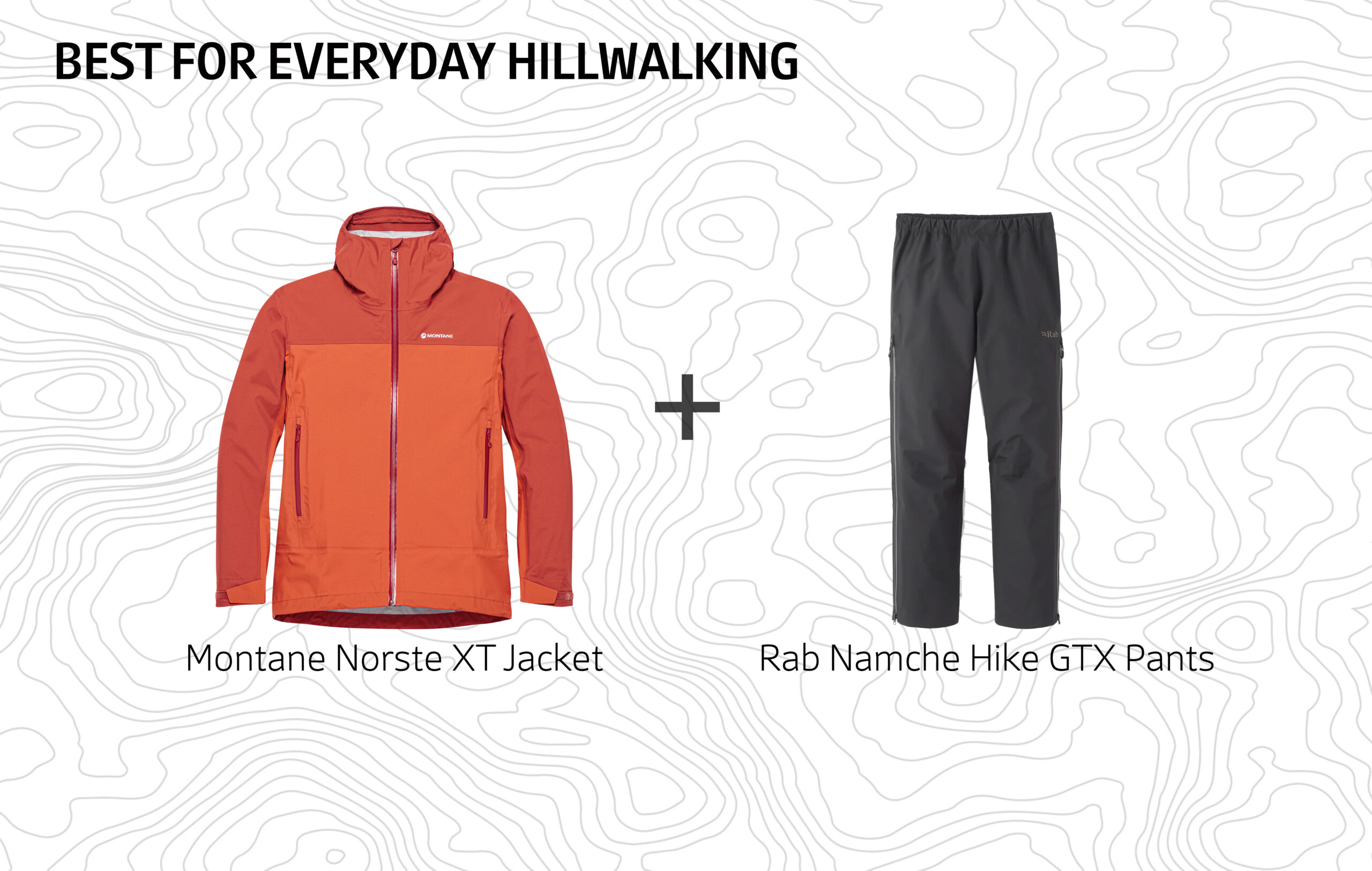
Not every winter walk calls for an alpine feature list. This combination keeps the focus on comfortable protection for wet paths, open hillsides and long days beneath an unpromising forecast.
The jacket: The Norste XT uses three-layer Pertex Shield with a 40D face fabric. Its regular fit and bonded pit zips make it a practical option for walking at a steady pace, with ventilation available when the gradient rises. It offers a useful middle ground between minimal emergency protection and a more substantial mountain shell.
The trousers: The Namche Hike GTX Pants keep things straightforward. Their three-layer GORE-TEX ePE fabric, articulated knees and low-bulk waistband suit hillwalking, while three-quarter-length two-way side zips allow changes over boots and venting. Those zips offer less opening than the Kangri’s full-length design.
Why pair them? A well-featured walking jacket meets streamlined overtrousers. It’s a sensible combination for everyday winter hillwalking, particularly when the trousers may alternate between your legs and your rucksack.
Best for Energetic Hikes and Steep Ascents
Rab Kinetic Alpine Stretch Jacket + Rab Firewall Mountain Pants
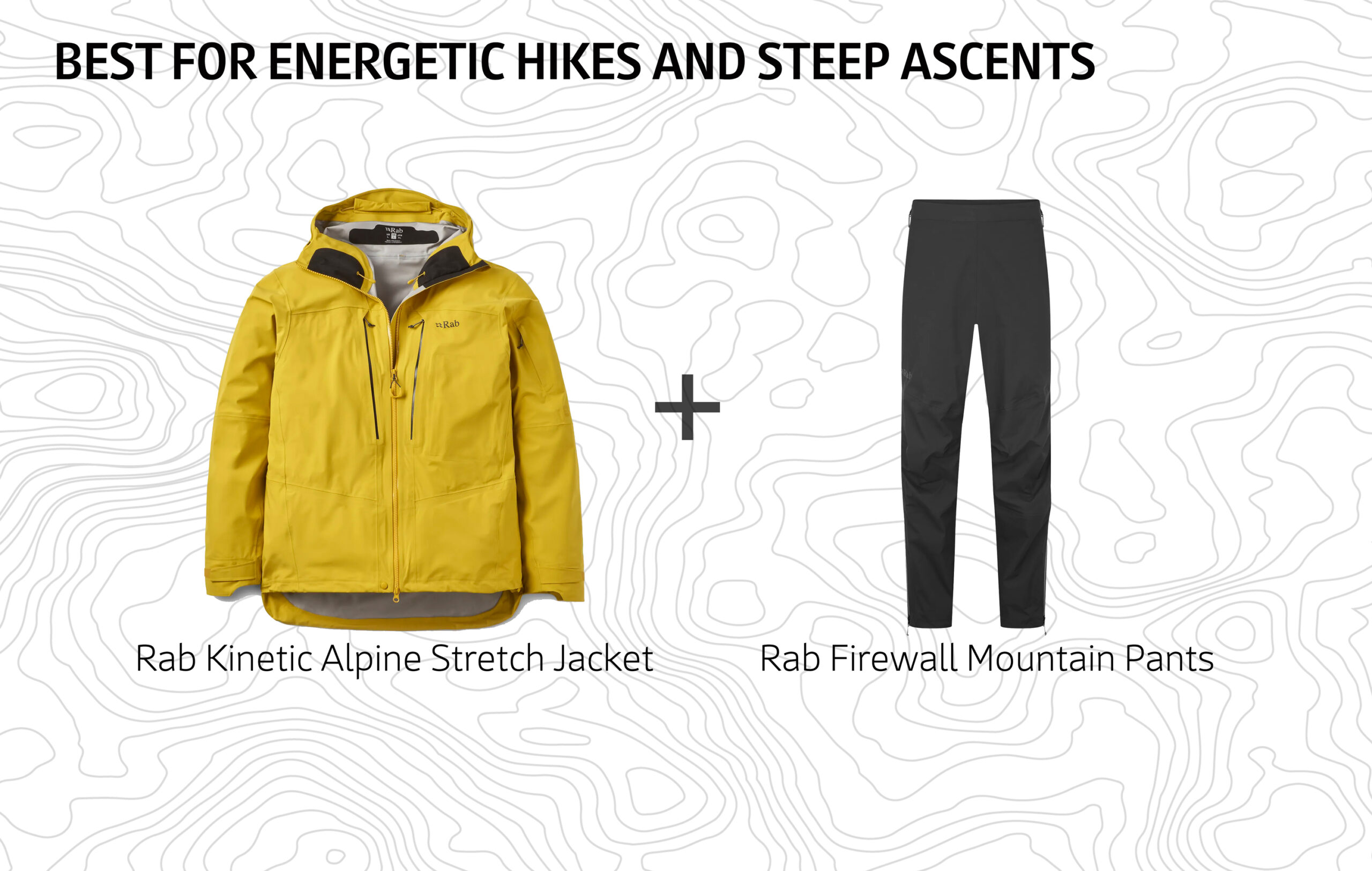
When the route involves high steps, scrambling and sustained climbing, freedom of movement becomes hard to ignore. This pairing brings together a stretchy jacket and trousers with generous opening and ventilation options.
The jacket: The Kinetic Alpine Stretch uses three-layer Pertex Shield Air with a soft, stretchy feel and two-way-venting pit zips. A helmet-compatible hood and large chest pockets reflect its technical mountain background. At 519g, it earns this category through mobility and ventilation rather than low weight; it is more jacket than many straightforward winter walks require.
The trousers: The Firewall Mountain Pants combine three-layer Pertex Shield with a gusseted crotch and articulated knees. Full-length two-way side zips make them easy to add over boots and give you options for releasing heat. Their minimal feature set helps keep packed size down, although they lack the Triolet’s reinforced, snow-focused cuff construction.
Why pair them? Both accommodate active movement, with ventilation you can adjust as effort changes. They suit steep, changeable days when waterproof protection needs to work around your pace.
Best Premium Lightweight Option
7mesh Guardian Apex Jacket + 7mesh Guardian Apex Pants
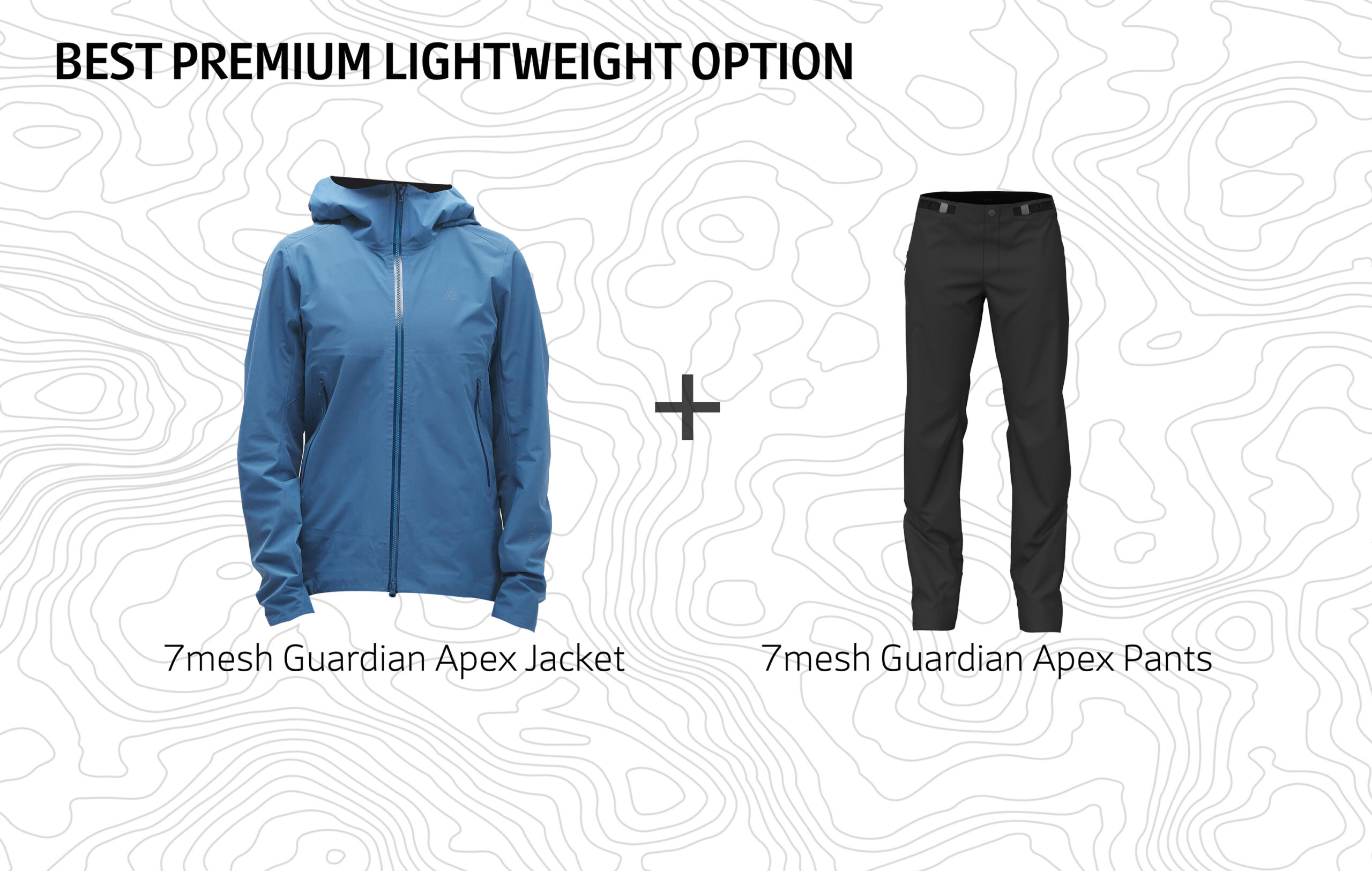
At a combined listed weight of 555g, the Guardian Apex pairing is the lightest here. Its appeal is keeping useful protection and articulation while reducing the load you carry.
The jacket: The 310g Apex combines GORE-TEX ePE, a 40D high-tenacity nylon face and C-Knit backing. Underarm vents, a two-way front zip, harness-friendly pockets and an adjustable CrossPull hood give it a broad feature set for its weight. It also stows using the integrated StashSystem.
The trousers: At 245g, the Apex Pants offer articulated shaping, reinforced seat and instep areas, adjustable hems and pocket storage for packing away. Their important distinction is access: the design does not include long side zips or dedicated leg vents, so they offer fewer options for changing over boots and releasing heat than the full-zip trousers here.
Why pair them? Both offer low weight and pocket stowage, making them appealing when pack space matters. Consider the trousers’ simpler opening arrangement before choosing them primarily for quick-change use as overtrousers.
Best for Technical Winter Mountain Days
Patagonia Triolet Jacket + Patagonia Triolet Pants
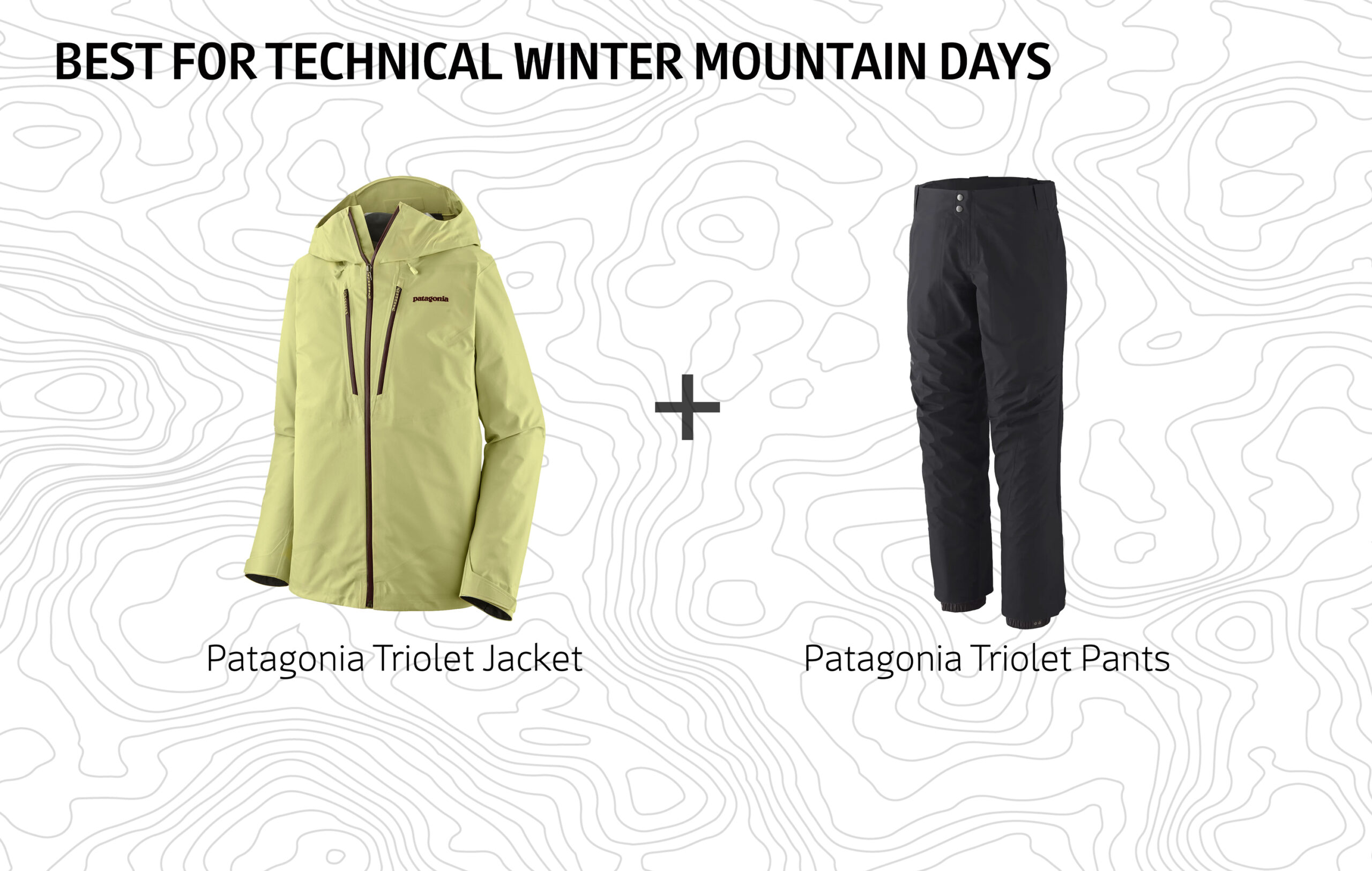
Snow-covered terrain and repeated contact with rough ground place different demands on waterproofs. The Triolet pairing brings a more substantial build and mountain-focused details, particularly around the trouser cuffs.
The jacket: Three-layer GORE-TEX ePE with a 75D face fabric provides a durable shell construction. The helmet-compatible hood, chest pockets, front pockets positioned clear of a harness or hip belt, and two-way pit zips suit days with more equipment and frequent adjustments. Its 510g weight makes it less appealing if minimum packed weight is your main priority.
The trousers: Fully separating two-way side zips help with changing over large boots and adjusting ventilation. Scuff guards, internal gaiters and a double-cuff design make them particularly relevant to snowy mountain use. At 520g, they are the heaviest trousers here and a substantial choice for occasional backup protection.
Why pair them? Both favour durable coverage and technical functionality. Choose this combination when you expect to wear your waterproofs through demanding winter conditions and will make use of the extra reinforcement and snow protection.
How to Choose a Waterproof Jacket for Winter Hiking
Try a waterproof jacket on with your winter layers and do a little more than check it in the mirror. Reach up, bend forward and turn your head with the hood fastened. You’ll quickly discover whether the sleeves pull back, the hem rides up or the hood leaves you looking at its lining instead of the path.
Waterproof ratings: look beyond the number
Waterproof ratings are usually given as hydrostatic head, measured in millimetres. A higher figure means the fabric withstands more water pressure in testing. For regular winter hiking in prolonged rain or wet snow, a rating of 20,000mm or above is a useful starting point, but it cannot tell you everything about the finished jacket. Seam sealing, zip protection and the openings around your face, wrists and waist matter too.
Breathability and ventilation
You can work up plenty of heat on a steep climb, even with snow on the ground. Breathable fabric helps moisture escape, while underarm zips let you release heat more directly. Look for adjustments you can operate easily and open vents before you become uncomfortably hot, provided the weather allows it.
Two-layer, 2.5-layer or three-layer?
These terms describe the waterproof fabric’s construction rather than how many layers of clothing you need underneath.
| Construction | What it means | What to consider |
| Two-layer | An outer fabric and waterproof barrier, usually with a separate lining in jackets. | Check the finished garment’s bulk and intended use. |
| 2.5-layer | An outer fabric and waterproof barrier with a protective print or coating inside. | Often prioritises low weight and a small packed size. |
| Three-layer | An outer fabric, a waterproof membrane, and an inner backing bonded together. | A strong option for frequent winter use, with protection for the membrane and good durability. |
Three-layer construction does not automatically mean a heavy jacket, and construction alone does not determine waterproofness.
Hoods, cuffs, hems and pockets
Small details become much more noticeable when you’re adjusting them with cold fingers:
- Hood: It should tighten securely and turn with your head without blocking your view. Check helmet compatibility if your activities require it.
- Cuffs: Look for enough adjustment to work with your gloves and close gaps.
- Hem: Check that it covers your waist when you reach or bend.
- Pockets: Fasten your rucksack hip belt and see whether you can still reach them.
A well-fitting hood and sufficient sleeve and body coverage are worth checking in person.
Room for winter layers
Bring the fleece or insulated layer you expect to wear underneath when trying on a shell. You should be able to move freely without pulling across the shoulders or compressing the insulation. Start with the manufacturer’s intended fit rather than automatically buying a size larger.
Durability, weight and packability
A shell worn under a rucksack every weekend faces different demands from one carried for occasional showers. Consider fabric toughness where straps sit and where you might brush against rock. Higher-denier fabrics generally indicate greater ruggedness, although fabric quality and construction also influence durability.
Think about how often the jacket will be in your bag. A compact shell is appealing when you carry it for much of the walk; if it will stay on from the car park to the summit and back, give fit, coverage and useful features at least as much attention as packed size.
How to Choose Waterproof Trousers for Winter Hiking
Waterproof trousers are easy to overlook until you’re trying to pull them over muddy boots as the rain gets heavier. Before buying, think about when you’ll put them on, what you’ll wear underneath and whether they allow a comfortable uphill stride.
Backup overtrousers or all-day protection?
Overtrousers go over your walking trousers when conditions demand extra protection. A light, packable pair makes sense if they spend most of their time in your rucksack.
For walks where persistent rain, wind or wet snow is likely from the start, you may wear waterproof trousers throughout. Prioritise comfort and a more durable construction for extended use. Many overtrousers can also be worn all day; the distinction is how you intend to use them.
Leg zips that work with your boots
Check the zip opening against your actual winter hiking boots. Longer side zips make changing easier, while shorter openings can require more manoeuvring. Three-quarter-length zips are useful for pulling trousers over boots; full-length designs open further.
Practise putting them on at home. A quick fitting-room check is much easier than discovering a tight opening on a wet hillside.
Breathability, ventilation and movement
Look for breathable fabric and, where available, side zips for ventilation. Check how much you can open them while keeping the trousers secure and maintaining coverage.
Then take a high step and squat down. The knees, seat and crotch should allow movement without tugging at the waistband. Extra room helps with layering, but excessive loose fabric around your lower legs can get in the way.
Waist fit and ankle adjustment
Try them over your usual walking trousers, including a base layer if that forms part of your winter setup. The waistband should stay comfortable when sitting, bending and wearing a rucksack hip belt.
At the ankles, look for an opening that accommodates your boots and adjusts neatly around them. You want coverage without hems trailing underfoot.
Reinforcements and packability
For regular use on rough ground, consider tougher fabric or reinforcement around areas such as the knees, seat and inner ankles. Check where the reinforcement sits rather than assuming every panel serves the same purpose.
If the trousers are mainly backup protection, compare their packed size with the space available in your rucksack. Keep them somewhere accessible, so putting them on does not mean unpacking everything else.
Pairing Your Waterproof Jacket and Trousers
Found a jacket you like? Before settling on the trousers, try them together. A comfortable waistband and a well-cut jacket can feel quite different once you add winter layers, fasten a rucksack hip belt and start moving.
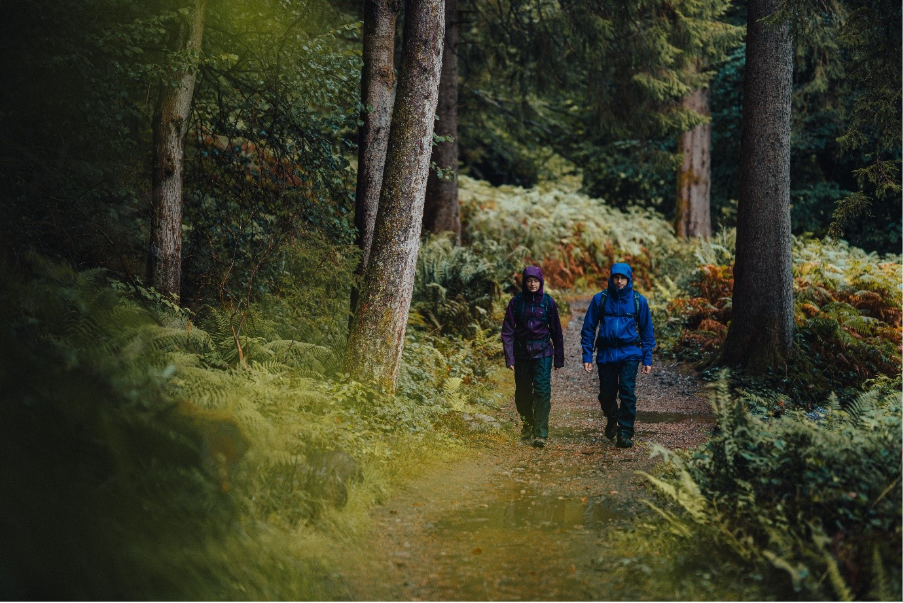
Check the overlap
Your jacket should sit comfortably over the trouser waistband, with enough overlap to maintain coverage when you bend forward or reach up. Try a few high steps too. You don’t want the hem catching on the waistband or either piece pulling out of position.
Match them to the walk
Think about how you’ll use each piece. If your jacket stays on for most winter walks but your trousers usually remain in your bag, a durable shell paired with lighter, packable overtrousers can make sense.
For days spent walking through persistent rain, sleet, or wet snow, give equal attention to all-day comfort and protection in both pieces. On steep routes, check that you can release heat through the jacket and trouser vents without awkward adjustments.
Leave room to move
Try the pairing over the layers you actually wear, then put your rucksack on. Can you reach the jacket pockets above the hip belt? Does the trouser waist feel comfortable underneath it? Can you crouch or step onto a high rock without fabric pulling across your back or knees?
These small checks tell you more than standing still in front of a mirror.
Do they need to be from the same brand?
No. Matching pieces can work well, but there’s no need to rule out a better-fitting combination from different brands. Focus on coverage, movement and whether both pieces suit your plans. The best pairing is one you can walk comfortably in for hours without repeatedly tugging at a hem or pulling up a waistband.
Is GORE-TEX Worth It for Winter Hiking?
Halfway up a steep climb, you’re asking your waterproofs to do two things at once: keep wind-driven rain out and let the moisture you’re producing escape. Throw in wet snow, a rucksack and several hours on the hill, and the choice becomes more interesting than simply looking for a GORE-TEX label.
GORE-TEX vs alternative waterproof technologies
GORE-TEX is a familiar choice for winter hiking, but alternatives such as Pertex Shield also offer waterproof, breathable protection. Both come in different fabric constructions, so the useful comparison is between the jackets or trousers themselves, rather than the names on their labels.
During prolonged rain, check the whole garment. Waterproof fabric is only part of your protection. Sealed seams, protected zips and openings that adjust securely help keep the weather outside. A hood that blows back or cuffs that leave gaps can soon become more noticeable than the membrane inside the jacket.
For steep climbs, give heat somewhere to go. Breathability matters, but so does the ability to open underarm or leg vents before you become soaked in sweat. Even a breathable shell can feel uncomfortable if you’re working hard with every opening tightly fastened.
For regular mountain use, check what surrounds the membrane. Outer fabric toughness and the backing protecting the waterproof layer influence how well a garment handles repeated wear. A lightweight shell and a substantial mountain jacket may use the same waterproof technology yet be designed for different needs.
Then there’s fit. Can you reach forward without pulling across the shoulders? Does the hood follow your head? Can you bend and take a high step with your winter layers underneath?
GORE-TEX deserves a place on your shortlist, alongside alternatives that suit your activity. Choose the combination of fabric, construction, ventilation and fit that works for the way you walk. That is what you’ll notice when the weather settles in.
Keeping Your Waterproofs Performing
When rain stops rolling off your sleeves and starts soaking into the outer fabric, it’s easy to assume your jacket has had its day. Often, it needs some attention before it needs to be replaced.
When the outside looks soaked
That dark, saturated appearance is known as wetting out. It happens when the outer fabric’s water-repellent finish is no longer working effectively. The waterproof membrane underneath may still be intact, but the garment can feel clammy and less comfortable.
Wash first, then check
Dirt, sweat and oils build up with use, so don’t save washing for the moment your waterproofs look particularly muddy. Follow the care label, use a suitable cleaner and avoid fabric conditioner.
After washing, follow the recommended drying instructions. Where permitted, heat can help reactivate the existing durable water-repellent treatment, or DWR. If water still fails to bead, apply a compatible reproofer. This restores surface water repellency; it cannot mend holes or repair a damaged membrane.
Our guides explain how to wash your waterproof jacket and how to reproof or maintain winter outerwear.
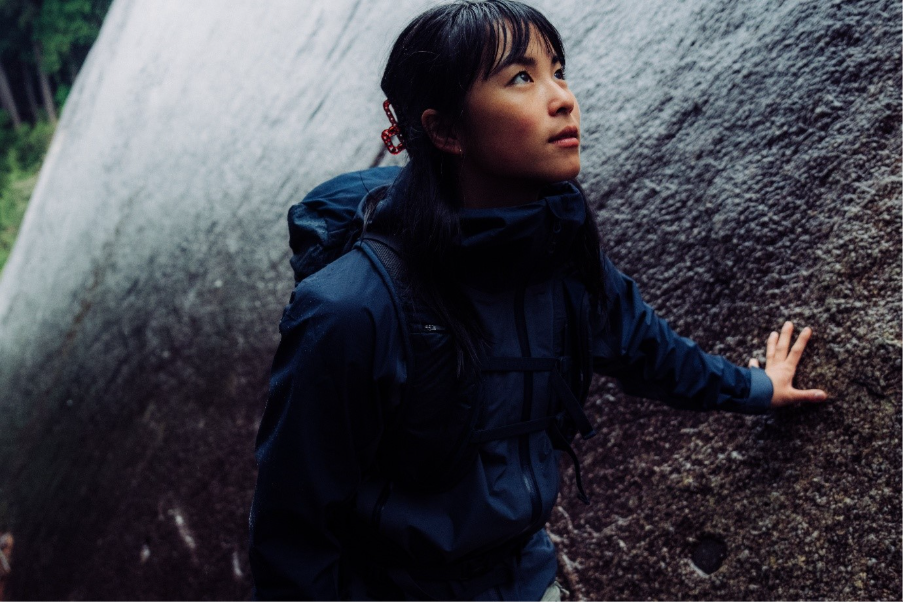
Give the hardworking areas a closer look
Check beneath rucksack straps, around cuffs and along trouser seats and inner ankles. Look for worn fabric, small holes, lifting seam tape or layers beginning to separate. Persistent leaking in one area deserves a closer inspection rather than another round of reproofing.
Dry your jacket and trousers fully before putting them away. A little attention between walks helps them stay ready for the next spell of rain, sleet or snow.
Final Word
Choose your waterproofs for the walks you actually do. Long days on exposed hills call for dependable coverage and fabrics that can handle regular wear. If you move quickly and build up heat on climbs, pay close attention to ventilation. And if your trousers spend more time in your rucksack than on your legs, packability deserves a place on the checklist.
Try your jacket and trousers together over your winter layers. Reach, bend, take a high step and check that everything stays comfortable with your rucksack on. A combination that fits properly will make far more difference to your day than matching labels.
If you’d like a hand with choosing, visit our Hereford shop to try a few options and get advice from the team. You can also give us a call or get in touch for help with fit, features and winter layering.
FAQs
Look for reliable waterproof protection, a secure adjustable hood, room for winter layers and ventilation you can use on climbs. The best choice depends on your routes and pace: regular days on rough, exposed terrain place different demands on a jacket than shorter, less demanding walks. 
For frequent winter use, three-layer construction is well worth considering. The waterproof membrane is bonded between an outer fabric and an inner backing, which helps protect it from wear. However, check the fabric toughness, fit and features too, as three-layer jackets vary considerably.
Most waterproof shells provide little insulation. They help protect you from rain, snow and wind, while your base layers and midlayers provide warmth. Choose a shell with enough room for the layers you expect to wear, and adjust your insulation as your effort and the conditions change.
For regular hiking in prolonged rain or wet snow, 20,000mm or above is a useful starting point. The rating measures the fabric’s resistance to water pressure, rather than the jacket’s overall performance. Sealed seams, protected zips, coverage and fit also matter.
They should be part of your winter hillwalking kit, even if you don’t wear them from the start. They provide protection for your legs when rain, wet snow or strong winds arrive. Choose a pair you can put on over your hiking boots, so you can change without removing your footwear.
No. You can mix brands as long as both pieces fit comfortably together and suit your intended use. Check that the jacket overlaps the waistband when you move and that neither piece restricts your stride or catches awkwardly under your rucksack.
Not automatically. Many shells are already cut with layering space, so start with the brand’s size guide and try them over your usual winter clothing. You should be able to move freely without compressing insulation, pulling across the shoulders or feeling restricted at the knees and seat.
There’s no fixed lifespan. Frequency of use, abrasion, care and storage all affect how it wears. If the outer fabric starts soaking up water, cleaning and restoring its water-repellent finish may help. Holes, lifting seam tape, separating layers, or persistent leaks need closer assessment and may require repair. Wetting out alone does not mean the jacket needs replacing.
Leave a Reply