Ready to hit the trails but not sure how to choose trail running shoes that suit your runs? From forest paths to mountain ridgelines, discover how the right pair can elevate your performance and transform your off-road adventures.
IN SHORT…
- What sets trail running shoes apart and why they matter on every terrain
- How to identify the features that will boost your comfort, grip, and confidence
- When you’ll know you’ve found the perfect fit for your feet and your trails
- Examples of popular trail running shoes to help guide your choice
What is trail running?
Trail running isn’t just running. It’s an escape, freedom, weaving through forests as birdsong replaces your playlist, climbing ridgelines where your only audience is the wind, and bombing downhill like a kid on summer holidays. It’s the kind of running that shakes the routine out of your bones. Put simply, it’s running on natural terrain like forest paths, rocky ridgelines, muddy hills and mountain trails, but it feels like so much more than that.
Why does a good pair of trail running shoes matter?
When trail running, the terrain doesn’t care if you’re ready. It’ll throw mud, loose rock, wet roots, steep climbs and sudden descents your way. Sometimes all in the same run. And when it does, your shoes are your line of defence.
The right pair won’t just grip when you need it most. They’ll boost your confidence, protect your feet, and carry you through every mile without a second thought. Choose well, and your shoes will feel like an extension of the landscape.
Let’s explore how to choose the pair that’s made for your kind of wild. Let’s break down what really matters when choosing trail running shoes. We’ll help you find the pair that fits your feet, your trail, and your rhythm.
What Kind of Trails Will You Be Running On?
Not all trails are created equal, and neither are the shoes that tackle them. Before diving into lugs, cushioning, or waterproof membranes, start by thinking about where you’ll actually be running. The terrain underfoot plays a massive role in what kind of shoe will serve you best.
Here’s a quick breakdown:
Rocky and technical trails: Think uneven footing, sharp stones, and steep scrambles. These all mean you’ll want shoes with an aggressive grip, solid underfoot protection (like a rock plate), and a secure fit that keeps you stable on sketchy ground.
Muddy or wet terrain: If you’re sloshing through bogs or dealing with post-rain sludge, go for deep multi-directional lugs, a quick-drying upper, and maybe a waterproof membrane
Dry, hard-packed dirt trails are your smoother, more predictable paths. Here you can opt for a lighter shoe with moderate grip and increased breathability, perfect for faster running or longer distances.
Mixed or mountainous terrain: When routes throw a bit of everything at you — rock, mud, forest floor, gravel — you’ll want a versatile, all-rounder trail shoe that balances grip, cushioning, and durability.
Getting familiar with your terrain makes the rest of the decision-making process so much easier, and it ensures that your shoes can handle whatever lies around the next bend.
How Do You Run, and What Kind of Feet Do You Have?
It might sound like an odd question, but how your feet move when you run greatly impacts the kind of trail shoes that feel best and perform best underfoot.
Here’s what to consider:
Do you land on your heel or forefoot?
Some runners naturally land on their heels, while others strike midfoot or forefoot. If you’re a heel striker, a shoe with more cushioning in the heel can help absorb impact. Forefoot or midfoot runners often prefer a lower-drop shoe that keeps them feeling nimble and balanced.
Are you a pronator, supinator, or neutral?
This refers to how your foot rolls when it hits the ground. Most people are near neutral, but if you overpronate (roll inward), you might benefit from more stability or structure in your shoes. If you supinate (roll outward), a well-cushioned, flexible shoe is usually best.
What kind of arches do you have: low, medium, or high?
Your arch shape affects how your foot absorbs shock. Low arches (flat feet) might need added support; high arches tend to benefit from extra cushioning; medium arches can often get away with a more neutral setup.
Understanding your gait and foot shape helps narrow down the vast world of trail shoes and gives you a better chance of finding a pair that feels natural from the first step.
What Features Actually Matter in Trail Running Shoes?
With so many trail shoes out there — all boasting different buzzwords — it’s easy to feel overwhelmed. But don’t worry: choosing becomes much simpler once you understand the key features and how they relate to your running style and terrain.
👉 For a full breakdown of the technologies used in trail running shoes, check out our Trail Running Shoe Technologies Guide
Let’s break it down:
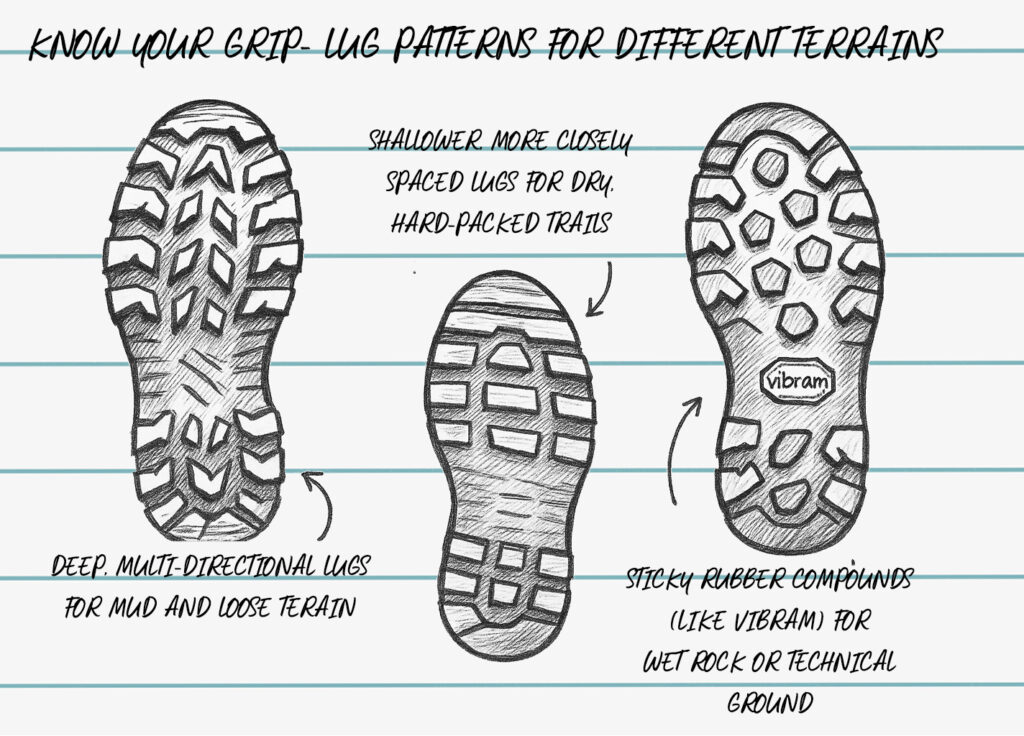
How important is grip?
Very. Grip is what keeps you upright when the trail gets steep, slick, or unpredictable. Look for:
- Deep, multi-directional lugs for mud and loose terrain
- Shallower, more closely spaced lugs for dry, hard-packed trails
- Sticky rubber compounds (like Vibram) for wet rock or technical ground
Think of your outsole as your tyre tread — different jobs need different patterns.
Do you need cushioning or ground feel?
That depends on how far you’re going and what you prefer underfoot.
- More cushioning offers comfort on long runs, hard-packed trails, or if you’re prone to sore joints.
- Less cushioning (aka more “ground feel”) keeps you nimble and connected to technical terrain, perfect for short or fast-paced runs.
Some runners like a plush ride, others want to feel every stone, and there’s no wrong answer.
Do you need rock plates or reinforced toes?
The answer is likely yes if you’re heading into rocky, rooty or unpredictable ground.
- Rock plates protect the soles of your feet from sharp edges.
- Reinforced toe bumpers help when kicking a hidden rock or tree root.
You can get away with lighter, more flexible shoes for smoother trails.
Is waterproofing better than breathability?
It depends on your priorities and your climate.
Waterproof membranes (like Gore-Tex®) are great for cold, wet conditions where staying dry matters. But on hot days or long distances, they can run warm and can trap moisture inside. In those cases, a breathable mesh upper that dries quickly might be a better call, even if it lets some water in.
As a general rule, if you’re splashing through a lot of wet grass, puddles, or bogs, waterproof might be worth it. If you’re running in mixed, warmer, or drier conditions, go breathable.
What’s the best heel-to-toe drop for you?
Drop is the difference in height between the heel and the toe. Most trail shoes fall somewhere between 0mm (zero drop) and 10mm.
- Higher drop (8–12mm) can suit heel strikers or runners used to road shoes.
- Lower drop (0–6mm) encourages a more natural stride and suits forefoot/midfoot strikers.
If you’re new to lower-drop shoes, ease in slowly to let your body adapt.
Understanding these features helps you filter out the noise and zero in on what you really need. After all, the best trail shoe isn’t the most expensive. It’s the one that works best for YOUR feet and YOUR terrain.
Are There Different Types of Trail Running Shoes, and Which One Do I Need?
Trail running shoes aren’t one-size-fits-all. They’re designed for specific terrain, distances, and running styles — so knowing what kind of running you’ll do helps you pick the perfect match. That’s why we’ve broken it all down into a matrix: not just to help you choose, but also to teach you the key differences between the many shoe types available.
Remember, the matrix is just a great starting point. It helps narrow your options based on terrain, distance, and use — three of the most important factors when choosing trail shoes.
But it’s not the full story.
Fit, foot shape, climate, and running style all play a big role in how a shoe performs for you. The matrix helps point you in the right direction, but trying shoes on and understanding your personal needs is key to finding the perfect match.
Trail Running Shoe Selector Matrix
| Terrain / Use | Short Runs (5–10K) | Mixed Distance (10–30K) | Long Distance / Ultra (30K+) | Speed / Race |
| Light Trails / Park Paths | Light Trail Shoe | Light/Mid Trail Shoes | Cushioned All-Rounders | Minimalist / Race-Day Shoes |
| Muddy / Soft Ground | Mud-Terrain Shoes | Mud Trail Shoes + Cushion | Mud Max Cushion Shoes | Aggressive Lightweight Shoes |
| Rocky / Technical Trails | Protective Midweight Shoes | Technical Trail Shoes | Rugged Trail / Max Protection | Precision Minimalist Shoes |
| Mixed Terrain / Alpine | Versatile All-Rounder Shoes | Balanced Trail Shoes | Ultra Cushioned Rock Plate Shoes | Race-Ready All-Terrain Shoes |
Legend: Shoe Types Explained
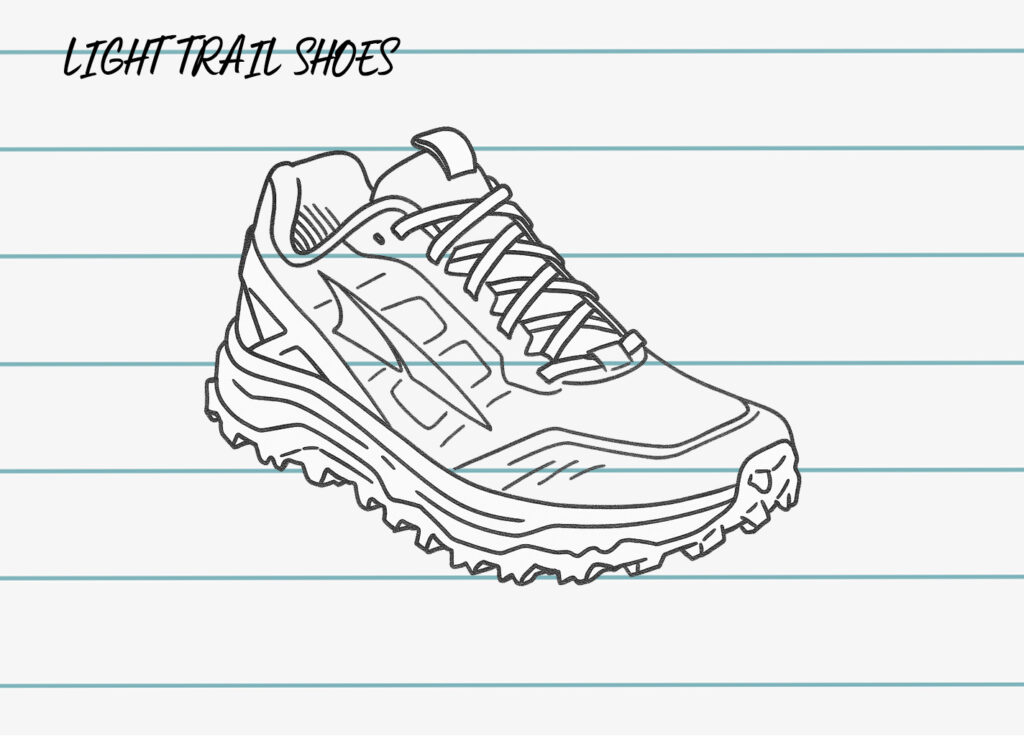
Light Trail Shoes
Great for: Park paths, forest tracks, gravel roads, and dry, well-maintained trails
These are the most beginner-friendly shoes — flexible, forgiving, and often road-to-trail capable.
Key features:
• Lightweight and breathable construction
• Moderate grip for light off-road use
• Often slightly wider for comfort
• Some models tolerate tarmac stretches
Ideal for: First-time trail runners, urban green spaces, or casual off-road jogs
Light/Mid Trail Shoes
Great for: Varied terrain that isn’t overly technical
A slight upgrade in grip and structure compared to pure light trail shoes — a great bridge between comfort and capability.
Key features:
• Slightly more aggressive lugs
• Better midfoot support
• Good for everyday trail runs or mixed routes
Ideal for: Runners ready to progress into moderate off-road trails
Cushioned All-Rounders
Great for: Mixed terrain, long training runs, comfort-seekers
Think of these as trail SUVs — versatile and comfy with solid grip and cushioning for a bit of everything.
Key features:
• Plush midsole cushioning
• Good grip for varied trails
• Stable yet responsive ride
Ideal for: Runners who value comfort, or anyone looking for a “one shoe to do it all”
Versatile All-Rounder Shoes
Great for: Light mud, forest trails, stony paths, and even fire roads
Blends trail-ready features with just enough comfort and versatility for long days.
Key features:
• Moderate protection and cushioning
• Grippy but not overly aggressive outsole
• Breathable upper, often quick-drying
Ideal for: Runners on mixed surfaces, long-distance hikers, or one-shoe quiver seekers
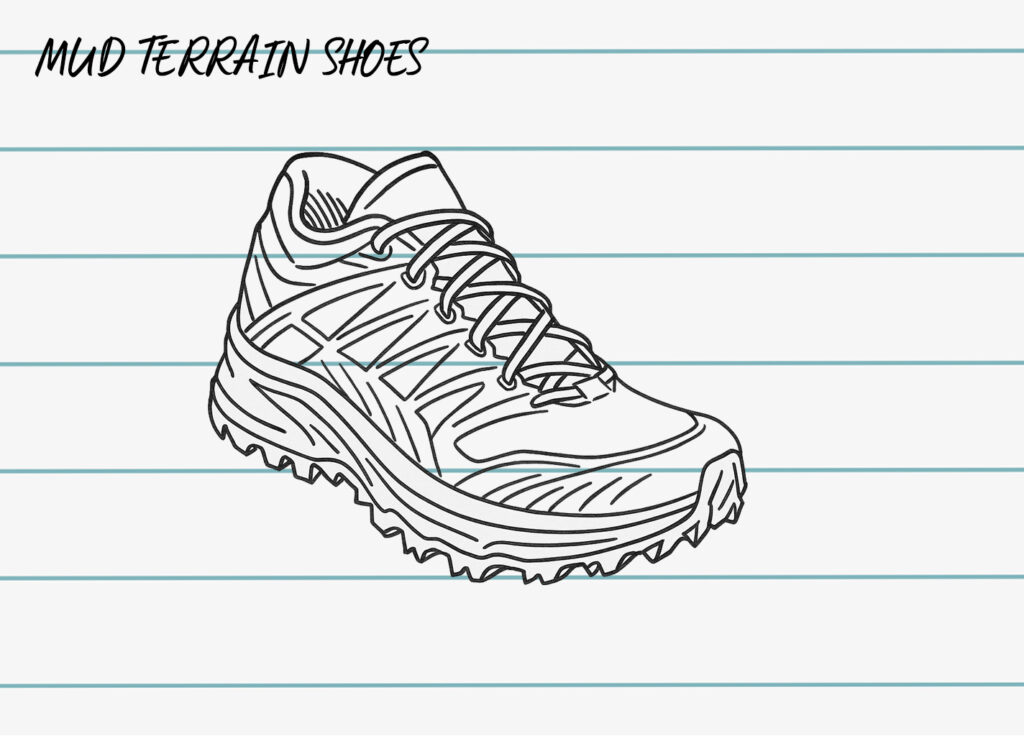
Mud-Terrain Shoes
Great for: Boggy fields, wet forests, deep mud, and UK-style sludge
Built like off-road tanks — these love slop and slush.
Key features:
• Deep, widely spaced lugs
• Drainage-focused uppers
• Often lower to the ground for stability
Ideal for: Wet-weather trail runs, obstacle races, and fell runners
Mud Trail Shoe + Cushion
Great for: Wet, muddy terrain where you want comfort, too
You get the grip of a mud shoe, but with added underfoot plushness for longer distances.
Key features:
• Luggy outsole
• Soft midsole cushioning
• Water-repellent or quick-drying upperIdeal for: Long slogs in wet conditions where comfort counts
Mud Max Cushion Shoes
Great for: Ultras or long runs in soggy, slippery conditions
The full package: grip, drainage, durability, and cushioning.
Key features:
• High stack height with aggressive lugs
• Comfort over long distances
• Reinforced uppers for sloppy terrain
Ideal for: Mountain ultras in foul weather or wet multi-day adventures
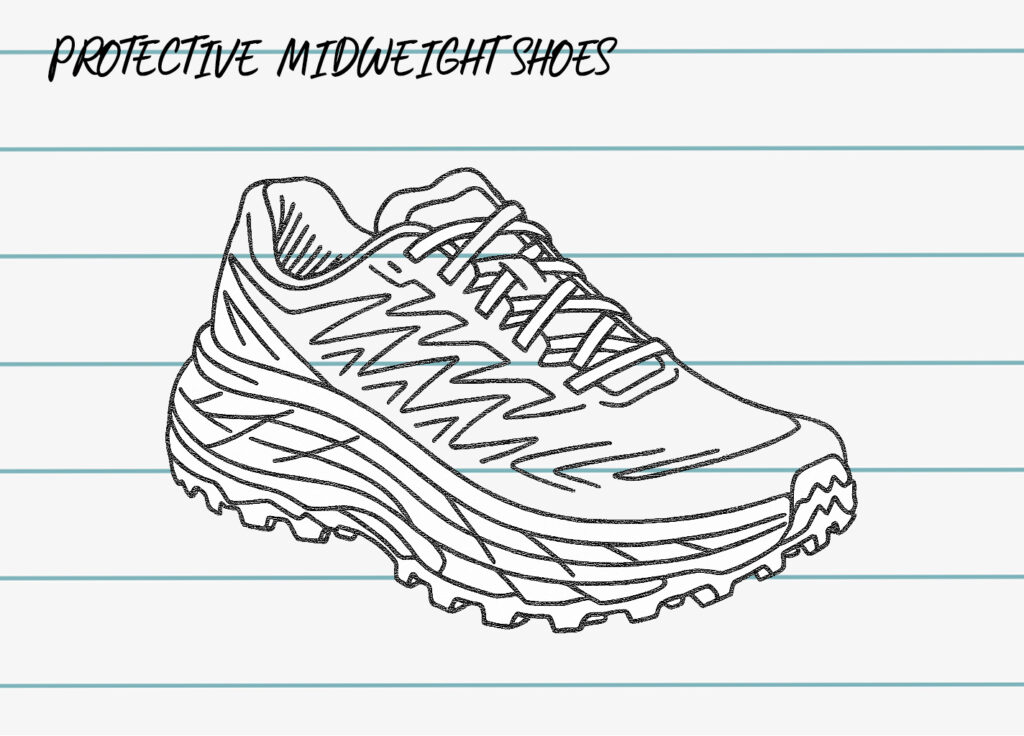
Protective Midweight Shoes
Great for: Rocky trails, rooty paths, and moderate mountain terrain
A solid balance of protection, comfort, and agility — beefier than light trail shoes without overkill.
Key features:
• Reinforced toe cap and sidewalls
• Rock plate or stiffened sole
• Grippy rubber and supportive heel
Ideal for: Those moving from casual trails to tougher ground
Technical Trail Shoes
Great for: Alpine paths, rock scrambles, and exposed ridgelines
These are mountain goats in shoe form — secure, sticky, and built for technical precision.
Key features:
• Sticky rubber outsoles (e.g., Vibram)
• Firm midsole with excellent foot control
• Tough, abrasion-resistant upper
Ideal for: Steep, uneven trails or mountain runners
Rugged Trail / Max Protection
Great for: Long missions in rocky, alpine or varied terrain
These are the heavy-duty boots of the trail running world — robust and confidence-inspiring.
Key features:
• Rock plate, reinforced toe, durable upper
• Cushioned yet supportive midsole
• Stable platform for heavy loads or rough ground
Ideal for: Ultra distances in the mountains, or mixed terrain backpacking
Minimalist / Race-Day Shoes
Great for: Speed-focused efforts, shorter races, and confident runners
Featherweight and responsive, these shoes favour agility and ground contact over comfort.
Key features:
• Low drop and minimal cushioning
• Flexible, fast-reacting midsole
• Minimalist upper with sock-like fit
Ideal for: Fast trail runs, vertical kilometres, or lightweight racing
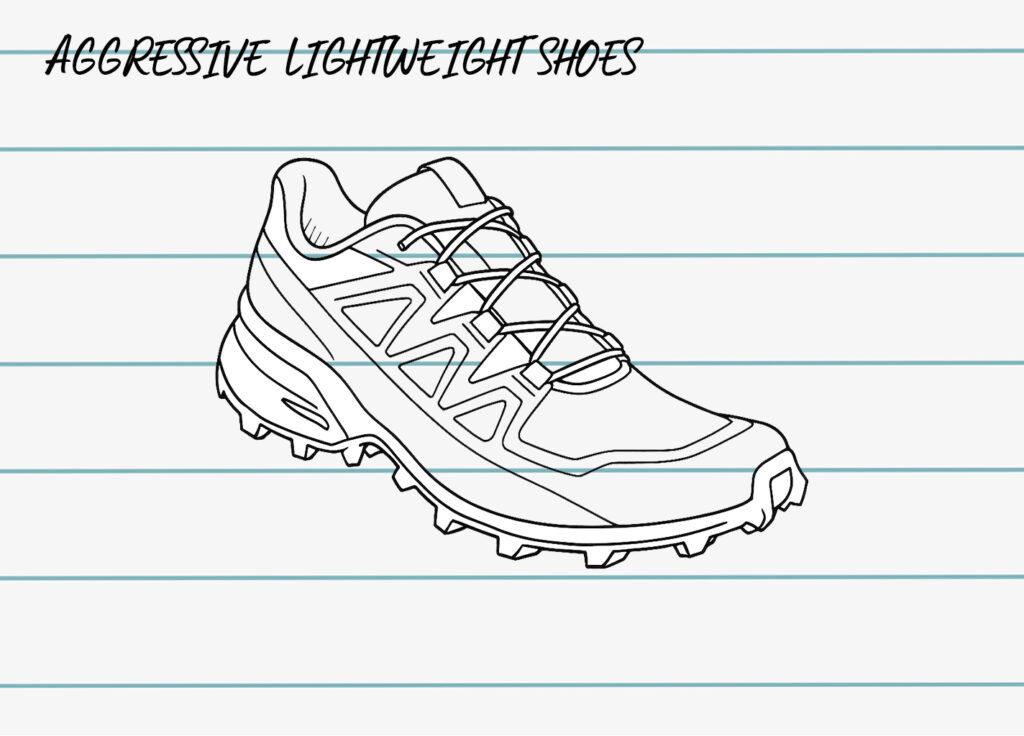
Aggressive Lightweight Shoes
Great for: Slippery mud races, fell runs, or vertical ascents
Like minimalist shoes, but with more bite — designed to grip and go fast.
Key features:
• Deep, claw-like lugs
• Water-shedding upper
• Lightweight construction
Ideal for: Muddy 5Ks, OCR events, and aggressive short-distance trail efforts
Balanced Trail Shoes
Great for: Trail runners wanting comfort + control without extremes
These shoes hit the middle ground: not too soft, not too firm.
Key features:
• Moderate stack height
• All-surface grip
• Versatile for most trail types
Ideal for: Newer trail runners still figuring out their preferences
Ultra Cushioned + Rock Plate Shoes
Great for: Multi-day efforts, ultras, or recovering runners
Combines max protection with a buttery smooth ride.
Key features:
• High stack height and plush foam
• Rock plate for protection
• Wide fit and stable platform
Ideal for: Technical ultras or older runners prioritising joint support
Race-Ready All-Terrain Shoes
Great for: Fast mountain runs where grip and agility are everything
A fusion of lightweight speed and rugged performance — race-day focused, but mountain-hardened.
Key features:
• Aggressive outsole
• Minimalist upper with precise lockdown
• Protective yet light underfoot
Ideal for: Skyraces, technical 10Ks, or confident mountain athletes
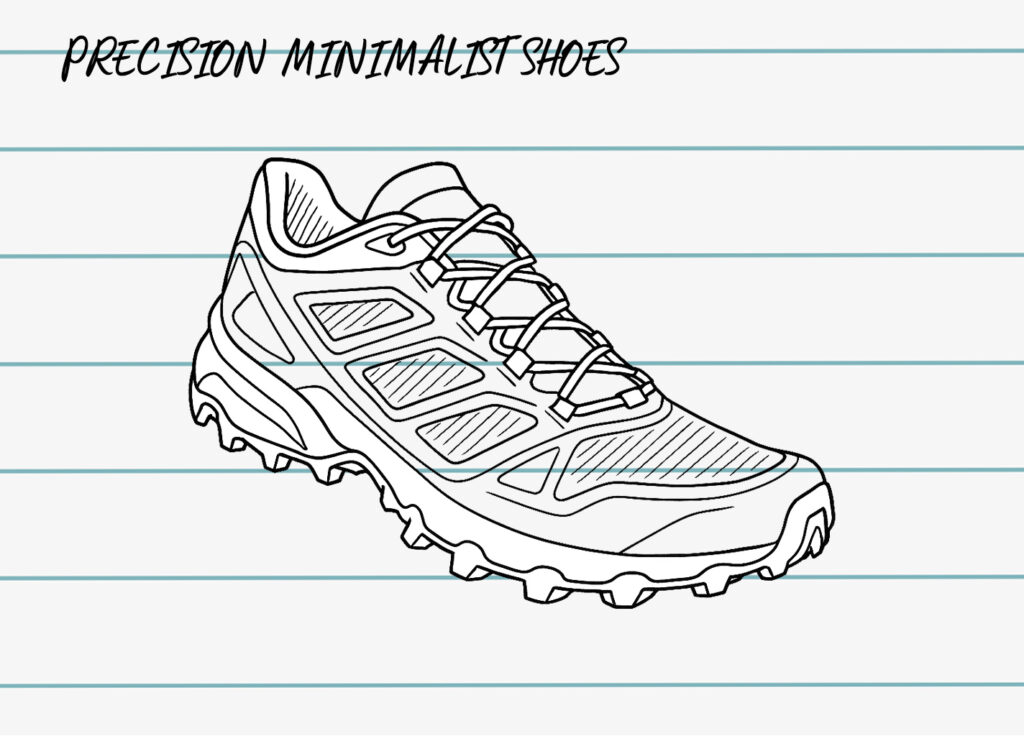
Precision Minimalist Shoes
Great for: Fast, technical terrain where every gram matters and agility is everything
These are stripped-back shoes for confident, experienced runners who want maximum ground feedback and precision in foot placement.
They typically feature:
- Lightweight and responsive midsoles
- Extremely low stack height for ground sensitivity
- Snug, race-oriented fit to avoid movement on steep or uneven terrain
- Less cushioning than standard minimalist shoes — tuned for control, not comfort
- Minimal drop (often 0–4mm)
Ideal for: Skyrunning, fell racing, vertical kilometres, or technical trail races where sharp turns, quick footwork, and minimal interference are key.
How Should Trail Running Shoes Actually Fit?
Getting the right fit is just as important as picking the correct type of shoe. Too tight, and you’re dealing with blisters, bruised toenails, or numb toes. Too loose, and you’re sliding around inside your shoe on every descent. A dialled-in fit gives you comfort, control, and mile after mile confidence.
Here’s what to look (and feel) for:
Is there enough space in the toe box?
Your toes need room to wiggle and splay naturally, especially on long runs or hot days when your feet swell.
You should have about a thumb’s width of space in front of your big toe. That extra space helps prevent bruising on steep descents and keeps your feet feeling fresh.
Is your heel locked in?
The back of your foot should feel snug, with no lifting or rubbing as you run.
A solid heel lock keeps your foot stable on uneven ground and prevents your toes from being pushed forward, a common cause of black toenails.
Do you need a wide or narrow fit?
Not all shoes come in multiple widths, but some brands (like Altra or HOKA) are known for roomier toe boxes, while others (like La Sportiva) run narrower and more precise.
If you have wider feet or want more space to spread your toes, look for wide-fit options or models known for extra room.
When’s the best time to try them on?
Try on shoes at the end of the day or after a run. That’s when your feet are at their biggest, which gives you the most realistic idea of how they’ll feel mid-run.
Bring your running socks too (preferably the ones you’ll use on the trail).
How tight is too tight?
Your shoes should feel secure, but not restrictive.
- If your toes are cramped or your arch feels pinched, they’re too tight.
- If your foot shifts around or you feel unstable, they’re too loose.
- A good trail shoe hugs your foot without squeezing it.
Remember, a perfect fit in the shop should still feel great 10 miles in. If in doubt, don’t be afraid to try on a few sizes or models — your feet will thank you out on the trail.
What are the Best Trail Running Shoes for Beginners?
If you’re just getting into trail running, first of all, welcome. You don’t need the lightest, fastest, or flashiest shoe on the wall. You need something that feels good from the get-go, keeps you stable on uneven ground, and gives you the confidence to explore without worrying about every root and rock.
When starting, comfort, grip, and versatility matter more than anything. Look for a shoe with:
- A moderate level of cushioning to keep your feet happy on longer runs
- Reliable grip for mixed terrain
- A secure fit that holds your foot in place without pinching
- And a bit of all-round protection — nothing overbuilt, but enough to guard against the unexpected
You don’t need to overthink drop height or race-day weight just yet. You’re better off with a balanced shoe that can handle a bit of everything.
A few beginner-friendly trail shoes we stock and regularly recommend include:
- Salomon Ultra Glide 3 – soft, cushioned, and super versatile, ideal for runners looking for comfort over long miles on mixed terrain
- Altra Lone Peak 9+ – a great intro to zero-drop shoes with a wide toe box and reliable grip for UK trails
- La Sportiva Prodigio – cushioned, protective, and lively underfoot — a brilliant option for those venturing onto longer or more technical trails
- Nnormal Tomir 2.0 – light, responsive, and well-suited for varied terrain, with a stripped-back design that still offers excellent protection and grip
Of course, every foot is different, and what works for one runner might not suit another. That’s why trying on a few pairs, walking around, and, if possible, testing them on real terrain makes all the difference.
Start with comfort. Choose what feels natural. And remember: the best shoe for a beginner is the one that excites you to lace up and hit the trail again tomorrow.
Final Tips: How Do You Know How to Choose trail Running Shoes?
Sometimes, it’s not about specs or lugs or drop. It’s about feel. The right trail shoe won’t just tick boxes. It’ll quietly disappear beneath you, letting you focus on the rhythm of your breath, the crunch of gravel, the swoop of the trail ahead.
You’ll know you’ve chosen well when you stop thinking about your feet. When your shoes provide great freedom as you dance across roots, charge through puddles, and flow downhill without a second thought.
Don’t overthink the marketing buzzwords. Don’t let flashy terms distract you from what really matters. Try them on after a long day, take them out onto real trails, and trust what your body tells you. A little pressure here, a hotspot there — those things don’t vanish with time. Comfort does not need to be earned.
And if you’re still unsure, rent a pair. Give them a proper run before you commit. There’s no shame in experimenting, finding the right shoe is part of the adventure.
Because when it clicks — when fit, terrain, and feeling come together — you’ll know. You’ll feel it in the ease of your stride, in the way the trail welcomes you in, and in that quiet sense of this is it.

FAQs
Yes. Road shoes slide around on mud and roots like socks on a kitchen floor. Trail shoes give you grip, protection, and confidence when the terrain gets sketchy.
Absolutely. They’re brilliant for shorter, lighter hikes. They’re grippy, comfy, and way less clunky than boots. Just avoid heavy packs or really rugged terrain.
Snug, but not vice-grip tight. You want a secure heel, no slipping, and a bit of wiggle room up front. If your toes are cramped or your heel’s lifting, they’re not right.
Not like leather boots, but don’t take them straight from the box to a mountain ultra either. Start with short runs or wear them around the house to soften them up.
Roughly 300–500 miles — sooner if you’re smashing rocky trails. Worn-out tread, flattened cushioning, or a squishy midsole feeling? Time for a new pair.
Don’t panic. It happens. Try to test on real trails first. Or better yet — chat to us. We’re happy to nerd out and help you find a better fit.
Good ones. Seriously — ditch the cotton. Look for moisture-wicking, breathable socks with a snug fit. Crew length helps keep grit out, and a bit of cushioning never hurts. Bridgedale and Darn Tough are both brilliant picks.
Often, yes. Your feet swell on longer runs, and steep descents can jam your toes if the fit’s too tight. Half a size up is a safe bet — just make sure your heel stays locked in.
If you’re hitting muddy or dusty trails — or just hate getting grit in your shoes — mini gaiters are a game-changer. Lace garages (that hide laces) and toe bumpers also come in handy. Not essential, but very nice.
Sometimes. Women’s shoes tend to be slightly narrower with different sizing and heel-to-toe ratios. But brands like Altra and Nnormal offer unisex or gender-neutral options too. If it fits well, wear it — labels aren’t the boss.
Absolutely — especially if you’re clocking lots of miles on variable terrain. They’re grippy, comfy, and lighter than most hiking shoes. Just bear in mind, they will wear faster on pavement.
Something in the middle. Around 4–8mm is a good place to start if you’ve never thought about drop before. Too low can feel weird. Too high can limit ground feel. Go Goldilocks with it.
Depends on the shoe. Deeper lugs and sticky rubber help, but on proper snow and ice, you’ll want something grippier — or add microspikes. Waterproofing is a plus in slushy conditions.
When the grip’s worn smooth, the foam feels dead, or your knees start complaining. If your shoes look tired and feel tired, they probably are.
Easy, wear them around the house, then take them on short runs or walks. Don’t throw them into the deep end on day one. Let them (and your feet) settle in gradually.
Not necessarily. Some trail shoes (like the Salomon Ultra Glide or Altra Timp) work well on mixed surfaces. But you’ll wear them out faster if you’re doing serious road mileage.