
Ready to hit the trails but not sure if your shoes can keep up? Dive into the world of trail running shoes technologies and discover what makes them essential for every off-road adventure.
IN SHORT…
- What sets trail running shoes apart from road shoes
- How different features impact performance, comfort, and grip
- Which key technologies power modern trail shoe design
1. What Makes Trail Running Shoes So Different from Road Running Shoes?
If you’ve ever taken your road running shoes off the tarmac and onto a trail, you’ll know. It’s not the same game. What feels smooth and springy on pavement can turn into a slip-and-slide or a bruised-foot disaster when faced with roots, rocks, or mud. Trail running shoes aren’t just rugged-looking versions of their road counterparts. They’re purpose-built for a completely different kind of terrain and movement. Trail shoes are like the 4×4 of the running world. They’re tougher, grippier, and designed to protect your feet from sharp rocks, sudden slips, unpredictable terrain, and other harsh conditions underfoot.
What Features Actually Matter in Trail Running Shoes?
Here’s what you get:
- Traction that grips: Thanks to grippy rubber outsoles and deep lugs, you can stay upright on mud, rocks, and wet leaves.
- More protection where it counts: Rock plates, reinforced toe caps, and beefed-up uppers keep your feet safe from sharp objects and hard knocks.
- Built to last: These shoes are made with durable materials like ripstop mesh and TPU overlays that hold up when the trail gets rough.
- More stability, less drama: Lower stack heights and firmer midsoles give you better control and reduce the chance of rolling an ankle on uneven ground.
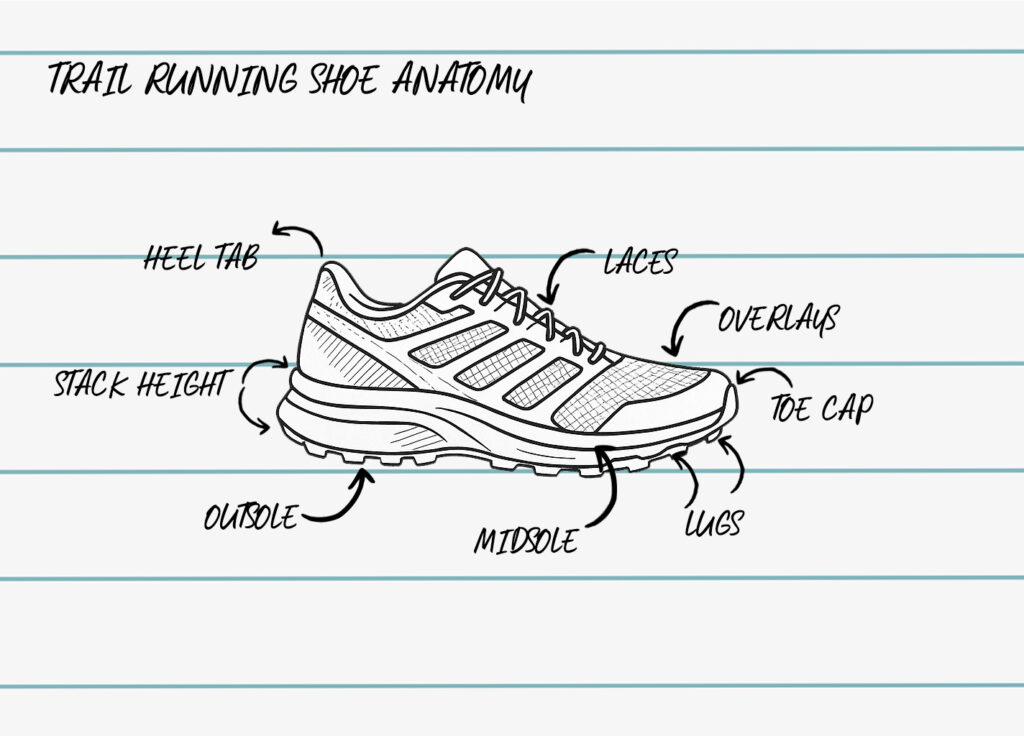
Why so much tech?
Because the trail terrain is unpredictable. One moment you’re flying over smooth dirt, and the next you’re skidding down loose shale or splashing through a stream. That’s why trail shoes pack in all the extra features, so you can focus on running, not surviving.
Once you feel the difference underfoot, especially on technical terrain, it’s a bit of a lightbulb moment. You suddenly realise that trail shoes aren’t just nice to have, they’re essential.
2. How Do Outsoles Help You Stay on Your Feet in the Wild?
If there’s one part of your trail shoe that does the heavy lifting, it’s the outsole. This layer of rubber makes direct contact with the ground, and it plays a huge role in keeping you upright when the terrain gets sketchy.
But it’s not just a matter of slapping some rubber on the bottom. Outsoles are engineered with grip, traction, and terrain control in mind. Here’s how they do it:
Grip you can trust
When running on trails, your foot constantly lands on uneven, loose, or slippery surfaces. The outsole’s job is to create friction between the shoe and the ground so that your foot doesn’t slide out from under you.
High-friction rubber compounds like Vibram® Megagrip, Salomon’s Contagrip®, or Frixion® are designed to mould slightly to the surface you’re stepping on, especially rock or hard-packed trail, giving you better contact and a stickier feel. That tiny bit of give helps the rubber “bite” into the terrain instead of skating over it.
Why softness and hardness matter
Softer rubber grips better because it deforms more easily and conforms to the surface, which increases friction (great for wet or rocky terrain). But it wears down faster, especially if mixed with some road sections.
Harder rubber is more durable and resists abrasion, making it ideal for dry, rugged terrain or long-distance use, but it doesn’t offer the same sticky feel on smooth or wet surfaces. Think of it like winter tyres vs. all-season ones: each has its moment.
Lug design works with the rubber to stop slipping
Of course, the rubber compound only tells part of the story. The shape and placement of the lugs (those tooth-like treads on the outsole) determine how well the shoe digs into soft ground or sheds mud. We’ll dig deeper into that in the next section but just know this: great grip is always a combination of rubber, lug pattern, and surface contact.
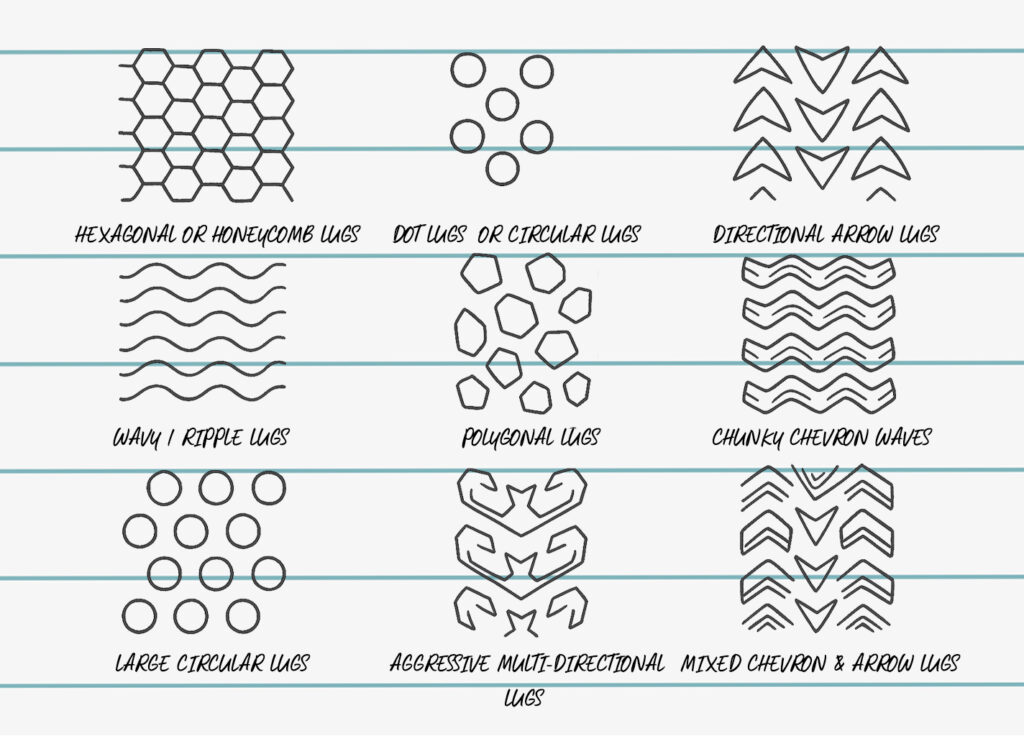
3. Why Do Lugs Matter and What Lug Pattern Is Best for You?
You’ve probably noticed those toothy, claw-like patterns on the bottom of trail running shoes. Those are the lugs. Lugs are what give you the grip to claw your way up steep hills, brake on descents, and stay upright when things get slippery.
Think of them like the tread on a mountain bike tyre: the deeper, sharper, and better positioned they are, the more confident you’ll feel on technical ground.
Aggressive vs. shallow lugs what’s the difference?
- Aggressive lugs (5mm–6mm+) are deep, widely spaced, and bite into soft, loose terrain like mud, snow, or forest floors. These are ideal for fell running, mountain trails, and wet weather. They dig in, clear out mud quickly, and give that reassuring “locked in” feel underfoot.
- Shallow lugs (2–4mm) are better for hard-packed trails, dry conditions, and mixed terrain. They still provide traction but don’t over-grip or feel unstable on firm surfaces. Plus, they’re often more comfortable if you’re running stretches on tarmac or gravel.
Why does lug direction matter?
It’s not just about how deep the lugs are—what really matters is how they’re shaped and positioned. Their design can make all the difference in grip and stability.
- Uphill lugs are often angled or forward-facing at the forefoot to help you push off and gain traction as you climb.
- Downhill lugs tend to face backwards, especially around the heel, to act like mini brakes when descending or trying to slow down on steep slopes.
Lug shape, spacing, and flexibility work together
- Angular, tooth-like lugs dig into soft ground.
- Flatter or rounded lugs provide more surface contact for hard trails and rocky scrambles.
- Wide spacing helps shed mud and avoid clogging.
- Outsole flexibility can also improve grip—especially on rocky terrain—by letting the sole wrap slightly around uneven surfaces, increasing contact and traction.
Grip on varied terrain: it’s a system, not a single feature
Modern trail shoes often use multi-directional lug layouts: forward-facing lugs at the forefoot help with climbing, while rear-facing ones at the heel give braking power on descents. Combine that with the right rubber and a flexible enough sole, and you have a shoe that adapts to the trail rather than fighting against it.
5. What’s a Rock Plate and Do You Need One?
Ever landed on a sharp stone mid-stride and felt it jab straight through your sole? That’s exactly the kind of situation a rock plate prevents.
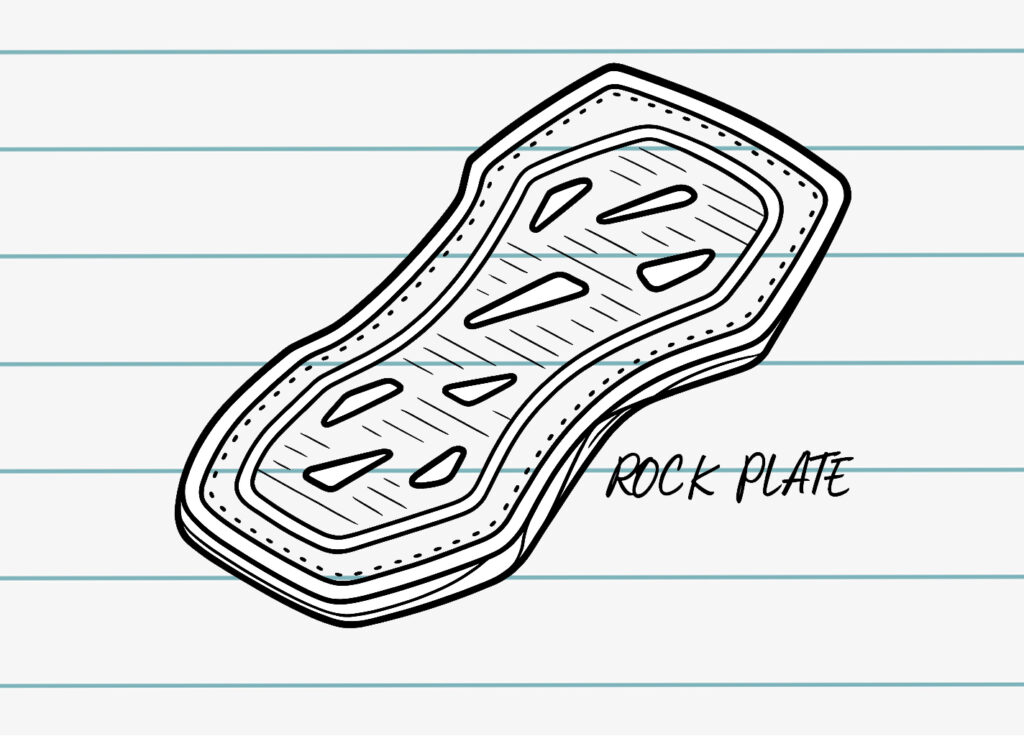
What exactly is a rock plate?
A rock plate is made of plastic (like TPU), carbon fibre, or a firm composite and sandwiched between the midsole and outsole of your trail shoe. Its job? To shield your foot from sharp rocks, roots, and debris and spread out the impact across a wider area.
Imagine stepping on a jagged rock. Without a rock plate, that force concentrates under one part of your foot. With a rock plate, that pressure is deflected and spread across your sole, reducing the risk of bruising or pain.
Do you actually need one?
It depends on where and how you run:
Yes, if you run on technical, rocky, or alpine terrain. Rock plates add crucial underfoot protection for those long, punishing miles where bruised feet are a real risk.
Maybe, if your trails are mixed or moderately rough. Some shoes include partial plates in the forefoot only, ideal for lightweight protection without sacrificing too much flexibility.
Probably not, if you’re running soft, forested or grassy trails. In these cases, flexibility and ground feel might be more important than extra protection.
Types of rock plates
TPU plates: These are common in many trail shoes and offer flexible protection with minimal weight.
Carbon plates: Found in some high-performance or racing trail shoes, often doubling as a propulsion aid. It is stiff and more responsive but less forgiving underfoot.
Full-length vs. forefoot plates: Some models cover the sole, while others protect the toe-off zone, where pressure peaks during the stride.
How does it affect the way you feel
Rock-plate shoes usually feel a little firmer and more structured underfoot, which some runners love for stability and control. However, they can reduce flexibility and ground feel, especially for runners who like a more minimalist ride.
6. How Much Cushioning Is Too Much on the Trail?
Trail shoes come in all sorts of shapes and stack heights. From thin, barely-there soles that let you feel every pebble, to plush, cloud-like monsters that seem built for ultra marathons. But how much cushioning do you actually need when you’re off-road?
First things first: what is “cushioning” in a trail shoe?
Cushioning is the amount and type of foam in the midsole (the part of the shoe between your foot and the outsole). It absorbs impact, reduces fatigue, and adds comfort. But on the trail, cushioning doesn’t just affect comfort; it also affects stability, responsiveness, and how connected you feel to the ground.
The trade-off: comfort vs. control
Maximal cushioning offers serious comfort and shock absorption. It’s great for:
Long-distance runs or ultras
Recovery runs
Runners with joint issues or sensitive feet
But too much foam can feel unstable on uneven ground, especially if it’s soft or squishy. You might find yourself wobbling on rocks or awkwardly rolling on technical terrain.
Moderate cushioning gives you a balance: enough protection to take the sting out of sharp impacts, but still enough ground feel to keep you nimble. This is the sweet spot for many trail runners tackling mixed terrain.
Minimal cushioning prioritises ground connection and agility. You’ll feel every contour of the trail, which can help with control and proprioception (your awareness of foot placement). But you’ll also feel every rock and root, so it’s not for everyone, especially on longer runs.
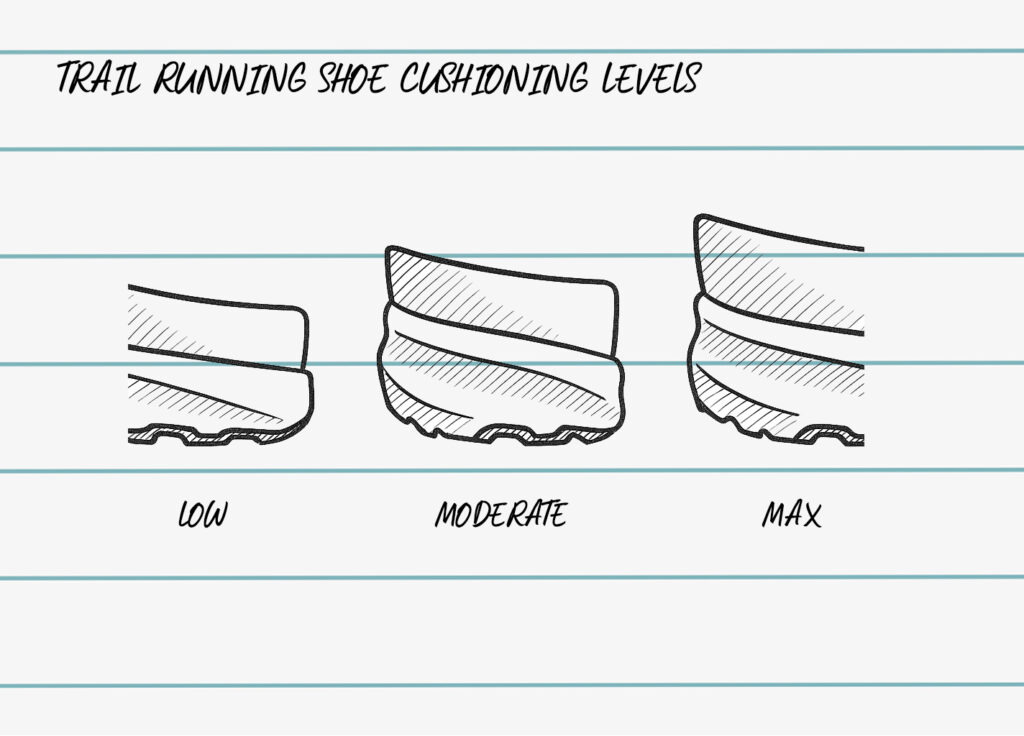
So, how do you choose the right amount?
Ask yourself:
- How long are your runs? More miles often call for more cushioning.
- What kind of terrain are you on? Rocky or hard-packed? A cushion helps. Soft forest trails? You might not need as much.
- Do you prefer comfort or precision? If you like feeling “locked in” and nimble, go lighter. Go cushier if you want your feet to feel fresh at mile 20.
It’s also worth noting that cushioning doesn’t mean sloppy. Some highly cushioned shoes still offer firm, responsive rides, so check the foam type and feel, not just the stack height.
7. What Are Trail Shoe Midsoles Made Of – and Why Does It Matter?
The midsole is the heart of your trail shoe; it gives it bounce, cushioning, and structure. While it’s easy to get caught up in flashy outsole designs or aggressive lugs, what’s underfoot (but above the outsole) plays a massive role in how the shoe feels on the trail.
So, what is the midsole made of?
Most trail running midsoles are made from some form of foam, and the most common materials you’ll come across are:
- EVA (Ethylene Vinyl Acetate) – The classic choice. Lightweight, cushioned, and cost-effective. It gives a soft feel and is used in many shoes, though it can compress over time and lose some bounce.
- PU (Polyurethane) – Denser and more durable than EVA. It’s heavier but offers better long-term resilience and protection, and it is often used in hiking-oriented or hybrid trail shoes.
- Superfoams (e.g. Pebax®, PWRRUN PB, ZoomX) – Found in higher-end or race-focused trail shoes. They’re incredibly responsive and lightweight, offering serious energy return. Think of them as the “sports car” midsoles: fast, bouncy, and often pricier.
Dual-density midsoles: best of both worlds?
Some trail shoes feature dual-density midsoles, where a firmer foam is placed in specific zones (like the medial side or heel) for stability and control, while a softer foam cushions the rest of the foot. This setup can help on long descents or when your form breaks down over long runs.
How does the midsole affect your trail experience?
- Energy return – Some midsoles are bouncy and propulsive; others are soft and shock-absorbing.
- Stability – Firmer midsoles tend to feel more stable on technical terrain.
- Protection – A thicker midsole can shield you from ground impact, especially if the shoe doesn’t have a rock plate.
- Ground feel – Thinner, firmer midsoles offer more connection with the terrain, which some runners prefer for agility and precise foot placement.
What should you look for when choosing midsole?
- For short, technical runs, consider a firmer or lower-profile midsole for agility and control.
- Long-distance or ultra running – A softer or superfoam midsole can save your legs.
- Steep, rocky terrain – Go for something with a bit more structure and protection.
8. Should You Choose Waterproof Shoes or Let Your Feet Breathe?
Ah, the classic trail running dilemma: waterproof or breathable? One promises dry feet in wet conditions, the other offers airflow and fast drying. So, which one’s actually better on the trail?
Well… it depends.
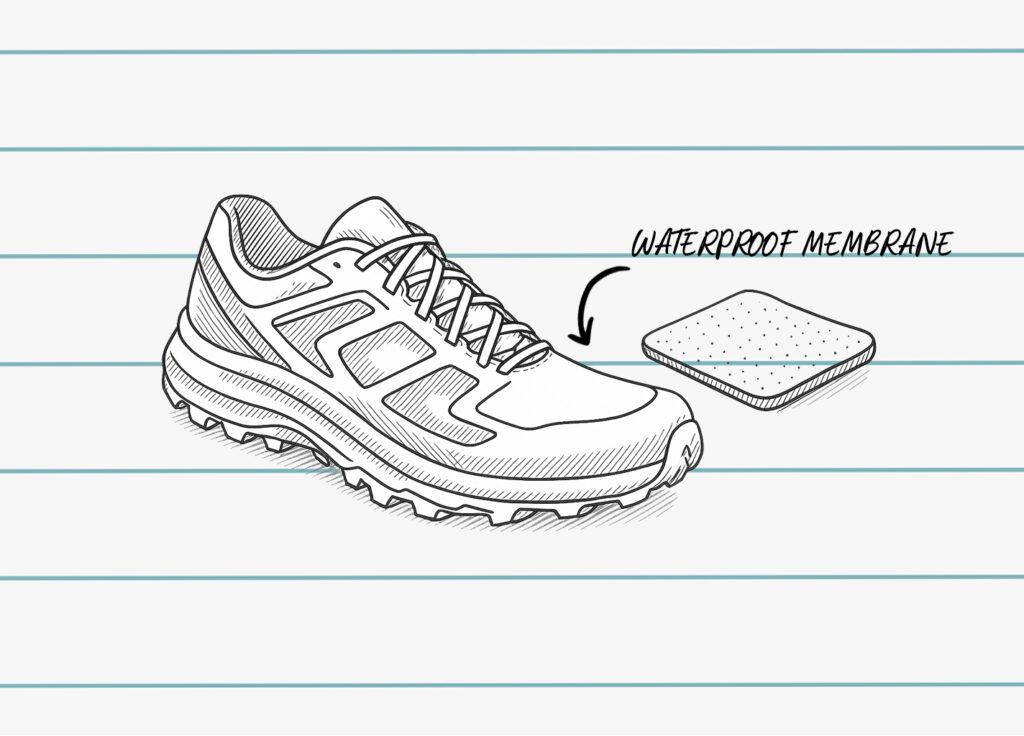
What does “waterproof” actually mean in trail shoes?
Most waterproof trail running shoes use a membrane (like GORE-TEX®, eVent®, or PROOF™) built into the upper. This membrane blocks water from coming in while still allowing moisture vapour (sweat) to escape.
The result? Your feet stay dry from puddles and rain—in theory. But the key thing to remember is:
Waterproof means water can’t get in… but it also doesn’t get out quickly once it’s in.
Pros of waterproof trail shoes
- Keeps out rain, snow, and shallow puddle splashes
- Great for cold, wet conditions
- Useful on soggy moorland or boggy trails
- Adds a bit of wind resistance in winter
Cons of waterproof trail shoes
- Less breathable can feel hot and sweaty in warm weather
- Slower to dry if water gets in from above (e.g. deep puddles or heavy rain running down your legs)
- Slightly heavier and stiffer than non-waterproof versions
So, when should you not go waterproof?
A breathable, non-waterproof shoe is often the better choice if you’re running in warm, humid conditions or on well-drained trails. These shoes typically:
- Dry quickly after stream crossings or heavy sweat
- Feel cooler and lighter
- Allow better airflow, especially during summer runs
Plus, many non-waterproof trail shoes include drainage ports or mesh uppers designed to release water quickly and keep your feet feeling fresher.
What about a middle ground?
Some runners pair non-waterproof shoes with gaiters to keep debris and splashes out, giving them breathability and some protection. Others reserve waterproof shoes for winter or shoulder season, and go breathable the rest of the year.
The bottom line:
Waterproof shoes make sense if you’re running in cold rain, snow, or wet grass. But if your trails are dry, mixed, or you’re often crossing streams, a breathable shoe is often more comfortable in the long run.
9. How Do Trail Running Shoe Uppers Withstand the Abuse?
Let’s face it—trail running isn’t gentle on your gear. Your shoes get snagged by brambles, scraped on rocks, soaked in puddles, and pelted with mud. While the outsole keeps you upright, the upper takes the brunt of everything else.
And yet, good trail running uppers somehow manage to be tough, lightweight, breathable, and supportive—all at once. So, how do they do it? Let’s break down what makes a trail shoe upper ready for the rough stuff.
What are trail shoe uppers actually made of?
Trail running uppers are usually built from durable mesh, often reinforced with protective overlays. Depending on the brand and purpose, you might see:
- Ripstop nylon or mesh – Lightweight yet resistant to tearing, thanks to a grid of thicker threads woven through the fabric.
- Engineered mesh – A more breathable, structured mesh designed to flex in some areas and support others.
- Matryx® – A super-tough woven upper made from Kevlar® and nylon (used in some premium trail shoes). Very durable, very light.
- TPU overlays – Thin layers of plastic-like material fused onto the upper to add structure and abrasion protection without adding bulk.
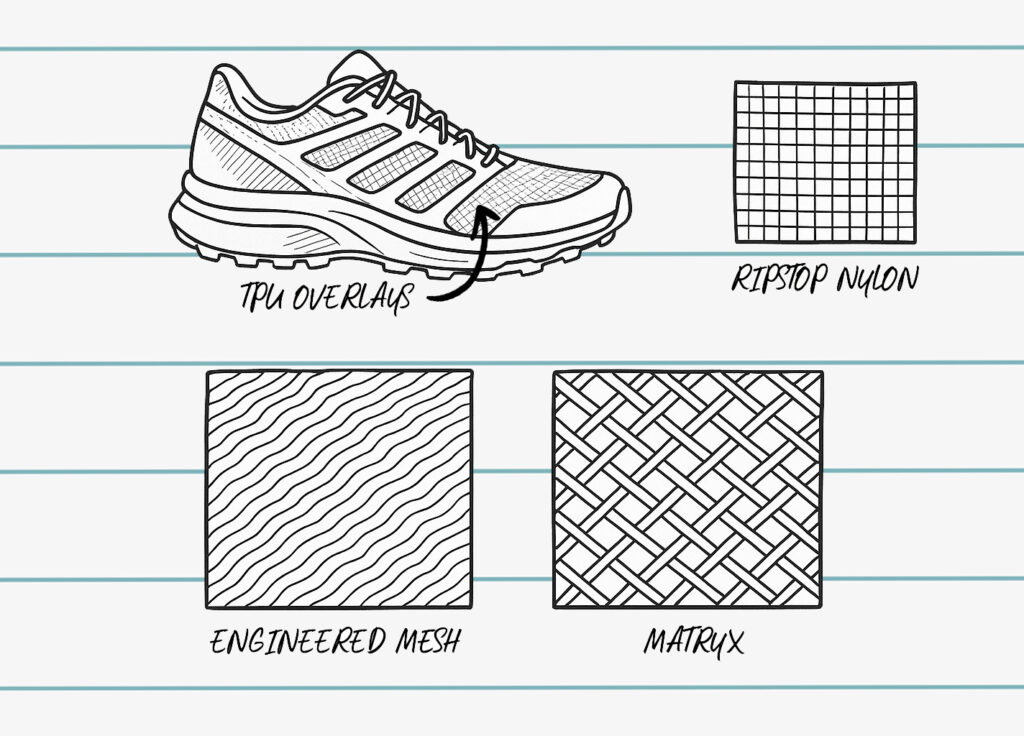
What kind of protection do they offer?
- Toe caps and randing – Reinforced bumpers at the toe protect against stubbing on rocks or roots. Many shoes also have a wraparound “rand” at the upper base for extra durability.
- Debris resistance – Some uppers are tightly woven or coated to keep out grit, sand, and fine mud. Others are more open and breathable, so you may want to pair them with gaiters.
Support and lockdown
A well-built upper doesn’t just survive rough trails—it holds your foot securely, even when bombing downhill or side-hilling on sketchy ground. Look for:
- Gusseted tongues – Tongues that are attached to the sides of the upper to keep out debris and help with a snug fit.
- Midfoot overlays or webbing add structure and support to prevent foot slippage inside the shoe, especially on uneven ground.
Durability vs. breathability
Tougher uppers usually mean slightly less airflow. More breathable uppers feel cooler and dry faster, but they can wear out quicker in rough terrain. The trick is finding the balance that suits your trails and your mileage.
10. What Is a Gaiter and Do You Actually Need One?
You’re not alone if you’ve ever had to stop mid-run to fish out a pebble, a stick, or half the trail from your shoe. Enter the gaiter,a simple, often overlooked accessory that can make a big difference, especially on dusty, muddy, or technical trails.
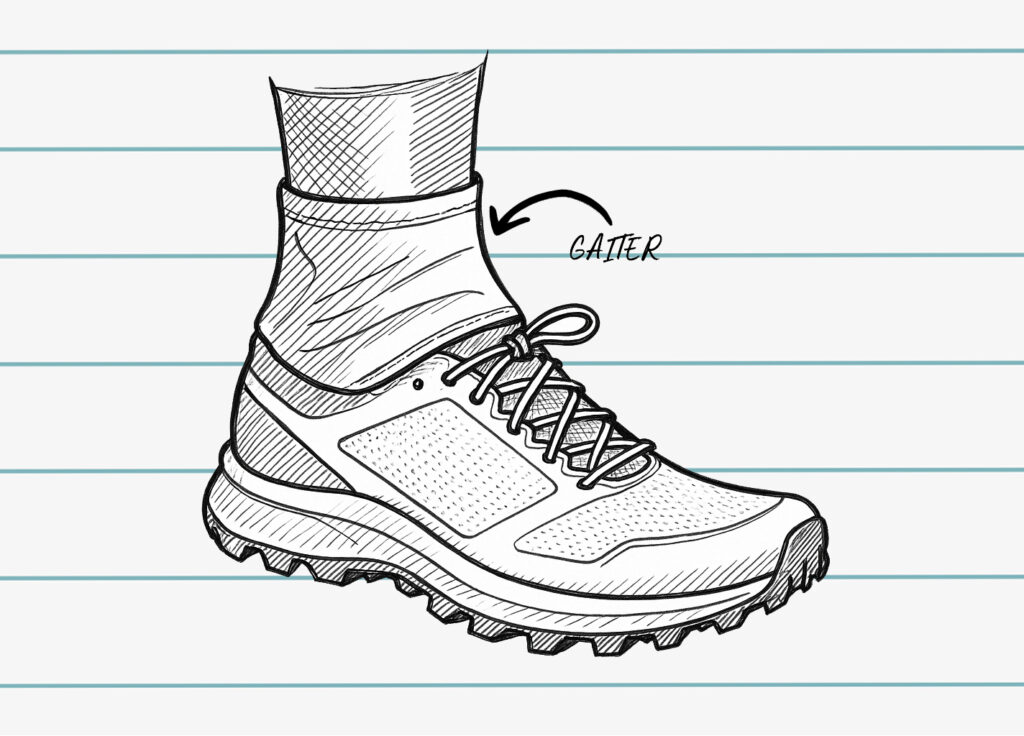
So, what is a gaiter exactly?
A gaiter is a fabric sleeve that wraps around the top of your shoe and ankle. Its job is to keep debris, water, and cold air out of your shoes, forming a seal between your foot and the outside world. They come in different lengths and materials, but trail running gaiters are usually low-profile, stretchy, and lightweight.
You might also hear the term “built-in gaiter”, which refers to shoes with a gaiter-like collar integrated into the upper—like a stretchy sock cuff—to keep debris out without adding extra kit.
Do you really need gaiters for trail running?
That depends on your terrain and tolerance for annoying interruptions.
Gaiters are a great idea if:
- You run on loose, dusty trails (gravel, sand, scree)
- You’re in muddy or wet conditions
- You’re doing long distances or ultras, where comfort really matters
- You hate stopping to empty your shoes
You can probably skip them if:
- You run mainly on firm, dry paths
- Your shoes already have a snug, sock-like collar
- You don’t mind the occasional pit stop to shake things out
Types of gaiters: what to look for
- Lightweight trail gaiters – Thin, stretchy, breathable. These often attach via hook-and-loop (Velcro), small hooks, or shoe-specific tabs.
- Weatherproof gaiters – Slightly more robust, sometimes water-resistant, and better for wet or cold conditions.
- Integrated gaiter collars – Found on some shoes like the Altra Lone Peak or La Sportiva Cyklon, offering built-in protection without extra gear.
Do they affect performance?
Not really! Modern gaiters are low-profile and unobtrusive—you’ll barely notice them once you’re moving. But your feet will thank you when you’re not stopping to fish out that one rogue stone… again.
11. Can Lacing Systems Really Make That Much Difference?
It might seem like a small detail, but when you’re bombing down a rocky descent or climbing a steep, technical trail, your lacing system can make or break your run. A good lacing setup keeps your foot secure and stable inside the shoe. A bad one? It can lead to hot spots, blisters, and sloppy control.
So yes—lacing absolutely matters. And there are more options out there than you might think.
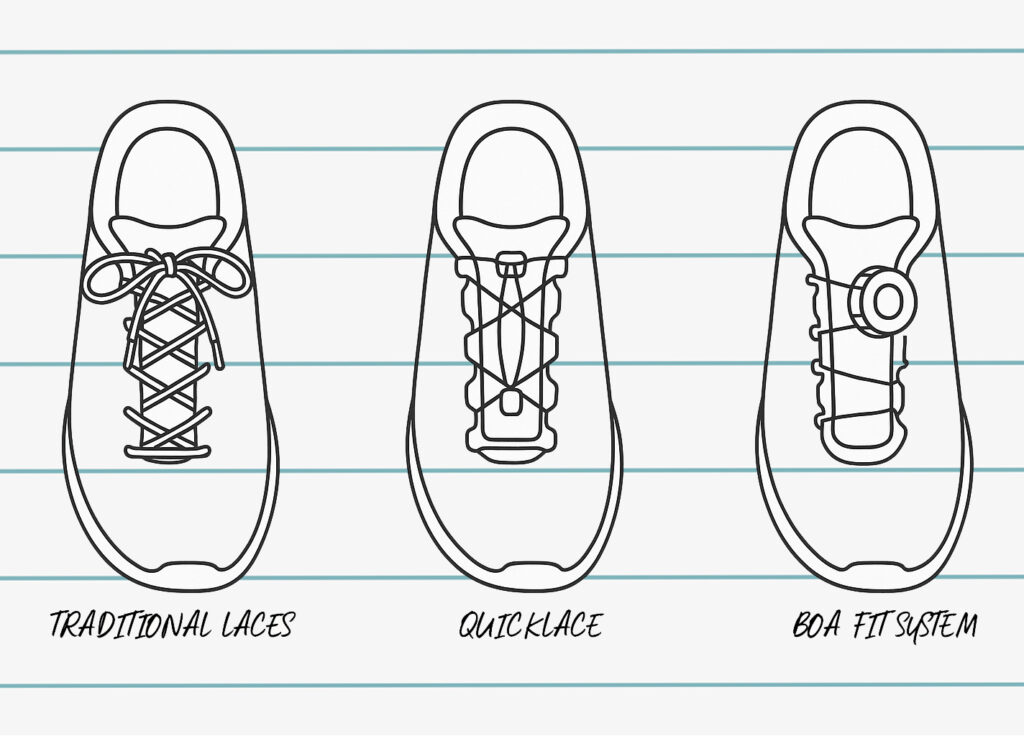
The main types of lacing systems in trail shoes
Traditional laces
Good old-fashioned shoelaces. They offer the most customisable fit because you can adjust the tightness in different zones (forefoot, midfoot, ankle). They’re also easy to repair or replace.
Downside? They can loosen mid-run or come undone unless you double-knot or use a lock-lace technique.
Quicklace® (Salomon)
A single-pull Kevlar-style cord with a sliding lock. Super fast to tighten, even with cold fingers or gloves. Tucks neatly into a lace garage to stay out of the way.
Great for: Quick transitions, race-day convenience, and secure lockdown
Not ideal for: People who want to fine-tune different parts of the fit
BOA® Fit System
More common on approach shoes and some alpine-style trail runners, BOA uses a dial and cable system to tighten the shoe evenly. It’s fast, micro-adjustable, and looks futuristic.
Bonus: You can often adjust BOA on the move, even one-handed.Downside: It’s more complex and more challenging to fix in the wild if something breaks.
Why lacing matters on the trail
- Better lockdown = better control – A snug midfoot and heel hold reduces internal slipping, which means more precise footwork and less chance of blisters.
- Foot swelling? No problem. – Adjustable lacing systems let you tweak the fit as your feet swell over long runs or in hot conditions.
- Downhill performance – A secure lace system helps prevent your toes from slamming into the front of the shoe on descents.
Quick tip:
If your shoe fits perfectly during a short test run but feels sloppy or uncomfortable during long efforts, play with your lacing technique. Sometimes, all it takes is a heel lock or skipping a few eyelets to get that dialled-in, trail-ready fit.
12. Trail Running Shoes Technologies: How Do All These Features Add Up ?
By now, you’ve seen how much tech is packed into a pair of trail running shoes. From the rubber underfoot to the laces up top. But with so many features to think about, it’s easy to get overwhelmed.
So here’s the key question: Which features actually matter most for you?
Start with where and how you run.
Different trail environments demand different features. Ask yourself:
Do you run on muddy forest trails or rocky mountain ridges?
- Mud needs aggressive lugs and debris-shedding outsoles.
- Rocky ground calls for sticky rubber, a rock plate, and durable uppers.
Are you running short and fast, or going long and steady?
- Short, technical runs benefit from light, agile shoes with good ground feel.
- Long distances usually call for more cushioning, support, and comfort.
Do you run in all weather, or stick to dry days?
- Wet or wintry runs might justify a waterproof membrane.
- Dry and hot? Go breathable and ditch the extra weight.
What should you prioritise when choosing trail running shoes?
Here’s a quick cheat sheet based on common needs:
| You want… | Focus on… |
| Grip on technical or mixed trails | Rubber compound, lug pattern, outsole flexibility |
| Comfort over long distances | Cushioned midsole, fit, breathable upper |
| Rock protection | Rock plate, thicker midsole, reinforced toe box |
| All-weather versatility | Waterproof membrane, gaiter compatibility |
| Lightweight and nimble performance | Low stack height, minimal upper, flexible sole |
| All-rounder for mixed terrain | Medium lugs, moderate cushioning, balanced fit |
Fit still reigns supreme
Even with all the tech in the world, a shoe that doesn’t fit right won’t perform well. Lockdown, toe room, heel hold, and comfort should always be part of your decision-making process. Don’t be afraid to try on multiple pairs—or rent a model before you buy, if that’s an option.
13. Trail running shoes technologies: Feeling Overwhelmed? Totally Normal
Let’s be honest, trail running shoes can be a bit of a rabbit hole. Lugs, rock plates, drop, membranes… It’s a lot. But now that you’ve got a better feel for what all this tech means, you might be wondering where to go from here.
Don’t stress about ticking every feature box. Start by thinking about the trails you run most, how far you’re going, and what bugs you about your current shoes (if anything). Too slippery on wet rock? Feet soaked all the time? Feel unstable on descents? That’s your clue.
We’ve got a massive range of trail running shoes at Trekitt—from soft and comfy cruisers to lightweight technical rockets. Some are waterproof, some feel like tanks (in a good way), and some let you feel the trail underfoot again. It’s not about finding the “best” shoe but finding one that feels right for your runs.
Still feeling stuck?
If you’re local, pop into our shop in Hereford—we’ll chat it through and let you try some on. Or drop by the website and scroll through the trail running section to compare models and find the perfect pair for your next adventure.
👉 Now that you know your way around the tech, the next step is choosing the right pair for your feet and terrain. Head over to our How to Choose Trail Running Shoes Guide to put it all into practice.
FAQs: Questions We Actually Get Asked About Trail Running Shoes
You don’t need to—but it helps. Winter trails often demand waterproof uppers, aggressive lugs, and insulation, while summer runs might call for breathable mesh and better drainage. Think of it like jackets: one “do-it-all” might work, but you’ll be comfier with gear that matches the weather.
That’s probably stack height. Max-cushioned shoes often have thicker midsoles, which add comfort but raise your foot further from the ground. This can affect stability. If you’re on rocky trails or you tend to roll ankles, consider something with a lower stack.
Not necessarily. Some shoes use dense midsoles that offer rock protection without a separate plate. If you stick to mellow or soft trails, you might not even miss it. But if you’re running on sharp scree or mountain paths, your feet might vote otherwise by mile five.
It depends on your feet—and the terrain. Wider toe boxes like Altra let your toes splay naturally and reduce blisters over long runs. But on steep, rocky ground, a snugger fit may offer more control. Choose what feels secure without cramping your style—or your toes.
Absolutely. Many trail runners double as lightweight hiking shoes, especially on well-maintained or dry trails. They’re grippy, breathable, and less bulky than boots. Just make sure they have the support and protection your hike demands.
Most modern trail shoes don’t need a major break-in—but give them a few short runs before committing to a big outing. If they feel off from the start (hot spots, heel lift, tight toes), they probably won’t magically fix themselves.
Typically 300–500 miles, but it depends on terrain, your stride, and the shoe’s build. Rocky or muddy trails wear shoes faster than forest paths. Watch for signs like flattened foam, worn lugs, or a sloppy fit—those are your shoe’s way of saying, “I’m tired.”
Leave a Reply