
How to Stack Sleeping Mats to Increase R-Value
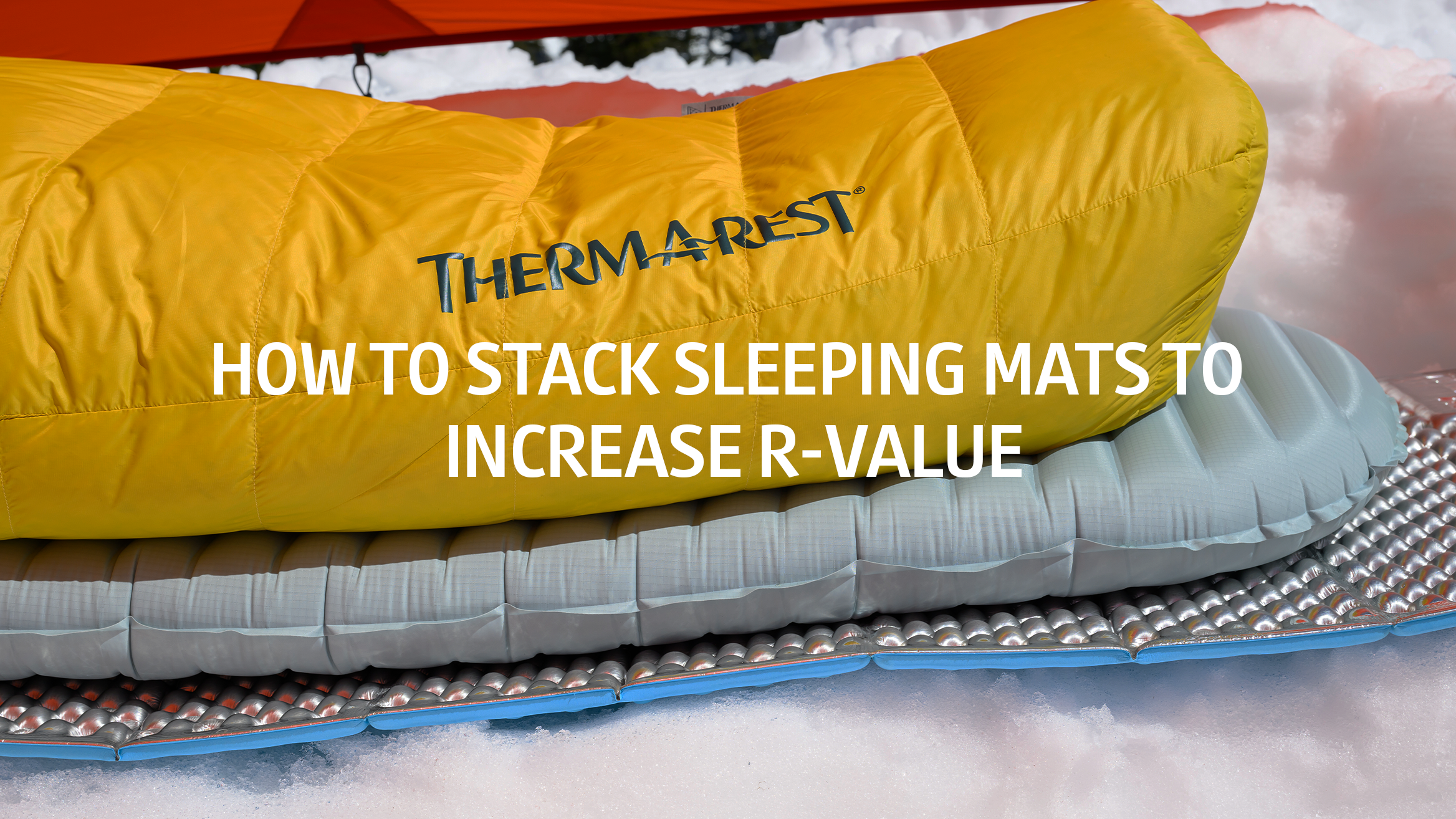
If your sleeping mat isn’t quite warm enough for colder conditions, you don’t necessarily need to replace it. Stacking a second sleeping mat on top or underneath can increase the total R-value of your setup, giving you more insulation from the cold ground.
It’s a simple trick, but there are a few things worth knowing. In this guide, we’ll explain how sleeping mat R-values combine, which mat should go on the bottom and when stacking makes more sense than buying a warmer mat.
We’ve put this guide together to explain those differences in practical terms, so you can work out which pair better suits the way you spend time outdoors.
IN SHORT…
-
How Does Stacking Sleeping Mats Work?: Learn why combining two mats increases the insulation between you and the ground.
-
How to Calculate Your Combined R-Value: See how to quickly work out the approximate R-value of two stacked mats.
-
Which Sleeping Mat Goes on the Bottom?: Find the most practical way to stack foam and inflatable sleeping mats.
-
When Should You Stack Sleeping Mats?: Discover when adding another mat makes sense and when a dedicated insulated mat may be better.
Understanding Sleeping Mat R-Value
R-value measures thermal resistance. For a sleeping mat, it indicates how effectively the mat resists heat transfer between you and the ground.
The basic rule is:
Higher R-value = greater insulation from the ground.
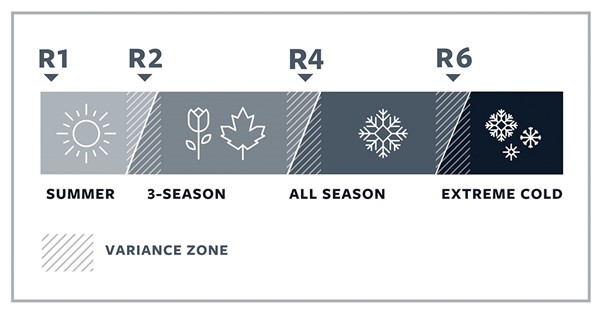
So, an R 5 mat provides greater thermal resistance than an R 2 mat.
This is more useful than simply looking at how thick a mat appears. Internal insulation and construction can make two similarly sized mats perform very differently.
R-value shouldn’t be treated as a direct temperature rating, though. An R 5 mat doesn’t automatically have a specific minimum operating temperature. It tells you about insulation, while your wider sleep system and the conditions determine how warm you’ll actually feel.
Stacking Sleeping Mats to Increase R-Value
Stacking sleeping mats is an easy way to boost ground insulation using kit you may already own. Because the thermal resistance of each mat works together, you can add their R-values to get an approximate combined figure.
For example, pairing an inflatable mat rated at R 3 with a closed-cell foam mat rated at R 2 gives you:
R 3 + R 2 = approximately R 5
This can be particularly useful if your usual mat works well for most of the year but needs a little extra insulation when temperatures drop. Rather than replacing it with a warmer mat for the occasional cold-weather trip, you can simply add a second mat when conditions call for it.
The Best Order for Stacking Sleeping Mats
When combining a closed-cell foam mat and an inflatable, we’d usually arrange them like this:
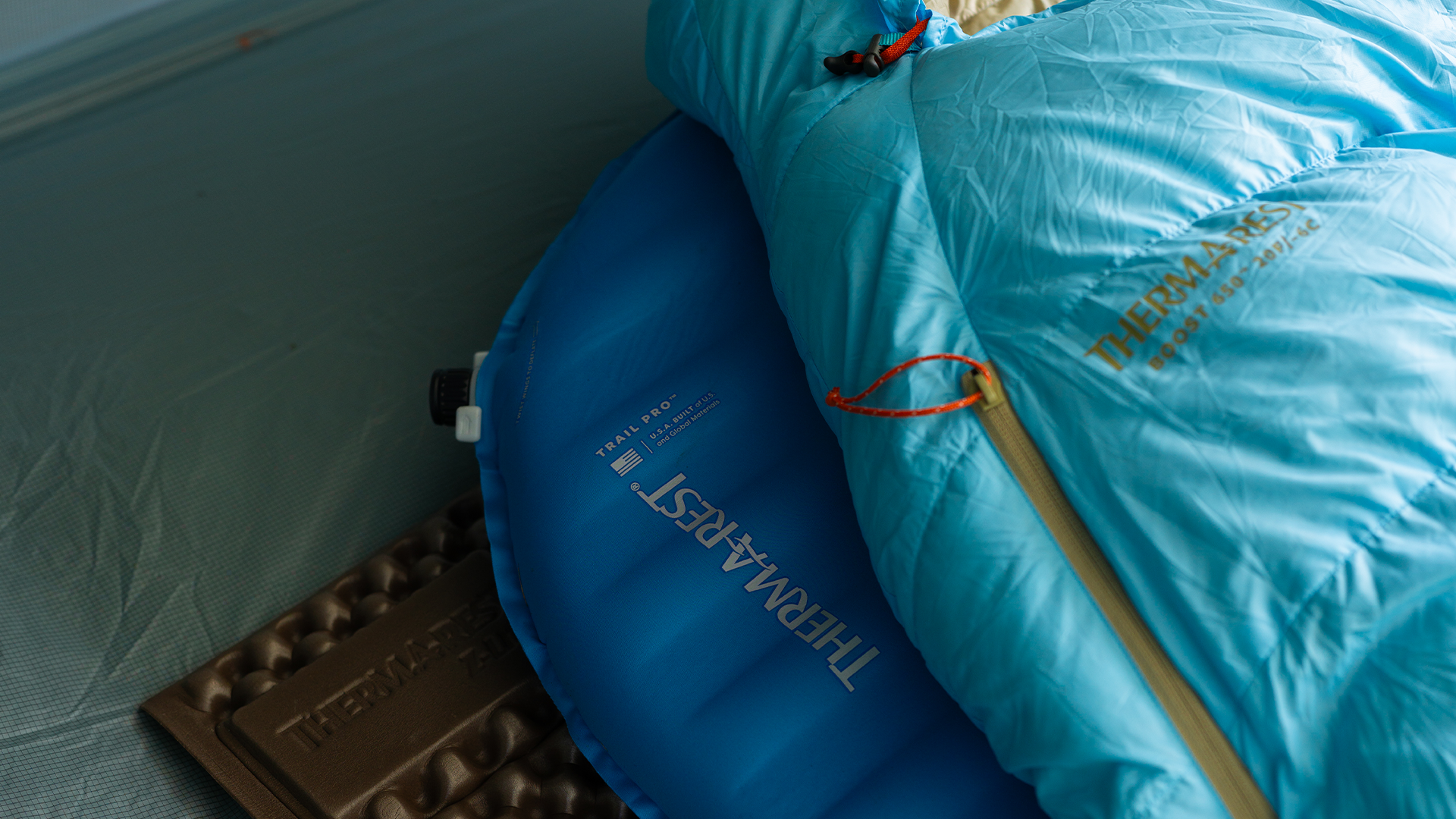
The R-value doesn’t increase because the foam is underneath. Both mats contribute to the combined thermal resistance regardless of their order.
There are simply some practical advantages to putting the foam on the bottom.
Protection
Putting the foam mat underneath creates an additional physical barrier between your inflatable and the ground.
You should still clear away sharp stones, thorns and anything else that could cause damage, but the foam gives your inflatable a little extra protection.
Comfort
Your inflatable is usually the more comfortable of the two mats, so keeping it on top allows it to provide the cushioning it was designed for.
Backup Insulation
There’s another benefit to having a closed-cell foam mat in your setup.
It can’t deflate.
If your inflatable develops a puncture, you’ve still got some insulation between you and the ground. That’s particularly reassuring on colder trips when losing your main mat would be more than just uncomfortable.
Can You Stack Two Inflatable Sleeping Mats?
Yes.
If both mats have known R-values, their thermal resistance can still be combined.
However, there are some practical drawbacks.
Two inflatable mats can:
- Slide against one another
- Create a very tall sleeping platform
- Add considerable packed bulk
- Add unnecessary weight
- Leave you without a foam backup if one punctures
If you already own two inflatable mats and only occasionally need the extra insulation, stacking them can work perfectly well.
For regular colder-weather use, we’d usually consider whether an inflatable and foam combination or a single warmer mat would make more sense.
Using Stacking to Create a Modular Sleep System
One of the best things about stacking is that you don’t need to carry your coldest-weather setup all year.
A simple system might look like:
Warmer Conditions: R 5 inflatable
Colder Conditions: R 5 inflatable + R 2 foam = R7
The second mat only comes along when you need the additional insulation.
We at Trekitt particularly like this approach for people who camp across different seasons. It gives you more flexibility without requiring a completely separate sleeping setup for every part of the year.
A Quick Note About Sleeping Bags
Most modern sleeping bags are tested using EN or ISO standards. While these provide useful benchmarks, real-world warmth depends on factors such as your metabolism, fatigue, hydration, what you’re wearing inside the bag and, importantly, the insulation beneath you.
It’s also worth noting that EN/ISO testing assumes a well-insulated sleeping surface (around R 5). So, if you’re using a mat with a much lower R-value, you may find your sleeping bag doesn’t feel as warm in real conditions as its temperature rating suggests.
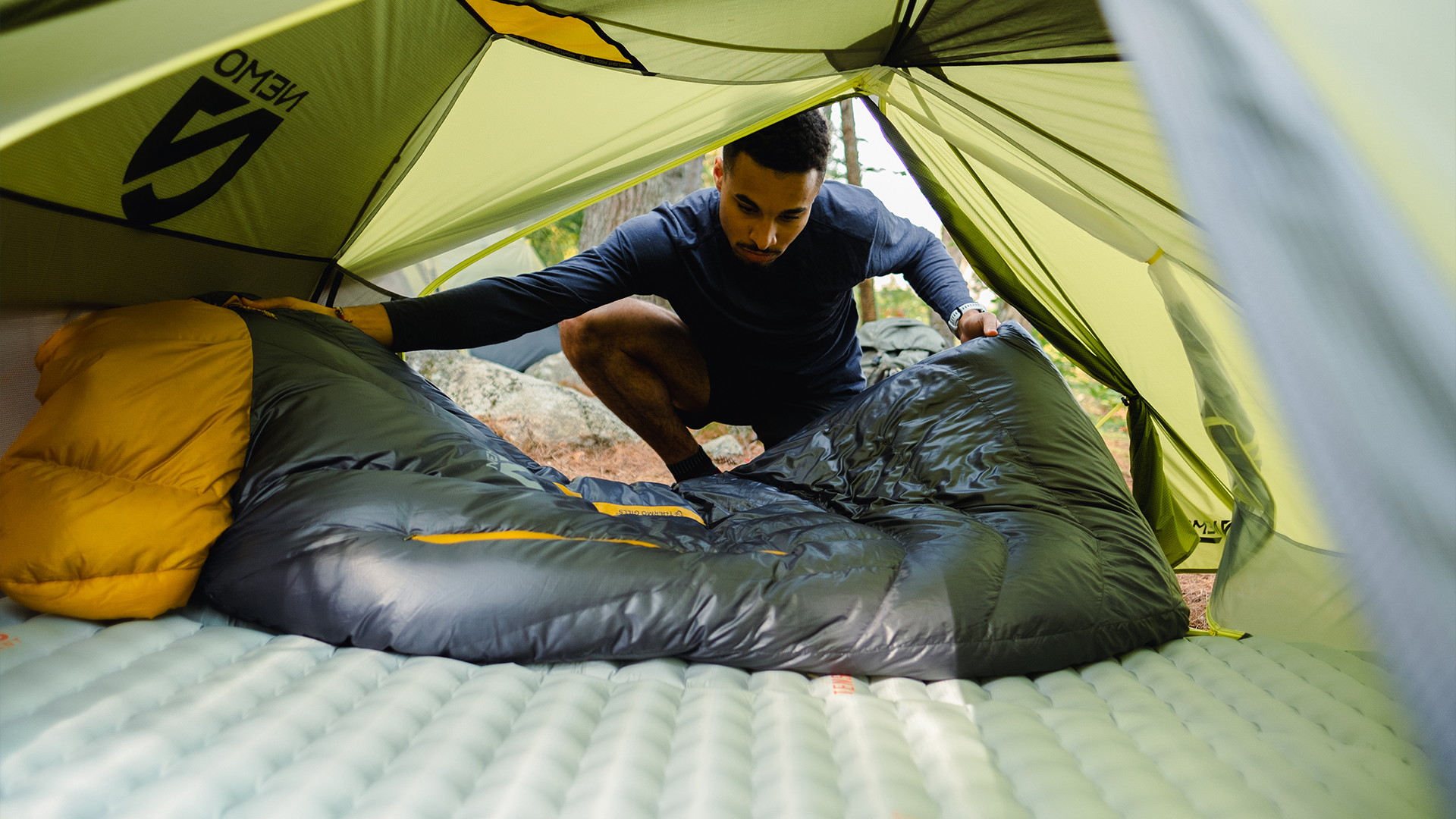
This is another reason why increasing your mat’s R-value can make such a noticeable difference in colder conditions. Your sleeping bag and mat work together, and the insulation underneath you is an important part of that system.
For more detail on how these ratings work and what they mean outside the lab, read our guide to What Sleeping Bag Temperature Rating Do You Really Need in the UK?
Stacking Versus Buying a Warmer Mat
Stacking works particularly well when you only need additional insulation occasionally.
If you’re regularly taking two mats on every trip, however, it’s worth looking at the complete setup.
Compare:
- Combined R-value
- Total weight
- Packed size
- Comfort
- Reliability
- How frequently you’ll use both mats
An inflatable and foam combination might provide exactly the flexibility you need. Alternatively, one well-insulated mat could provide the same thermal resistance with less bulk and a simpler setup.
There’s no need to chase the highest R-value possible. The aim is to carry enough insulation for the conditions you’re expecting without adding unnecessary weight and bulk.
Final Thoughts
Stacking sleeping mats is a practical way to increase R-value without replacing a mat that already works well for most of your trips. Pairing an inflatable with a closed-cell foam mat can give you extra insulation when temperatures drop, as well as some additional protection and backup if your inflatable punctures.
For occasional colder trips, that flexibility can make a lot of sense. If you find yourself regularly carrying two bulky mats, however, it may be worth considering a single, more highly insulated mat instead.
Still unsure which setup is right for you? Our Trekitt team can help you compare R-values and work out whether stacking or switching to a warmer mat makes more sense. Email us at [email protected], call 01432 263335, or visit our Hereford Service Centre for sleeping mat and bag advice. You can even bring your existing kit along so we can see what you’re working with.
FAQs
The R-value of a sleeping mat measures how well it resists heat transfer between your body and the ground. The higher the R-value, the greater the insulation.
There isn’t one R-value for all sleeping mats. Lightweight summer mats may have relatively low R-values, while insulated mats designed for colder conditions can be considerably higher. When comparing mats, look at the stated R-value rather than relying on thickness alone.
A good R-value depends on when and where you plan to camp. Lower R-values can be suitable for warm-weather use, while colder ground conditions call for more insulation.
Rather than treating a particular R-value as a guaranteed temperature rating, consider it alongside your sleeping bag, expected conditions and how warm or cold you naturally sleep. For colder trips, having some additional insulation in reserve is generally preferable to pushing a mat to its limits.
Yes. A high R-value sleeping mat can still be used during summer. Unlike a sleeping bag or insulated clothing, a highly insulated mat won’t necessarily make you excessively warm. It mainly reduces heat transfer between you and the ground.
The bigger considerations are usually weight, packed size and cost. If you’re camping exclusively in warm conditions, you may prefer a lighter mat with less insulation simply because it’s easier to carry.
We’d avoid recommending an exact R-value based on air temperature alone. R-value measures thermal resistance rather than providing a minimum temperature rating, and the temperature of the ground can differ considerably from the air.
For conditions around freezing, ground insulation becomes particularly important. Consider your mat as part of your complete sleep system and allow a sensible margin for colder-than-expected conditions rather than relying on a precise R-value-to-temperature conversion.
The simplest way is to stack another sleeping mat with it. The thermal resistance of the two mats combines, so their R-values can be added together for an approximate total.
For example:
R 3 inflatable + R 2 foam mat = approximately R 5 combined.
Pairing an inflatable with a closed-cell foam mat is particularly useful because the foam also provides additional protection and some backup insulation if the inflatable punctures.
If you regularly camp in cooler conditions, an insulated sleeping mat can be well worth carrying. The insulation helps reduce heat loss towards the ground and can make a significant difference to your overall sleep system.
For occasional colder trips, stacking your existing mat with a foam mat may be more versatile. If you’re regularly stacking two bulky mats, however, one appropriately insulated mat may offer a lighter and simpler setup.
Comfort depends on your sleeping position, body shape and personal preference, so there isn’t one construction that’s most comfortable for everyone.
Inflatable and self-inflating mats generally provide more cushioning than thin closed-cell foam mats. Side sleepers may particularly appreciate greater depth to prevent hips and shoulders pressing into the ground. Width, shape and stability are also worth considering alongside thickness.
Not in the sense that too much ground insulation will automatically make you overheat. A higher R-value simply provides greater resistance to heat transfer between you and the ground.
However, extra insulation can come with compromises such as additional weight, packed bulk and cost. There’s little benefit in carrying a heavy winter mat on every warm-weather trip if a lighter option provides all the insulation you need.
Leave a Reply