
How To Wash Your Waterproof Jacket
Not sure how to care for your gear? This guide simplifies how to wash your waterproof jacket—covering cleaning essentials, detergent choices, and key steps to keep your jacket performing like new.
In SHORT…
-
Know why washing matters: Learn how dirt, sweat, and oils impact breathability, waterproofing, and the lifespan of your jacket.
-
Understand the right washing process: Discover the detergents, machine settings, and drying methods that effectively clean and restore your jacket’s water-repellent finish.
-
See care tips and long-term benefits: Explore simple maintenance habits that enhance performance, reduce environmental impact, and extend your jacket’s durability.
Living in the UK, we expect a lot from our waterproof shell jackets. They get well and truly put through their paces all year round. Regular maintenance will keep your jacket performing and breathing at its best, making your time outdoors more enjoyable. If your shell jacket isn’t beading water as well as it used to, smells a bit pongy or hasn’t seen a washing machine in a very long time. Then it’s time to wash your waterproof jacket and reapply the DWR (durable water repellent). Not familiar with the process? Don’t worry, it’s not as daunting as it sounds.
How to Wash a Waterproof Jacket
Before we dive into the details of washing a waterproof jacket, here’s a quick guide to the key steps. If you’re short on time, this table covers everything you need to know to keep your waterproof clothing performing at its best.
| Need | Recommendation |
| Wash a waterproof jacket | Use Grangers Performance Wash or Nikwax Tech Wash to safely clean waterproof and breathable fabrics. |
| Restore water repellency | Apply Grangers Clothing Repel or Nikwax TX.Direct once water stops beading on the outer fabric. |
| Dry your jacket | Always follow the care label. Some waterproof jackets benefit from low heat in a tumble dryer to help reactivate the DWR finish. |
| Avoid | Don’t use biological detergent, fabric softener or bleach, as these can reduce waterproof performance and breathability. |
In this blog, you’ll learn why you need to wash your waterproof jacket, how to do it and the benefits of regularly maintaining your kit. Including an easy step-by-step guide on washing and reapplying the DWR to your hardshell clothing.
Can I wash my waterproof jacket in the washing machine?
We understand some people are hesitant to wash their waterproof clothing as their quite expensive pieces of kit. But, if you follow the care label and our handy step-by-step guide, you won’t ruin it! In fact, keeping your jacket clean and well-maintained will enhance its performance and increase its overall life span. Which, in turn, is better for the environment and your wallet!
Why Do You Need to Wash Your Waterproof Jacket?
Like all items of clothing, over time, your waterproof jacket will no doubt get dirty and begin to smell with frequent use. Whether that’s from falling over in the mud, sweating when you’re working hard or rubbing up against grubby rocks and trees on the trail. This build-up of dirt, sweat and oils from your skin can lessen your jacket’s performance, breathability and water repellency.
How does my waterproof jacket work?
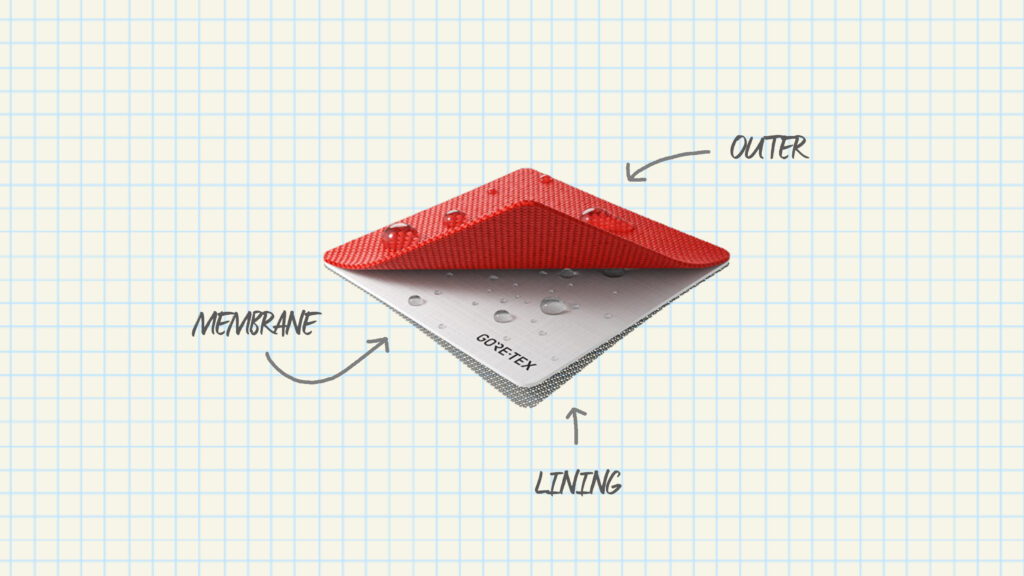
Most waterproof jackets have 3 layers. A durable outer face fabric, a waterproof membrane sandwiched in the middle and a protective lining. This construction shields the waterproof membrane from the rigor of frequent use because it’s a lot less durable. It needs to be kept clean to keep performing well and stay in good condition for many years to come. The outer face fabric is treated with a DWR to repel water, dirt and oils that could hinder or damage the membrane.
The consequences of not washing your waterproof jacket?
As you sweat, tiny particles of skin, oil, moisturising lotion, sunscreen, perfume, etc, transfer from your skin onto the clothes that you are wearing. Sounds gross, right? If your jacket isn’t washed regularly, this builds up over time. It not only causes your jacket to smell, but it also blocks the waterproof membrane, reducing its breathability. Certain oils, moisturisers and chemicals found in beauty and skincare products can even cause permanent damage! Which is not what you want to happen to your favourite shell jacket!
Why is your waterproof jacket not working as well as it used to?
This hindered breathability can make your jacket feel cold, clammy, uncomfortable and like it’s leaking. This isn’t usually the case; it’s not water getting in, it’s water vapour that can’t escape. This unpleasant build-up of moisture can quickly sap the joy out of your adventure and lead you to believe that your jacket is to blame. It’s a sure sign that it needs a good wash and reapply of the DWR.
How Often Should You Wash Your Waterproof Jacket?
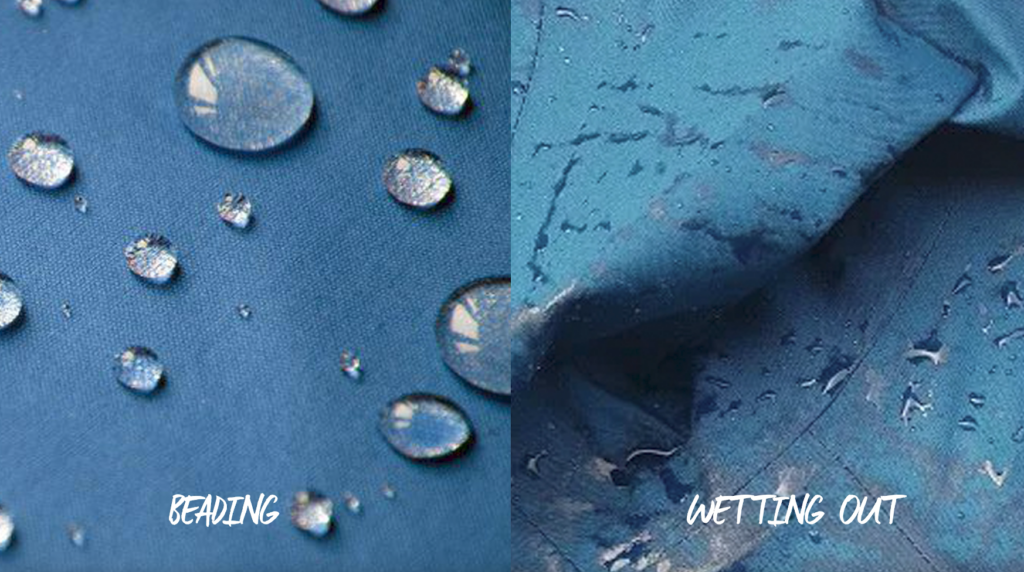
Unfortunately, we can’t recommend a specific number. It varies from user to user, depending on how often you wear the jacket or what you use it for. A general rule is whenever it looks/feels dirty, is a bit smelly, or water no longer beads off the outer fabric. You’ll notice that instead, the water sits on the fabric surface, soaking in. Generally speaking, the beading will go first on high-wear areas such as the shoulders and waist, where a rucksack will rub over time and across the cuffs. These areas are the best indicators that your jacket needs some TLC.
What is the best detergent for washing your waterproof jacket?
We recommend using a technical detergent like the Grangers or Nikwax products to wash and reapply the DWR. Some of these products require two stages to wash and then re-apply the DWR. Such as the Nikwax Tech Wash and TX Direct. While others, like the Grangers 2 in 1 Wash and Repel, do it all in one cycle to save water, energy and time.
What is the difference between Nikwax and Grangers?
Both brands offer separate wash and repel products, which are equally as effective. Some customers who don’t have a tumble dryer swear by using separate products across two cycles for the best result. Whereas others experience the same performance from both options. As with many things in the outdoor industry, the choice is down to personal preference.
How To Wash Your Waterproof Jacket
1. Check the care label
Firstly, read your jacket’s care label instructions before you go anywhere near your washing machine. They’re usually found either on the inside hem of the jacket or tucked away inside one of the pockets. You’ll need to find out what temperature wash it requires and whether or not it can be tumble-dried.
2. Prepare your washing machine
Ensure your washing machine is clean and free from dirt, debris or detergent from previous washes by running a quick rinse cycle. Pay special attention to the detergent draw. If it looks a bit grubby, take it out and give it a good wash to remove any leftover regular detergent or fabric softeners that may harm the jacket’s coatings.
3. How dirty is your hardshell jacket?
The next step is to get your jacket ready for washing by assessing how dirty it is. Are there any obvious stains that need to be addressed? Is it muddy? If so, try to remove as much of it as possible when the mud is dry. For stains, we recommend pre-treating them with some of the Grangers or Nikwax detergent you’re about to use.
4. Get your jacket ready to wash
Make sure all the pockets are empty before washing your waterproof jacket. Do up all of the jacket’s zips, release the hood/hem drawcords and loosen any Velcro cuffs. Make sure the Velcro is closed for the washing cycle, so it doesn’t catch on any part of the jacket.
5. Time to wash your waterproof jacket
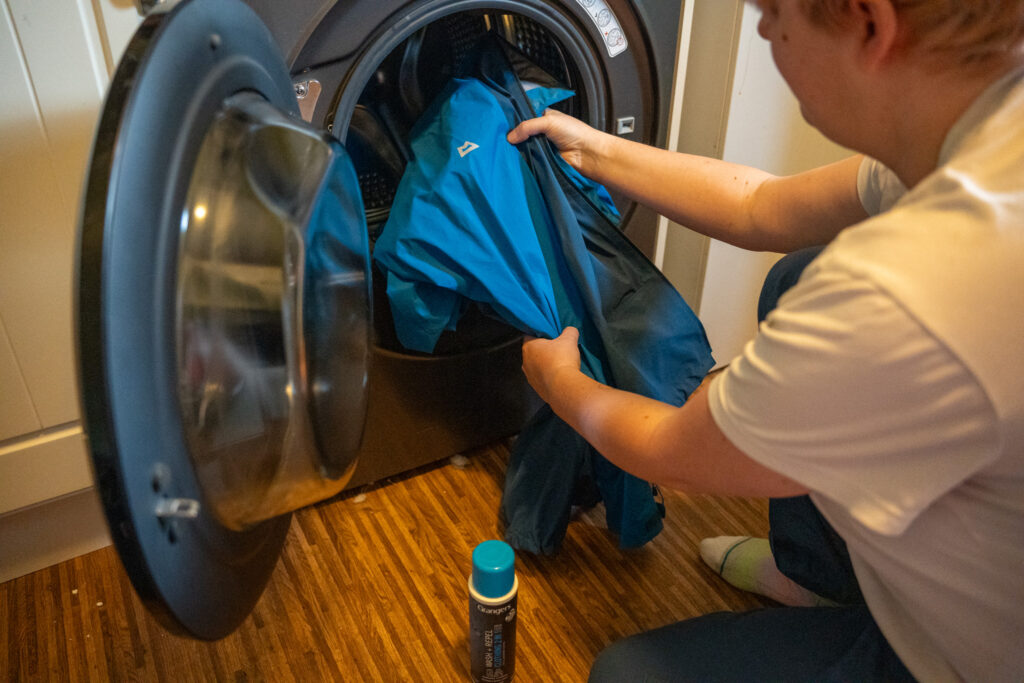
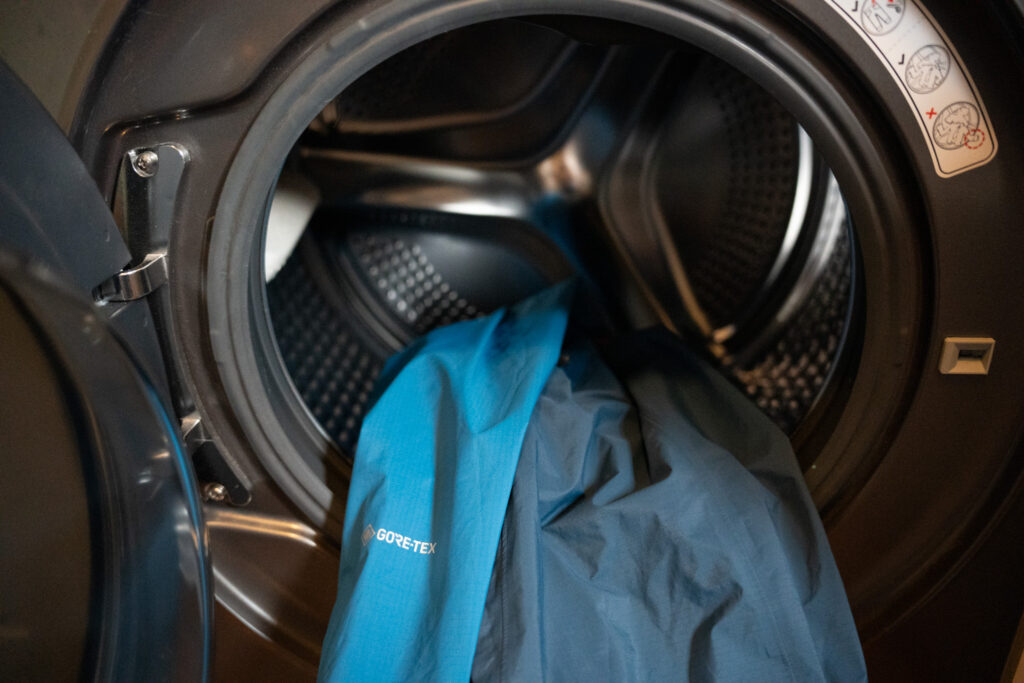
Pop your jacket into the washing machine and dose with your chosen detergent as per the bottle’s instructions. Select a synthetic or delicate cycle on either 30 or 40 degrees, depending on your jacket’s care instructions. Then let the washing machine work its magic.
6. How to reapply your jackets DWR
If you’ve used the Grangers 2 in 1 Wash and Repel to wash your waterproof jacket, you can go ahead and skip this step. If you’ve used the Nikwax Tech Wash or the Grangers Performance Wash to clean your jacket, once the cycle has finished, you’ll have to run it again with the corresponding repel treatment to reapply the DWR.
7. How to activate the DWR
Now you’ve washed your waterproof jacket; it’s time to dry it. If the jacket’s care instructions allow, tumble dry it. If you don’t have access to a tumble dryer or your jacket is not suitable to be tumble dried, iron the jacket on medium heat to dry it. Use a clean tea towel as a barrier between the iron and the jacket to protect it. Both methods of heat will activate the new DWR coating. Be careful not to use to much heat that you could risk damaging your jacket.
8. The final test
Once thoroughly dried, your jacket is good to go! You can pop the jacket’s sleeve under a running tap and you’ll see the water beading or moving off the jacket instead of soaking into the outer face fabric as before. It’s quite satisfying!
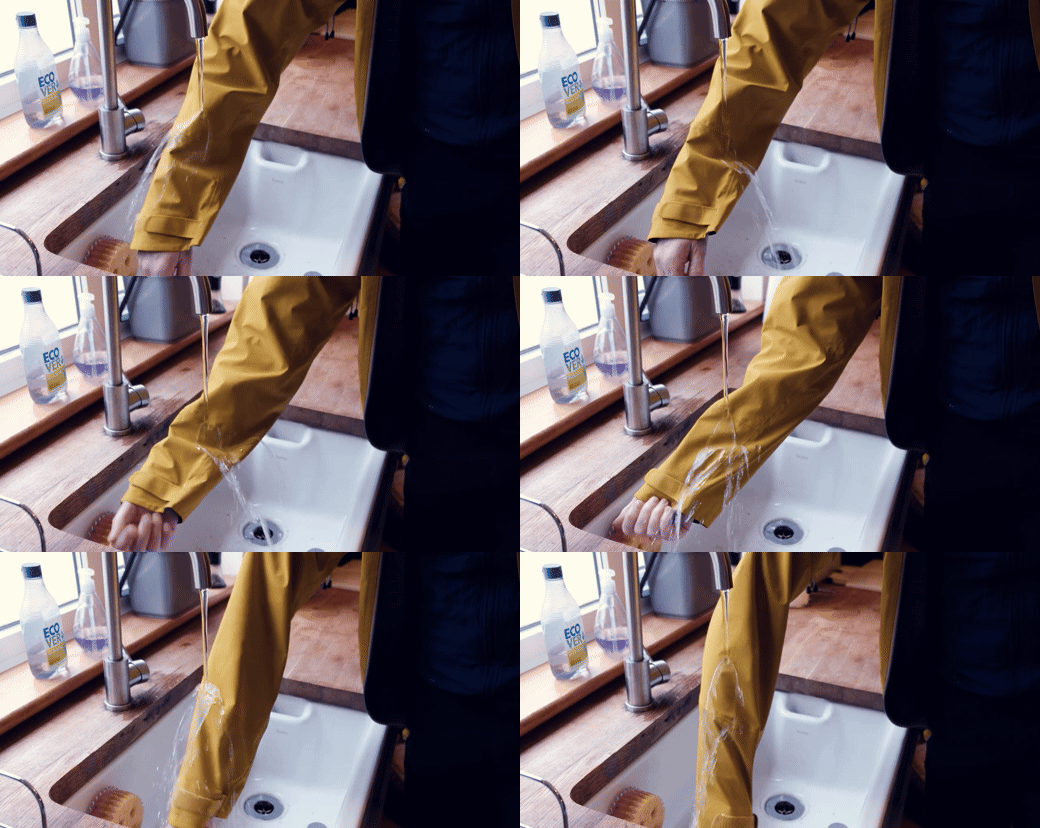
Once complete, you’ll have a fresh, clean-smelling waterproof jacket that’s had its DWR fully rejuvenated and is ready for more adventures out on the hill. Its improved performance after washing shows how fundamental regular care and maintenance is to keep your jacket performing at its best and breathing to its maximu
Why does my new waterproof jacket need washing more than my old one?
Due to recent changes in the legislation regarding the use of PFCs. Going forward, waterproof technologies like Gore-Tex® and other proprietary membranes will continue to develop into more environmentally friendly options. These new membranes will require slightly more care to keep them performing well. One of the main waterproof technologies which is currently changing is Gore-Tex®. For more information about what this change means and why it’s happening, read our blog here.
Waterproof Jacket Cleaning Products We Recommend
Keeping your waterproof jacket clean is just as important as restoring its water-repellent finish. Dirt, sweat and body oils can clog the breathable membrane and cause the outer fabric to “wet out”, making your jacket feel damp and less breathable even if the membrane is still waterproof.
Two of the most trusted brands for waterproof clothing care are Grangers and Nikwax. Both offer specialist cleaners and reproofing treatments designed for technical waterproof jackets, including GORE-TEX, Pertex Shield, eVent and more.
Grangers Waterproof Jacket Care
Grangers has specialised in waterproof clothing care for decades and offers PFAS-free formulations that help clean technical fabrics while maintaining breathability.
Performance Wash
Best for: Regular washing of waterproof jackets
Performance Wash is a specialist cleaner that removes dirt, sweat and detergent residue without damaging waterproof membranes or existing DWR treatments. Unlike household detergents, it won’t leave behind residues that reduce breathability or water repellency.
Use it whenever your waterproof jacket becomes dirty or starts to lose breathability.
Grangers Clothing Repel
Best for: Restoring Durable Water Repellent (DWR)
If water no longer beads on the surface of your jacket, it’s time to restore the DWR coating. Grangers Clothing Repel adds a fresh water-repellent finish while maintaining breathability, helping rain bead and roll away instead of soaking into the outer fabric.
Ideal after washing with Performance Wash.
Grangers Wash + Repel (2-in-1)
Best for: Washing and reproofing in one cycle
Grangers Wash + Repel combines cleaning and waterproof restoration into a single wash, making it a convenient option for jackets that need both cleaning and a fresh DWR treatment. It’s ideal when you want to refresh your waterproof jacket quickly without running two separate wash cycles.
Nikwax Waterproof Jacket Care
These products are widely recommended for waterproof clothing and are suitable for a broad range of technical fabrics, including GORE-TEX garments.
Nikwax Tech Wash
Best for: Cleaning waterproof clothing
Nikwax Tech Wash safely removes dirt and contaminants while preserving the performance of waterproof breathable fabrics. It’s designed specifically for technical outdoor clothing and should be used instead of standard laundry detergent.
Use Tech Wash before applying any reproofing treatment.
Nikwax TX.Direct Wash-In
Best for: Reproofing complete waterproof garments
TX.Direct Wash-In restores the Durable Water Repellent (DWR) finish throughout the entire garment during a washing machine cycle. It’s a quick and effective option for jackets where overall water repellency has diminished.
Nikwax TX.Direct Spray-On
Best for: Targeted restoration
Unlike the Wash-In version, TX.Direct Spray-On is applied directly to the outer fabric after washing. This allows you to target high-wear areas such as the shoulders, hood and sleeves while avoiding unnecessary treatment of inner linings or insulation.
Spray-On is often preferred for insulated waterproof jackets, garments with moisture-wicking liners, or when you only want to restore the outer face fabric.
Wash-In vs Spray-On: Which Should You Choose?
| Product Type | Best For |
| Wash-In Reproofer | Unlined waterproof jackets, quick all-over treatment and restoring DWR across the entire garment. |
| Spray-On Reproofer | Insulated jackets, jackets with moisture-wicking linings or when you only want to treat the outer fabric. |
Regardless of which solution you choose, always wash your jacket first using a specialist cleaner such as Grangers Performance Wash or Nikwax Tech Wash. Applying reproofer to a dirty jacket can reduce its effectiveness.
Looking for a New Waterproof Jacket?
If your waterproof jacket no longer performs as it should, even after cleaning and reproofing (actually reapplying DWR), it may be time for a replacement. Modern waterproof jackets are lighter, more breathable and use the latest waterproof technologies to keep you comfortable in all weather conditions.
Explore our full range of Waterproof Jackets to find the right option for hiking, hillwalking, mountaineering and everyday outdoor adventures. If you already have a favourite brand, you can also browse our complete collections of Rab Waterproof Jackets or Mountain Equipment Waterproof Jackets, featuring everything from lightweight emergency shells to fully featured mountain jackets built for demanding conditions.
Whether you’re upgrading an old jacket or investing in your first waterproof shell, choosing the right model for your activity will ensure you stay dry and comfortable on every adventure.
Watch our YouTube video: How to Wash Your Waterproof Jacket
If you prefer to watch rather than read, Paul got you covered. In our YouTube video, he’ll walk you through how to wash your waterproof jacket step-by-step, so it stays clean, fresh, and performing at its best. Grab a brew, hit play, and follow along.
As always, if you have any questions or need further advice about any of our products, you can visit us in-store at our Hereford Service Centre. or speak with our friendly customer service team via telephone (01432 263 335) or email ([email protected]) or contact us via our social media channels linked below.
FAQ
Wash your waterproof jacket whenever it becomes visibly dirty or when you notice reduced breathability. For most hikers, this is every few months with regular use, although frequent users may need to wash it more often. Dirt, sweat and body oils can clog the waterproof membrane, reducing comfort and performance. 
Yes. Most GORE-TEX jackets are designed to be machine-washed. Always follow the care label, use a specialist cleaner such as Grangers Performance Wash or Nikwax Tech Wash, and avoid standard detergents and fabric softeners.
Use a specialist cleaner made specifically for waterproof outdoor clothing. Products like Grangers Performance Wash and Nikwax Tech Wash clean technical fabrics without leaving residues that can reduce breathability or water repellency.
Regular household detergents can leave residues that attract water, reduce breathability and interfere with the jacket’s Durable Water Repellent (DWR) finish. Fabric softeners and bleach should also be avoided, as they can affect the performance of technical waterproof fabrics.
Not every time. If water still beads on the surface after washing, the DWR finish is still working. If the outer fabric starts absorbing water instead, it’s time to apply a waterproof reproofer such as Grangers Clothing Repel or Nikwax TX.Direct.
Both brands produce high-quality cleaners and reproofer treatments for waterproof clothing. Grangers offers PFAS-free cleaning and reproofing products, while Nikwax is well known for its Tech Wash cleaner and TX.Direct waterproofing range. Both are suitable for most waterproof breathable fabrics, including GORE-TEX.
Many waterproof jackets can be tumble-dried on a low heat setting if the care label allows it. Gentle heat can help reactivate the existing DWR treatment on some jackets. Always check the manufacturer’s washing instructions before using a tumble dryer.
Wetting out happens when the outer fabric absorbs water instead of allowing it to bead and roll off. This usually means the DWR finish has worn away rather than the waterproof membrane failing. Cleaning and reproofing the jacket will often restore its performance.
A waterproof jacket usually needs reproofing when:
Water no longer beads on the surface.
The outer fabric quickly becomes saturated in rain.
The jacket feels heavier when wet.
Breathability has noticeably decreased.
Washing alone no longer restores water beading.
These are all signs that the DWR finish has worn away and should be renewed with a suitable waterproof treatment.
Leave a Reply