
What Size Tent Do You Actually Need?
Author: Trekitt Gear Team
With years of hands-on experience using tents across the UK’s varied conditions, our team understands how tent size affects comfort, storage space and real-world usability on camp. From compact solo shelters to family-friendly setups with room for kids, dogs and kit, we know what genuinely makes a difference when choosing the right tent size for your trips. Whether you’re planning lightweight backpacking nights or relaxed campsite weekends, we focus on what works beyond the brochure specs
If you’ve ever looked at tents online, you’ve probably noticed they’re described as 1-person, 2-person or 3-person models. At first glance, choosing the right size seems simple, just match the number of sleepers to the tent capacity.
In reality, tent size ratings are usually based on minimum sleeping space rather than comfort. Things like sleeping mat width, gear storage, UK weather conditions and how long you expect to spend inside the tent can all affect what size will actually work best for your trips.
In this guide, we’ll explain what tent capacity ratings really mean and how to choose the right tent size for a more comfortable camping setup.
KEY TAKEAWAYS:
- What tent capacity ratings actually mean in real use
- How sleeping mat width affects comfort and fit
- When choosing a larger tent makes sense
- How to plan space for gear and UK conditions
This article is part of our 👉 Tents Knowledge Centre, where you’ll find expert tent-buying advice, shelter comparisons, camping tips and practical guidance to help you choose the right tent for every adventure.
Why Tent Size Matters
Choosing the right tent size might not sound like the most exciting part of planning a camping trip, but it can make a huge difference to how enjoyable that trip actually is.
A tent is more than just a place to sleep. It’s your bedroom, your changing room, your storm shelter, and sometimes your emergency snack bunker when the rain refuses to stop. If it’s too small, things get cramped very quickly. If it’s too big, you might end up carrying more weight than necessary, especially if you’re hiking to camp.
The size of your tent affects several important things:
Comfort
A little extra room goes a long way. When sleeping mats are packed tightly together, even turning over at night can feel like a small negotiation between campers.
Storage Space
Backpacks, muddy boots, wet jackets, dog leads, snacks… they all need somewhere to go. Without enough room inside the tent or in the porch, your gear can quickly take over your sleeping space.
Ventilation
More space often means better airflow, which helps reduce condensation. In the UK, where damp mornings are practically part of the camping experience, good ventilation can make a noticeable difference.
Weather Protection
When the weather turns (and in Britain, it usually does at some point), you may spend more time inside your tent than planned. Having a bit of extra room makes it far easier to change clothes, organise gear, or simply wait out the rain without feeling like you’re living in a backpack.
Weight for Backpacking
If you’re hiking to your campsite, the size of your tent also affects weight and packed size. Bigger tents offer more comfort, but they also take up more space in your pack and add extra grams.
The Reality of Tent Capacity Ratings
Here’s something many campers discover after their first trip: tent capacity ratings are often… optimistic.
A “2-person tent” usually means two sleeping mats squeezed side by side with very little space left over. Technically, it works, but it doesn’t leave much room for gear, elbows, or midnight turning-over manoeuvres.
Because of this, many experienced campers follow a simple rule:
Choose a tent rated for one more person than will actually sleep in it.
For example:
- Solo campers often choose a 2-person tent for extra gear space.
- Couples often prefer 3-person tents for a more comfortable night.
- Families sometimes size up to gain extra living space.
In short, the best tent size isn’t just about how many people are sleeping inside. It’s about how you camp, how much gear you carry, and how much personal space you’d like after a long day outdoors.
And if you’ve ever tried to sleep shoulder-to-shoulder in a tent during a windy night… you’ll understand why that extra bit of space can feel like absolute luxury.
What Are 1.5 & 2.5 Person Tents?
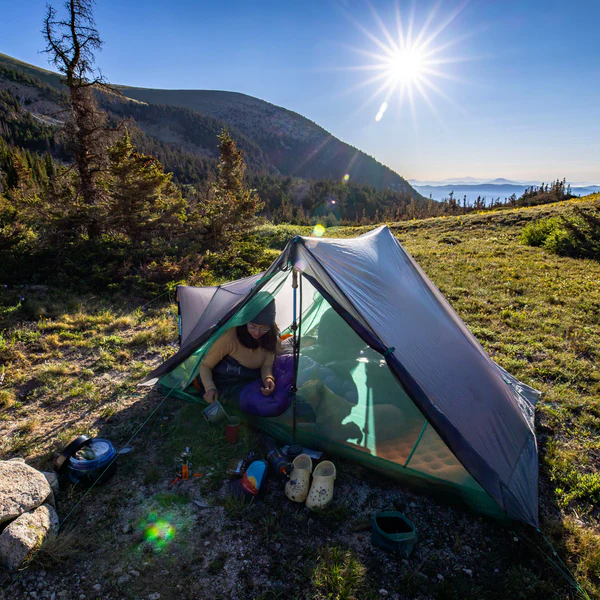
You may have started to notice some newer tents described as “1.5-person” or “2.5-person” rather than the traditional 1-, 2-, or 3-person sizing.
This shift reflects how tents are actually used in the real world.
Traditional capacity ratings are based on fitting sleeping mats side-by-side with very little spare room. In practice, most campers want extra space for gear, movement, and comfort, especially in UK conditions where you may spend more time inside the tent than planned.
To address this, some brands (including Big Agnes) have introduced in-between sizes that sit between standard categories:
- 1.5-person tents → designed for solo campers who want extra room for gear and comfort
- 2.5-person tents → designed for two people who want more space without moving to a full 3-person tent
In simple terms:
- 1.5-person = comfortable solo
- 2.5-person = comfortable for two
These tents are a great option if a standard size feels too tight, but the next size up feels unnecessarily large or heavy.
What Size Tent Do You Actually Need?
This is where many people get caught out when buying their first tent. The number printed on the box — “2-person”, “3-person”, “4-person” — tells you the maximum number of people that can physically fit inside, not necessarily the number that will sleep comfortably.
Manufacturers calculate tent capacity by placing sleeping mats side-by-side with almost no spare room. In reality, most campers want a bit more breathing space than that.
A helpful way to think about tent sizes is like this:
Tent Rating vs Realistic Comfort
Tent capacity ratings show the maximum number of people that can fit inside, but real-world comfort often looks a little different. Most campers prefer a bit more room for sleeping mats, gear, and movement.
| Tent Rating | Realistic Comfort |
| 1 person | Solo minimalist, ultralight backpacking, fastpacking, bikepacking |
| 1.5 person | Solo camper wanting extra comfort, space for gear inside, better for poor weather or longer trips |
| 2 person | Solo camper wanting extra space, minimalist pair, snug couple, solo winter camping with extra kit (Many 2-person tents have vestibules large enough to store two backpacks.) |
| 2.5 person | Comfortable for two without going full 3-person, couple with light gear, two hikers wanting more space |
| 3 person | Comfortable for two, couple + dog, two hikers with backpacks, couple wanting extra sleeping space |
| 4 person | Couple with lots of gear, couple + child, couple + dog + gear, small family with young child |
| 5 person | Family of four with limited gear, comfortable space for three adults |
| 6 person | Small family, family with camping furniture, group festival tent, family basecamp setup |
This difference between rated capacity and real comfort comes down to a few simple factors.
Sleeping Mat Width
Most sleeping mats are 50–65 cm wide, and wide mats can reach 70–76 cm. If two people both use wider mats, a typical 2-person tent floor can quickly become completely full.
Gear Storage
Backpacks, boots, jackets and cooking equipment all need somewhere to live overnight. While many tents include porch space, some gear still ends up inside the sleeping area — especially in bad weather.
Personal Space
After a long day hiking or travelling, a little personal space can make a big difference to how well you sleep. Being able to roll over without elbowing your tent partner is always a bonus.
Because of this, many experienced campers follow a simple rule:
If comfort matters, choose a tent rated for one extra person.
A couple often sleeps far more comfortably in a 3-person tent, while solo campers frequently choose a 2-person tent to allow space for their gear.
Tent Size Guide by Number of People
To make things easier, here’s a quick overview of typical tent sizes and how they’re usually used in the real world.
1 Person Tent Size
Typical floor size
- 210–230cm length
- 70–90cm width
Best for
- Solo backpacking
- Ultralight hiking
- Bikepacking
One-person tents are designed for efficiency rather than luxury. They’re built to minimise weight and pack size, making them ideal for hikers covering long distances or anyone travelling fast and light.
Space inside is usually just enough for a sleeping mat and sleeping bag, with gear typically stored in the porch.
1.5 Person Tent Size
Typical floor size
• 210–230cm length
• 90–110cm width
Best for
• Solo camping with extra comfort
• Wild camping in poor weather
• Solo hikers with gear inside the tent
1.5-person tents offer a noticeable step up in space compared to traditional solo tents, without a big increase in weight or pack size.
They’re ideal if a 1-person tent feels too restrictive, but you don’t want to carry a full 2-person shelter.
This extra width provides more gear storage and makes it easier to sit up, move around, or wait out bad weather in comfort.
2 Person Tent Size
Typical floor size
- 210–230cm length
- 120–140cm width
Realistic use
- Solo camping with gear
- Minimal space for couples
While a 2-person tent technically fits two sleeping mats, it often feels quite snug in practice. For solo campers, however, it’s often the perfect balance between space and weight.
Many hikers use a 2-person tent to gain extra room for backpacks, boots and clothing, especially on longer trips.
For couples, it can work, but space will be limited.
Because of this, many couples prefer a 3-person tent for greater comfort.
For help choosing the right model, take a look at our Best 2-Person Tents for UK Camping guide, where we compare Trekitt’s top picks for backpacking, wild camping and campsite trips in typical UK wind and rain conditions.
2.5 Person Tent Size
Typical floor size
• 210–230cm length
• 140–160cm width
Best for
• Two people wanting more space without going full 3-person
• Lightweight backpacking couples
• Two hikers with compact gear
2.5-person tents sit between traditional 2- and 3-person sizes, offering extra width and usable space without the full weight of a 3-person shelter.
They’re a great option for couples who find standard 2-person tents too tight but still want to keep pack weight and size down.
In many cases, they provide enough room for two sleeping mats and a small amount of gear.
3 Person Tent Size
Typical floor size
- 210–230cm length
- 160–180cm width
Best for
- Two people with gear
- Couples who want more space
- Car camping
Three-person tents are often considered the sweet spot for couples. They provide noticeably more sleeping space while still remaining reasonably manageable in terms of weight and packed size (particularly when split between 2 of you).
The extra width makes it easier to store small items inside the tent and gives both campers a bit more room to sleep comfortably.
4 Person Tent Size
Typical floor size
- 210–230cm length
- 200–240cm width
Best for
- Families
- Couples wanting maximum comfort
- Basecamp style camping
Four-person tents start to feel much more spacious. They’re popular with families or couples who prioritise comfort over pack weight.
These tents often feature larger porches and higher ceilings, making them well-suited for campsite trips where you’re staying in one place for several nights.
6 Person Tent Size
Typical floor size
- 240+ cm width
Best for
- Families
- Campsite camping
- Festivals
Six-person tents are designed more like portable rooms than minimalist shelters. They offer plenty of sleeping space, often include standing height, and usually provide a large porch or living areas.
They’re not designed for backpacking, but they’re excellent for family camping trips, longer campsite stays, or festival weekends where comfort matters more than weight.
Are Tent Sizes Standard Across Brands?
Not exactly. While most brands use similar “person ratings” (1-person, 2-person, 3-person, etc.), the actual floor dimensions of the tent can vary quite a bit between models and manufacturers.
For example, two different 2-person tents may technically fit two sleeping mats, but one might feel noticeably more spacious thanks to a wider floor or steeper walls.
This is why it’s always worth checking the actual measurements of the tent floor, rather than relying only on the capacity rating printed on the label.
Many respected outdoor brands, including Big Agnes, MSR, NEMO Equipment, Fjällräven, Terra Nova and Wild Country, design tents with slightly different priorities. Some focus on ultralight backpacking performance, while others aim to maximise interior space and comfort.
Example: Floor Size Differences in Popular 2–3 Person Tents
| Tent Model | Brand | Capacity | Approx Floor Size | Notable Space Features |
| Copper Spur HV UL2 | Big Agnes | 2 person | ~224 x 132 cm | High-volume design creates more headroom |
| Hubba Hubba HD | MSR | 2 person | ~213 × 127 cm | Balanced weight and usable living space with two vestibules |
| Dragonfly OSMO 2P | NEMO | 2 person | ~224 × 127 cm | Tapered floor with large vestibules and excellent porch storage |
| Abisko Lite 2 | Fjällräven | 2 person | ~220 × 130 cm | Tunnel design with generous vestibule and strong weather protection |
| Laser Lite 1 | Terra Nova | 1 person | ~215 × 75 cm | Ultralight tunnel design prioritising minimal weight and packability |
As you can see, even within the same 2-person category, floor widths can vary by 10–15 cm or more, which can noticeably affect how comfortable the tent feels once two sleeping mats are inside.
Before choosing a tent, it’s always worth checking:
- floor width
- tent length
- interior height
- porch space
These measurements often tell you more about real-world comfort than the person rating alone.
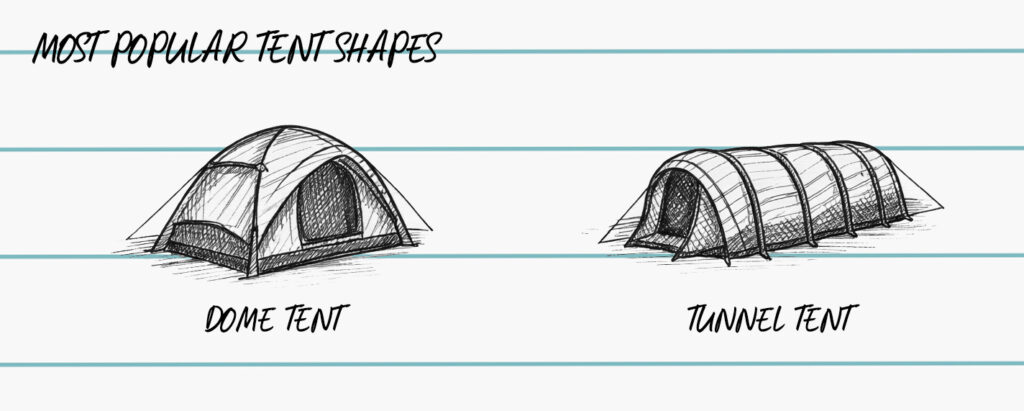
Comparison of Most Popular Tent Shapes
A tent shape can make a big difference to how spacious a tent feels inside. Two tents with the same sleeping capacity may feel very different depending on their design, internal height and wall structure.
Understanding the most common tent shapes can help you choose a model that offers the right balance of space, stability and weight for your trips.
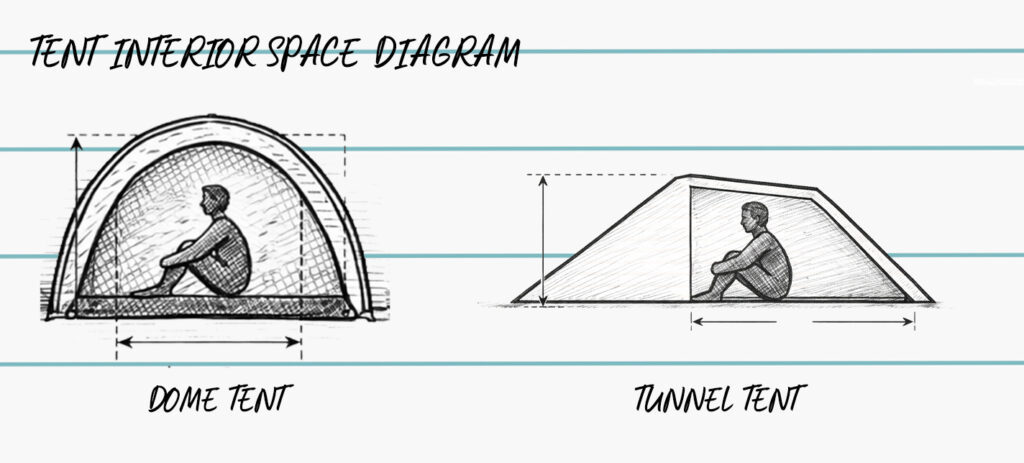
Dome Tents
Dome tents are one of the most common tent designs used for backpacking and general camping. They typically use two flexible poles that cross in the centre, creating a rounded dome shape that balances stability, space and weight.
Because the poles cross, dome tents are usually freestanding, meaning they can hold their shape without being fully pegged out. This makes them easier to pitch on rocky ground, wooden platforms or hard surfaces where stakes may not be possible.
Benefits of dome tents include:
• Freestanding structure that is easy to pitch
• Good balance between weight and interior space
• Reliable stability in moderate wind
However, the sloping walls of a dome tent can reduce usable space near the edges of the floor, meaning the middle of the tent usually offers the most headroom.
Dome tents are particularly popular for:
• Backpacking and hiking trips
• Wild camping where simple pitching matters
• General camping where versatility is important
Many lightweight backpacking tents use dome-style designs because they offer a reliable balance of comfort, weight and packability.
Tunnel Tents
Tunnel tents use parallel poles to create a curved, tunnel-like structure, giving the tent a long, sloping shape. This design is especially popular with Scandinavian and UK camping brands because it provides excellent interior space for its weight.
One of the main advantages of tunnel tents is their efficient use of space. The long structure often creates a spacious sleeping area and a generous porch or vestibule, making them ideal for storing backpacks, boots and wet gear.
Benefits of tunnel tents include:
- Excellent space-to-weight ratio
- Large porch areas for gear storage or cooking
- Good ventilation options along the length of the tent
- Great performance in high wind
However, tunnel tents are usually not freestanding, meaning they rely on proper pegging and guy lines to maintain their structure. When pitched correctly and facing into the wind, they can be very stable in windy conditions.
Tunnel tents are particularly popular for:
• Backpacking trips where interior space matters
• Family camping with extra gear
• Longer campsite stays where comfort and storage space are important
Because of their shape, tunnel tents often feel more spacious than dome tents with the same person rating, especially in terms of porch space and gear storage.
Why Tent Shape Matters
Even when two tents are rated for the same number of people, their internal space can feel very different depending on their shape.
Factors influenced by tent shape include:
- Usable sleeping width
- Headroom and sitting comfort
- Porch size and gear storage
- Wind stability
Understanding these differences can help you choose a tent that not only fits your group size but also provides the comfort you expect during your trip.
Tent Floor Dimensions vs Sleeping Mats
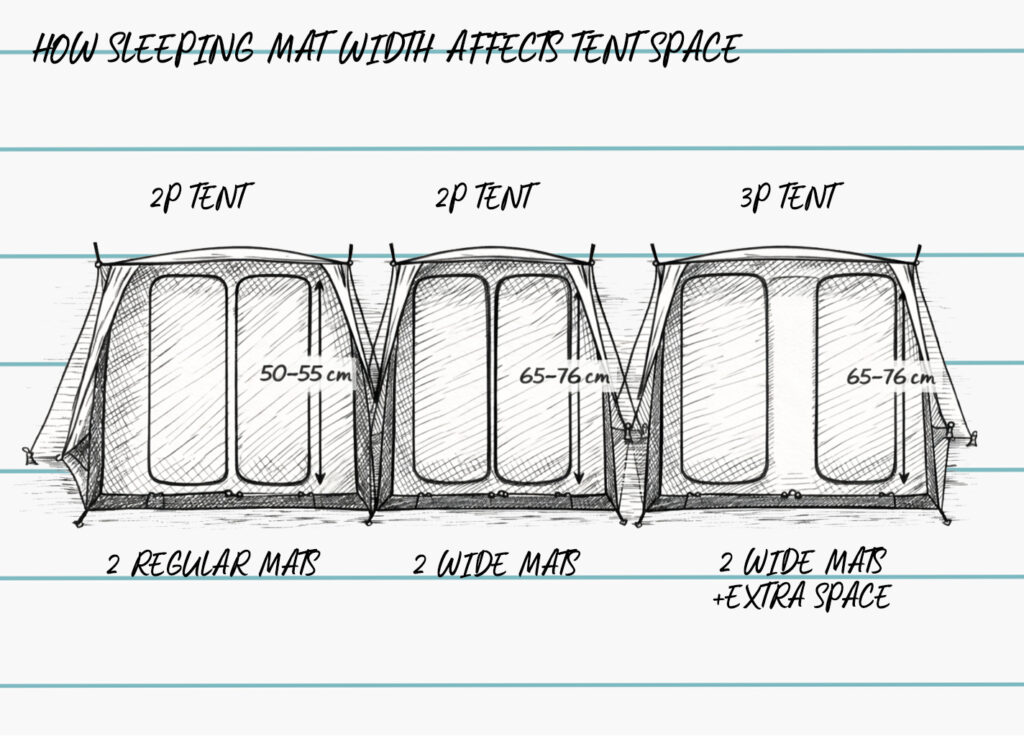
One of the most common surprises for new campers happens after the tent is pitched for the first time: the sleeping mats barely fit.
Tent capacity ratings assume standard-width sleeping mats placed tightly next to each other, but in reality many people now use wider mats for better comfort.
Typical sleeping mat widths are:
- Regular mats: 50–55 cm
- Wide mats: 63–65 cm
- Extra-wide comfort mats: 70–76 cm
If two people both use wide mats, a typical 2-person tent floor can quickly become completely full.
| Tent Size | Typical Floor Width | What Fits Comfortably |
| 2 person | 120–140 cm | Two regular mats |
| 3 person | 160–180 cm | Two wide mats + small gear space |
| 4 person | 200–240 cm | Two people + gear |
This is one of the main reasons experienced campers often size up their tents. A slightly wider tent can make a noticeable difference to sleeping comfort, especially on multi-day trips.
Before choosing a tent, it’s worth checking:
- floor width
- your sleeping mat size
- whether you want space for gear inside
A tent that technically fits two mats may still feel very cramped in practice.
Other Factors That Affect Tent Comfort
Door & Entry Design
Many campers focus on sleeping space but overlook how the tent is accessed. The number and placement of doors can make a big difference to comfort, especially when sharing a tent.
For example:
• Single-door tents mean one person may need to climb over the other to get out at night.
• Two-door tents allow each camper to enter and exit independently.
• Side-entry doors often make it easier to organise gear and use the vestibule.
Two doors are particularly useful for:
• couples sharing a tent
• campers storing gear in the porch
• getting in and out during bad weather without disturbing your tent partner.
For many backpackers, two doors and two vestibules can make a tent feel significantly more practical and comfortable.
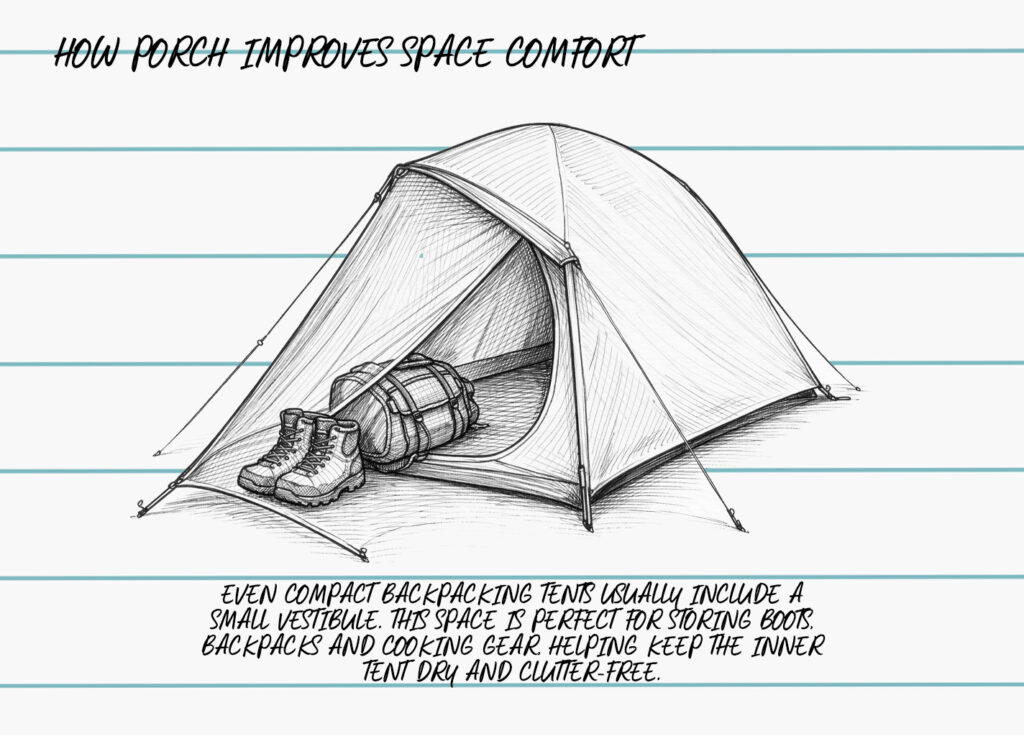
Vestibule Space
Vestibule space can make a surprisingly big difference to overall comfort. The porch (or vestibule) is the covered area outside the inner tent where you can store equipment and manage wet gear.
This space is typically used for storing:
- Boots
- Backpacks
- Wet clothing
- Cooking equipment
Without a porch, all of this equipment may need to go inside the sleeping area, which can make smaller tents feel crowded very quickly. In many cases, a generous porch improves comfort more than adding extra sleeping width.
Internal Height
Internal height is another factor that affects how comfortable a tent feels, especially during longer stays.
Most lightweight backpacking tents are designed with low profiles to reduce weight and improve wind stability, which means standing height is uncommon. However, extra headroom can still make a big difference when spending time inside the tent.
Greater internal height makes it easier to:
- Get dressed
- Sit up comfortably
- Move around inside the tent
- Spend longer periods inside during bad weather
For campsite camping or longer trips, a tent with more headroom can significantly improve overall comfort.
What Tent Size Works Best for Different Camping Styles?
The number of people sleeping in the tent is only part of the equation. Your camping style also plays a big role in choosing the right tent size.
Solo Backpacking
Best choice:
- 1-person tent for ultralight trips
- 2-person tent if you want extra gear space
Typical weight target:
- 1–1.5 kg for lightweight backpacking tents
When you’re hiking long distances, every gram matters. A small, lightweight tent helps keep your pack manageable while still providing reliable shelter.
Camping as a Couple
Best choice:
- 3-person tent
Why many couples size up:
- more space for sleeping mats
- room for backpacks and clothing
- easier movement inside the tent
- improved airflow and less condensation
Two people technically fit in a 2-person tent, but a 3-person tent often makes camping far more comfortable.
Camping with a Dog
Recommended:
• 2–4 person tents, depending on dog size and how much gear you carry
• 1–2 person tents can work for solo campers with a small dog
Why:
• space for the dog to sleep comfortably
• extra room for muddy gear
• better airflow on warmer nights
Dogs tend to move around during the night, so a little extra floor space can make sleeping easier for everyone.
Family of Four
Recommended:
- 4–6 person tent
Important features to look for:
- standing height
- large porch or vestibule
- multiple sleeping areas
- good ventilation
Family camping often involves more equipment, so additional space quickly becomes valuable.
Common Tent Size Mistakes
Buying Exactly the Rated Capacity
One of the most common mistakes is choosing a tent that fits the exact number of people who will sleep in it. Tent capacity ratings are usually based on sleeping mats placed side by side tightly, with little extra room for movement or personal space.
While a 2-person tent technically fits two people, it can feel cramped, especially on longer trips or during bad weather when you may spend more time inside. Many experienced campers choose to size up by one person for better comfort.
Ignoring Gear Storage
Camping gear quickly takes up space. Boots, backpacks, wet jackets, and cooking equipment all need somewhere to go.
In smaller tents without sufficient porch space, this gear often ends up inside the sleeping area. Wet or muddy equipment can reduce usable space and make the tent feel crowded very quickly. A tent with adequate storage space or a larger porch can significantly improve comfort.
Not Considering Sleeping Mat Width
Modern sleeping mats are often wider than the mats used when many tents were originally designed.
Standard mats are typically around 50–55 cm wide, but wider mats can measure 65–76 cm. When two wide mats are placed inside a smaller tent, they may fill most of the sleeping area, leaving little room for movement or gear.
If you use wide or thick mats, choosing a larger tent size can make a big difference.
Final Thoughts
The best tent size isn’t just about how many people are sleeping inside. Comfort depends on a combination of factors, including your camping style, the gear you carry, and how much time you expect to spend in the tent.
Before choosing a tent, it helps to consider:
- The width of your sleeping mats
- How much gear do you need to store
- The type of weather you expect
- How long you’ll spend inside the tent during your trip
In many cases, choosing slightly more space than the minimum requirement can lead to a far more comfortable camping experience. If you’re still unsure which size will work best for your setup, the Trekitt team is always happy to help. We regularly test tents in real UK conditions and can talk through options based on your trips, gear and priorities.
FAQ
Most couples are most comfortable in a 3-person tent. While a 2-person tent can technically fit two sleeping mats, it often leaves very little space for gear or movement.
Most solo campers choose either a 1-person tent or a 2-person tent, depending on their priorities.
• 1-person tents are best for ultralight backpacking and minimal pack weight.
• 2-person tents give solo campers extra room for gear, better comfort and more space to move inside the tent.
Many experienced hikers prefer a 2-person tent for solo trips, especially on longer adventures.
A 4-person tent is usually the minimum, but many families prefer 5- or 6-person tents for additional living space and gear storage.
Yes — in fact, many couples consider a 3-person tent the ideal size because it provides extra space for gear and allows both campers to sleep more comfortably.
Yes, but space will be tight. Two-person tents are designed to fit two sleeping mats side-by-side, leaving limited room for gear or movement inside.
For backpacking trips, many hikers choose:
1-person tents for ultralight travel
2-person tents for solo hikers with gear
3-person tents for two hikers sharing space
Many backpacking tents aim to stay under 2 kg for two people
Check the tent floor width and compare it with the width of your sleeping mats. Two wide sleeping mats can take up most of the floor space in a small 2-person tent.
Most couples camping with a dog find that a 3-person or 4-person tent works best. This gives the dog space to sleep comfortably and leaves room for gear inside the tent or porch.
For wild camping and backpacking trips, smaller tents are usually preferred to reduce pack weight. Many campers choose a 1-person or lightweight 2-person tent, depending on how much gear they carry.
Most tents allow 50–65 cm of sleeping width per person, which matches the width of a standard sleeping mat. Wider mats or extra gear can quickly reduce available space inside smaller tents.
Three people can technically fit in a 3-person tent, but space will usually be tight. For greater comfort, many groups of three prefer a 4-person tent, especially if gear needs to be stored inside.
Larger tents can sometimes help reduce condensation by providing more air volume and better airflow. However, ventilation features such as vents and mesh panels usually make a bigger difference than size alone.
When choosing a tent for a family of four, consider both sleeping space and living space. While a 4-person tent can technically fit four sleeping mats, many families prefer 5- or 6-person tents to allow extra room for bags, clothing and movement inside the tent.
Look for tents with:
Separate sleeping areas or larger floor space
Good internal height
A porch or vestibule for gear storage
Extra space makes a big difference during bad weather when everyone may spend more time inside.
For UK camping, comfort and weather protection are just as important as sleeping capacity. Many campers choose a tent rated for one person more than the number of occupants to allow space for gear and wet clothing.
When choosing a tent size, consider:
Sleeping mat width
Gear storage space
Porch size for boots and wet layers
Internal height for comfort in rainy conditions
UK weather often means spending time inside the tent, so slightly more space can make trips much more comfortable.
For two adults with backpacks and equipment, a 3-person tent is often the most comfortable choice. While a 2-person tent can fit two sleeping mats, there is usually limited room left for gear.
A 3-person tent provides:
More sleeping space
Room for gear inside the tent if needed
Greater comfort during longer trips or poor weather.
For car camping, weight is less important than comfort. Many groups of three choose 4-person tents, which provide extra sleeping space and room for gear.
A larger tent makes it easier to:
Move around inside
Store bags and clothing
Stay comfortable during longer campsite stays.
Outdoor retailers such as Trekitt offer a wide range of three-person tents designed for UK conditions, including lightweight backpacking tents and more spacious campsite models. Look for tents with strong poles, reliable waterproof ratings and good ventilation to handle changeable weather.
A 2.5-person tent is designed to sit between a 2- and 3-person tent, offering extra space for two people without the added weight and bulk of a full 3-person model. It’s a popular choice for backpacking couples who want more comfort without carrying a larger shelter.
Leave a Reply