
Why Is Your Waterproof Jacket Wetting Out?
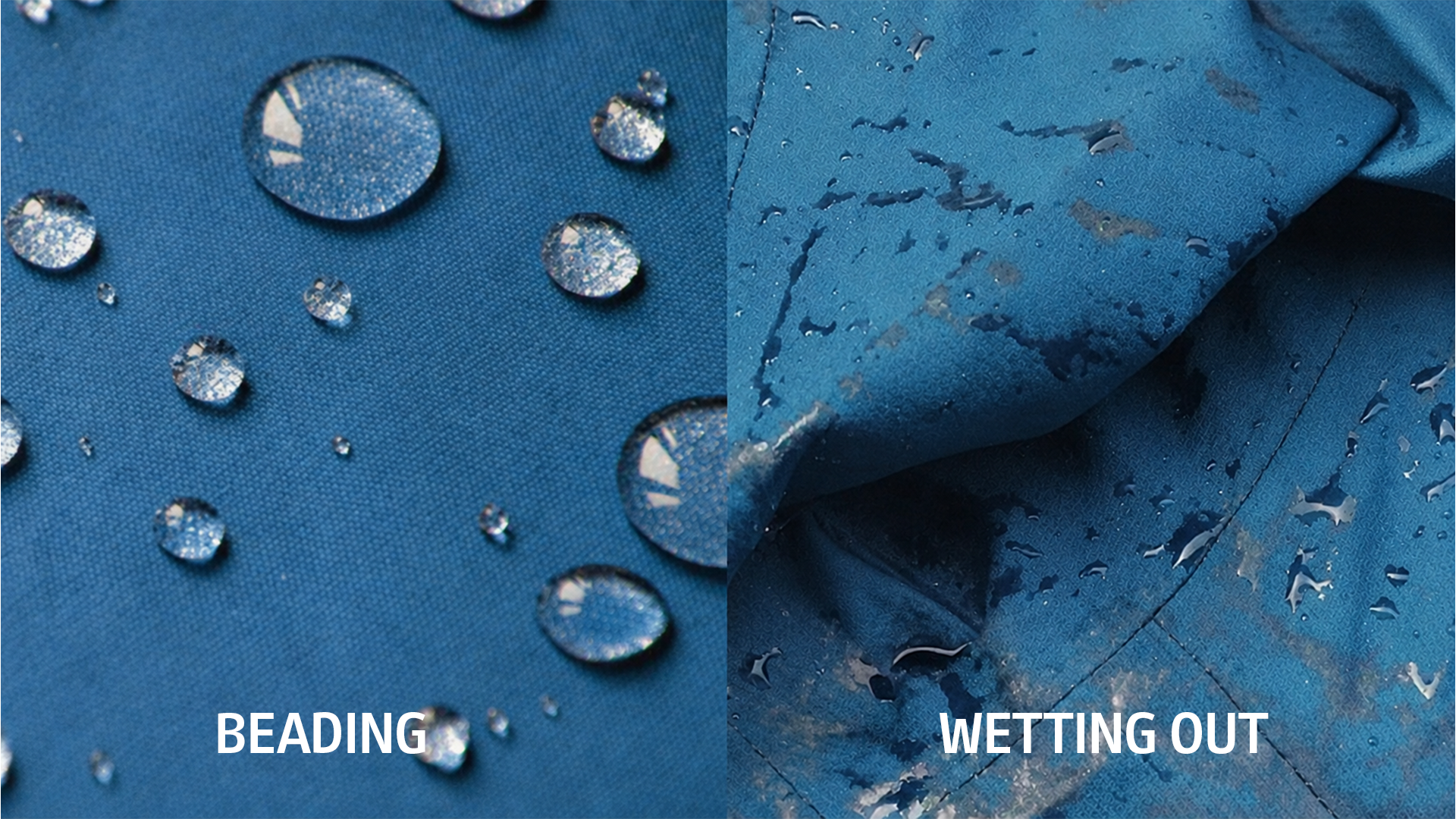
You’ve invested in a decent waterproof jacket, taken it out on a fair few soggy walks, and now something doesn’t seem quite right. Instead of rain beading up and rolling off, the outer fabric is turning darker and starting to absorb water. Before long, your jacket feels heavy, cold and clammy. Not exactly what you want when you’re halfway up a hill with another three hours of rain forecast.
So, has your waterproof finally given up?
Not necessarily. What you’re probably experiencing is something called wetting out, and it doesn’t automatically mean your jacket is leaking or that you need to replace it.
It’s also something you might notice more frequently with newer waterproof clothing, particularly as outdoor brands move away from traditional PFAS-based water-repellent treatments. While these changes are important from an environmental perspective, they’ve also changed how we need to look after some of our kit.
In this guide, we’ll explain why waterproof jackets wet out, what’s happening beneath the fabric, and how a little maintenance can help get your jacket performing properly again.
IN SHORT…
-
Wetting Out vs Leaking: Learn how to tell the difference between a saturated outer fabric and a waterproof jacket that’s genuinely letting rain through.
-
Why Waterproof Jackets Wet Out: Understand how DWR treatments work, why newer waterproofs can behave differently, and what role the membrane plays.
-
Washing and Reproofing Your Waterproof Jacket: Find out how to clean your jacket, restore its water repellency and choose the right reproofing method.
-
When to Repair or Replace Your Waterproof: Discover which signs suggest your jacket needs more than a wash and when a repair might be worthwhile.
-
Keeping Your Waterproof Performing for Longer: Get practical maintenance tips and answers to common waterproof jacket questions.
What’s the Difference Between Wetting Out and Leaking?
Wetting out and leaking might feel pretty similar when you’re halfway up a hill in the rain, but they’re actually two different problems. Understanding the difference can save you from unnecessarily replacing a perfectly good waterproof jacket.
Wetting out happens when the outer fabric of your jacket starts absorbing water rather than allowing it to bead up and roll off. This usually means the durable water repellent (DWR) treatment isn’t working as effectively as it should. The waterproof membrane underneath may still be doing its job, but the saturated outer fabric can make your jacket feel colder and clammy, particularly when you’re working hard.
Leaking, on the other hand, means water is actually finding its way through the waterproof barrier. This could be down to damaged fabric, deteriorating seam tape or a problem with the membrane itself.
Here’s a quick comparison:
| Wetting Out | Leaking | |
| What’s happening? | Outer fabric absorbs rain | Water passes through the waterproof barrier |
| Common cause | Dirty or worn DWR treatment | Membrane damage, worn seams or tears |
| What you’ll notice | Dark patches, clamminess and reduced comfort | Water entering through particular areas |
| Can you fix it? | Often with washing and reproofing | May require repair or replacement |
One thing worth remembering: feeling damp inside your jacket doesn’t automatically mean it’s leaking. If you’re working hard on a steep climb, condensation from sweat can build up faster than your waterproof can release it. Add a saturated outer fabric into the mix, and it’s easy to mistake that clammy feeling for rain getting through.
Before assuming your jacket has failed, we’d always recommend giving it a proper clean and checking the DWR.
What Is DWR and Why Does It Matter?
DWR stands for Durable Water Repellent. It’s the treatment applied to the outer fabric of most waterproof jackets that encourages rain to form droplets and roll off rather than soaking into the material.
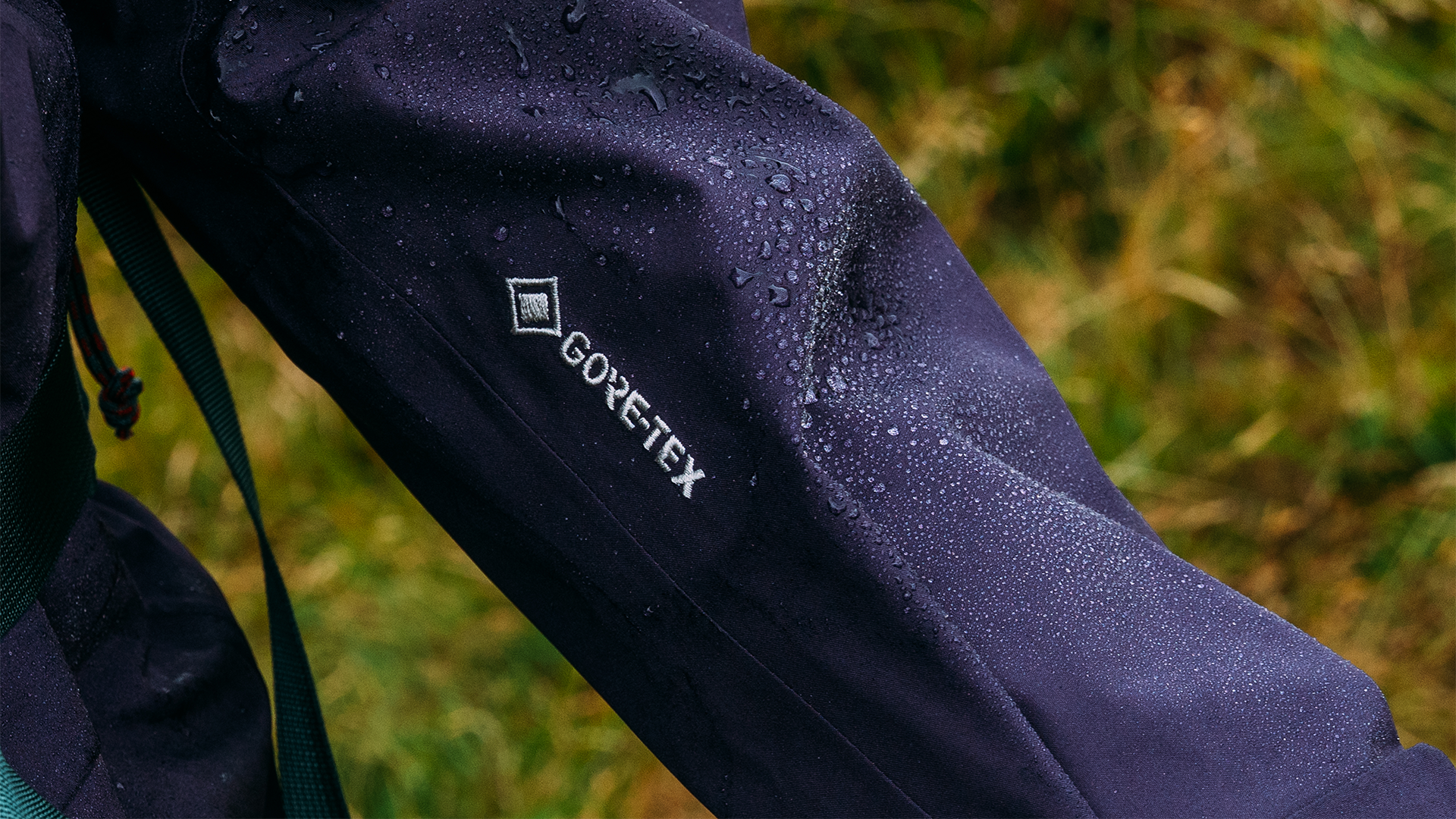
You know that satisfying effect when you step outside in a new waterproof and the rain just slides away? That’s the DWR doing its thing.
However, there’s a common misconception worth clearing up. DWR isn’t what makes your jacket waterproof. In most technical waterproof jackets, the membrane or waterproof coating underneath provides the main barrier against rain. The DWR helps prevent the outer fabric from becoming saturated, improving comfort and allowing the jacket to perform as intended.
The catch is that DWR doesn’t last forever. Every time you wear your jacket, it’s exposed to things that can affect its water repellency, and some areas tend to take more punishment than others.
Common culprits include:
- Dirt and mud: Contamination can interfere with how effectively the treatment repels water.
- Sweat and body oils: These gradually build up around high-contact areas such as collars and cuffs.
- Rucksack straps: Repeated friction across the shoulders can wear down the treatment over time.
- General wear and washing: DWR treatments gradually lose effectiveness through use and cleaning.
That’s why you might notice wetting out around your shoulders, cuffs or collar before anywhere else. These areas experience the most contact, friction and contamination during everyday use.
The good news is that a DWR treatment that’s stopped working effectively doesn’t necessarily mean it’s completely worn away. Sometimes, dirt and oils are simply preventing it from doing its job.
Before reaching for a bottle of reproofer, it’s worth trying a proper wash. You might be surprised how much water repellency comes back once the fabric is clean.
Why Are Newer Waterproof Jackets Wetting Out More Quickly?
If you’ve recently replaced an older waterproof jacket, you might have noticed that your new one seems to need washing more often. Perhaps your previous jacket would happily shed rain for months, while the newer version starts showing dark patches after a handful of outings.
And if you’re wondering whether waterproof technology has somehow gone backwards, you’re not alone.
There’s actually a pretty interesting reason behind this, and it comes down to changes in the chemicals used to make outdoor clothing water repellent.
The Move Away From PFAS
For decades, outdoor brands used PFAS-based treatments because of their excellent resistance to water, oils and contamination. These treatments were particularly effective at keeping the outer fabric of waterproof clothing from becoming saturated, even after repeated use.
However, PFAS chemicals have raised significant environmental concerns because of their persistence in the environment. As a result, the outdoor industry has been moving towards alternatives made without intentionally added PFAS.
It’s an important change, but it has also altered how we need to look after some waterproof clothing.
Some newer DWR treatments are more susceptible to contamination from sweat, dirt and body oils. This means your jacket might stop beading water sooner than an older waterproof you’re used to wearing, even though the waterproof membrane underneath is still performing perfectly well.
In other words, your new waterproof isn’t necessarily less waterproof. It might just need cleaning more often.
Do PFAS-Free Waterproof Jackets Need More Washing?
In some cases, yes. We recommend washing waterproof garments made without intentionally added PFAS after approximately seven to ten wears or following a long trip. For older PFAS-treated garments, the general recommendation was around 30 wears.
These aren’t universal rules for every waterproof jacket, but they give you an idea of how maintenance expectations are changing.
At Trekitt, we’d always recommend following the care instructions for your particular jacket rather than sticking to a rigid washing schedule. A waterproof worn regularly for sweaty hillwalking will naturally need more attention than one used occasionally for short walks.
The important thing is not to assume that a newer jacket is faulty simply because the outer fabric stops beading water. With some modern DWR treatments, regular cleaning is becoming an increasingly important part of keeping your kit in good condition.
How Do Waterproof Membranes Work?
To understand why wetting out doesn’t necessarily mean leaking, it helps to know what’s going on underneath the outer fabric.
Most technical waterproof jackets use a membrane or waterproof coating that prevents liquid water from passing through while allowing moisture vapour to escape. This is what provides the main waterproof barrier, rather than the DWR treatment on the outside.
There are several different constructions, but three-layer fabrics are particularly common in technical mountain clothing.
A typical three-layer waterproof jacket consists of:
| Layer | What It Does |
| Outer face fabric | Provides durability and carries the DWR treatment. |
| Waterproof membrane | Prevents rain from passing through while allowing moisture vapour to escape. |
| Inner backing | Protects the membrane from abrasion and wear. |
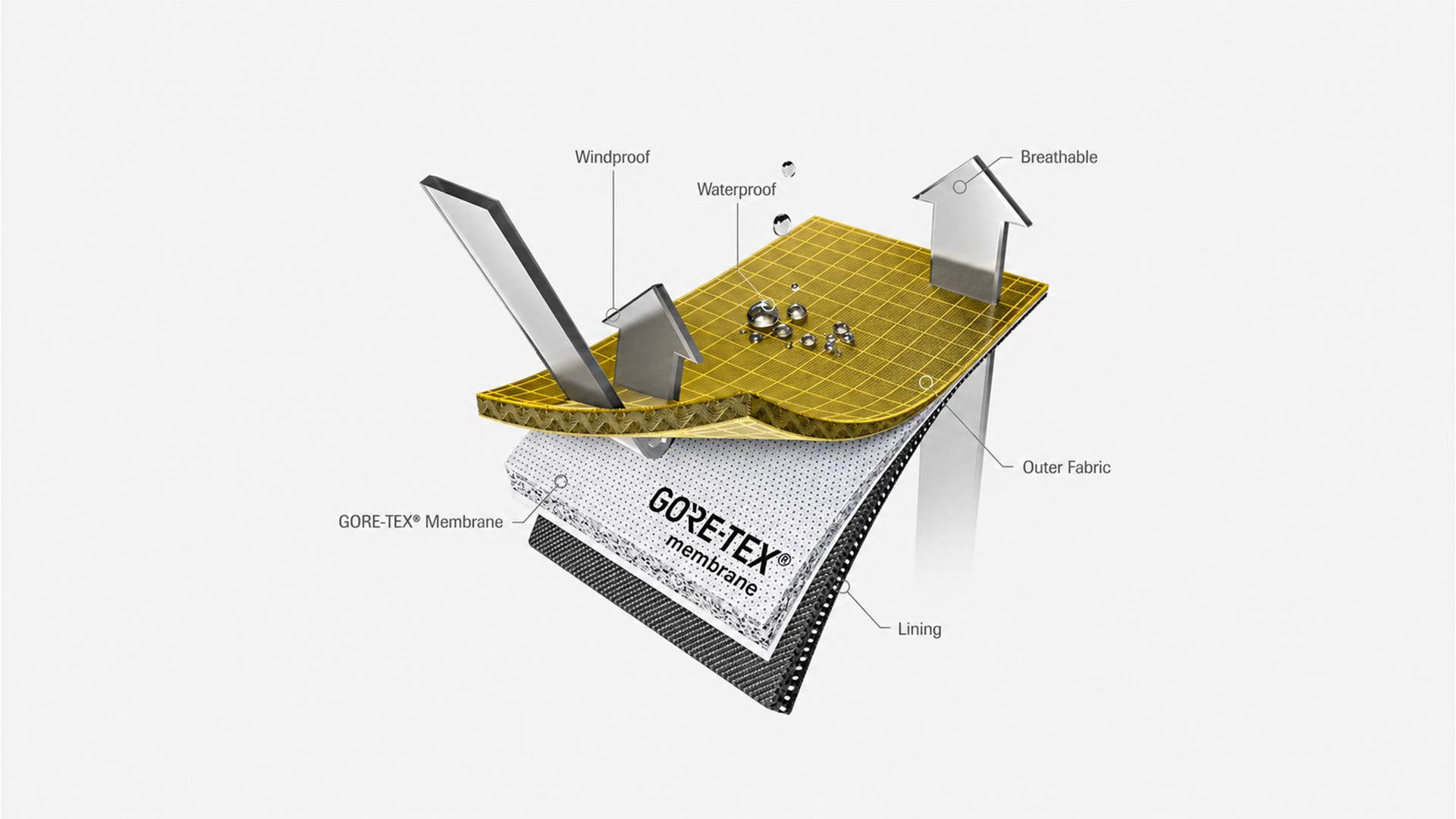
These layers are bonded together to create a single fabric. When the outer fabric wets out, the membrane can still prevent rain from getting through, although the saturated face fabric can affect moisture transfer and make the jacket feel colder and clammy.
It’s also worth remembering that waterproof breathability has its limits. If you’re working hard on a steep climb, you might produce sweat faster than your jacket can release it. That’s why ventilation and sensible layering are still important, even when you’re wearing a highly breathable waterproof.
What About ePE Membranes?
If you’ve been looking at newer GORE-TEX jackets, you’ve probably come across the term ePE. It stands for expanded polyethylene, a membrane material used in some modern waterproof fabrics as an alternative to traditional expanded polytetrafluoroethylene (ePTFE).
GORE-TEX’s next-generation ePE membrane is designed to provide waterproof, windproof and breathable performance while being made without intentionally added PFAS.
However, an ePE membrane isn’t what causes your jacket to wet out. Wetting out happens at the outer face fabric, where the DWR treatment is applied, rather than at the membrane itself.
So, whether your jacket uses an ePE membrane or another waterproof technology, keeping the outer fabric’s water repellency in good condition remains important for comfort and overall performance.
Can Washing Restore Your Waterproof Jacket’s Water Repellency?
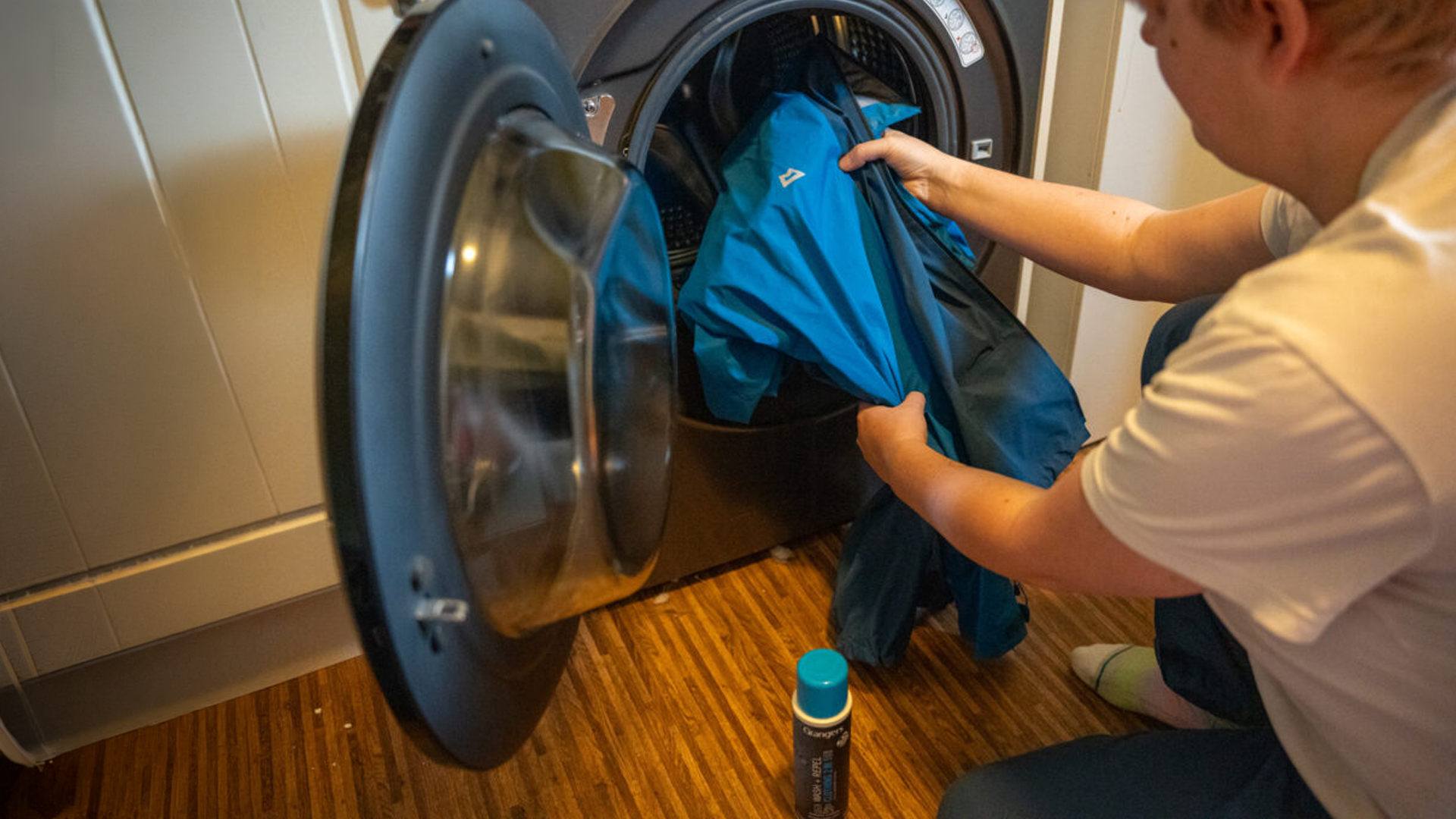
Before reaching for a reproofing treatment, it’s worth giving your waterproof jacket a proper clean. Dirt, sweat and body oils can interfere with the DWR treatment, making it seem as though the water repellency has worn away when it might just be contaminated.
This is particularly important with some newer PFAS-free DWR treatments, which can be more sensitive to contamination. Regular washing helps remove these residues and can sometimes restore much of the jacket’s original water repellency without needing to apply anything else.
Always follow the manufacturer’s care instructions and use a suitable cleaner. Some waterproof jackets also benefit from gentle heat after washing to help reactivate the DWR.
For a complete walkthrough, including which cleaning products to use and how to dry your jacket safely, check out our How to Wash a Waterproof Jacket guide.
How Do You Know If Washing Has Worked?
Once your jacket is clean and dry, sprinkle a little water onto the outer fabric and see what happens.
- Water beads up and rolls off: Great! The DWR is doing its job, and there’s probably no need to reproof just yet.
- Water spreads across the fabric: The DWR may still need some attention, particularly if the fabric starts absorbing moisture.
- Some areas bead while others wet out: The treatment may have worn unevenly, especially around high-contact areas such as the shoulders and cuffs.
If your jacket is still wetting out after a proper clean, it’s worth considering reproofing.
How to Reproof Your Waterproof Jacket
So, you’ve washed your jacket, dried it correctly and given it the water test, but the rain still isn’t beading properly. At this point, it’s worth considering reproofing.
Reproofing involves applying a fresh durable water repellent (DWR) treatment to the outer fabric, helping restore its ability to shed rain. It’s a straightforward way to extend the useful life of your waterproof, particularly when the original treatment has worn down through regular use.
Just remember that reproofing restores surface water repellency. It won’t fix a damaged membrane, leaking seam or hole in the fabric.
Spray-On vs Wash-In Reproofing
| Spray-On Reproofing | Wash-In Reproofing | |
| How it works | Applied directly to the outer fabric | Applied through the washing machine |
| Main advantage | Targets the exterior without unnecessarily coating the inside | Convenient application across the garment |
| Best suited to | Jackets where exterior-only treatment is preferred | Garments approved for wash-in treatments |
| Things to consider | Requires even application | Not suitable for every waterproof construction |
For most technical waterproof jackets, we’d suggest checking the manufacturer’s guidance before choosing a treatment. Some garments have specialist linings or moisture-managing inner surfaces that shouldn’t be treated with wash-in products, making a spray-on treatment the more suitable option.
Whichever method you use, always follow the product instructions and make sure the treatment is compatible with your jacket.
Does Reproofing Need Heat?
Sometimes. Certain DWR treatments benefit from gentle heat to help achieve their intended performance. For some jackets, low-temperature tumble drying after washing can also help reactivate the existing DWR, meaning you might not need to apply a fresh treatment at all.
However, not every waterproof jacket is suitable for tumble drying or ironing, and heat requirements vary between treatments. Always check the manufacturer’s care instructions and the directions supplied with your chosen reproofer.
When Should You Replace Your Waterproof Jacket?
If your jacket is wetting out, don’t rush to replace it. A good clean and the right reproofing treatment can often make a noticeable difference.
However, waterproof jackets don’t last forever, and there are situations where maintenance won’t solve the problem. The key is knowing when you’re dealing with a tired DWR treatment and when there’s genuine damage to the waterproof construction.
Here are the main things we’d look out for.
Delaminating Fabric
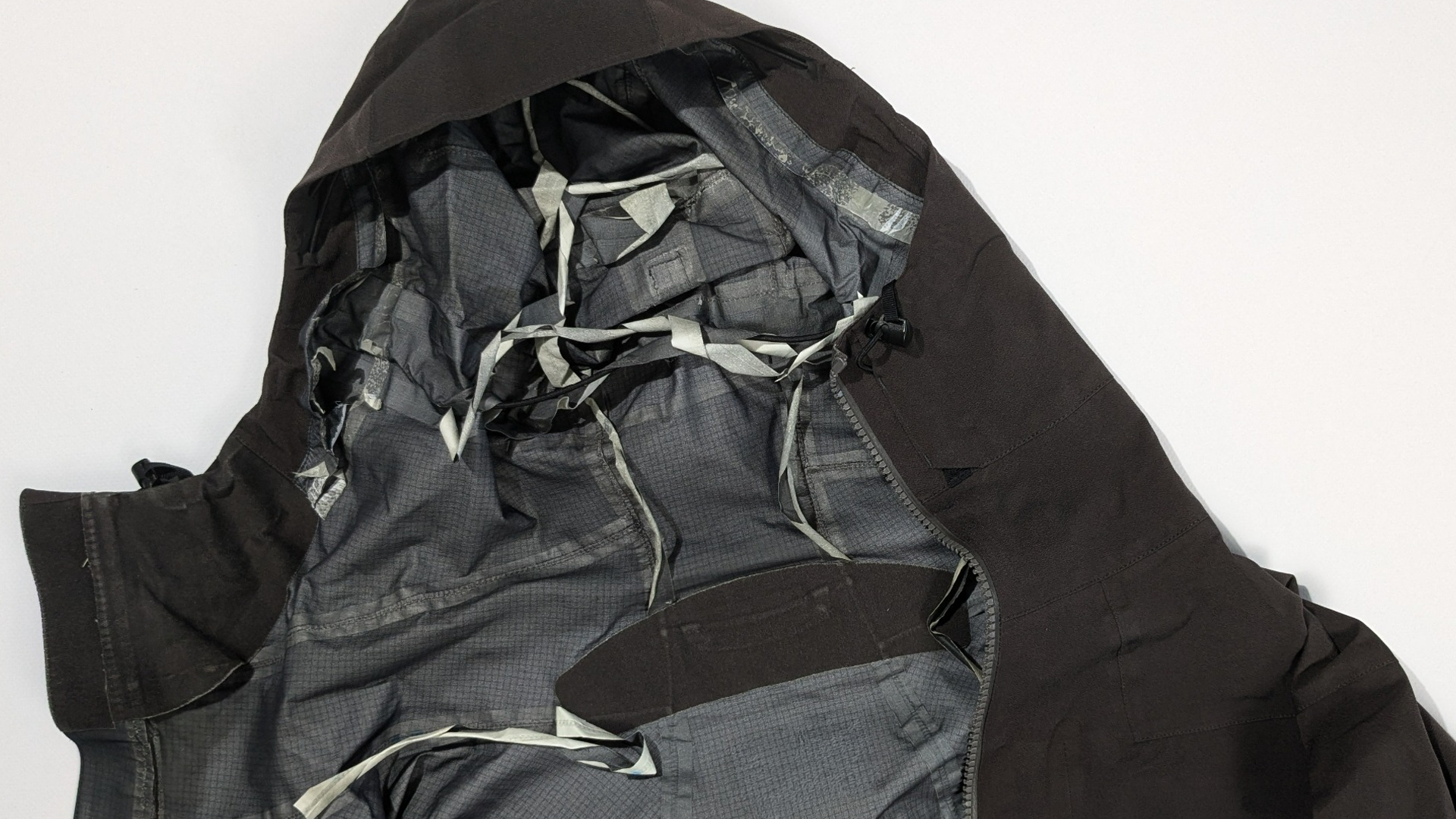
Delamination happens when the layers of a waterproof fabric begin separating. You might notice bubbling, peeling or unusual changes to the fabric’s surface, particularly in areas that experience frequent movement or wear.
Significant delamination can compromise the waterproof barrier, and applying more DWR won’t fix it.
Peeling Seam Tape
Waterproof jackets use seam tape to seal the stitching holes created during construction. If that tape starts peeling away, rainwater may find its way through the seams.
Depending on the extent of the damage, professional repair might be possible. It’s worth investigating before assuming the entire jacket needs replacing.
Tears and Abrasion
A small tear doesn’t automatically mean the end of your jacket. Suitable repair patches and professional repair services can often deal with minor damage, extending the useful life of the garment.
However, extensive abrasion or damage to the waterproof membrane may be more difficult to resolve.
Persistent Leaking
If your jacket continues letting water through after appropriate cleaning and maintenance, it’s worth investigating further. Check the seams, fabric and areas that experience frequent wear, and make sure the moisture isn’t coming from condensation or water entering through openings.
Before spending money on a replacement, see whether the manufacturer offers a repair service or warranty assessment.
At Trekitt, we’re big believers in getting as much life out of good outdoor kit as possible. If a jacket can be repaired and kept in use, that’s often a better option than replacing it unnecessarily.
How to Keep Your Waterproof Jacket Performing for Longer
Waterproof jackets are designed to handle some pretty miserable weather, but that doesn’t mean they’re maintenance-free. A little regular care can go a long way towards keeping your waterproof comfortable and reliable, particularly if you’re using it regularly in demanding conditions.
The good news is that looking after your waterproof doesn’t need to be complicated. It’s mostly about keeping the fabric clean, maintaining the DWR treatment and dealing with small problems before they become bigger ones.
Here’s what we’d recommend:
- Wash it regularly: Don’t wait until it’s visibly dirty, particularly if it uses a newer DWR treatment.
- Keep an eye on the beading: If water stops rolling off, try cleaning and drying the jacket before reaching for a reproofer.
- Reproof when necessary: Apply a suitable treatment when washing alone no longer restores water repellency.
- Dry it properly: Always follow the care instructions and make sure your jacket is dry before storing it.
- Avoid long-term compression: Don’t leave your waterproof tightly stuffed into the bottom of a rucksack for months on end.
- Manage condensation: Use ventilation zips, adjust your layers and avoid overheating where possible. Learn more about layering for wet winter conditions here.
- Deal with damage early: Small tears and peeling seam tape are worth addressing before they become bigger problems.
It’s also worth thinking about how you store your jacket between outings. Leaving a damp waterproof crumpled in the bottom of your rucksack isn’t doing it any favours, particularly if it’s going to stay there for several days.
Once you’re home, take it out, allow it to dry properly and give it a clean if needed. A few minutes of attention after a wet day in the hills can save you a lot of hassle later.
Final Thoughts: Is Your Waterproof Jacket Really Leaking?
A waterproof jacket that starts absorbing rain isn’t necessarily ready for retirement. In many cases, the membrane is still doing its job, and it’s simply the outer fabric’s water repellency that needs some attention.
With newer DWR treatments becoming more common, keeping your waterproof clean and properly maintained is more important than ever. A good wash, appropriate drying and occasional reproofing can make a real difference to how your jacket performs.
So, before replacing your waterproof, give it a little TLC. And if you’re still having problems, check for damaged seams, delamination or other signs of genuine leaking. Good kit deserves to be looked after, and a bit of maintenance can help keep it out on the hills for longer.
FAQs
No, not necessarily. Wetting out happens when the outer fabric becomes saturated because the DWR treatment isn’t repelling water effectively. The waterproof membrane underneath may still be preventing rain from getting through.
However, the saturated fabric can affect comfort and moisture transfer, making the inside of the jacket feel cold or clammy.
There are several possible reasons. Your jacket could be wetting out, allowing the outer fabric to become saturated and reducing comfort. Alternatively, condensation from sweat might be building up inside, particularly during strenuous activities or in humid conditions.
Genuine leaking is another possibility, especially if the membrane, seams or fabric are damaged. It’s worth checking where the moisture is coming from before assuming the jacket has failed.
Not necessarily. The move away from PFAS-based DWR treatments mainly affects how the outer fabric repels water and contamination. The waterproof membrane or coating can still provide effective protection against rain.
However, some newer DWR treatments may require more frequent cleaning to maintain their performance.
Start by washing and drying your jacket correctly, then sprinkle a little water over the outer fabric.
If the water beads up and rolls off, the DWR is working. If it spreads across the surface and soaks into the fabric, even after cleaning, reproofing may be needed.
Tumble drying doesn’t repair a damaged waterproof membrane. However, gentle heat can help reactivate certain DWR treatments, improving the way the outer fabric sheds water.
Not every waterproof jacket is suitable for tumble drying, so always follow the manufacturer’s instructions.
Not straight away. Wetting out is often a maintenance issue rather than a sign that the jacket has failed. Try washing, drying and reproofing it correctly first.
If the jacket is really leaking, has significant delamination or shows extensive membrane damage, it may need professional repair or replacement. ler setup.
Leave a Reply