
Best Lightweight Tents for Backpacking

Author: Trekitt Gear Team
With years of hands-on experience testing sleeping bags across different conditions, our team understands how fit, insulation and body shape affect warmth and comfort. From women-specific designs to unisex and men’s options, we know what truly makes a difference when choosing the right bag for UK camping.
When you’re heading out into the hills, every gram matters. Whether you’re tackling a multi-day trek through the Lake District, fastpacking across Eryri, or planning a Scottish Highlands adventure, your tent is one of the biggest opportunities to reduce pack weight without sacrificing comfort or protection.
At Trekitt, we spend a lot of time testing and using gear in real UK conditions – wind, rain, boggy ground, and everything in between. Lightweight tents have come a long way in recent years, and the best options now strike an impressive balance between low weight, durability, weather resistance, and liveability.
In this guide, we’ll walk you through the best lightweight tents for backpacking from our range, explain what makes them suitable for UK use, and share practical tips on how to reduce your overall shelter weight.
Key Takeaways:
- The best lightweight tents balance low weight with reliable UK weather protection
- Aim for 1–2kg for most backpacking trips; sub-1.2kg for experienced ultralight users
- Freestanding or well-pitched tunnel tents perform best in wind and uneven ground
- Good ventilation and pitching technique are key to managing condensation
- Reducing tent weight can significantly improve comfort on long-distance routes
This article is part of our 👉 Tents Knowledge Centre, where you’ll find expert tent-buying advice, shelter comparisons, camping tips and practical guidance to help you choose the right tent for every adventure.
Why Choose a Lightweight Tent?
Lightweight tents aren’t just about saving your back – they fundamentally change how you move through the mountains.
A lighter shelter allows you to:
- Cover more ground with less fatigue
- Pack more efficiently
- Enjoy a more comfortable overall experience
- Stay agile in unpredictable UK conditions
For UK backpacking, weight reduction is especially valuable. Routes often involve steep ascents, rough terrain, and wet ground. A bulky, heavy tent can quickly become a burden.
However, going lightweight doesn’t mean going minimal at the expense of safety. The key is choosing a tent that is light and capable of handling British weather.
What Makes a Good Lightweight Tent for the UK?
Not all ultralight tents are suitable for use in the UK. While some designs excel in dry, stable climates, they may struggle in wind-driven rain or soft ground.
Here’s what we look for when recommending lightweight tents for UK backpacking:
Reliable Weather Protection
A good UK-ready tent must handle sustained rain and strong winds. Look for:
- High hydrostatic head (HH) ratings
- Full-coverage flysheets
- Solid inner options (or hybrid mesh/solid designs)
Strong, Stable Design
Freestanding or semi-freestanding designs tend to perform better in exposed locations. Tunnel tents can also be excellent if properly pitched.
Compact Packed Size
Space in your pack is just as important as weight. Modern lightweight tents pack down small enough to fit inside your rucksack, protecting them from the elements.
Ease of Pitching
In the UK, you may be pitching in wind and rain. Fast, intuitive pitching systems are essential.
Durability vs Weight Balance
Ultralight materials are fantastic – but they need to be robust enough for rough ground and repeated use.
Best Lightweight Tents from Trekitt
Here are some of our top recommendations from Trekitt’s 1-2 person and ultralight tent range, chosen specifically for UK conditions.
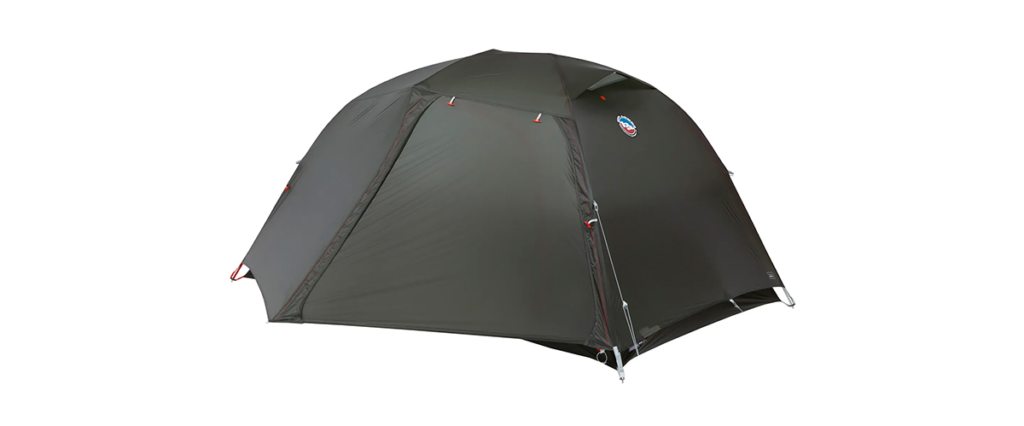
Big Agnes Copper Spur UL2
The Copper Spur UL2 has long been a benchmark for lightweight backpacking tents, and for good reason.
Why we recommend it for the UK:
- Excellent balance of weight and interior space
- Fully freestanding design – ideal for rocky or awkward pitches
- High-quality DAC poles for strength in wind
- Reliable weather protection despite its low weight
At just over 1.4kg, it’s impressively light for a tent that offers two doors, two vestibules, and a genuinely liveable interior. The steep sidewalls maximise usable space, which is especially valuable on longer trips.
This is a great option if you want comfort without carrying excess weight.
MSR Hubba Hubba LT 1
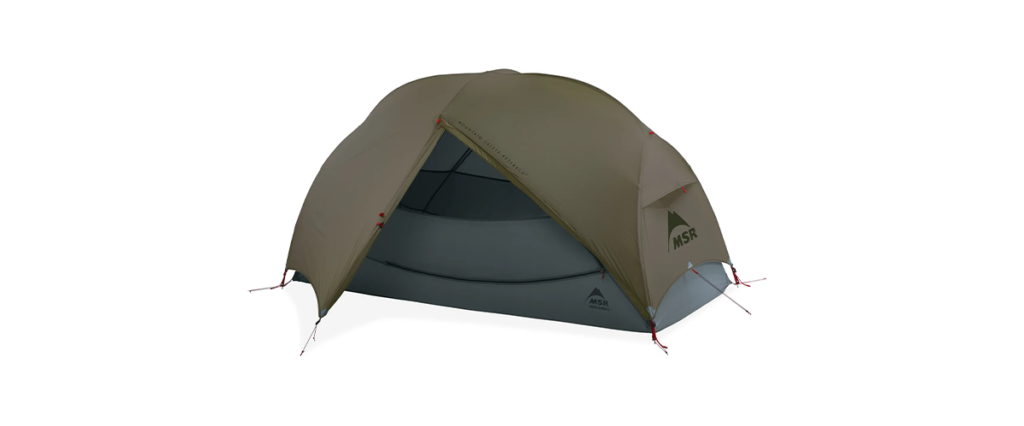
The latest evolution of one of the most recognisable backpacking tents on the market, the MSR Hubba Hubba LT 1 builds on everything that made the original so popular – while improving space, weight, sustainability and liveability.
Why it works so well in the UK:
- Freestanding design for easy pitching on tricky or uneven ground
- Full-coverage fly with dependable waterproof performance
- Strong DAC poles that handle wind well for the weight
- Excellent ventilation to help manage condensation
For a one-person tent, the LT 1 feels noticeably roomy. The updated geometry gives you more usable space than many ultralight solo shelters, making it a comfortable option for multi-day trips where you’ll be spending more time inside.
It also pitches quickly and packs down small, which is exactly what you want when the weather turns. While it’s not the absolute lightest solo option available, the added comfort and ease of use make it a very dependable choice for UK backpacking.
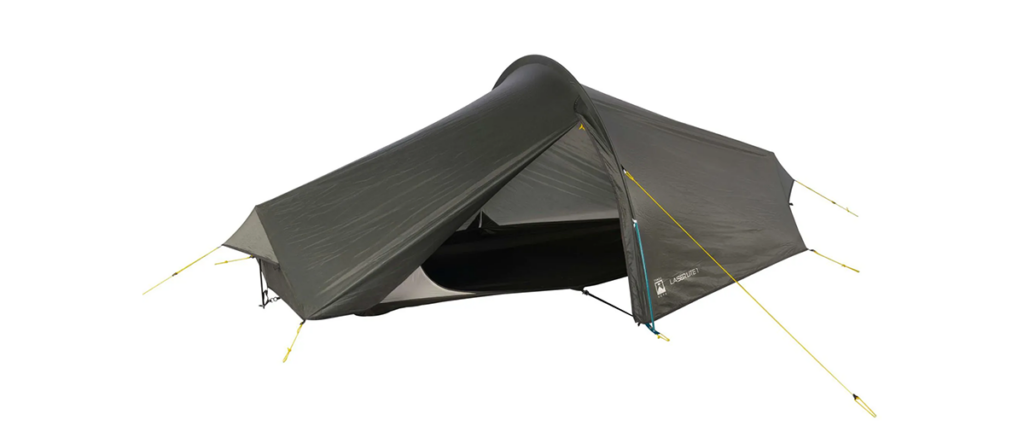
Terra Nova Laser Lite 1
The Terra Nova Laser Lite 1 is a true ultralight specialist, designed for solo backpackers who want to move fast and keep pack weight to an absolute minimum.
Why we rate it for UK use:
- Exceptionally low weight for a fully enclosed tent
- Proven Terra Nova design with strong performance in wind when pitched correctly
- Compact pack size – ideal for smaller rucksacks and fastpacking setups
This is very much a tent for experienced users who are confident with pitching and site selection. As a single-pole tunnel design, it relies on a good pitch to perform at its best, but when set up properly, it offers impressive stability for the weight.
For long-distance routes, multi-day solo trips, or anyone chasing a lighter base weight without going tarp-only, the Laser Lite 1 is a seriously capable option.
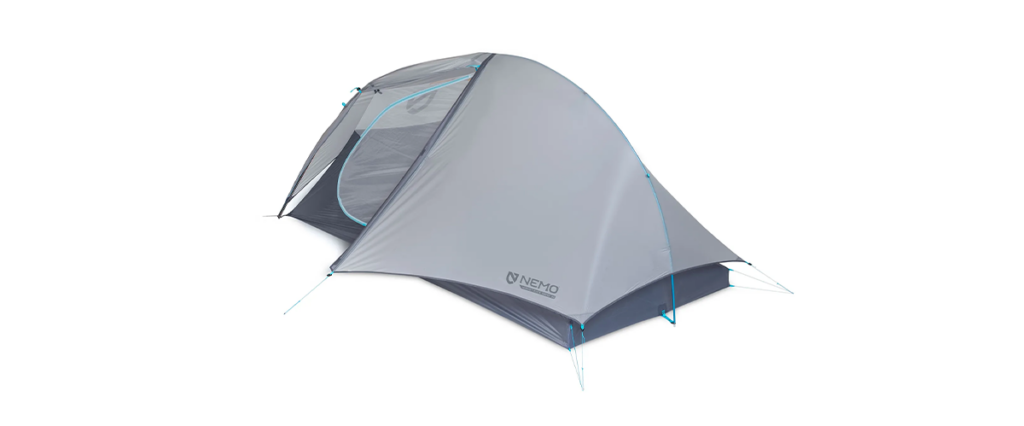
Nemo Hornet Elite OSMO 2P
The Nemo Hornet OSMO is one of the lightest fully featured tents available, without feeling overly fragile.
Key benefits:
- Ultralight construction
- Thoughtful storage and interior layout
- Sustainable OSMO fabric with improved water resistance
This is a great choice for those looking to push their base weight down while still enjoying a comfortable shelter.
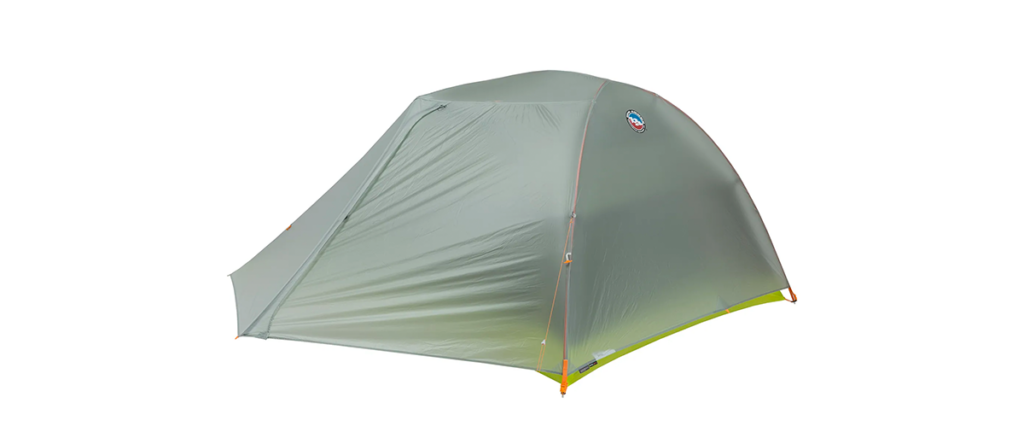
Big Agnes Tiger Wall UL2
Sitting between ultralight minimalism and full comfort, the Tiger Wall UL2 is a semi-freestanding design that saves weight without sacrificing usability.
Why it stands out:
- Lighter than fully freestanding tents
- Dual vestibules for gear storage
- Quick and intuitive setup
For UK use, it performs well in sheltered to moderately exposed conditions.
Ultralight vs Traditional Lightweight: Which Should You Choose?
There’s often confusion between ‘lightweight’ and ‘ultralight’.
- Lightweight tents (1.2-2kg): Better durability, easier pitching, more forgiving in bad weather
- Ultralight tents (sub 1.2kg): Minimal weight, but often require more skill and care
For most UK backpackers, we recommend starting with a lightweight tent unless you have experience managing ultralight systems in challenging conditions.
Tips to Make Your Tent Setup More Lightweight
Choosing the right tent is only part of the equation. Here are some practical ways to reduce your shelter weight even further:
Swap Poles for Trekking Poles
Many ultralight tents are designed to use trekking poles instead of dedicated tent poles. This eliminates duplicate weight and reduces pack bulk.
Leave the Stuff Sack at Home
It sounds simple, but ditching the original stuff sack can save weight. Use a lightweight dry bag or pack your tent directly into your rucksack.
Split the Load
If you’re hiking with a partner, divide the tent components: one carries the fly, the other carries the poles and the inner.
Use a Lightweight Footprint (or None)
Footprints add protection but also weight. In many UK conditions, careful site selection can eliminate the need for one.
Choose the Right Pegs
Swap out heavy steel pegs for lightweight aluminium or titanium options. Just make sure they’re suitable for softer UK ground.
Minimise Redundant Kit
If your tent has good weather protection, you may not need additional tarps or shelters.
Pack Smart
Keep your tent accessible so you can pitch quickly in bad weather, avoiding unnecessary exposure and stress.
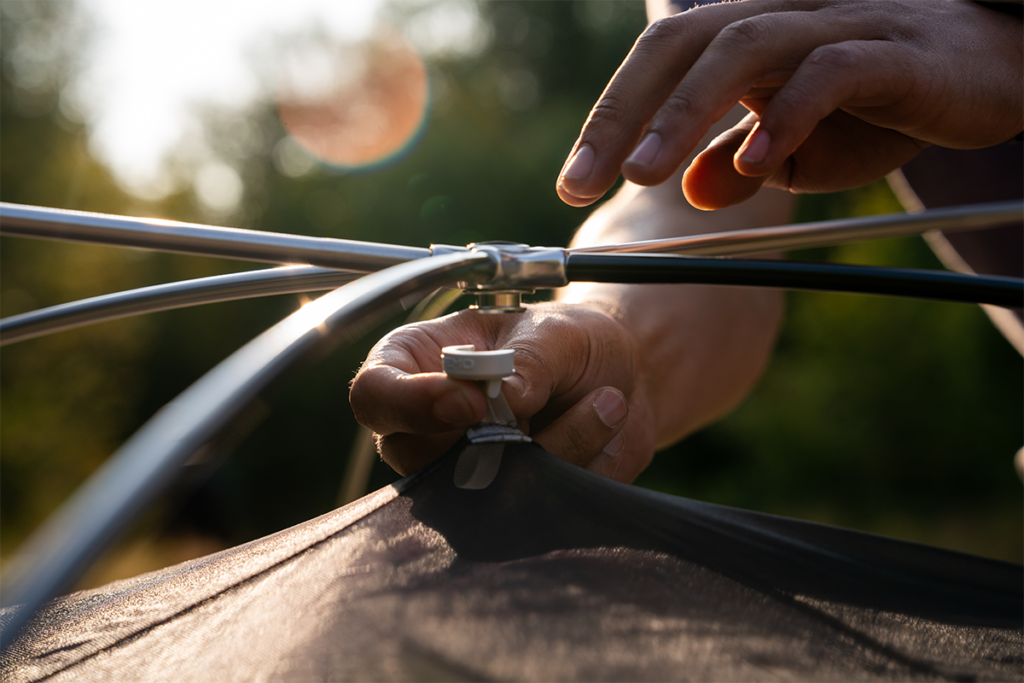
Pitching Tips for UK Conditions
Even the best tent won’t perform well if it’s poorly pitched. Here are a few UK-specific tips:
- Pitch into the wind: Reduce stress on the structure
- Use all guy lines: Especially important in exposed areas
- Choose your ground carefully: Avoid water pooling and boggy patches
- Ventilate where possible: Helps reduce condensation
Common Mistakes to Avoid
Going Too Light Too Soon
Ultralight gear can be less forgiving. Make sure your experience matches your setup.
Ignoring Weather Ratings
A tent that performs well in dry climates may struggle in the UK.
Poor Peg Selection
In soft or wet ground, lightweight pegs can fail if not chosen carefully.
Overlooking Interior Space
On multi-day trips, a cramped tent can quickly become uncomfortable.
Final Thoughts: Finding the Right Balance
The best lightweight tent for backpacking isn’t necessarily the lightest – it’s the one that offers the right balance of weight, protection, and usability for your specific adventures.
For UK conditions, we always prioritise reliability. A slightly heavier tent that keeps you dry and secure is far more valuable than shaving a few extra grams.
At Trekitt, our range of lightweight and ultralight tents has been carefully selected based on real-world performance. Whether you’re new to backpacking or refining a dialled-in kit, there’s an option that will help you move lighter and more efficiently through the hills.
If you’re unsure which tent is right for you, our team is always happy to help – because the right shelter can make all the difference.
Explore Lightweight Tents at Trekitt
Browse our full range of 1-2 person tents and ultralight shelters to find the perfect fit for your next adventure. Whether you’re heading into the Peaks for a weekend or tackling a multi-day Highland route, we’ve got you covered.
If you are ever unsure about what gear you need, we are always happy to help. You can contact the team at Trekitt by emailing [email protected] or calling 01432 263335. You are also very welcome to visit us in person at our Hereford Service Centre, where the team can talk through gear options and help you build a setup that works for your trips.
FAQs
What is the best lightweight backpacking tent?
The best lightweight backpacking tent depends on your priorities, but for UK use, it should balance low weight with reliable weather protection. A good option will handle wind, rain, and damp ground while still packing down small. Tents like the MSR Hubba Hubba LT 1 or Terra Nova Laser Lite 1 are excellent examples – they’re light enough for long-distance walking but robust enough for unpredictable British conditions. Ultimately, the ‘best’ tent is one that suits your trip length, experience level, and the kind of terrain you’ll be camping on.
Is a 5-pound (2.2kg) tent too heavy for backpacking?
A 5lb (2.2kg) tent isn’t necessarily too heavy, but it sits at the upper end of what most people would consider suitable for backpacking, especially in the UK, where steep climbs and rough terrain are common. For shorter trips or if you’re prioritising comfort and durability, it can still work well. However, many modern lightweight tents now come in under 1.5kg, offering a much better balance of weight and performance. If you’re covering longer distances, reducing your tent weight can make a noticeable difference to your overall comfort.
Is an ultralight tent worth the money?
An ultralight tent can absolutely be worth the investment – if it matches your needs and experience level. The biggest benefit is reduced pack weight, which means less fatigue and more enjoyable days on the hill. However, ultralight tents often require more careful pitching, better site selection, and a bit more experience to deliver the best performance. If you’re a regular backpacker or looking to reduce your base weight, they’re a great upgrade. If you’re newer to camping, a slightly heavier but more forgiving lightweight tent may be a better starting point.
What is considered a lightweight backpacking tent?
A lightweight backpacking tent is generally considered to weigh between 1kg and 2kg. Anything under 1.2kg typically falls into the ‘ultralight’ category. In the UK, a good lightweight tent should still offer full weather protection, decent interior space, and enough durability to handle wet, windy conditions. The key is not just low weight, but how well the tent performs in real-world environments. Because shaving grams isn’t worth it if your shelter can’t handle a night in the hills.
Are ultralight tents suitable for UK weather?
Yes, ultralight tents can be suitable for UK weather, but only if you choose the right design and use them correctly. The UK’s combination of wind, rain, and high humidity can expose the limitations of some ultralight shelters, particularly those designed for drier climates. Look for models with a full flysheet, good ventilation, and a stable structure. Just as importantly, pitching skill and site selection play a big role. In sheltered spots and with a solid pitch, a good ultralight tent can perform very well – but they’re generally less forgiving than slightly heavier alternatives.
Do lightweight tents get more condensation?
Lightweight tents don’t necessarily create more condensation, but they can feel more prone to it due to their design. Many use lighter fabrics and more compact shapes, which can reduce airflow compared to heavier tents. In the UK’s damp conditions, condensation is often unavoidable regardless of your tent choice. The key is good ventilation – keeping vents open, pitching to allow airflow, and avoiding damp ground where possible. Choosing a tent with a well-designed inner and fly system will make a noticeable difference in managing moisture.
Can lightweight tents handle Scottish weather?
Yes, many lightweight tents are more than capable of handling Scottish weather, provided you choose carefully. Scotland often brings stronger winds, heavier rain, and more exposed camps, so stability and weather protection are key. Look for tents with strong pole structures, secure guying points, and reliable waterproof ratings. Models like the MSR Hubba Hubba LT 1 or Terra Nova Laser Lite 1 can perform well when pitched correctly, but in very exposed conditions, some walkers may prefer slightly more robust shelters. As always, good pitching and choosing a sheltered campsite are just as important as the tent itself.
Leave a Reply