
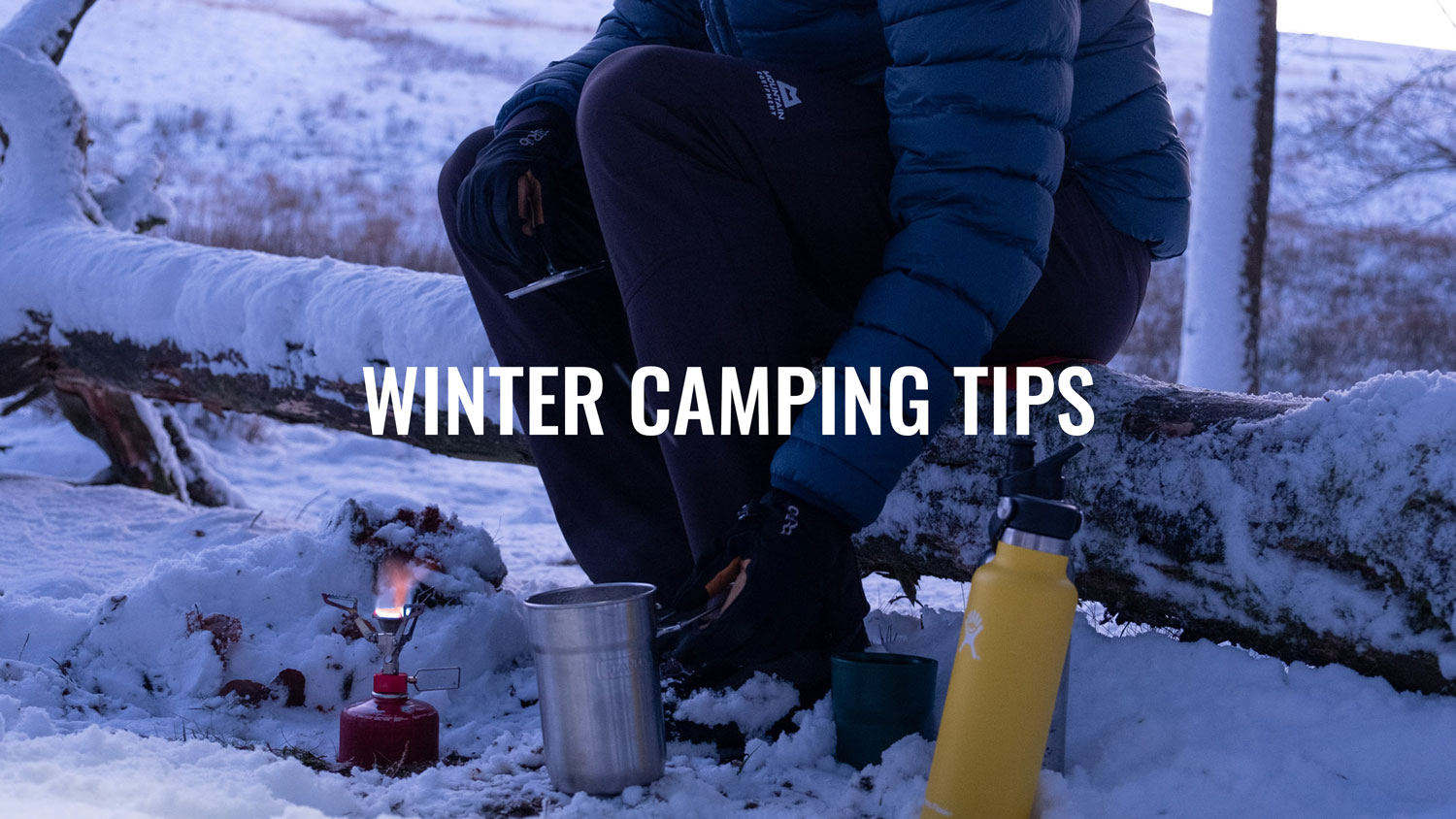
Winter Camping Tips
Planning a cold-weather adventure? This guide simplifies winter camping tips—covering campsite selection, sleep systems, essential gear, and clever tricks to help you stay safe, warm, and ready for any conditions.
Winter 2025/2026 Update: As we move into the Winter 2025–2026 season,
advances in insulated sleep systems, lighter high-R-value mats, and improved
cold-weather fuel technology make winter camping more accessible and
comfortable than ever. The guide below has been updated with the latest
information and trends that outdoor enthusiasts should know.
In SHORT…
-
Know smart campsite strategies: Explore how location, terrain, and snow conditions impact safety, warmth, and shelter during winter trips.
-
Understand cold-weather sleep systems: Learn the key components—like sleeping bag ratings and insulated mats—that ensure warmth and comfort in freezing temperatures.
-
See essential gear and pro hacks: Discover the must-have winter accessories, plus clever tips for staying organised, keeping warm, and managing moisture through the night.
Camping during the wintertime can be a challenging endeavour. With unpredictable weather and the threat of freezing temperatures, it takes much more organisation than camping in warmer months.
This article is part of our Winter Camping Basecamp, where you’ll find expert layering advice, technical gear deep dives and practical cold-weather tips.
Is Camping A Good Idea In Freezing Weather?
You may be wondering if camping in freezing conditions is actually a good idea… Absolutely! Winter camping is always a great idea, as long as you are prepared for it.
This preparation is necessary to keep you warm and safe and enables you to enjoy your adventure despite the conditions. In this blog, I’ll offer some tips and tricks for winter camping to help you make the most of the cold weather.
Making Camp
1. Choosing your spot
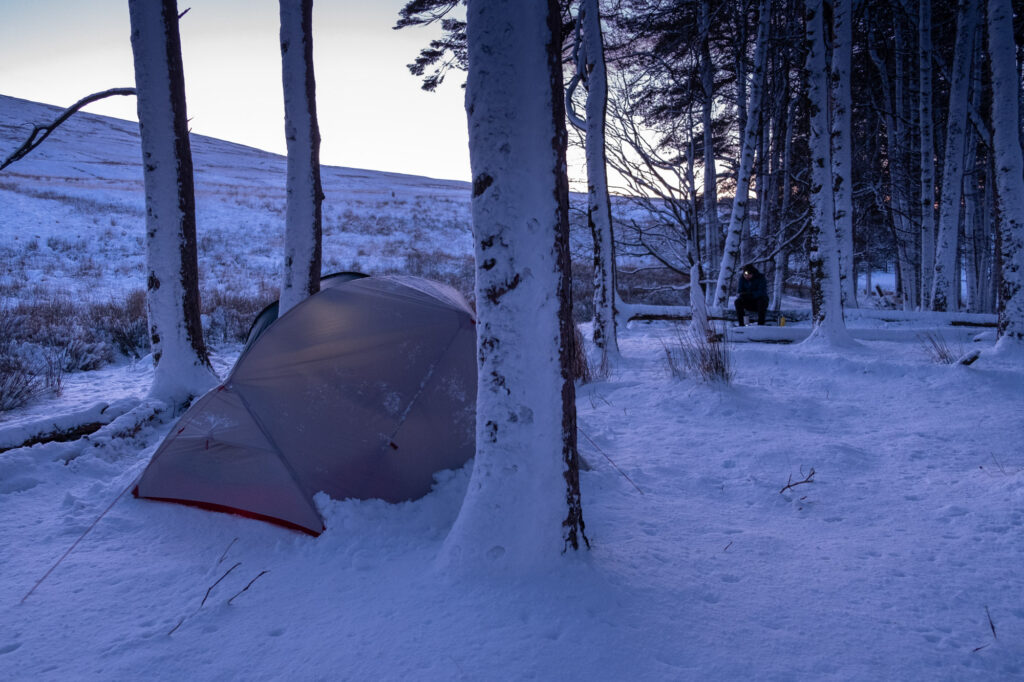
It’s essential to consider where you’re setting up camp, especially if you’re heading into the mountains this winter.
Avalanche risks can be fatal, so you certainly wouldn’t want to sleep near one! Therefore, a spot with minimal risks, sheltered from the wind, would be ideal. It will help keep you warm and protected from various elements. Keep your eye out for landmarks around camp in case of a snowstorm or low visibility conditions. Noting your surroundings will help you locate your base should you be lost or disoriented.
Consider if there are enough water sources nearby or whether you’ll need to use the snow. Do you need a water filter, or can you drink it fresh? If you’re unsure, we would recommend using a filter to be safe; you can watch our water filter guide on Youtube here. The video explains which filter works best for which purpose and identifies where you may need to use them. Shop water filters by clicking here.
Avoiding soft areas of vegetation and choosing a flatter surface or an established campsite with bare ground will also help to prevent your belongings from getting damp from melting snow.
It’s also worth choosing a space exposed to the sunrise to help your tent warm up quicker in the morning.
2. Pack down the snow
Once you’ve found your spot, start packing down the snow around you if there’s more than a sprinkling. You can do this with a shovel (if you have one) or simply by patting it down with your feet, whether wearing snowshoes, skis or boots.
Loose snow is more likely to be melted by body heat. Therefore, packing it down creates a flat, solid foundation to pitch up on. Patting down the snow also helps to keep you more comfortable in camp, especially when asleep!
3. Create a porch/wall
Creating a porch or wall around your tent will amplify shelter from wind and harsh weather. If you’re unable to do this, dig into the snow roughly one or two feet down to pitch your tent.
It’s important not to seal your tent entirely between the walls you build; you’ll still need to keep the space open for ventilation.
Make sure you don’t leave your boots or any clothing in your porch overnight; it will freeze by morning!
Use A Winter Camping Appropriate Sleep System
1. Sleeping bags
This might seem obvious, but if you’re sleeping in low or freezing temperatures, you must make sure your sleeping bag is warm enough to accommodate these temperatures. You can check this using the temperature rating that comes with your bag. The rating system usually consists of Comfort, Limit and Extreme ratings, which are fairly self-explanatory. Some brands also offer their own comfort limit rating, such as Rab’s ‘Rab Sleep Limit’ rating.
Comfort
Comfort is a temperature you’ll feel comfortable in when inside the bag.
Limit
Limit is probably the lowest you’ll want to go, and you might not have the cosiest of nights.
Extreme
Extreme is the absolute limit. This rating will keep you alive in severe, freezing temperatures, but don’t count on it for a restful night’s kip, or any at all!
2. A sleeping mat
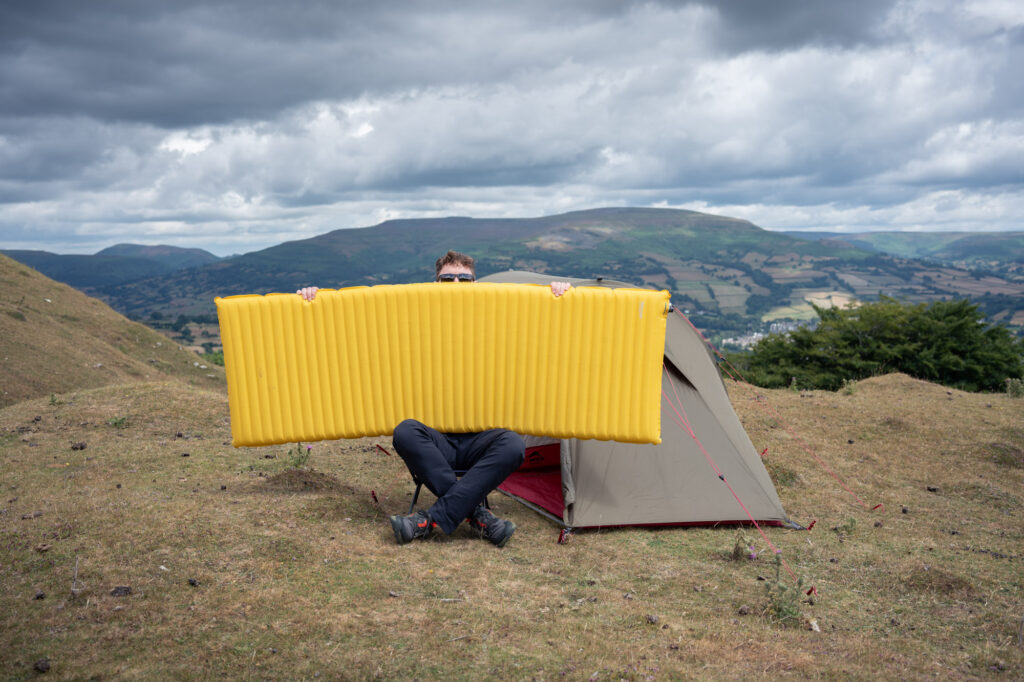
Using an insulated sleeping mat will add ample warmth to your sleep system. Insulated mats are rated using the R-value system to identify their level of warmth. The higher the number, the warmer your mat will be. Most sleeping mats range between an R-value of 1.5 and 7. A rating of 4.0 or more would be best for winter camping, depending on where you are and how cold it is.
You could even pair your insulated mat with a foam pad underneath for maximum protection from the freezing ground. It’ll also give you a little extra cushioning.
Shop our range of sleeping mats and pads by clicking here.
3. When you’re in the bag…
As tempting as it may be, try to refrain from tucking your head into your sleeping bag. Sleeping with your head inside will allow moisture from your breath to cause condensation within the bag, leaving you damp, clammy and potentially cold by morning. Instead, you can use a buff or keep your beanie on if you need to.
Clothing and Equipment
1. Good base layers, and lots of them!
Investing in a good set of baselayers is critical for the colder months. Thermals and merino-based baselayers will provide all the warmth and comfort you need for your adventures. Merino wool works perfectly, as the yarn is incredibly warm in cold weather, naturally deters odours (ideal for multi-day camps) and feels soft against the skin. At Trekitt, we recommend trusted brands like Devold, which have produced premium merino clothing in Norway for over 165 years. Their baselayers are tested in the harsh Nordic climate. They combine traditional wool expertise with modern innovation to deliver warmth, next-to-skin comfort, and durability that will see you through season after season.
Bringing along two sets of baselayers, including a top and long johns, is also a good idea for winter camping. You can use one pair for the daytime and the other for sleeping in. This ensures you have a clean, dry, warm set of clothes for nighttime, no matter if you get damp and soggy throughout the day.
2. The essential accessories for winter camping
There are a few must-have items I would recommend taking when winter camping. The list includes:
A head torch and camping lantern
The days are short during winter, so good lighting is essential. A sufficient head torch and camping light will make your life a heck of a lot easier. Your head torch is ideal if you need to nip out for a wee during the night, or want to head out adventuring after dark. When you’re sitting in your tent or cooking up an evening meal, a camping lantern will illuminate your tent nicely.
We have a great range of lighting in stock here at Trekitt. A couple of my favourites include the Silva Terra Scout Headlamp (a great choice for eco-friendly explorers) and the Biolite Alpen Glow Lantern. However, to browse the full range, click here.
Drybags
Drybags are great for separating your gear and keeping your belongings organised. We all know that winter camping conditions can be unpredictable, so it’s worth keeping some in your pack in case your kit gets wet or even frozen.
Drybags can also be transformed into a camping lantern to save weight in your pack. The Silva Terra range, again, works well here, as their undyed drybags are white, enabling the fabric to amplify and evenly distribute the light. Simply place a lit headtorch into the bag and fasten it as usual to create a small, portable camping lantern that you can hook anywhere.
Warm hats, gloves and extra socks
A cosy, woolly beanie can feel like a luxury when heading out in cold temperatures. Not only does it come in handy during the daytime, but it’s great at night too, whether sitting in camp or settling down in your sleeping bag for the night. Don’t have one? We’ve got you covered, check out our diverse range of warm headwear here.
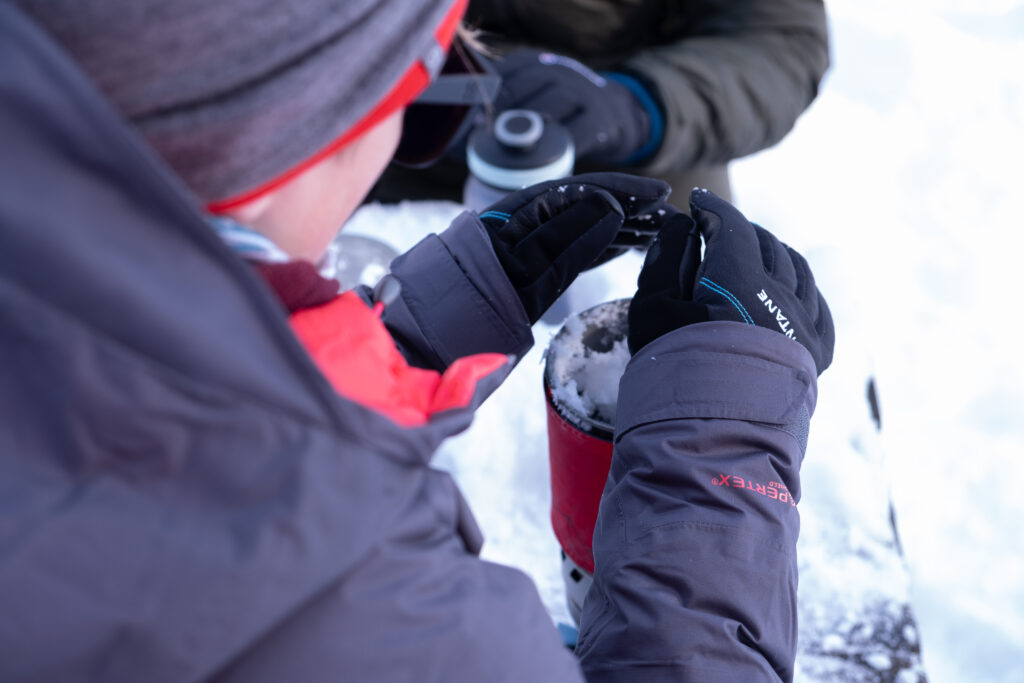
Insulated gloves will also provide ample warmth and protection from the cold, especially in freezing temperatures when your fingers are prone to frostbite. Synthetically insulated gloves could be a safe bet if it’s wet or snowy, as they will retain heat, even if they get damp. Browse our carefully selected range of gloves and mittens here.
I always take extra socks when heading out in case my feet get wet throughout the day. Technical socks are favourable, especially merino socks, as they regulate temperature efficiently, provide ample warmth and perform better overall. If the temperatures are below zero, you also have the risk of wet socks freezing when left out to dry. So, it might be worth doing the same, just to be safe… Don’t own any technical socks? Shop our range here.

A he/she-wee
Sounds gross, I know. But you know what sounds even more gross? Having to get up in the middle of the night, get dressed in the dark, unzip your tent and find a good spot to pee when it’s freezing outside. We’ve all been there!
Investing in a he/she-wee is ideal for avoiding leaving your tent at night during winter. Obviously, logistical issues may get in the way here, like whether your camping partner minds (if you’re sharing a tent, that is). However, I’ll let you work that out for yourself. I’m just pointing out that, despite taboos, it is indeed an option.
3. A stove suitable for winter-use
Some camping stoves are less efficient in winter than others. A liquid fuel stove will provide more reliability and consistently perform when temperatures are low. These stoves can regulate the fuel bottle’s pressure when cold, allowing you to maintain a powerful energy output. You can also purchase windshields for these types of stoves for efficiency purposes. These shields protect the stove’s output from being impacted by wind without putting the fuel bottle at risk of explosion.
Most liquid fuel stoves also come with the advantage of stability due to their lower profile. Sitting closer to the ground reduces the risk of knocks and topples, keeping your stove and (more importantly) your food upright.
Life Hacks For Winter Camping – How To Survive A Cold Night In A Tent
With years of experience under our belts, the Trekitt Team are great for advice and shortcuts to make your adventures a little easier, amongst other things, of course. Below are some of our favourite hacks for winter camping.
1. A DIY hot water bottle
You may be wondering how to keep warm in a cold tent during winter… Why not create your own makeshift hot water bottle? If you own a Nalgene water bottle or similar, you can boil some water, using your stove, and fill the bottle with it. The heat will radiate to the outside, transforming your bottle into a multi-use hot water bottle.
For protection, you can stuff the bottle into a sock to ensure it doesn’t burn or scold you throughout the night. Plus, you can drink the nice warm water when you wake up without worrying about it being frozen and cold. It’s worth mentioning that, unfortunately, this won’t work with double-walled, insulated bottles, as they don’t allow heat to move to the outer layer.
2. Utilise your sleeping bag
Your sleeping bag doesn’t just have to be for sleeping. Stuffing your clothes at the end of your bag will ensure your clothes are warm and dry for the morning. If conditions are a little damp, you could put them in a dry bag to ensure no moisture reaches them. Doing this also means you won’t have to get out of your snuggly camping bed to get dressed, win-win!
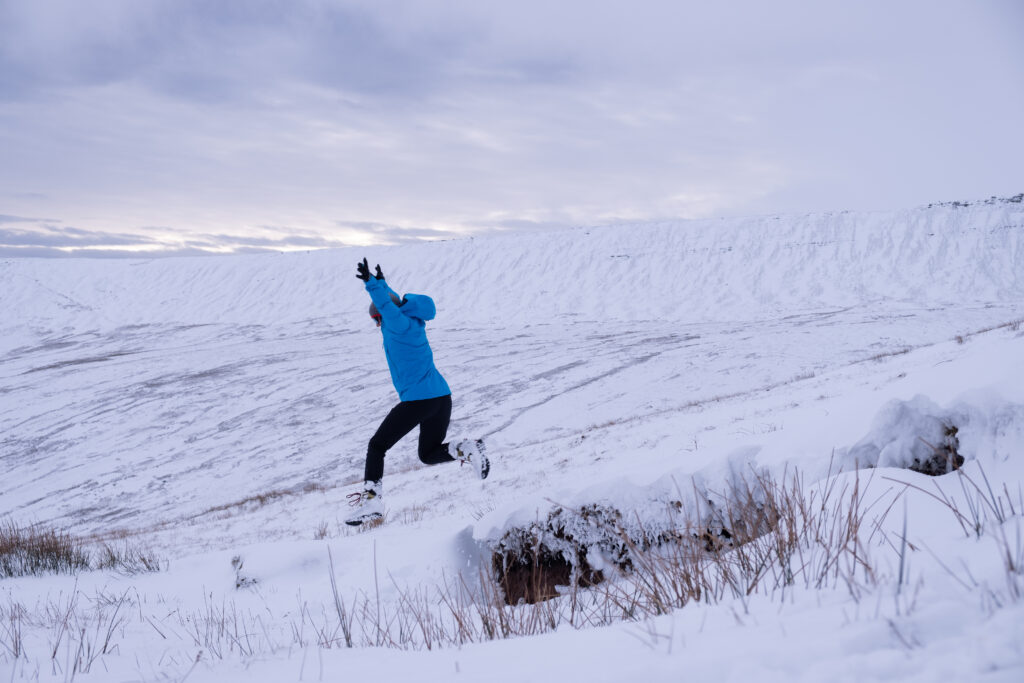
3. Star jumps are your friend
Before you go to bed, or if you feel yourself getting chilly around camp, doing star jumps is a simple yet effective way to bring your body temperature up. If you get in your sleeping bag when cold, it’ll take the bag longer to warm up, potentially leaving you uncomfortable and being worse off in terms of sleep.
4. Don’t go to bed hungry
When temperatures are low, your body uses more energy to keep warm, so going to bed hungry will probably leave you colder and, let’s be honest, pretty miserable. Make sure you’re well prepared with meals and snacks to keep your energy levels up. You could even take a little more food than you think you need to be safe. Hot food and drinks before bed are great for keeping you feeling both satisfied and toasty. Camping meals usually have substantial portions and will keep you feeling full throughout the night; we stock a great range of adventure-ready food with various dietary options, which you can check out here.
5. Tent moisture control
When heading to bed, unless it’s super stormy, you can leave a small section of the zipped entrance open for moisture control, helping to reduce condensation (which could freeze in minus temperatures) in your tent, that otherwise builds up throughout the night. Doing this will help keep the tent dry, keeping it warmer and making it easier to pack away when you’re done.
6. Leave no trace
Our final tip, as always, is to leave no trace. It’s imperative to make sure that we’re leaving nothing behind after our adventures, not even the tiniest smidge of litter! Your camping spot should look virtually untouched after you’ve used it. Collectively doing this will help us keep our AONBs and favourite wilderness spots clean and tidy. Mother Nature will thank us for it!
What are your favourite hacks for winter camping? Can you add any more to our list?
What’s New for Winter 2025–2026
Next-Gen R-Value Testing
The Winter 2025–2026 season brings several meaningful improvements to cold-weather camping gear, particularly in sleep systems. One of the biggest changes is the broader adoption of updated ASTM R-value standards for sleeping mats. Brands such as Therm-a-Rest and Nemo have now fully aligned with the latest ASTM F3340 testing requirements, ensuring that their R-value ratings are more accurate and comparable across the industry. The Therm-a-Rest NeoAir XLite NXT, for example, is now rated under this unified standard, giving campers a more reliable understanding of its cold-ground performance. Similarly, Nemo’s Tensor All-Season mat uses the same testing framework, resulting in a more trustworthy R-value for winter conditions. This shift, now widely implemented heading into 2026, means winter campers can choose mats with much greater confidence, especially in the R4–R7 range where performance differences matter most on snowpack or frozen ground.
Eco-Insulation Improvements in Sleeping Bags
Sleeping bags have also undergone a noticeable technological advancement, particularly in the realm of eco-conscious insulation. For 2025, several brands have introduced new recycled synthetic fills designed to offer loft retention and moisture resilience comparable to hydrophobic down. Rab’s Solar Eco series continues to lead the way in this area, utilising high-quality, recycled fibres that maintain their structure even in damp, frost-prone tent conditions common across the UK. Nemo has also updated its synthetic ranges with aerospace-grade recycled insulation that offers improved thermal stability during temperature swings. These new-generation synthetic fills recover loft more effectively after compression and resist collapse from internal condensation, making them better suited to multi-day winter trips where drying opportunities are limited. Alongside these improvements, many sleeping bag manufacturers have now transitioned to PFAS-free fabrics, combining sustainability with functional cold-weather performance.
High-Performance Winter Stove Fuels
Stove systems and fuels have also been refined to meet the demands of increasingly unpredictable winter temperatures. Liquid-fuel stoves remain the most reliable option for sub-zero conditions, and brands like MSR and Primus have further enhanced their winter performance for the 2025–2026 season. MSR’s WhisperLite Universal continues to be a staple for winter campers, but the newer versions highlight more consistent flame output in deep cold thanks to improved pressure regulation. Primus’ OmniFuel II has also benefited from refinements that allow it to maintain stable vapour pressure in harsh conditions, offering faster boil times and more efficient fuel use when snow-melting for water. These advances make winter cooking significantly more dependable, reducing the need to warm fuel bottles inside clothing or fight with sputtering burners during prolonged cold spells.
Advanced Merino-Blend Base Layers
Base layers also see notable innovation, with several brands refining their merino blends for improved performance during multi-day winter outings. Devold, well-known for its Norwegian-made merino, has expanded its technical layering systems with new merino-poly blended fabrics that enhance durability without compromising warmth or softness. These updated blends are engineered to dry faster than traditional merino—an invaluable advantage when dealing with perspiration on steep ascents or damp air inside a winter tent. The enhanced fibre structures also reduce wear from repetitive layering, making them more reliable for long-term use through an entire winter season. With better odour control, improved moisture transport and quicker drying times, these 2025–2026 merino innovations are particularly beneficial for campers who use one set of base layers for movement and a separate dry set exclusively for sleeping.
As usual, if you have any questions, don’t hesitate to get in touch! Reach out to us on our social media channels, whether Facebook or Instagram, via email at [email protected], or call our friendly customer service team on 01432 263 335. If you’re local to Hereford, why not visit us in-store? You can speak to one of our lovely staff members in person and get some hands-on assistance with finding the right product.
If you enjoyed this content, why not check out our other articles, such as ‘What Is PrimaLoft ® Technology?‘ or ‘How To Care For Your Waterproof‘.
FAQ
There isn’t a single temperature limit, but most people find that camping becomes significantly more challenging below –10°C, especially without a high-quality sleep system. With the right kit, including a winter-rated sleeping bag and a mat with an R-value of 4 or above, you can comfortably camp in well-below-freezing conditions. The key is preparation and understanding your own tolerance to cold.
Not always. A four-season tent is essential in heavy snow, alpine environments or exposed, windy areas. However, for sheltered woodland or valley locations with light snow, a sturdy three-season tent with good guying, a strong pole structure and plenty of ventilation can be perfectly adequate. Your campsite choice is just as crucial as your tent.
You can, but many gas canisters struggle in sub-zero temperatures because pressure drops as they cool. For reliable performance in proper winter conditions, a liquid-fuel stove is the safest option. If you prefer gas, choose winter-specific mixes, use a remote-canister design or keep the canister warm before cooking.
Condensation is almost unavoidable in cold weather because warm, moist air from breathing meets freezing tent fabric. Even breathable fabrics struggle in these conditions. Leaving a small section of the door or vent open, avoiding breathing inside your sleeping bag and keeping wet gear outside the inner tent all help reduce condensation.
Store bottles upside down (water freezes from the top), wrap them in clothing, or place them inside your sleeping bag’s foot box for extra warmth. If you’re using a metal bottle compatible with hot water, filling it with warm water before bed helps prevent freezing and doubles as a hand warmer.
It’s better to wear only dry, breathable layers inside your bag. Too many layers can restrict the insulation loft and reduce your bag’s efficiency. A good base layer, warm socks and a hat usually do the trick. The bag works best when it can trap warm air.
Winter camping increases the risk due to cold exposure, weather changes, and shorter daylight hours. However, with good planning, appropriate gear, avalanche awareness (if relevant) and solid navigation skills, it’s perfectly safe. Respect the environment, know your limits and always check forecasts before heading out.
Winter camping burns far more calories than summer camping due to constant heat loss, extra layers and heavier gear. It’s wise to bring 20–30% more food than usual and prioritise snacks that are dense, quick and easily edible in gloves.
Yes — as long as your dog is comfortable in cold conditions and you have the right kit for them. Many breeds cope well, but shorter-haired dogs will need an insulated jacket and a sleeping mat of their own. Make sure they stay dry, bring extra food and never allow them to sleep directly on snow or cold ground.
Winter meals should be calorie-dense, quick to prepare and easy to eat with cold hands. Pasta, couscous, dehydrated meals, instant oats and high-energy snacks all work well. Aim for foods that require minimal preparation so you don’t have to spend a long time cooking in the cold, and pack a few extra emergency rations in case the weather slows your progress.
Trekking poles are often helpful, especially for stability on icy or uneven ground. Snowshoes aren’t usually needed in most UK regions unless you’re in the Highlands after heavy snowfall, but microspikes or crampons may be helpful for iced-over paths in more exposed locations. For more guidance on choosing the proper footwear and traction, see our “How to Choose the Right Winter Boots and Crampons“ blog, which breaks down compatibility, fit and what to use in different winter conditions.
Permissions don’t usually change seasonally. In Scotland, wild camping is generally allowed following the Outdoor Access Code, while in England and Wales, you must follow local rules or stay within areas where permission has been granted. Winter conditions can affect car park access or mountain rescue advice, so always check local updates before heading out. If you’re unsure where to start, our Winter Wild Camping UK Guide provides a clear overview of recommended regions, access considerations, and essential planning tips for the colder months.
Leave a Reply