
TREKITT’S TOP PICKS:
BEST MIDLAYERS FOR
SKIING AND SNOWBOARDING
BEST MIDLAYERS FOR:

GEAR UP FOR YOUR NEXT ADVENTURE WITH TREKITT’S TOP PICKS:
BEST MIDLAYERS FOR SKIING AND SNOWBOARDING ⛷️🏂
Looking for the ideal midlayer to keep you warm on the slopes? We’ve got you covered! Our guide will help you find the perfect balance of warmth, breathability, and flexibility so you stay cosy and comfortable no matter what winter throws your way.
💡 Need help understanding insulation types, fabrics or fit? Read our How to Choose a Midlayer guide for expert advice.
MIDLAYERS FOR SKIING/SNOWBOARDING
WHAT ARE BEST MIDLAYERS FOR SKIING/SNOWBOARDING?
Lightweight Performance Fleece Like Polartec Power Grid Fleece
Highly breathable, allowing excess heat and moisture to escape. Despite being lightweight, it provides excellent insulation by trapping heat close to your body, delivering necessary warmth without bulk, making it comfortable under a ski jacket. Its moisture-wicking properties keep you dry by drawing sweat away from your skin, reducing the risk of chills. The fabric’s inherent stretch allows for a full range of motion, crucial for dynamic movements. Quick-drying capabilities ensure it dries rapidly if it gets wet from snow or sweat, maintaining warmth and comfort. Its lightweight, packable nature makes it easy to carry and layer, providing versatility for changing weather conditions.
Lightweight Synthetic Insulated Midlayer like PrimaLoft® Bio™ Insulation
An excellent choice for skiing due to its advanced synthetic insulation and thoughtful design features. The PrimaLoft® Bio™ insulation provides reliable warmth and thermal efficiency even when wet, which is crucial for maintaining comfort in the varying conditions of a ski environment. This insulation offers a superior warmth-to-weight ratio, ensuring you stay warm without adding bulk, allowing for freedom of movement essential for skiing.
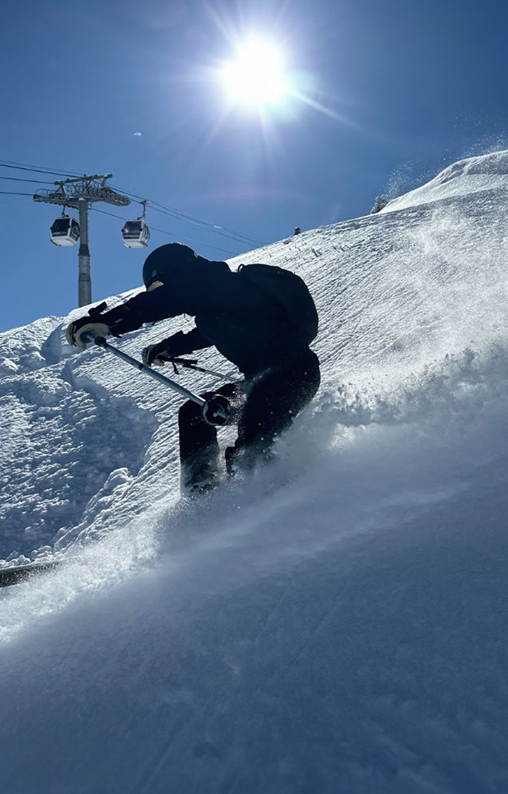
TREKITT’S TOP PICKS: BEST SKIING AND SNOWBOARDING MIDLAYERS FOR WOMEN
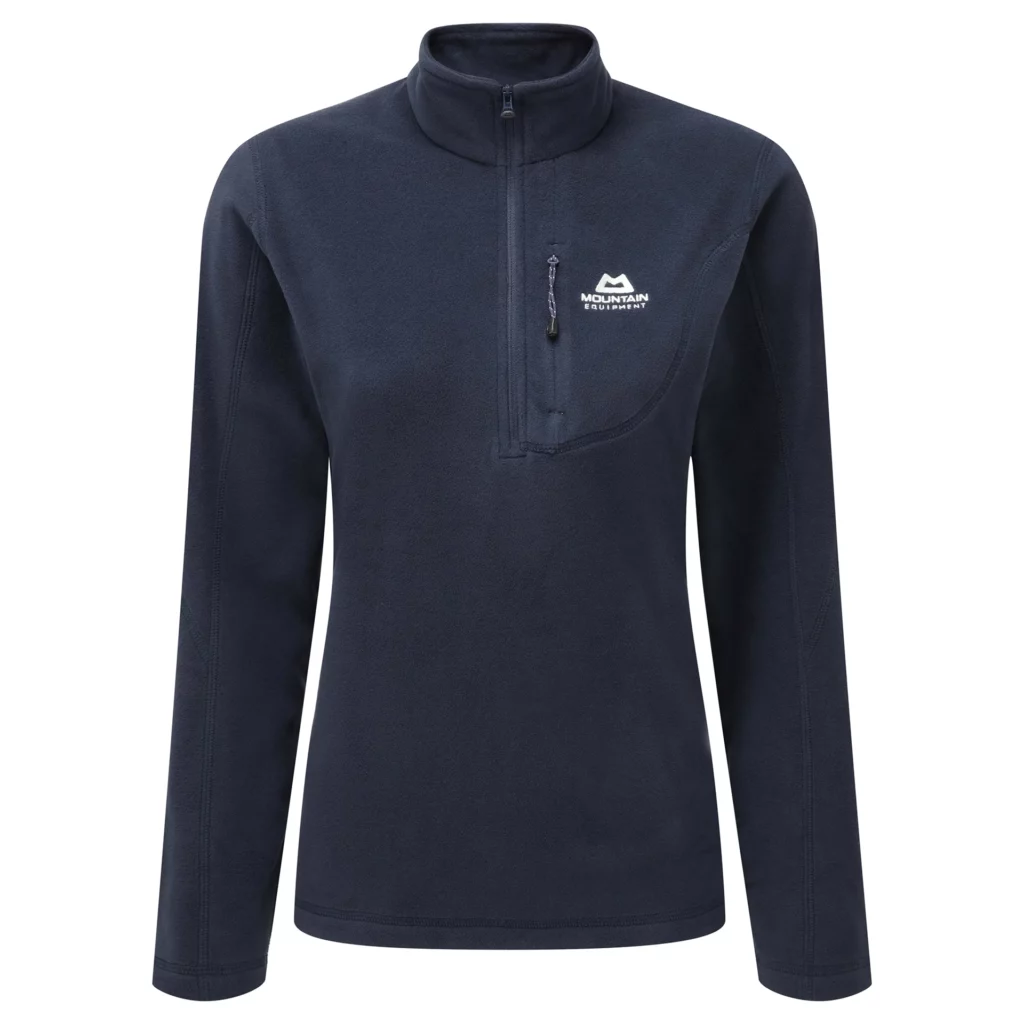
Mountain Equipment Womens Micro Zip-T
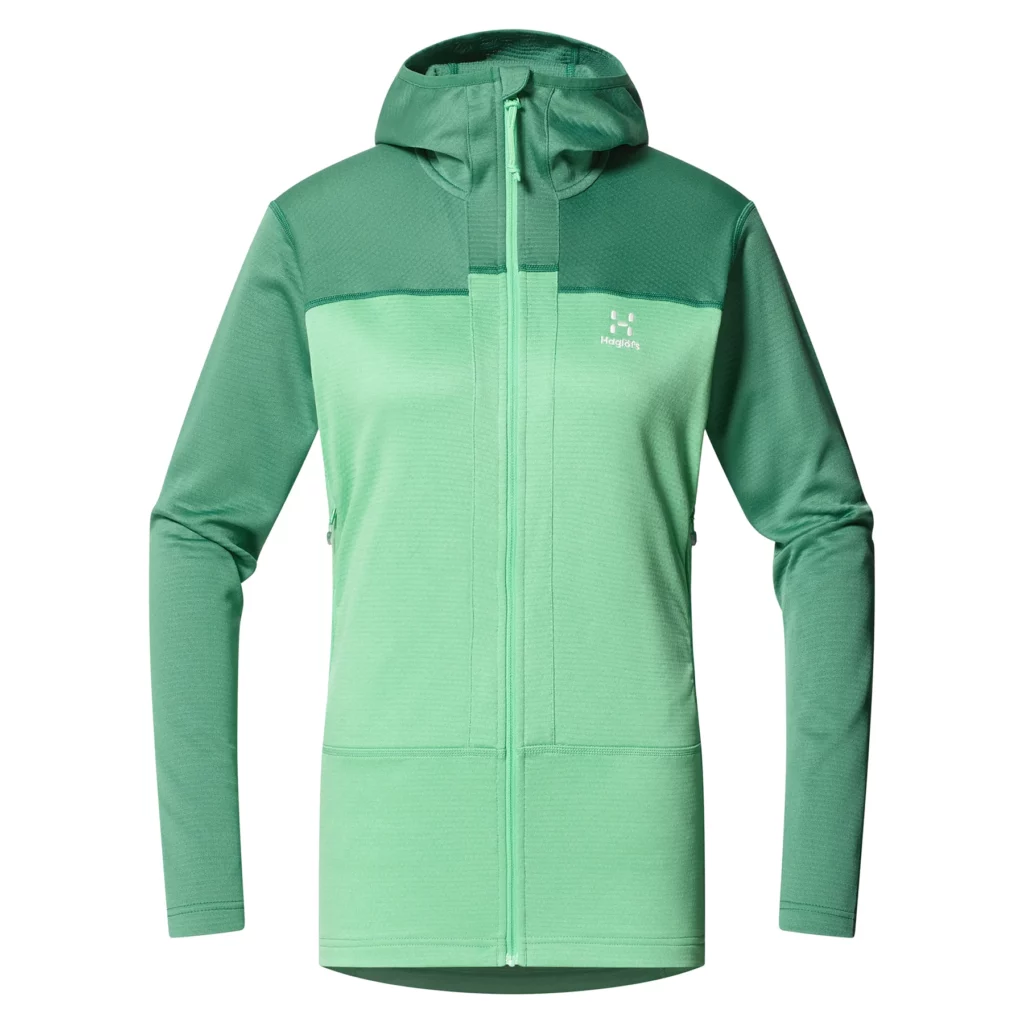
Haglofs Women’s ROC Flash Mid
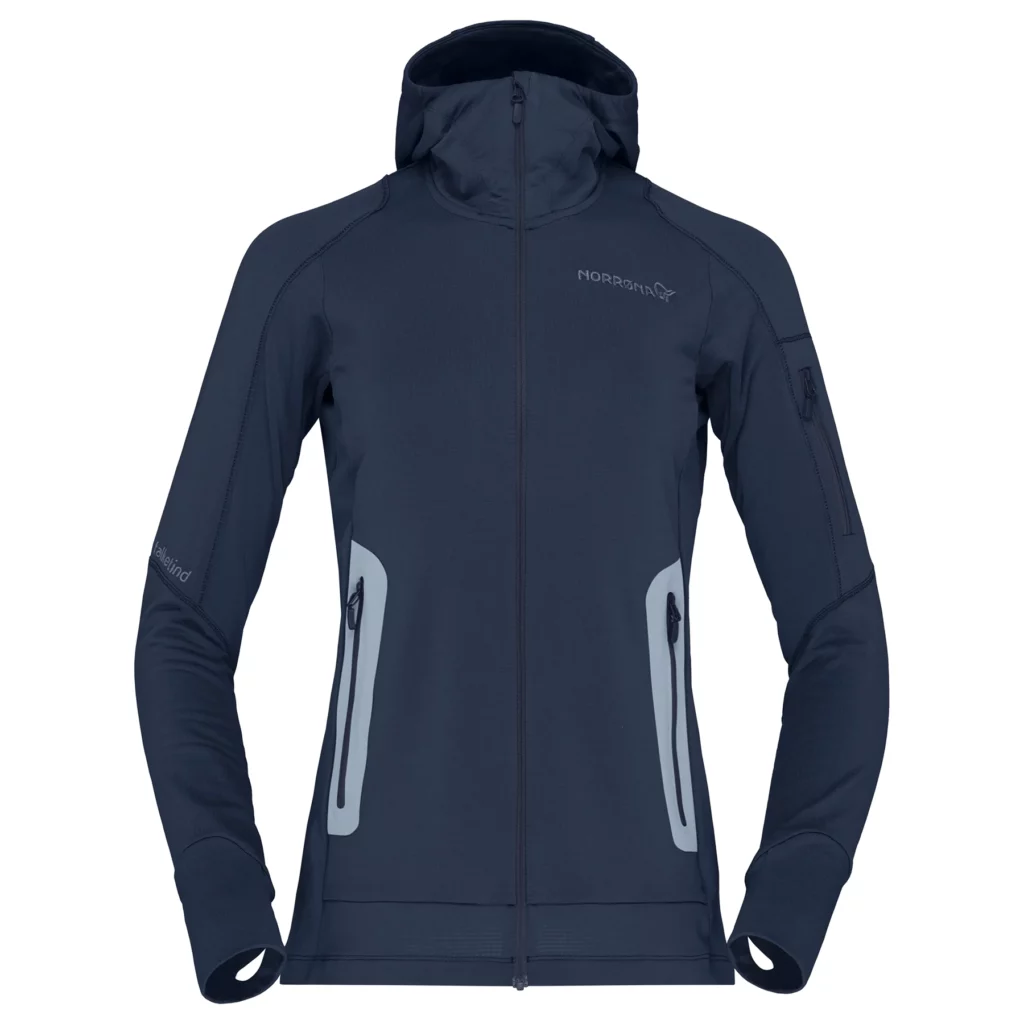
Norrona Women’s Falketind Power Grid

TREKITT’S TOP PICKS: BEST SKIING AND SNOWBOARDING MIDLAYERS FOR MEN
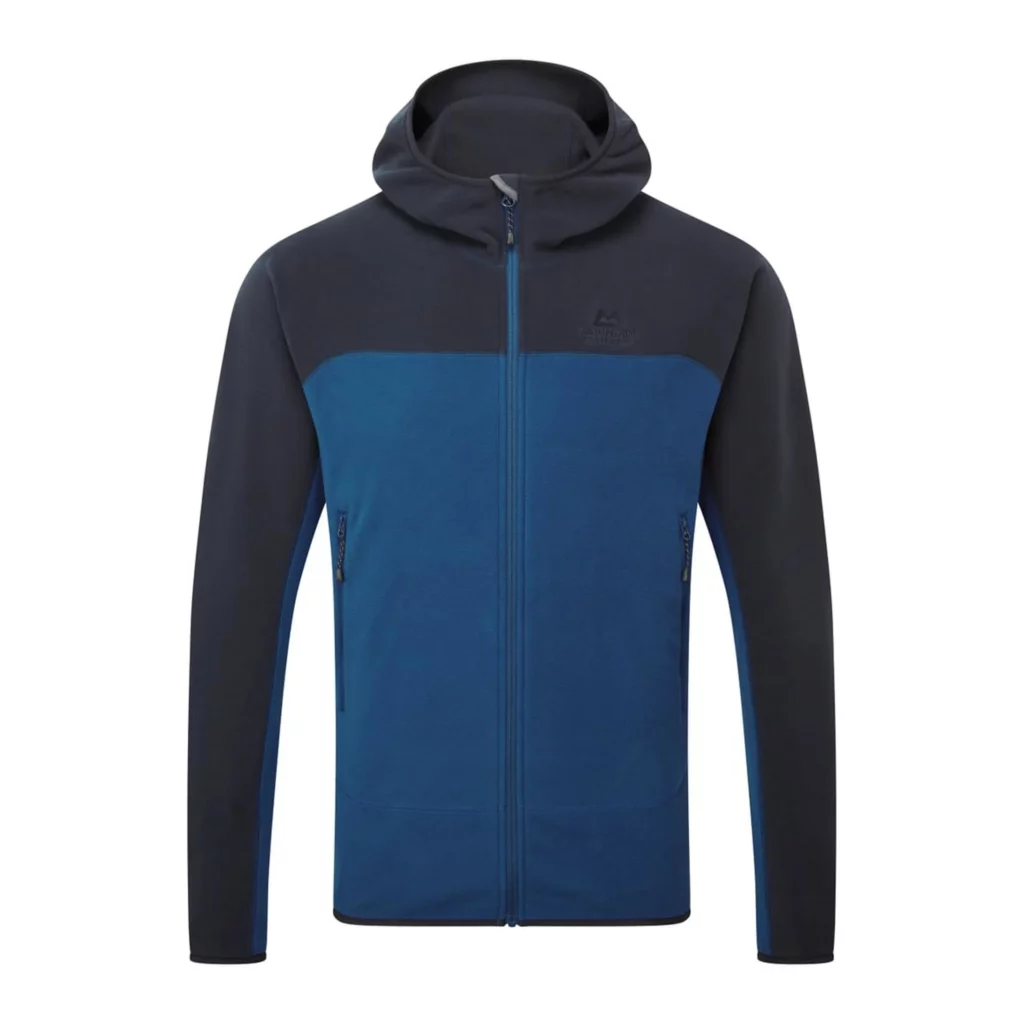
Mountain Equipment Mens Micro Zip Jacket Admiral
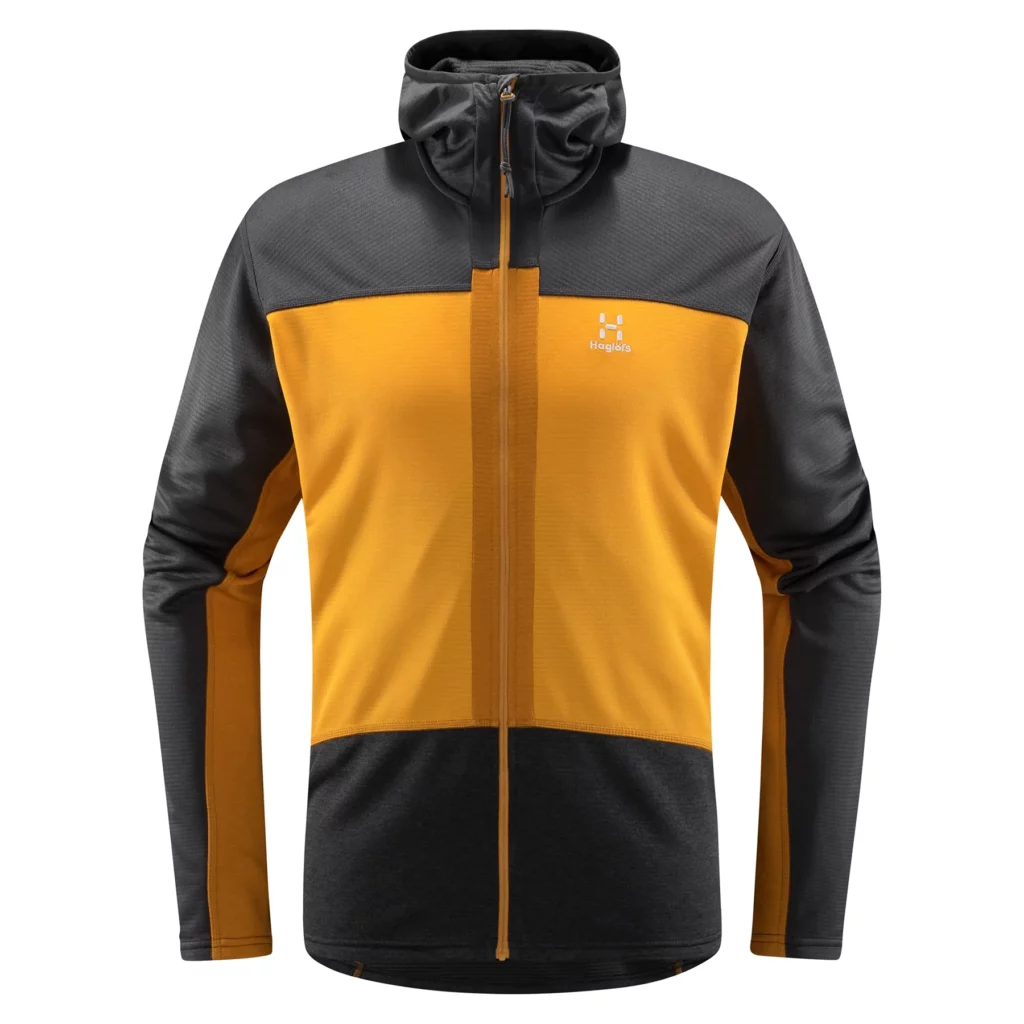
Haglofs Mens ROC Flash Mid
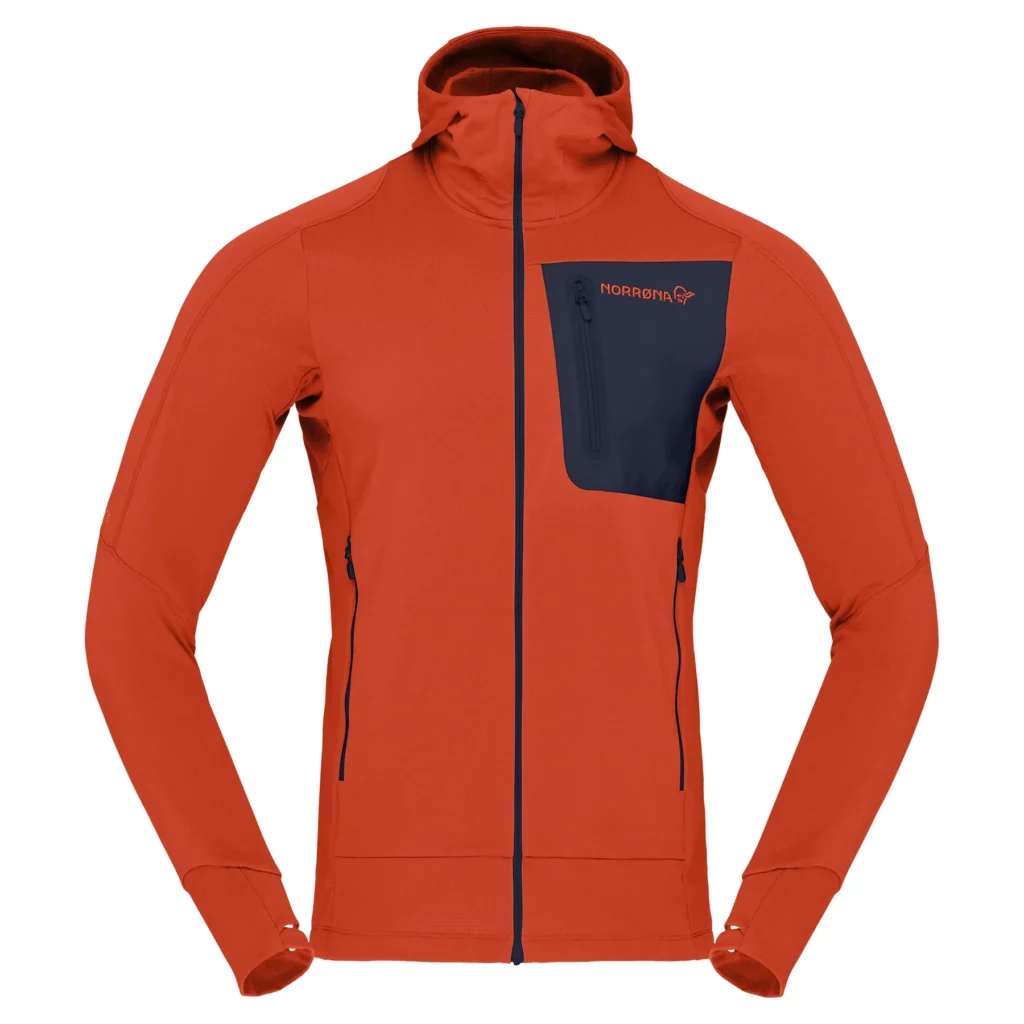
Norrona Men’s Falketind Power Grid
FEATURES TO LOOK FOR IN A SKIING AND SNOWBOARDING MIDLAYER
Finding the perfect midlayer for skiing and snowboarding is key to staying warm and comfortable on the slopes. Let’s break down the must-have features that’ll keep you cosy and ready to ride.
Insulation
When you’re out in the cold for hours, warmth is everything. You’ll want a midlayer that gives you great insulation without feeling bulky. Fleece or synthetic materials are your best bet—they trap heat even if they get damp, keeping you toasty on those freezing runs.
Drop-Tail Hem
A drop-tail hem means the back of the midlayer is longer than the front. This extra length in the back provides more coverage when you’re bending, sitting on the lift, or strapping into your board, helping to prevent cold air and snow from sneaking in.
Helmet-Compatible Hood
Not all hoods are created equal! If you plan to wear a helmet on the slopes (which you should!), ensure the midlayer’s hood is helmet-compatible. This feature means it’s large enough to fit comfortably over or under your helmet without feeling tight or restricting your movement, giving you extra protection against wind and cold.
High Collar:
A high collar can make a world of difference when you’re trying to keep cold air and snow out. It provides extra coverage for your neck and can be zipped up for those super cold, windy days. A fleece-lined high collar adds warmth and comfort, protecting your neck without needing an extra scarf.
Stretch Panels:
Some midlayers come with stretch panels in key areas, like under the arms or along the sides. These panels increase mobility and allow for better freedom of movement, which is especially useful when you’re twisting, turning, or moving dynamically on the slopes. They also reduce bulk in areas where you need flexibility.
Fit and Layering:
You want your midlayer to fit snugly but not too tight—it should layer easily under your outer jacket without adding bulk. A slim, athletic fit keeps warmth close to your body and gives you full mobility. Also, ensure it’s long enough to stay put so you’re not constantly tugging it back down!
Internal Mesh Pockets:
Internal mesh pockets are perfect for stashing small items that need to stay warm, like your phone, gloves, or goggles. The breathable mesh helps circulate warmth from your body to these items, preventing your phone from freezing up or keeping your extra gloves warm between runs.
BEST MIDLAYERS FOR SKIING AND SNOWBOARDING – FAQ
When choosing a midlayer for skiing or snowboarding, prioritise features that enhance performance and comfort. Look for a midlayer with a helmet-compatible hood for extra warmth and protection, thumb loops to keep sleeves more in place, and pockets for easy access to essentials. Ensure it has a good balance of warmth and breathability, and opt for a slim fit that allows easy layering without bulk. A full or half-zip option controls ventilation, while moisture-wicking properties help keep you dry during high-intensity activity. Durability and ease of movement are also key considerations for long days on the slopes.
Start with a moisture-wicking base layer, add your midlayer for warmth, and finish with a waterproof, windproof outer layer. The midlayer should be warm and breathable, while the outer layer will protect you from the elements.
It’s really a matter of personal preference. Zip-ups are great for easy temperature regulation and layering adjustments, while pullovers are simple and streamlined. Choose whichever feels most comfortable for you on the slopes!
Having a versatile midlayer that can handle various conditions is a good idea. However, if you’re skiing or snowboarding in very cold or mild weather, you might want a heavier or lighter option to swap out based on the forecast.
Definitely! Many midlayers are stylish and functional enough to wear off the slopes. They’re great for après-ski, hiking, or even just running errands on chilly days. Versatility is key!
Got questions?
Drop by our Service Centre or hit up our Customer Service team —we’re here to help!
WANT TO LEARN MORE? WHY NOT CHECK OUT OTHER GUIDES?
Unzip your tent to a frosty landscape, put the kettle on and watch the morning light creep across the hills. With quieter campsites and crisp air, winter camping gives you plenty of reasons to keep adventuring after summer has packed up. Tempted, but wondering whether you will spend the whole night shivering? That is an…
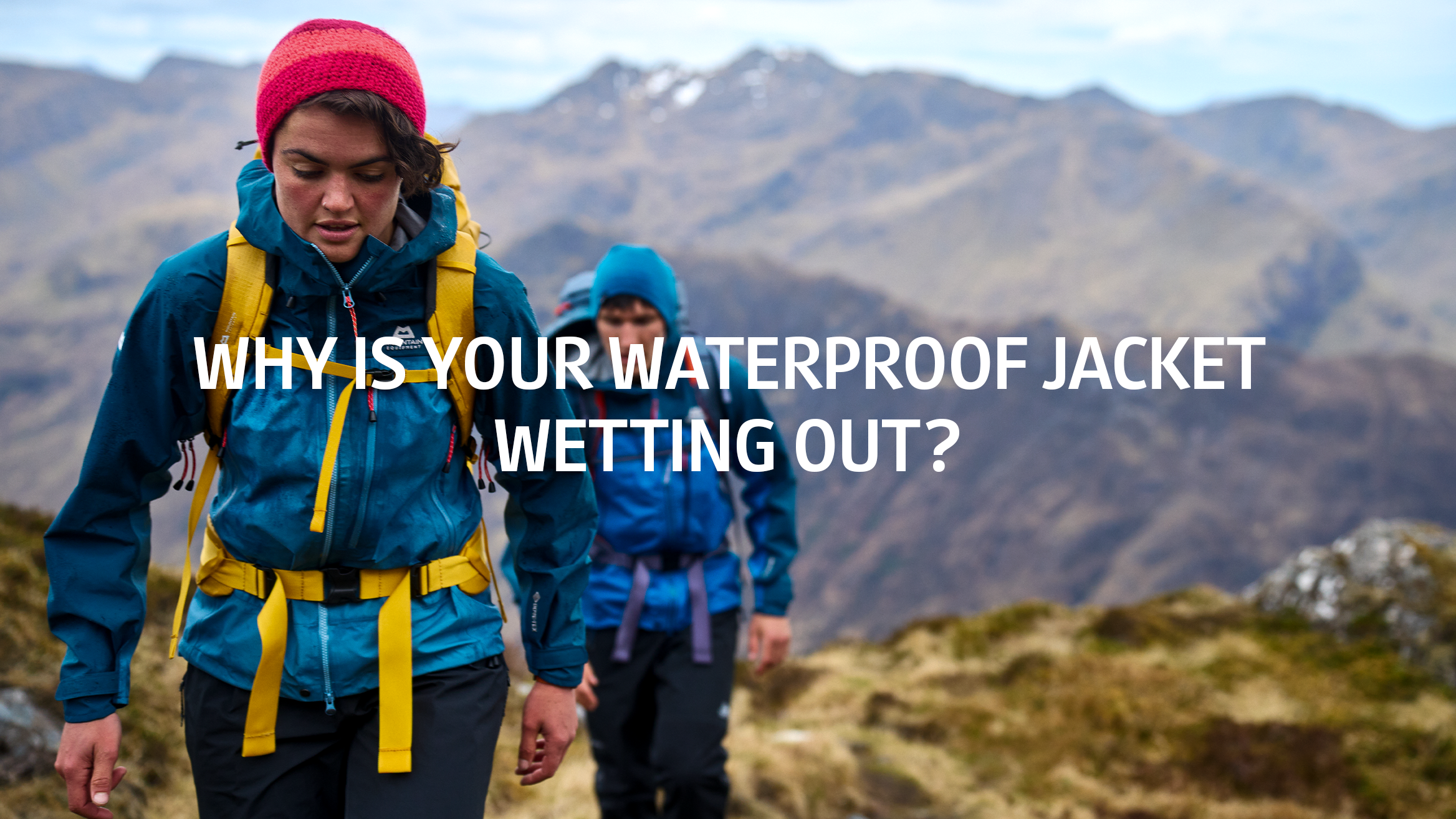
You’ve invested in a decent waterproof jacket, taken it out on a fair few soggy walks, and now something doesn’t seem quite right. Instead of rain beading up and rolling off, the outer fabric is turning darker and starting to absorb water. Before long, your jacket feels heavy, cold and clammy. Not exactly what you…
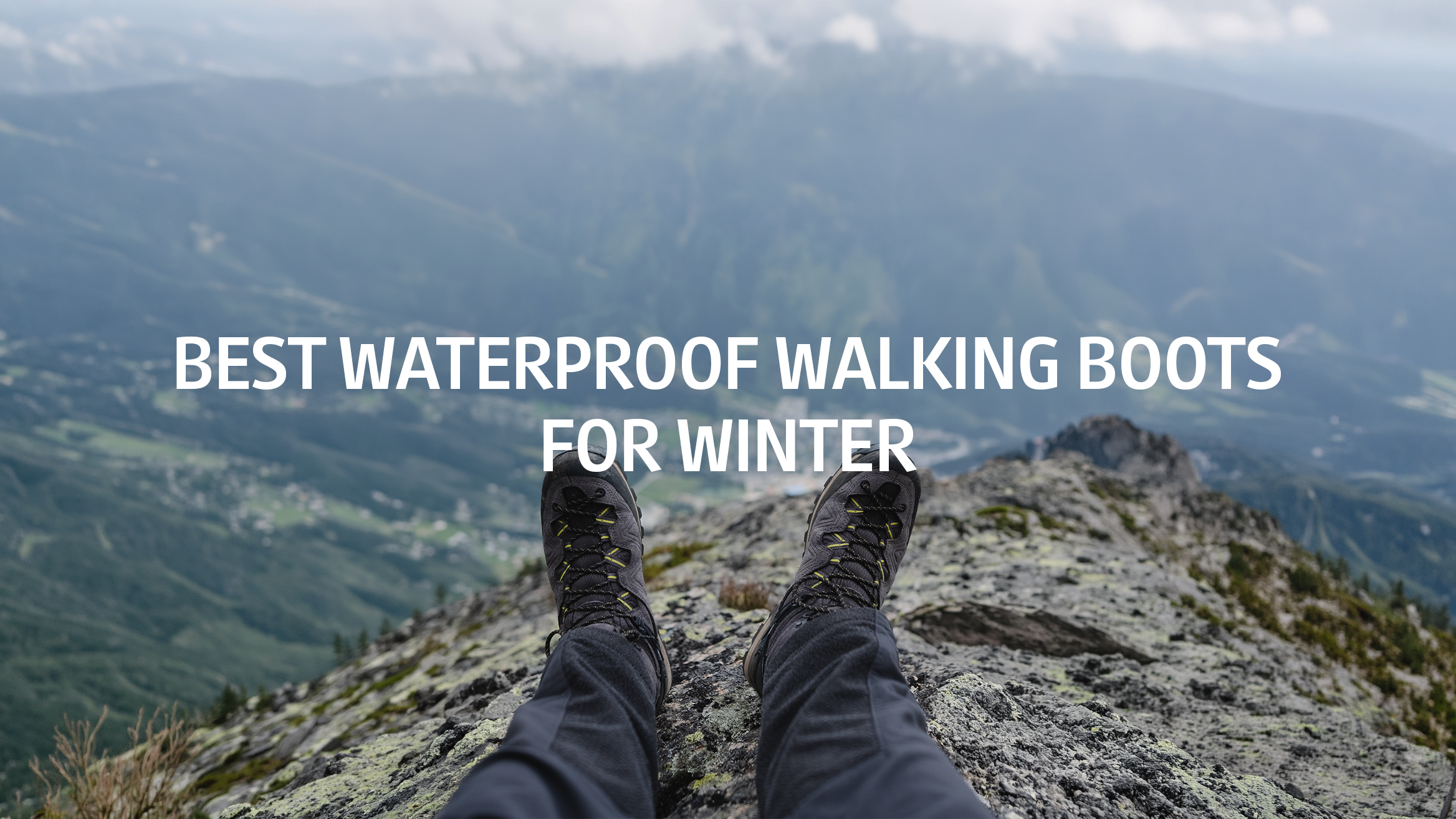
A Winter has a habit of exposing weaknesses in your walking boots. A slightly slippery outsole becomes much more noticeable on wet rock. A boot that feels supportive on a summer footpath might struggle once you’re carrying a heavier pack across rough ground. And, unsurprisingly, a leaky boot quickly becomes a problem when every puddle…
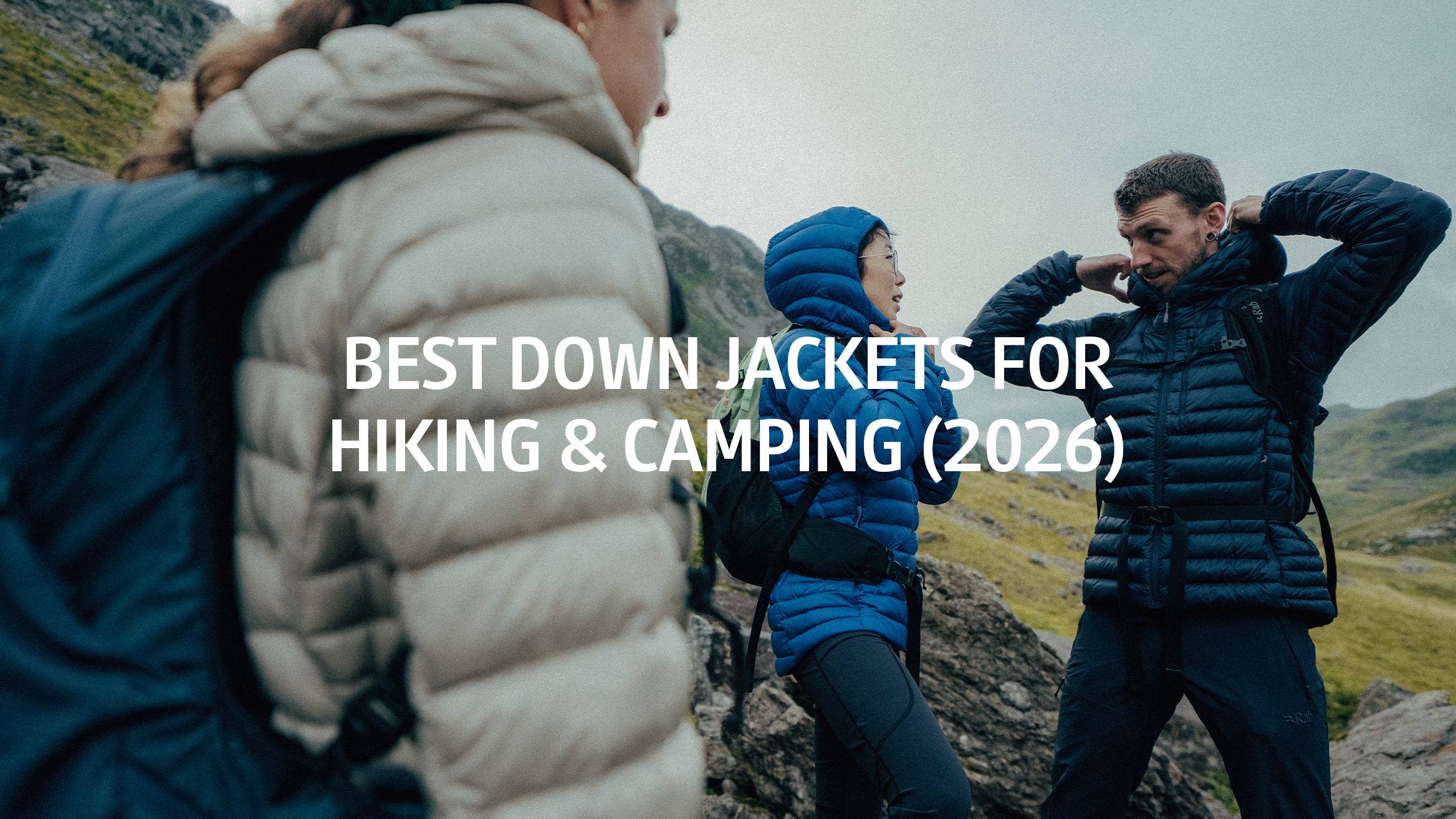
A good down jacket is one of those pieces of outdoor kit that quickly earns its place in your wardrobe. Lightweight, warm and impressively packable, down insulation can provide a lot of warmth without the weight and bulk of heavier winter clothing. However, the best down jacket for a fast day on the hills probably…
Continue Reading Best Down Jackets for Hiking & Camping (2026)