Winter in the UK backcountry is an adventure full of character. One moment you are crunching across frost-coated paths under a perfect sky, and the next you are squinting through sideways sleet. On a multiday route, those contrasts multiply, and so does the importance of packing the right kit.
Unlike a simple out-and-back day walk, a winter backcountry trip requires a careful balance between warmth, weight, durability and the ability to stay cheerful for several days in a row. The weather will challenge you, your rucksack will test you, and your sleeping bag will become your best friend. The good news is that with the right kit and a decent sense of humour, winter in the UK becomes one of the most rewarding seasons to travel through.
IN SHORT…
Sort your winter layers: Build a clothing system that keeps you warm, dry and adaptable for several days.
Pick footwear that can cope: Choose boots, socks, and traction that can handle ice, bogs, and long mileage.
Navigate like a pro: Use maps, compasses and offline GPS to stay on track when visibility drops.
Carry real safety essentials: Pack the small but vital kit that keeps you warm and protected in case things go wrong.
Fuel yourself well: Bring food and hot drinks that help maintain high energy levels on cold, long days.
Prepare for winter camping: Use the right sleeping system and simple campsite tricks to stay warm through the night.
This article is part of our Winter Camping Basecamp, where you’ll find expert layering advice, technical gear deep dives and practical cold-weather tips.
1. Reliable Layering System
A solid layering system is essential for a multiday winter trip because once you are cold and damp, it can be difficult to recover that lost heat. You will live in your layers for several days, so choose pieces that manage moisture well, dry quickly and offer plenty of warmth.
Why layering matters even more on multiday trips
You cannot rely on heading home or jumping into a warm car at the end of the day. You need clothing that keeps you comfortable from dusk to dawn and still works when you are setting up camp in subzero temperatures. Good layers keep you dry, prevent overheating during climbs and protect you from wind and driving sleet on exposed terrain.
What to pack
Base layers
Mid layers
Insulation layer
Outer layer
Accessories: warm hat, buff or neck gaiter, windproof gloves and a spare pair of insulated gloves
{"mainImage":{"id":18972,"url":"https:\/\/blog.citrus-lime.com\/tkt\/wp-content\/uploads\/sites\/18\/2025\/11\/Screenshot-2025-11-07-at-11.17.37-150x150.png","size":"thumbnail"},"dots":[{"position":{"x":50,"y":50},"wcProduct":{"productId":null,"productName":"","productPermalink":"","productShortDescription":"","productFeaturedImage":{"url":"","size":"large"},"productStockStatus":"","productPrice":""},"customProduct":{"productName":"Fleeces and Midlayers","productPermalink":"https:\/\/www.trekitt.co.uk\/clothing\/fleece","productShortDescription":"","productFeaturedImage":{"url":"https:\/\/blog.citrus-lime.com\/tkt\/wp-content\/uploads\/sites\/18\/2025\/11\/Screenshot-2025-11-07-at-11.17.37-1024x1024.png","size":"large","id":18972},"productPrice":""},"tooltip":{"direction":"row","style":{"position":"top","layout":"horizontal","width":"360px","height":"auto","background":{"hex":"#fff","rgb":{"r":255,"g":255,"b":255,"a":1}},"triangle":true},"containers":[{"type":"container","style":{"gridSize":"140px","padding":{"left":0,"top":0,"right":0,"bottom":0}},"blocks":[{"type":"media","source":"productFeaturedImage","options":{"size":"large"},"style":{"backgroundPosition":"center"}}]},{"type":"container","style":{"gridSize":"1fr","padding":{"left":16,"top":16,"right":16,"bottom":16}},"blocks":[{"type":"text","source":"productName","options":[],"style":{"color":{"hex":"#000","rgb":{"r":0,"g":0,"b":0,"a":1}},"fontSize":24,"fontWeight":600,"margin":{"left":0,"top":8,"right":0,"bottom":8}}},{"type":"text","source":"productShortDescription","options":[],"style":{"color":{"hex":"#000","rgb":{"r":0,"g":0,"b":0,"a":1}},"fontSize":16,"fontWeight":300,"margin":{"left":0,"top":8,"right":0,"bottom":8}}},{"type":"text","source":"productPrice","options":[],"style":{"color":{"hex":"#000","rgb":{"r":0,"g":0,"b":0,"a":1}},"fontSize":16,"fontWeight":300,"margin":{"left":0,"top":8,"right":0,"bottom":8}}}]}]},"style":{"pulsating":"always","opacity":1,"background":{"hex":"#d9e3f0","rgb":{"r":217,"g":227,"b":240,"a":1}},"size":"16px","borderWidth":"1px","borderColor":{"hex":"#fff","rgb":{"r":255,"g":255,"b":255,"a":1}}}}]}
Stick to my golden rule of winter travel: avoid sweating if you can. I know that’s easier said than done, but sweat chills fast once you stop moving. If you feel yourself heating up, shed a layer early. And the moment you stop for more than a minute, put your warm jacket on straight away. It is far easier to stay warm than to get warm again.
Think of your layering as a relationship. It only works if you communicate early and adjust often.
2. Footwear
Your feet are your primary mode of transport and your mood regulators. Cold or wet feet over several days can drain your energy fast and make even the best winter route feel far tougher than it needs to be.
Why do winter boots matter on multiday adventures?
Winter-ready boots offer insulation, stiffness and grip that help you travel safely across icy, boggy or snow-covered ground. They also resist water far better than standard boots, which is crucial on consecutive days where puddles seem to grow maliciously deeper. If you want help choosing a suitable winter-ready boot for UK conditions, our guide to winter boots and crampons linked here is a great place to start. And if you prefer hands-on advice, pay a visit to our Hereford Service Centre, where our team can help you find the right fit and support for your trip.
What to pack
Waterproof boots
Merino or synthetic hiking socks plus a dry spare pair for each day
Gaiters for snow, bogs or glacially cold puddles
Microspikes or traction aids for icy sections
When to use microspikes
If you are heading into upland areas or anywhere that regularly freezes overnight, pack them. Even if you do not expect ice, winter in the UK enjoys surprising people. Microspikes turn slippery traverses into confident strides. They barely weigh anything and can save you from a few unwanted slips along the way.
For a deeper dive into traction and how it fits into winter movement skills, take a look at our Ultimate Guide to Crampons.
3. Navigation Tools
Navigation on a winter backcountry trip requires redundancy. Batteries die. Screens freeze. Snow hides the path. Fog eliminates landmarks. And after two days of walking, your ability to distinguish “that rock” from “that other rock” may degrade. If you’re after a deeper dive into navigation, our blog on How to Navigate Safely in Winter and Poor Visibility is a great resource.
Why is multiday winter navigation tougher?
Routes look different in snow, and visibility can shift rapidly. If you make a mistake late in the day, you may not have time to correct it before darkness settles. Keeping several navigation tools means you always have a backup plan.
What to pack
OS map protected in a waterproof case
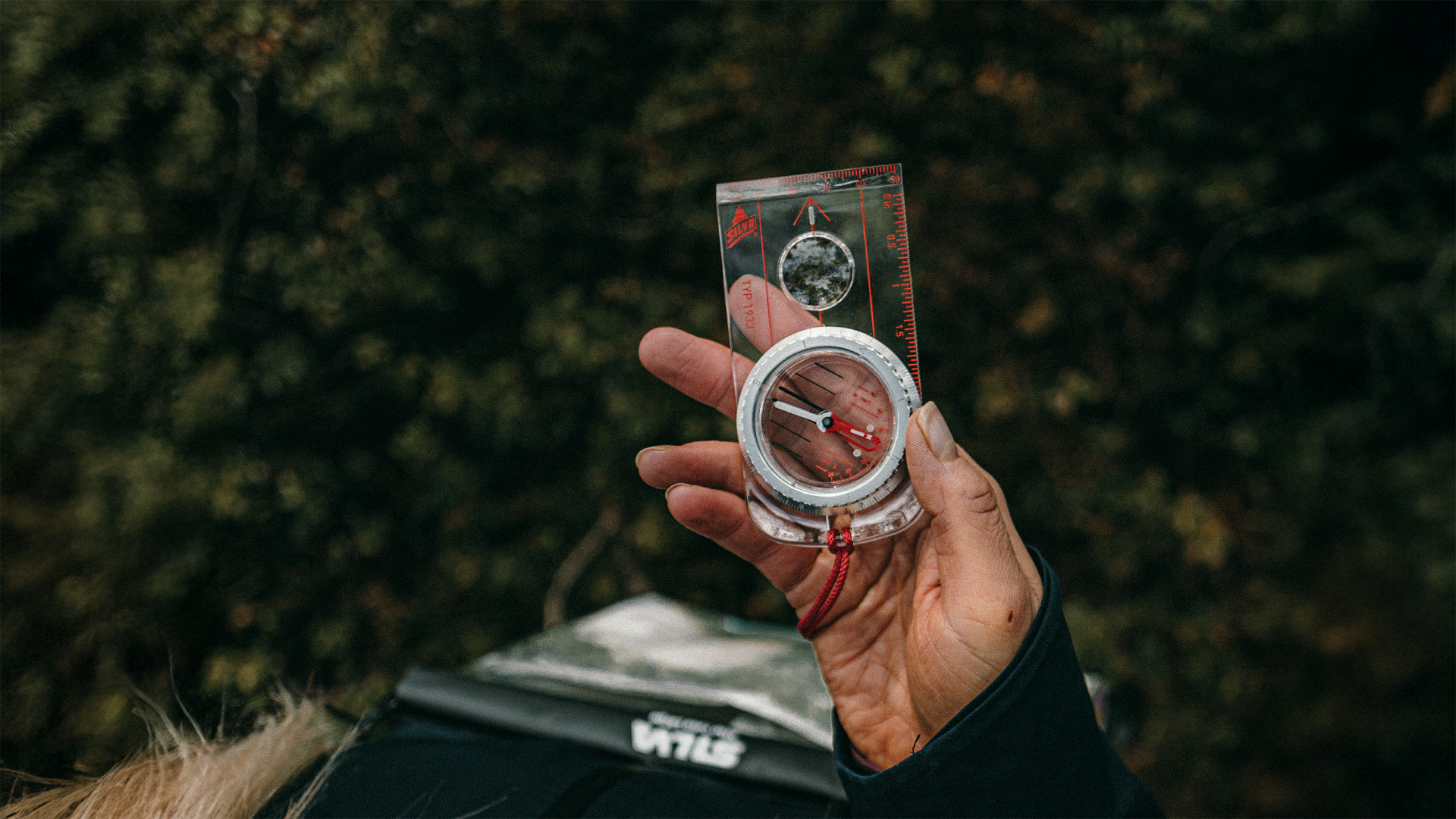
Compass
GPS device or a smartphone with offline maps
Power bank and cable
Smart habits for winter trips
Check your bearings often. Do not wait until you feel uncertain. Keep electronics warm inside an inner pocket to preserve battery life. And share your route plan with someone at home before you leave. It takes a minute and massively improves your safety margin.
4. Emergency Gear and Safety Equipment
Here at Trekitt, we love seeing people out in the hills year-round, especially in winter when the landscapes really come alive. But we also like to see everyone get home again. So if you only remember one thing from this blog, let it be this: pack your safety kit. It is the bit of gear you hope never to use, but on a multiday winter route, it is the one thing that truly earns its place.
On a multiday winter route, help may be many hours away. Conditions can deteriorate faster than expected, and an injury or navigational error becomes more serious in subzero temperatures. That is why having a compact but reliable emergency kit gives you crucial backup when you need it most.
Why does this kit matter even more over several days?
If you are forced to stop due to weather or injury, your emergency equipment keeps you warm and protected while you decide your next steps. It also provides peace of mind, allowing you to enjoy your trip rather than worrying about every darkening cloud.
What to pack
Head torch plus spare batteries
Emergency bivvy or survival bag
First aid kit with blister treatments
Whistle
Multi-tool or small knife
Waterproof matches or a fire starter
High-visibility item for use in poor light
Smart habits for winter trips
Check your bearings often. Do not wait until you feel uncertain. Keep electronics warm inside an inner pocket to preserve battery life. And share your route plan with someone at home before you leave. It takes a minute and massively improves your safety margin.
5. Food and Hydration
Your calorie needs increase significantly in cold weather. Over several days, eating well and drinking enough become essential for maintaining warmth, energy, and morale. If you have ever tried to cook while snow is falling sideways, you will know the value of efficient food planning.
What to pack
1 to 2 litres of water in an insulated bottle or pouch
High-energy snacks such as nuts, chocolate, oat bars and dried fruit
Breakfasts that cook quickly
Evening meals with high calorie density, such as dehydrated or freeze-dried options
Even though you may not feel thirsty, your body loses moisture through breathing cold air and through extra exertion. Drink little and often rather than waiting for thirst. Dehydration in winter tends to creep up quietly, a bit like the weather.
My top tip
Bring at least one snack that boosts morale. Everyone has their favourite. Chocolate orange segments. A fancy oat bar. A slightly squashed pastry. For me, it’s got to be a Crunchie. But whatever it is, pack it. Future you will be grateful.
6. Overnight Essentials
Setting up camp in winter requires extra planning. You want warmth, safety and the ability to crawl into your sleeping bag without thinking “this was a mistake”. If you’d like to avoid most classic winter-camping blunders, our Winter Wild Camping in the UK blog and Winter Camping Tips guide are well worth a read.
What to pack
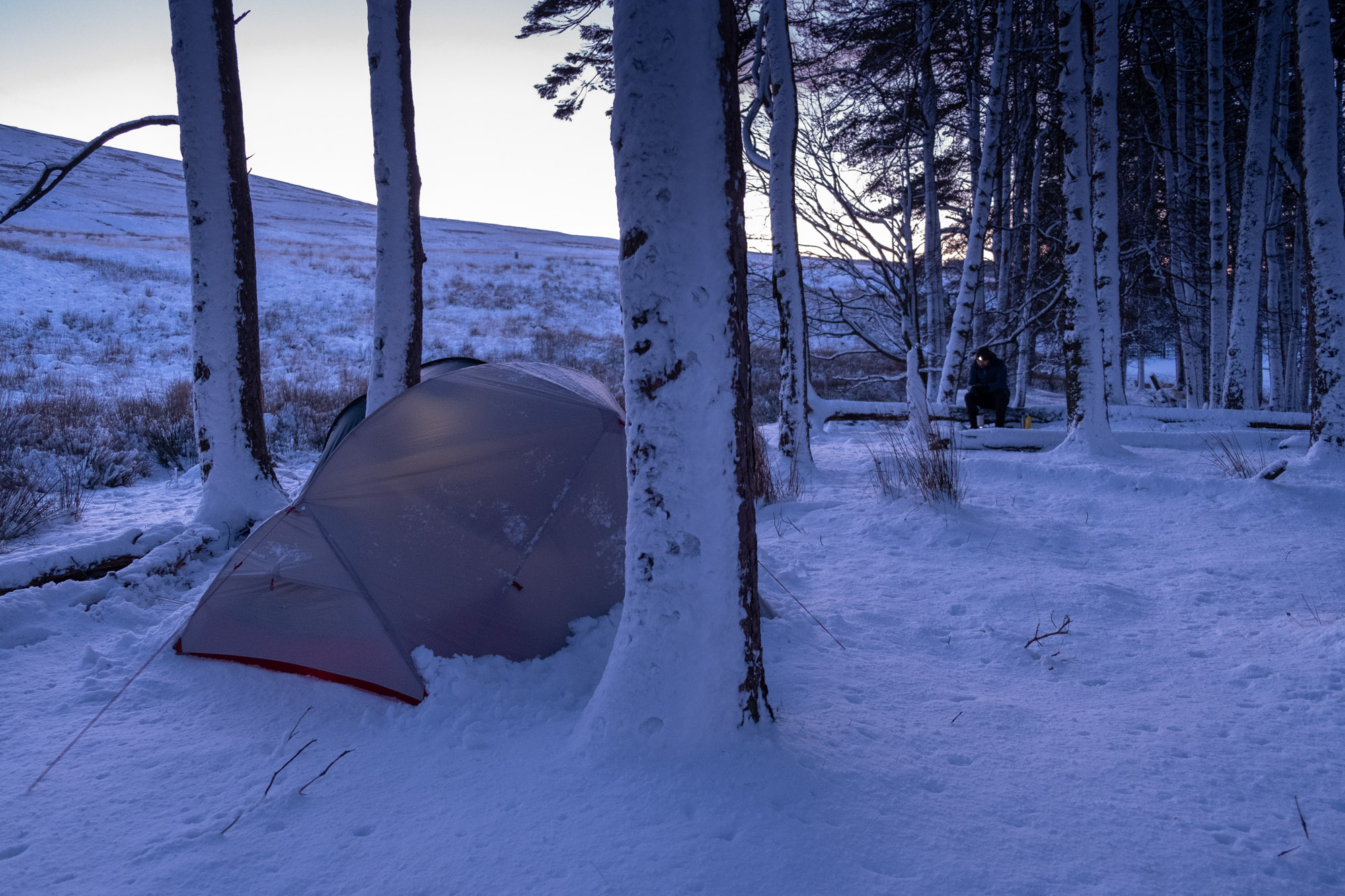
Four-season tent
Warm sleeping bag rated for freezing conditions
An insulated sleeping mat is essential for heat retention
Stove and fuel that work in cold conditions
Dry bags for organising kit
Repair tape for tent and gear
Head torch – always keep it handy
Keeping warm at camp
Use your insulated jacket immediately upon arriving at your chosen spot. Do not wait until you feel cold. Eat something warm as soon as you can. Keep your sleeping kit dry at all costs. And remember that wet down is the outdoor equivalent of showing up to a snowball fight in a T-shirt; it’s pointless.
7. Extras for Challenging Multi-Day Routes
Some trips will take you into remote, high or snow-affected areas where extra gear becomes valuable and sometimes essential.
What to pack
Extra insulated jacket for static rests
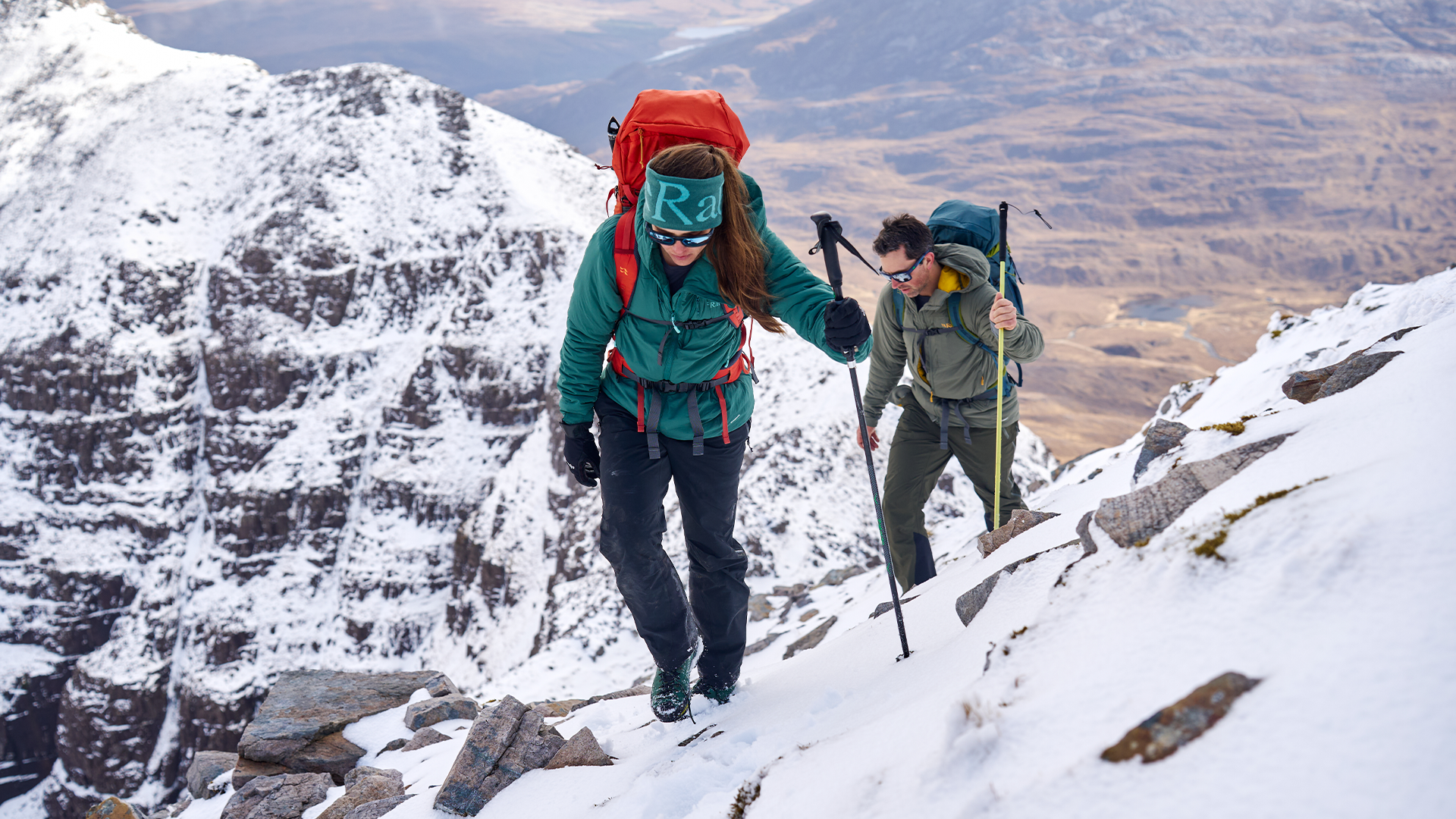
Trekking poles
Snow shovel for Scottish winter conditions
Waterproof pack cover
Spare gloves and socks
Why this kit matters
The weather on multi-day winter routes changes rapidly. Having the right tools makes travel safer and more enjoyable. Trekking poles improve balance on soft snow or icy descents. A spare insulated layer helps during long evening camps.
Final Thoughts: Be Prepared, Stay Flexible and Enjoy the Adventure
A multiday UK winter backcountry walk delivers some of the most rewarding experiences you can have outdoors. The light is magical, the landscapes feel wilder and the sense of achievement is huge. But winter also demands respect. Understanding what to pack and why helps you stay warm, dry and safe so you can enjoy every frosty ridge and every cosy night in your tent.
Pack smart. Plan well. Adapt often. And always keep one emergency snack hidden at the bottom of your pack just in case morale dips.
As always, if you have any questions or would like some advice, drop us a message on social media @trekittmountainsports, call our friendly team on 01432 263335, or pop into our Hereford Service Centre for expert, in-person advice.
FAQs
How cold does it really get on UK winter walks?
While the UK may not reach alpine extremes, upland areas like the Cairngorms, Snowdonia or the Lake District can experience sub-zero temperatures, high winds, and heavy snowfall. Wind chill often makes it feel significantly colder, especially on exposed ridgelines. Packing for these worst-case conditions is key.
Do I need specialist winter boots, or can I use my usual hiking boots?
Standard boots may not offer enough insulation or grip for winter conditions. Waterproof, insulated boots with good traction are a must for comfort and safety on multi-day routes. Add gaiters and microspikes for extra protection and stability on icy or boggy terrain.
Can I rely on my phone for navigation?
Phones are useful but vulnerable to cold and battery drain. Always carry a paper map and compass as backups. Keep electronics warm in inner pockets and bring a power bank to recharge on longer trips.
What should I do if the weather changes suddenly while I’m out?
Have a flexible route plan with bailout options. If visibility drops or conditions deteriorate, prioritise shelter and warmth. This is where your emergency kit and navigation tools really earn their place.
How do I stay dry when the weather keeps changing?
The secret lies in layering. Adjust layers frequently to prevent sweating, and pack spares of critical items like gloves and socks.


Leave a Reply